
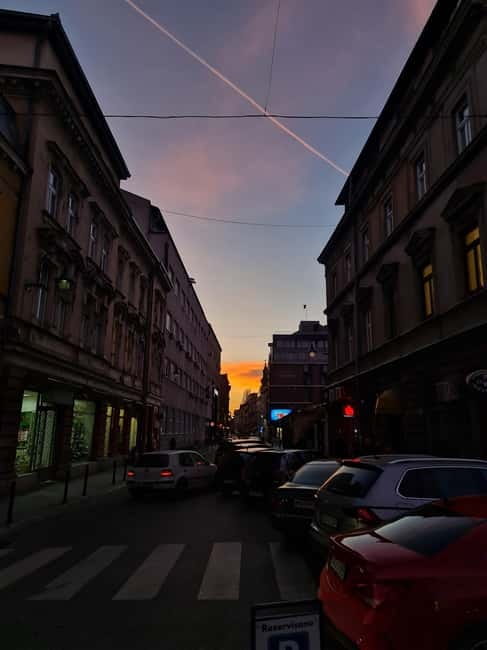
Reviewed · TUNNEL OF HOPE & SIEGE SITES
Sarajevo: Start of The First World War Tour
Sarajevo turns 1914 into real streets. This 3-hour small-group tour makes the causes of World War I feel personal, then anchors the story at the places tied to the Austro-Hungarian visit and the assassination at Latin Bridge. I particularly like the guide-led history that connects big European politics to what people in Bosnia actually experienced.
One heads-up: you’ll be on your feet a fair amount, with bridges, City Hall walking, and multiple photo and sightseeing stops. If you prefer light sightseeing with minimal political context, the subject can feel heavy in a short time.
In This Review
- Key things I’d watch for
- How Sarajevo’s 1914 story is told at street level
- City Hall and Latin Bridge, the two stops that set the hook
- Hotel Austria, Bosna, and what Austro-Hungarian rule did to daily life
- The secret societies and the assassination plot, explained in plain terms
- Appel Quay and the bridge-and-river rhythm of Sarajevo
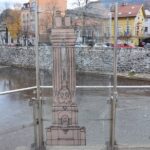
- East Sarajevo, the Gavrilo Princip monument, and the memory question
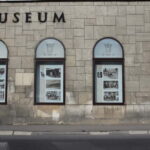
- Museum time at Sarajevo Museum 1878 to 1918
- Pacing, walking, and the kind of day this is
- Price and value: why $58 can be a smart buy
- The guides make or break the experience
- Who this tour suits best
- Should you book the Shot that Changed the World Tour in Sarajevo?
- FAQ
- How long is the Sarajevo Shot that Changed the World Tour?
- How much does it cost per person?
- Is the tour available in English?
- What sites are included on the route?
- Is this tour suitable for kids or people with mobility impairments?
- What is the cancellation policy?
Key things I’d watch for
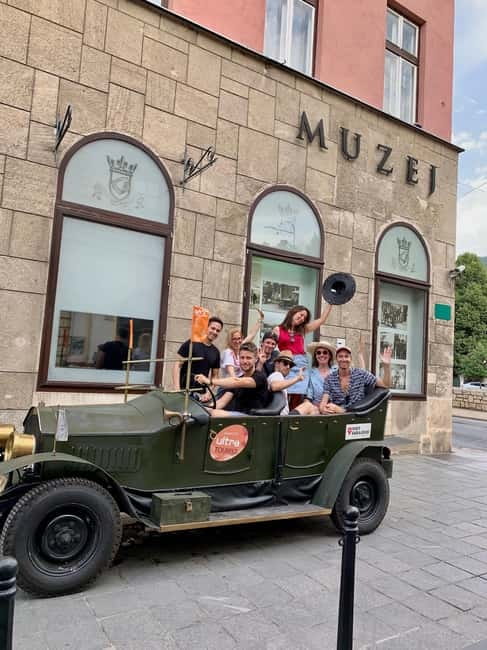
- Small group, big clarity: limited to 8 people, which helps the guide pace explanations and answer questions.
- Real 1914 staging points: Sarajevo City Hall, Ćumurija Bridge, and the Latin Bridge area are included, not just talked about.
- June 28 context you won’t get from a plaque: the timing links to major anniversaries in the region and to Archduke Franz Ferdinand’s personal calendar.
- The assassination story told in sequence: the failed first attempt and Gavrilo Princip’s successful attempt are both covered.
- Austro-Hungarian rule made concrete: stops like Hotel Austria and Bosna help explain how imperial control shaped daily life.
- East Sarajevo and shifting memory: you’ll visit the Gavrilo Princip monument area and hear how perceptions differ in Bosnia and across the Balkans.
Other siege-era sites around Sarajevo:
- Fall of Yugoslavia, Sarajevo War Tour with Tunnel of Hope Museum and Frontlines
★ 5.0 · 1,314 reviews - Sarajevo: Tunnel Museum Yugoslavia War Tour with War Veteran
★ 5.0 · 1,111 reviews - Sarajevo: Tunnel of Hope Tour – Survival and Resilience
★ 4.8 · 630 reviews - Tunnel Museum: Bosnian & Yugoslav Wars Tour with War Veteran
★ 5.0 · 551 reviews
How Sarajevo’s 1914 story is told at street level
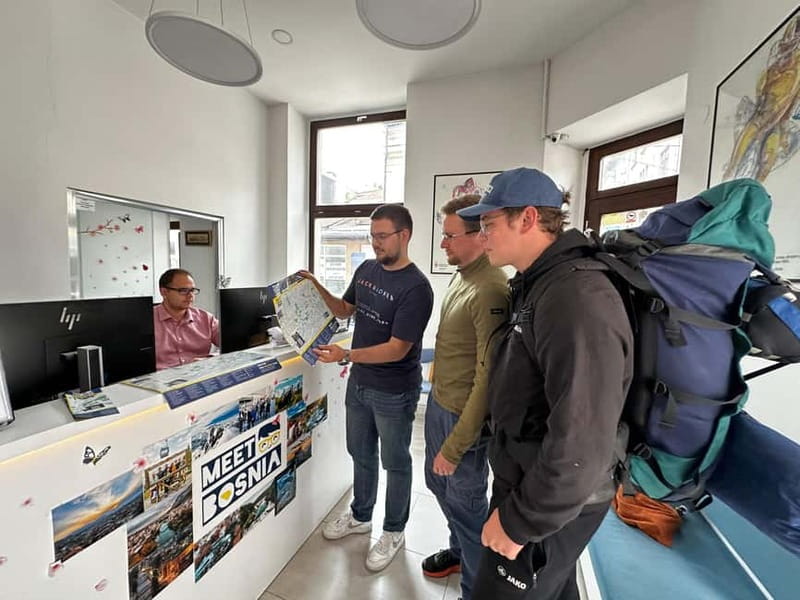
This tour is built around one idea: you learn World War I, not from a textbook, but from the way Sarajevo was laid out and used in 1914. You start in the Sarajevo area and move through the city at a pace that mixes walking with short breaks, so the story stays chronological instead of turning into a blur of monuments.
What makes it work is the balance between causes and consequences. You get the political climate in Europe in 1914 and the reasons that World War I ignited, then you get the human hinge: the assassination that changed the course of the world.
The group stays small, which matters more than you might think. With up to 8 participants, you get time for the guide to explain details clearly and to respond when you ask questions, instead of racing through everything.
City Hall and Latin Bridge, the two stops that set the hook
You begin at Sarajevo City Hall, an Austro-Hungarian-era building that Archduke Franz Ferdinand and Sophie were meant to visit. The guide focuses on why this place mattered in 1914 and how the schedule and setting were part of the imperial presence in Bosnia and Herzegovina.
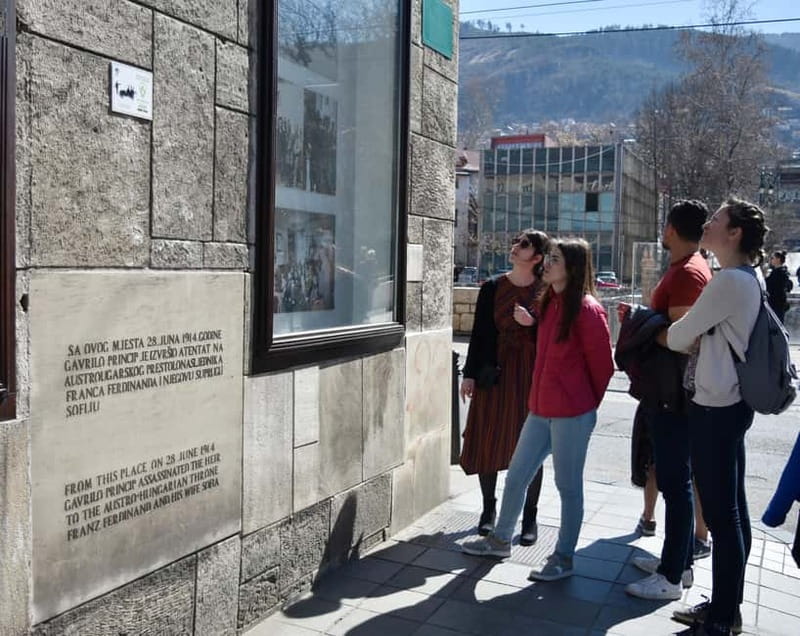
From there, the route brings you into the assassination geography. You’ll move through key bridge points, including Ćumurija Bridge for a photo stop and walking orientation, then on to the Latin Bridge, where the assassination happened. Being at the right crossings gives you something that photos do not: a sense of distance, movement, and timing.
If you like historical details, the tour has a knack for making them feel practical. For example, the June 28 timing is explained with the regional anniversaries tied to it, including a connection to the First Battle of Kosovo and Franz Ferdinand’s wedding anniversary. That makes the date feel less like trivia and more like a loaded trigger.
Hotel Austria, Bosna, and what Austro-Hungarian rule did to daily life
The Austro-Hungarian period shows up here in more than architecture. One of the core stops is the Hotel Austria and Bosna area, where you also get break time and some free time for photos and walking.
That pause is more than a rest break. It gives the guide room to explain how the empire’s rule impacted Bosnian society at the time, including how control operated and how different groups lived under the imperial umbrella. You start to see the tour’s logic: these were not neutral backdrops, they were part of a political system.
Another piece of the day’s structure helps this land. There are both pass-by sections and true stops, so you can notice the city layout without feeling rushed. Even the drive-by parts can add context by showing how East Sarajevo differs from the core areas you’ve just learned about.
Other 1914 sites in Sarajevo:
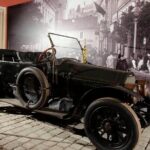
The secret societies and the assassination plot, explained in plain terms
The tour’s strongest storytelling section is the lead-up to the assassination. It covers the political and social context in the Southern Slavic countries under Austro-Hungarian rule, including the atmosphere that helped extremist groups take shape.
You’ll hear about secret societies connected to the plot, including the Black Hand and Young Bosnia. The key is that it is not just name-dropped. The guide explains why these groups mattered and how young activists and networks connected to violence in a way that felt, to them, like action.
Then the narration hits the event itself: a failed first attempt followed by the successful attempt by Gavrilo Princip. Knowing the sequence helps you understand how the assassination unfolded in reality, not as a single mythic moment.
Appel Quay and the bridge-and-river rhythm of Sarajevo
A detail I appreciate in this route is that it does not treat the city like a diagram. You spend time along areas connected to the riverfront and quays, including Appel Quay, then you walk to the bridges.
This matters because Sarajevo’s geography helps explain why certain sites became unavoidable. When you stand near bridges and crossings, the story shifts from abstract politics to movement through space, the practical question of where people would travel and how crowds and routes would shape events.
You also get time for photo stops and short walks at several points. That makes it easier to take in the “why here” of each location rather than only checking boxes.
East Sarajevo, the Gavrilo Princip monument, and the memory question
The day’s final perspective shift comes as you move toward East Sarajevo. You pass through and visit areas that help explain how the assassination is remembered differently depending on who is telling the story.
You’ll visit Park Gavrilo Princip and spend time in the area around the monument, with a photo stop and visit at the Gavrilo Princip Monument. The tour also includes the Gavrilo Princip Chapel as part of this thematic block, so you’re not only looking at public symbolism, you’re also seeing how commemoration is physically marked.
One of the most thought-provoking parts is that the guide discusses varying perceptions of Princip. In some narratives he’s remembered as a revolutionary, in others as a symbol of violence. The tour pushes you to notice that memory is political too, not just historical.
If you care about the afterlife of events, this is the section you’ll remember. It turns “what happened” into “how people keep arguing about what it meant.”
Museum time at Sarajevo Museum 1878 to 1918
Midday, the route includes Sarajevo Museum 1878 to 1918, with a break plus time to visit and some free time. This stop is the day’s chance to reset your brain and connect the streets to wider context.
The museum window is helpful because the tour covers a lot in just 3 hours, including political reasons for the war and the assassination timeline. A museum stop lets you see additional threads and details that a walking route can only summarize.
Because the pace includes break time earlier at Hotel Austria and Bosna, and again here, you should feel less pressure to sprint. You can actually read what matters to you and decide what you want to remember.
Pacing, walking, and the kind of day this is
This is a 3-hour experience, designed as a start-of-the-war story told on foot with some vehicle movement between clusters. The inclusion of pass-by segments means you’ll keep moving without feeling like every second is walking uphill.
Still, it is a walking tour. You’ll be out for photo stops, bridge walks, and the City Hall walking portion, with enough standing time that comfortable shoes matter. It also is not suitable for people with mobility impairments or for people with heart problems, so take that seriously and choose based on your body, not your curiosity.
There are multiple built-in moments to regroup. You get break time at Hotel Austria and Bosna, plus break time and free time at Park Gavrilo Princip, and you get break time again at the Sarajevo Museum. Those pauses help you process the heavier parts of the story.
Price and value: why $58 can be a smart buy
At $58 per person for about 3 hours, this isn’t a budget-only impulse tour. You are paying for a guide who ties together several layers, including European political context, Austro-Hungarian influence, and the assassination’s exact locations.
The value also comes from access and efficiency. The route includes sites that you might be able to reach on your own, but doing it in a structured sequence with a guide saves time and prevents the story from feeling random.
Most importantly, you get time. The tour’s small group size and the guides’ reputation for clear explanation and patience make it feel less like a lecture and more like a guided conversation that happens to follow a plan.
The guides make or break the experience
This tour is very guide-dependent, and that’s a good thing because the people running it clearly know how to teach it.
You might be guided by Ajmed, Alan, Ahmed Huseinović, or Arna. A recurring theme in the way the tour is praised is that the guides explain with real clarity, using both academic and everyday English to match the subject.
Alan, for instance, is noted for adapting when English skill levels vary, including using German when it helps comprehension. Ahmed Huseinović is praised for being careful, clear, and engaging with both the big historical context and the nuts and bolts of the assassination narrative.
Arna is also highlighted for charm and interest, and the driver is described as comfortable and safe. That mix matters in Sarajevo, where transitions between sites are part of the learning.
Who this tour suits best
This is a strong fit if you like history that feels connected to geography. If you enjoy understanding why events happened and how people lived under different rulers, you’ll find the Austro-Hungarian angle and the Sarajevo-specific story especially meaningful.
It also works well for first-time visitors who want a single starting point. The tour covers the most famous assassination geography and adds context that helps you interpret what you see afterward.
You might reconsider if you want a relaxed sightseeing loop with minimal historical detail. This one moves fast through politically dense material in a short span, and it asks you to think about cause and effect.
Should you book the Shot that Changed the World Tour in Sarajevo?
Book it if you want one organized, high-impact way to understand 1914 in Sarajevo, with the Latin Bridge sites and the City Hall setting that framed the Archduke’s visit. The best part is how the route turns dates, names, and secret societies into something you can picture in real space.
Skip it or choose a different option if you have mobility limits, heart-related concerns, or if you prefer lighter storytelling. The day is designed as a walking tour with multiple stops, including bridge walks and standing time.
If you do book, bring curiosity and comfortable shoes, and plan to ask questions. The guides are set up to handle them, and the final East Sarajevo memory discussion is where the experience often clicks for people.
FAQ
How long is the Sarajevo Shot that Changed the World Tour?
The tour lasts 3 hours.
How much does it cost per person?
The price is $58 per person.
Is the tour available in English?
Yes, the live tour guide speaks English.
What sites are included on the route?
The tour includes stops such as Sarajevo City Hall, Ćumurija Bridge, Latin Bridge, Sarajevo Museum 1878 to 1918, and areas connected to Gavrilo Princip, along with the Hotel Austria and Bosna area.
Is this tour suitable for kids or people with mobility impairments?
It is not suitable for children under 2 years old, and it is also not suitable for people with mobility impairments or people with heart problems.
What is the cancellation policy?
Free cancellation is available up to 24 hours in advance for a full refund.
Most recently added near Sarajevo
- Sarajevo : Private Walking Tour With A Guide (Private Tour)★ 5.0 · 1 review
- Sarajevo: Islamic Tour | 500+ years of Glorious Heritage★ 5.0 · 1 review
- Sarajevo: Srebrenica – A Journey of Remembrance★ 5.0 · 1 review
- Transfer tour Sarajevo-Dubrovnik★ 5.0 · 1 review
- Bunker: Tito’s Secret & Boracko Lake Tour from Sarajevo★ 5.0 · 1 review
- Svrzo House Entrance Ticket★ 5.0 · 1 review
- Thrilling Rafting Adventure on the Neretva River with Lunch★ 5.0 · 1 review
- Private transfer (FROM-TO) Sarajevo – Dubrovnik★ 5.0 · 1 review
Tunnel of Hope & Siege Sites, compared.
Fall of Yugoslavia, Sarajevo War Tour with Tunnel of Hope Museum and Frontlines
Read our review →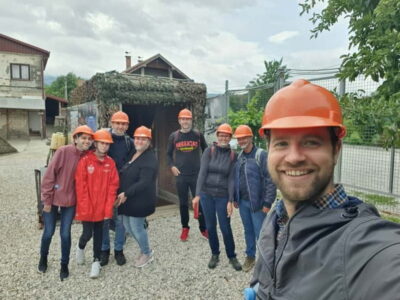
Tunnel Museum Yugoslavia War Tour with War Veteran
Read our review →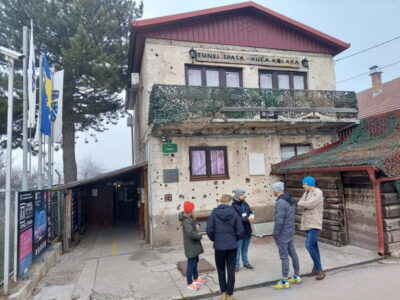
Tunnel Museum: Bosnian & Yugoslav Wars Tour with War Veteran
Read our review →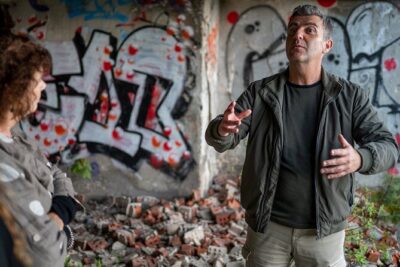
Sarajevo War Tour: A Veteran’s Story of the Siege (fees included)
Read our review →
Srebrenica Genocide Study Tour with War Veteran
Read our review →
Browse the lists this tour appears in