
Reviewed · HISTORICAL TOURS
Sarajevo: Islamic Tour | 500+ years of Glorious Heritage
Sarajevo’s Islamic sites click into place fast. What I like most is the Gazi Husrev-beg Mosque and the Gazi Husrev-beg Library, both tied to Ottoman Sarajevo and still very much in use. One watch-out, this is a walking tour with several short stops, and entrance fees are not included.
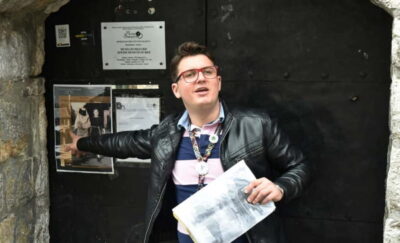
I also appreciate how the tour mixes architecture, daily life, and education, not just sightseeing. My guide, Vicky, came across as organized, humble, and genuinely focused on sharing the story behind each place, so you leave with more than photos. If you want extra time to linger inside a single building, you might feel a little rushed by the 3-hour pace.
In This Review
- Key points worth your attention
- Why this Sarajevo Islamic Tour works
- Meeting at Meet Bosnia Tours and getting your route set
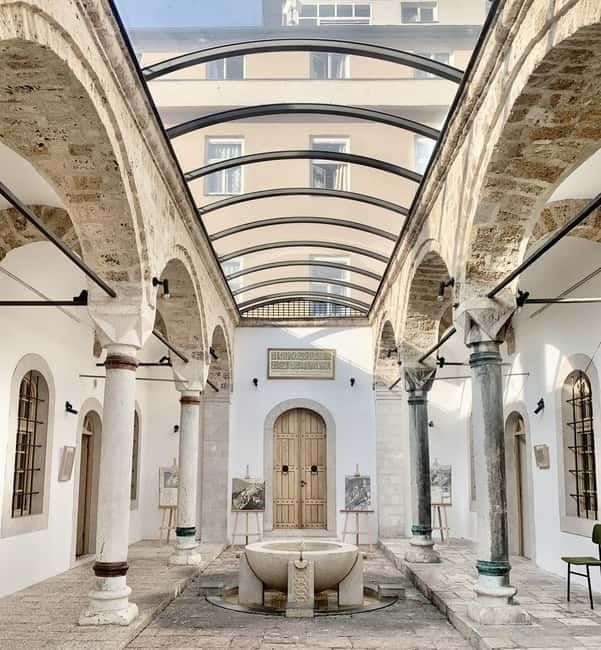
- Gazi Husrev-beg Library: a living archive you can actually see
- Gazi Husrev-beg Madrasa: learning as a place you can walk into
- Gazi Husrev-beg Mosque (1531): architecture with a working rhythm
- Baščaršija and Sebilj Fountain: city life around faith
- Emperor’s Mosque (1457): Sarajevo’s oldest place of worship
- Bezistan and the Islamic Arts Museum: the market mind and the artist mind
- Morica Han and Hanikah: caravan travel and spiritual stopovers
- Faculty of Islamic Sciences: education that shaped the city’s brain
- The itinerary-style flow: photo breaks, secret stops, and short windows of time
- Price, value, and what you should budget
- Who should book this tour
- Should you book the Sarajevo Islamic Tour?
- FAQ
- How long is the Sarajevo Islamic Tour?
- What is the price per person?
- What is included in the tour price?
- Are entrance fees included?
- What language is the live tour guide?
- Where does the tour start?
- Is the tour wheelchair accessible?
- Can I cancel and get a full refund?
- Does it offer reserve now, pay later?
Key points worth your attention
- Gazi Husrev-beg Mosque (1531), an architectural anchor for Sarajevo’s Islamic heritage
- Gazi Husrev-beg Library, founded in the 16th century and still active, with rare materials
- Baščaršija plus key city landmarks like Sebilj Fountain and the Sarajevo Clock Tower
- Emperor’s Mosque (1457), Sarajevo’s oldest place of worship
- Bezistan and historic markets that connect faith, commerce, and everyday rhythm
- A route that blends guided visits with photo stops, so you get variety without feeling stuck in one room
More history told where it happened in Sarajevo:
- East Bosnia & West Serbia UNESCO heritage day tour from Sarajevo
★ 5.0 · 55 reviews - Sarajevo Full Day Tour: History, Culture, Nature, War & Olympics
★ 5.0 · 27 reviews - Sarajevo genuine walking tour: Steps through history
★ 5.0 · 22 reviews - SARAJEVO STREET ART TOUR (art, history & mystery) – sARTajevo!
★ 5.0 · 18 reviews
Why this Sarajevo Islamic Tour works
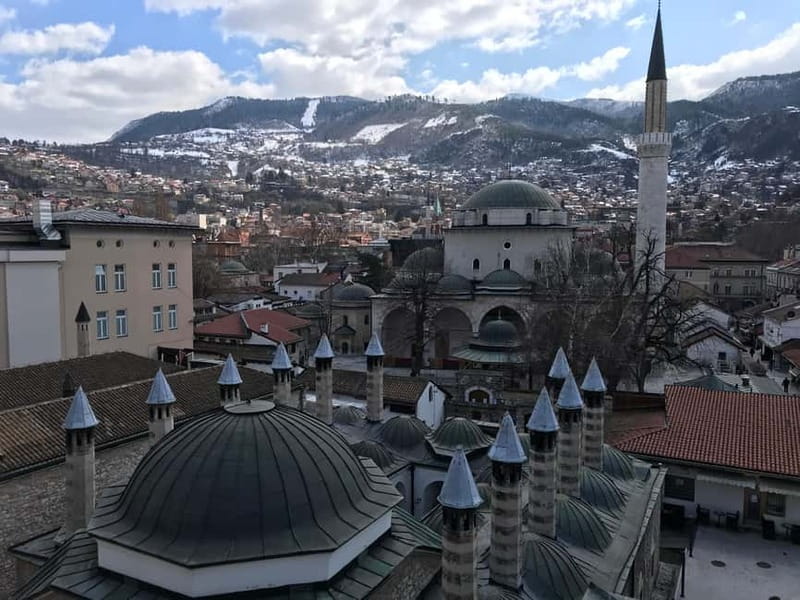
Sarajevo is one of those cities where faith shows up in stone, street layout, and daily routines. This tour does a smart job of linking that together. You’re not just looking at monuments, you’re seeing how worship, learning, and commerce lived side by side.
I like that the focus stays practical. You get named sites with dates, like the Gazi Husrev-beg Mosque (1531) and the Emperor’s Mosque (1457), plus context on what those places meant. Even if you are not a history nerd, the story connects quickly to real life in Sarajevo.
The tour also has a human feel. You spend time with a licensed English-speaking guide, and that matters on a cultural route where details can be easy to miss. With Vicky leading the way, the vibe is calm and respectful, and you get enough explanation to make each stop land.
Meeting at Meet Bosnia Tours and getting your route set
You’ll start at Meet Bosnia Tours – Sarajevo Tours, Days Out, Excursions and Activities. From there, the day is designed like a moving walking itinerary with frequent stops.
Because the duration is 3 hours, the pacing is efficient. You will have a mix of guided visits, photo breaks, and short free-time windows, so you can look closely without feeling like you’re on a sprint. If you prefer very slow sightseeing, you might want to do this tour early and then return later on your own.
A small note that can matter for comfort: since it is a walking tour, wear shoes you trust for city pavement and transitions between sites. The route is listed as wheelchair accessible, but it still helps to plan for short distances and frequent stops.
Gazi Husrev-beg Library: a living archive you can actually see
One of the strongest reasons to book this tour is the Gazi Husrev-beg Library. You do not just pass by it, you get a guided visit. This is the kind of stop that changes how you see the rest of the route, because it shifts the spotlight from buildings to what people studied and preserved.
The library was founded in the 16th century and is described as one of the oldest active libraries. It houses rare manuscripts, ancient texts, and valuable Islamic works. That phrasing matters because it is not a museum display that only exists behind glass. It is part of Sarajevo’s ongoing intellectual life.
What I love about this stop is the perspective shift. When you later see the mosque and madrasa, you can connect the dots between worship, teaching, and the written tradition. It turns the city into a connected classroom, not a list of landmarks.
Possible drawback: entrance fees are not included. If the specific library access involves a paid ticket on the day, you will want a little cash or card ready, just in case.
Other Sarajevo trips worth comparing
- Fall of Yugoslavia, Sarajevo War Tour with Tunnel of Hope Museum and Frontlines
★ 5.0 · 1,314 reviews
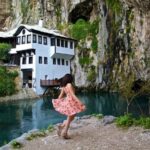
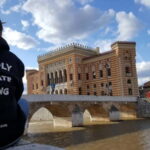
Gazi Husrev-beg Madrasa: learning as a place you can walk into
Next up is Gazi Husrev-beg’s Madrasa, established in 1537. A madrasa can sound abstract on paper, but once you stand there, it is easier to understand it as an institution built for study, discipline, and ongoing training.
You’ll get guided time here, and the guide will connect the school to the broader Islamic education tradition in Sarajevo. Even if you do not read Arabic or Ottoman-era texts, you can still follow the idea: this was where students came to pursue knowledge and devotion.
I like that the tour keeps returning to education. It is one thing to admire architecture, but it is another to learn that Sarajevo’s Islamic heritage includes a system for learning that has shaped the city’s identity. You feel that most clearly when you see the madrasa after the library.
Gazi Husrev-beg Mosque (1531): architecture with a working rhythm
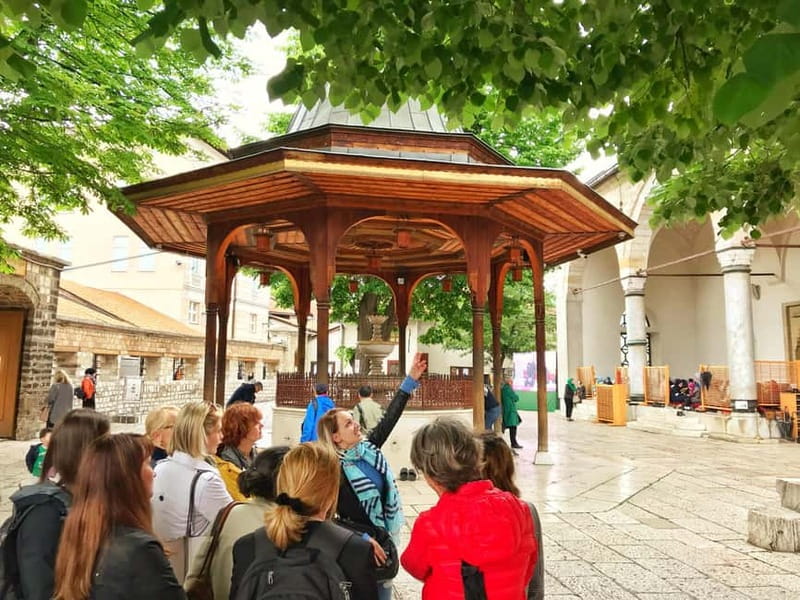
The centerpiece stop is the Gazi Husrev-beg Mosque, built in 1531. You’ll have break time, a photo stop, guided visiting time, and then some free time.
This is a good structure because mosques are not just photo locations. You need a bit of time to observe quietly, then time for the guide to point out what you would otherwise miss. The breaks make it easier to stay respectful and comfortable.
What I like most is that the tour does not treat the mosque as an isolated monument. It places it inside the wider ecosystem of the city, including the nearby library and educational spaces. That’s how you understand why Sarajevo became such a key Ottoman-era cultural center.
Practical consideration: this stop includes free time, so if you want better photos, you can use that time to position yourself. Just be mindful that prayer schedules and visitor flow can change during the day.
Baščaršija and Sebilj Fountain: city life around faith
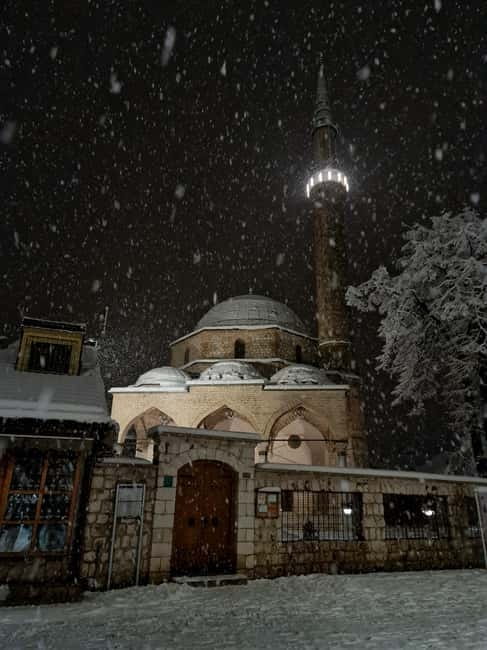
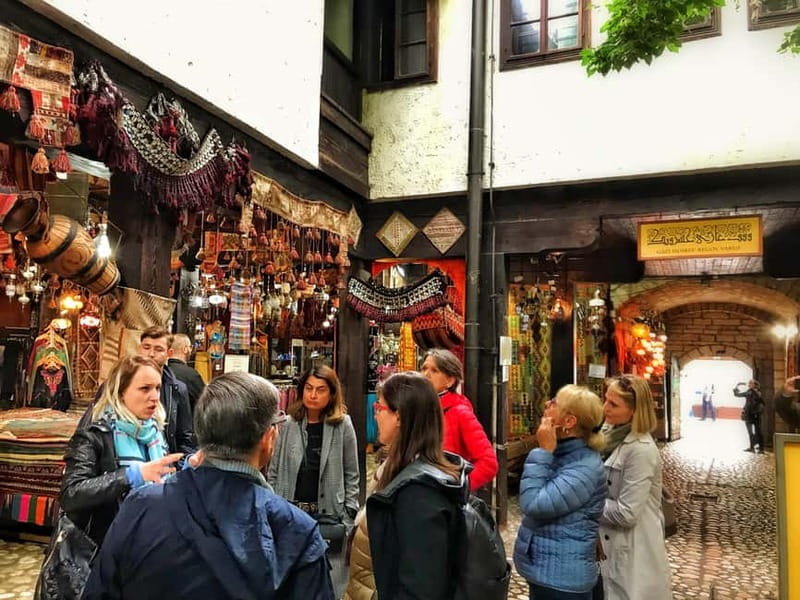
Then you shift into Baščaršija, where you get guided sightseeing plus shopping and walking time. Baščaršija is the kind of old-town area where the streets themselves feel like part of the story.
Two landmarks here are worth paying attention to because they show how Islamic culture blends into everyday city habits:
- Sebilj Fountain, tied to local legend about making a wish while sipping water
- Sarajevo Clock Tower, built in the 17th century, described as an official timekeeper for Muslims in Sarajevo, marking events and the call to prayer
I like including these because they are not only religious signals. They show how the city organizes time, movement, and daily routines. When a clock tower is linked to prayer times, you start to feel how public life follows spiritual rhythm.
For you, this is where you can slow down just enough to feel the atmosphere, then pick up souvenirs that fit the local craft scene. The tour gives you shopping time, so you are not stuck doing it later when you are tired.
Emperor’s Mosque (1457): Sarajevo’s oldest place of worship
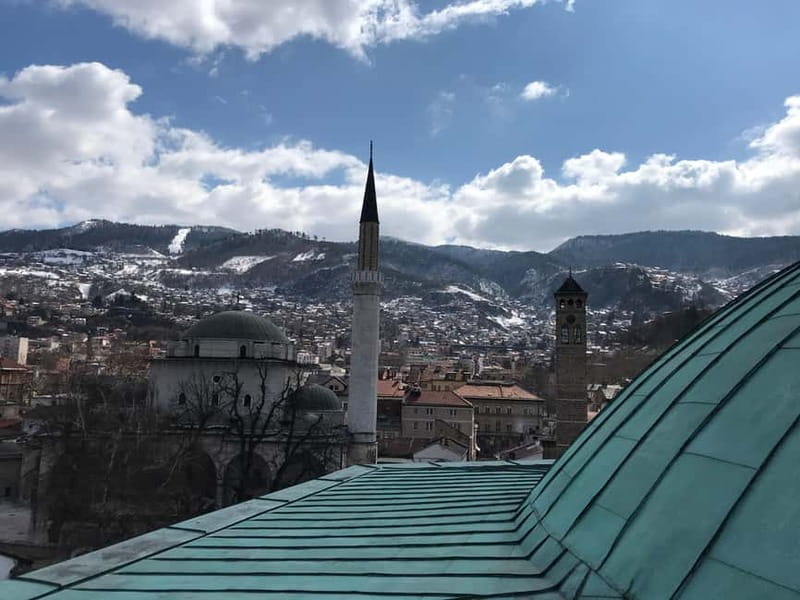
The Emperor’s Mosque, dating back to 1457, is one of the most meaningful stops. You’ll get photo time, guided viewing, and some free time.
What makes this stop powerful is the date itself. It is framed as Sarajevo’s oldest place of worship. Even if you are not tracking Ottoman versus earlier influences minute by minute, the age gives the visit extra weight.
I also appreciate how the tour positions it after time in the Ottoman-era landmarks. You feel a sense of continuity rather than a stop-and-go museum feeling. This is where Sarajevo’s long timeline becomes tangible.
If you want to get the most from your visit, use the guided time to learn what to notice first, then save the free time for your own quiet look. It is the best way to avoid rushing.
Bezistan and the Islamic Arts Museum: the market mind and the artist mind
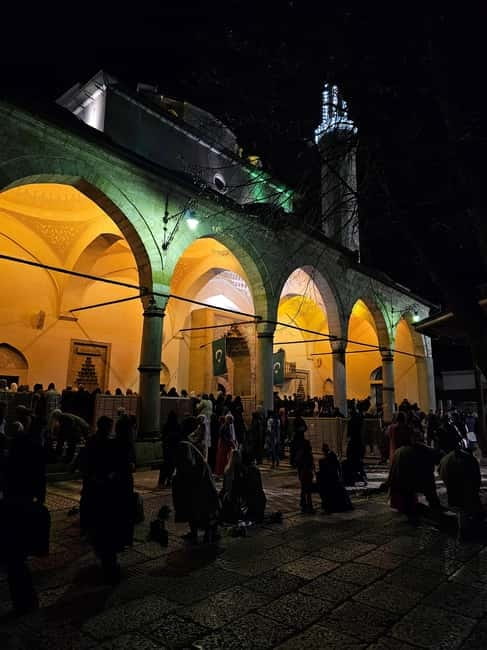
Between mosques and inns, the tour also includes key cultural and commercial stops. Two of the best examples are:
- Gazi Husrev bey’s Bezistan, a covered market where merchants once traded textiles and valuable goods
- Islamic Arts Museum, where calligraphy, ceramics, and textiles are used to narrate Sarajevo’s artistic creativity over the centuries
This is a smart pairing. Markets and arts are connected in Islamic cities because calligraphy and craftsmanship often carried social meaning, not just decorative value. When you see a covered market and then look at textiles and ceramics, it becomes easier to understand why Sarajevo built a reputation for skilled making.
I also like that the museum is included in a walking tour. Too many city tours only point at monuments. Here, you get a chance to see how artistic traditions were preserved, taught, and appreciated.
Entrance fees are not included, so plan for that if the museum requires a ticket on the day. It is usually worth budgeting for.
Morica Han and Hanikah: caravan travel and spiritual stopovers
The tour also brings you into Ottoman-era hospitality. Two names show up in the experience description:
- Morića Han, described as a medieval caravan seray, with photo time and a visit
- Hanikah, an Ottoman-era inn that provided spiritual refuge to dervishes and travelers on sacred journeys
This is one of the stops where the tour earns its theme. If you only visit places of worship, you miss the way people lived around those beliefs. Caravanserais and inns tell you how movement happened, how visitors were welcomed, and how spiritual practice met travel reality.
I like that these stops are included because they broaden what Islamic heritage means in Sarajevo. It is not only mosques and schools. It is also the infrastructure that supported community, scholarship, and spiritual life.
Faculty of Islamic Sciences: education that shaped the city’s brain
Another meaningful stop is the Faculty of Islamic Sciences. You’ll expand your knowledge here as the tour presents it as a center of Islamic education, with scholars who played a vital role in shaping Sarajevo’s intellectual landscape and preserving its heritage.
This is the part of the tour that feels most “less touristy,” in a good way. You are not only seeing old stones. You are being reminded that education continues, with institutions still active in the present day.
If you like understanding how cultures reproduce themselves through teaching, this stop will land. It connects the earlier library and madrasa to the present concept of study and scholarship.
The itinerary-style flow: photo breaks, secret stops, and short windows of time
You will notice a repeating pattern of photo stops, secret stops, pass-by points, and short guided segments. That may sound vague, but it works in practice.
Short photo moments keep your eyes engaged and give you a chance to check angles, street perspectives, and details. Guided segments give you enough explanation to make those details meaningful. And free time blocks help you reset your brain before the next doorway.
One possible drawback: if you hate uncertainty, the labeled secret stops can feel like filler. I found the overall logic holds, because the “real work” of the tour still happens at major sites like the Gazi Husrev-beg Mosque, the Emperor’s Mosque, the library, and the old-town core.
Price, value, and what you should budget
The price is $58 per person for a 3-hour English-language tour. For that time, you get a lot of guided attention across multiple key sites, plus a licensed guide and professional support.
Here’s the best way to think about value: in a heritage route, the guide is the product. Without one, you might appreciate the buildings, but you would likely miss the connection between the library, madrasa, markets, and the city’s religious calendar. This tour is priced like guided access to that network.
One cost consideration: entrance fees are not included. The tour has multiple places where tickets might be involved, like the museum. If you budget a little extra, you will feel relaxed instead of mentally doing math mid-tour.
Who should book this tour
This tour is a great fit if you want:
- A 3-hour way to understand Sarajevo’s Islamic heritage without needing to research everything yourself
- A walk that mixes mosques, education, markets, and arts
- A guide who can keep the route organized and respectful, with helpful explanations
It is also a strong choice if you like historical context tied to real city life. The tour’s inclusion of timekeeping (the clock tower), legends (Sebilj Fountain), and places for travelers (caravanserais and inns) helps you see the city as a living community.
Should you book the Sarajevo Islamic Tour?
Yes, I think you should book it if your goal is clarity. In a short time window, this tour connects the big-name sites into a story you can remember, including the Gazi Husrev-beg Mosque, the Gazi Husrev-beg Library, Baščaršija, and the Emperor’s Mosque.
I would hesitate only if you dislike walking, or if you want zero surprises because of the photo and secret stop labels. Also, if you strongly dislike paying entrance fees on the spot, set aside a bit of extra budget first.
FAQ
How long is the Sarajevo Islamic Tour?
The tour lasts 3 hours.
What is the price per person?
The price is $58 per person.
What is included in the tour price?
It includes a licensed guide, professional support, friendly access, and learning about Islam in Bosnia and Sarajevo.
Are entrance fees included?
No, entrance fees are not included.
What language is the live tour guide?
The tour is guided in English.
Where does the tour start?
You meet at Meet Bosnia Tours – Sarajevo Tours, Days Out, Excursions and Activities.
Is the tour wheelchair accessible?
Yes, it is listed as wheelchair accessible.
Can I cancel and get a full refund?
You can cancel up to 24 hours in advance for a full refund.
Does it offer reserve now, pay later?
Yes, there is a reserve now & pay later option, letting you book your spot and pay later.
If you want, tell me what month you’re going and what you care about most (mosques, markets, art, or education), and I’ll suggest how to plan your other Sarajevo time around this 3-hour walk.
Most recently added near Sarajevo
- Sarajevo : Private Walking Tour With A Guide (Private Tour)★ 5.0 · 1 review
- Sarajevo: Srebrenica – A Journey of Remembrance★ 5.0 · 1 review
- Transfer tour Sarajevo-Dubrovnik★ 5.0 · 1 review
- Bunker: Tito’s Secret & Boracko Lake Tour from Sarajevo★ 5.0 · 1 review
- Svrzo House Entrance Ticket★ 5.0 · 1 review
- Thrilling Rafting Adventure on the Neretva River with Lunch★ 5.0 · 1 review
- Private transfer (FROM-TO) Sarajevo – Dubrovnik★ 5.0 · 1 review
- Jewish Tour★ 5.0 · 1 review
Historical Tours, compared.
East Bosnia & West Serbia UNESCO heritage day tour from Sarajevo
Read our review →
Sarajevo Full Day Tour: History, Culture, Nature, War & Olympics
Read our review →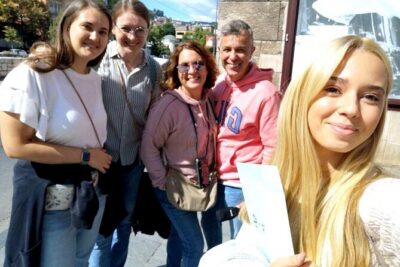
Sarajevo genuine walking tour: Steps through history
Read our review →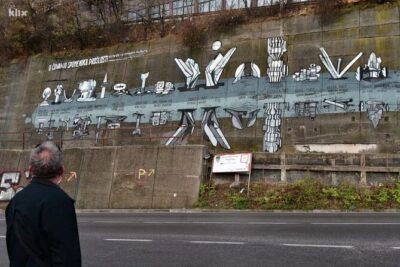
SARAJEVO STREET ART TOUR (art, history & mystery) – sARTajevo!
Read our review →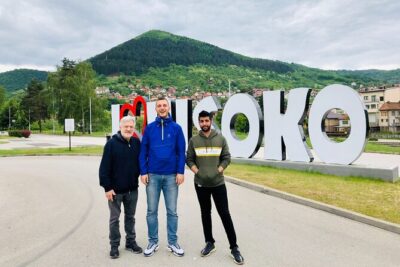
BOSNIAN PYRAMIDS TOUR (nature, history & archeology)
Read our review →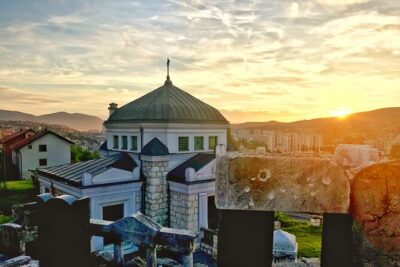
Browse the lists this tour appears in