
Reviewed · SARAJEVO TOURS
Sarajevo: Franz Ferdinand Assassination & the Start of WWI
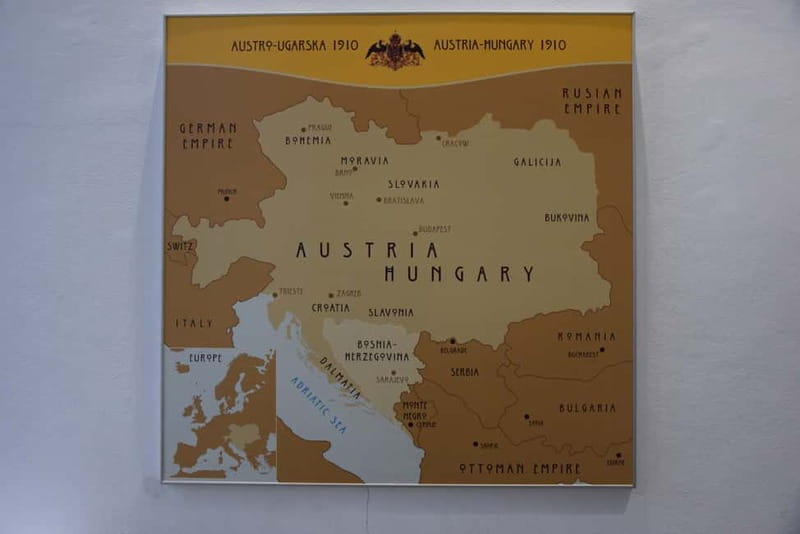
Sarajevo makes history feel close. This tour takes you to the Latin Bridge area where Franz Ferdinand was assassinated, then connects the scene to the Austro-Hungarian Sarajevo of 1914.
I love the stop at the Museum 1878-1918, with original Austro-Hungarian period items, and I like how the guides keep things responsive. Names like Nadeem and Fariz come up in real tour stories for their ability to answer questions and adapt when weather cuts down the walking.
One possible consideration: at only 2 hours, the pace is focused. If you want to linger, you may feel a time squeeze, especially on rainy days when routes get shortened.
In This Review
- Key highlights you should clock fast
- A 2-hour walk that starts at Latin Bridge
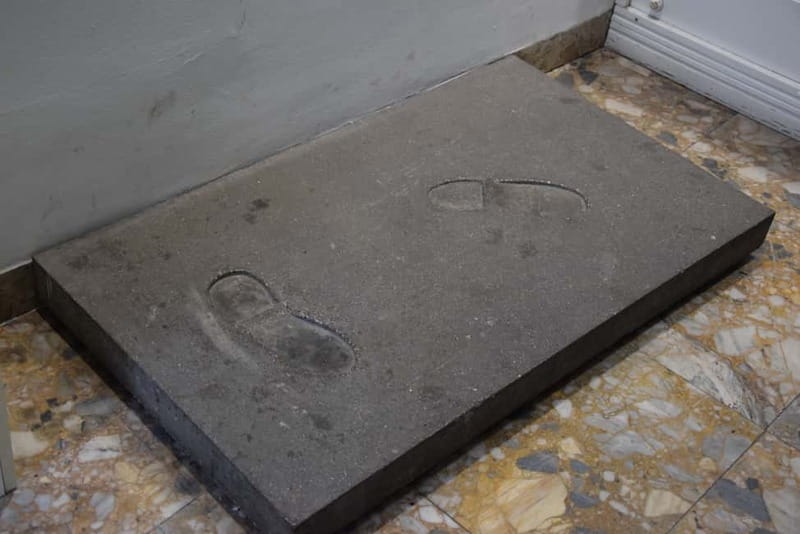
- Standing where Franz Ferdinand was assassinated
- Museum 1878-1918: original objects, not just dates
- Young Bosnia and Princip: motives in plain language
- Austro-Hungarian Sarajevo landmarks that frame 1914
- Political tensions that led to World War I
- What the guide time actually gives you
- Price and value: is $29 for 2 hours fair?
- Should you book this Sarajevo Franz Ferdinand tour?
- FAQ
- How long is the Sarajevo Franz Ferdinand assassination tour?
- What is included in the price?
- How much does it cost per person?
- Where does the tour meet?
- Is the tour in English?
- What museum do we visit?
- Does the tour include the assassination location near Latin Bridge?
- Can I cancel for a refund?
- Are there multiple starting times?
Key highlights you should clock fast
- Stand at the exact assassination location near Latin Bridge and see how the city layout frames the event.
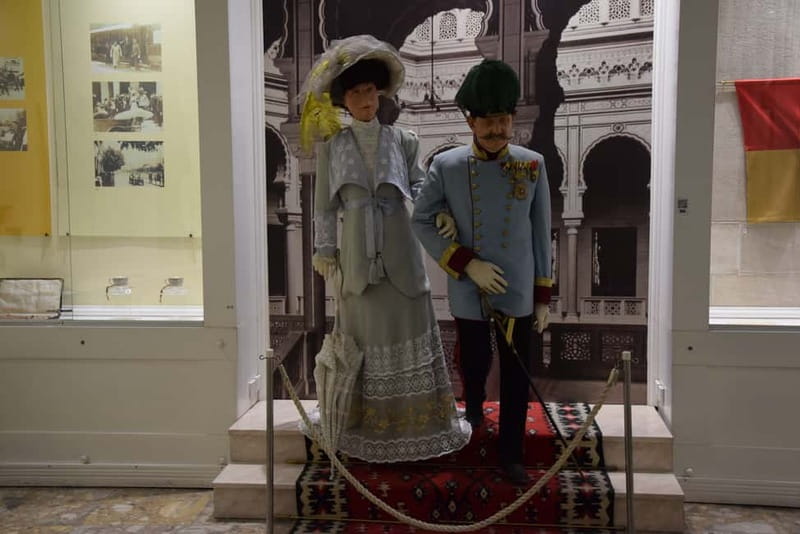
- Museum 1878-1918 with original Austro-Hungarian artifacts tied to the era.
- Gavrilo Princip and the Young Bosnia movement, explained with the political tensions of 1914.
- Austro-Hungarian Sarajevo landmarks, used as real story anchors, not just sightseeing stops.
- World War I causation, focused on how one event triggered a wider chain reaction.
Other 1914 sites in Sarajevo:
- The last day of Franz Ferdinand Walking Tour
★ 5.0 · 10 reviews - Sarajevo: Start of The First World War Tour
★ 5.0 · 5 reviews - Sarajevo Assassination: The Spark of World War I
★ 5.0 · 4 reviews
A 2-hour walk that starts at Latin Bridge
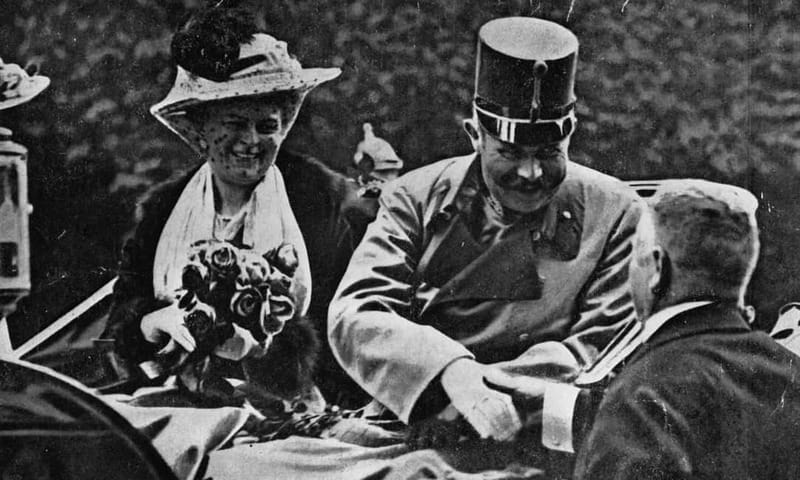
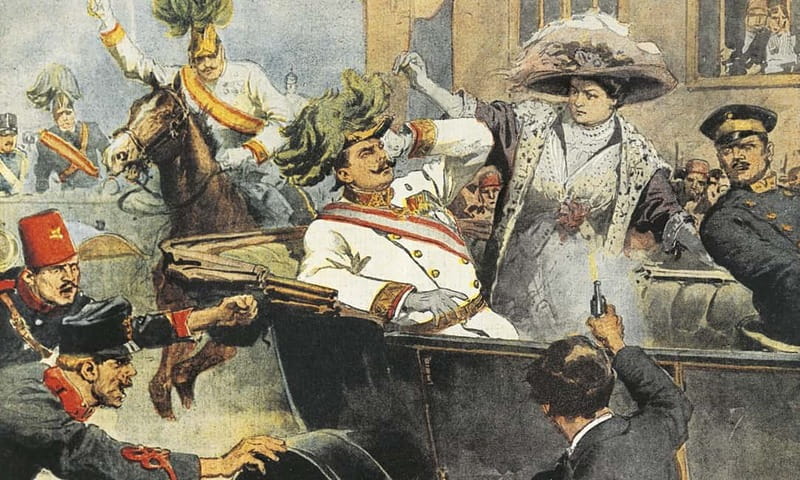
If you like history that feels specific, Sarajevo delivers. This tour is built around one moment that changed everything, the assassination of Archduke Franz Ferdinand in 1914, carried out near the Latin Bridge area. The key here is that you are not watching a video recap. You stand where it happened, and the guide stitches together what the streets and institutions were doing right before the shot.
You also get more than the assassination itself. The focus stays on the Austro-Hungarian context of Sarajevo, the tensions building in the region, and the political logic behind the actions of Gavrilo Princip and the Young Bosnia movement. That matters because you walk away understanding why the world reacted so fast. It was not just one dramatic crime. It was the ignition point for an existing stack of pressures.
The pacing is tight by design. You are in and out in about 2 hours, which is a good length for most first-time visitors who want real context without turning the whole day into a classroom.
And yes, weather can shape the experience. I like that guides on this tour seem comfortable adjusting the route. If rain rolls in hard, you still get the core parts: the key street stops and the museum time.
Standing where Franz Ferdinand was assassinated
The heart of the tour is standing at the exact assassination location near the Latin Bridge. That is where the story stops being abstract. You can look at the route, the nearby urban rhythm, and the way the city streets connect. It is easier to grasp how quickly events unfolded once you are physically oriented.
What I find useful is how the guide frames the site as a hinge between local Sarajevo life and larger European politics. The bridge and nearby streets are treated like more than scenery. They are part of the operational reality of 1914 Sarajevo.
You also gain a clearer mental map of where the event fits into the Austro-Hungarian era. The assassination is the headline, but the tour keeps returning to the political atmosphere around it, including the occupation and the pressures faced by different communities.
A practical note: if you are taking photos, plan on shorter moments at each spot. The guide will keep moving so everyone stays on time, and that helps you see the full arc of the story rather than spending all your attention on one angle.
Museum 1878-1918: original objects, not just dates
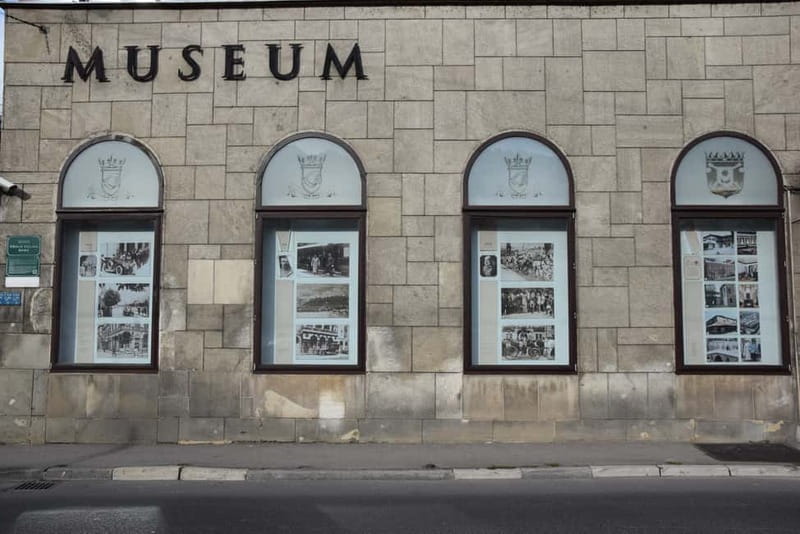
After the street time, you head into the Museum 1878-1918. This is included, and the entrance fee is part of the price, with ticket-line skipping built in. That small detail matters. You avoid the annoying pause that can eat your limited two hours.
The museum is where the tour shifts from the event to the surrounding system. You get original items from the Austro-Hungarian period, which makes the timeframe feel grounded. Instead of learning 1914 as a random year, you start seeing how the occupation period shaped Sarajevo’s institutions and daily life.
The guide uses this museum stop to connect ideas you heard outside. Gavrilo Princip is not just a name. Young Bosnia is not just a slogan. You see how political ideas formed in that environment and why some people saw radical action as a path forward.
One detail that comes up in the real tour experience: there can be a VR component available at the museum. If you enjoy interactive exhibits, it can add another layer to the story without turning the visit into a long detour. Either way, this museum stop is the reason this tour feels more complete than a quick assassination walk.
Other Sarajevo trips worth comparing
- Fall of Yugoslavia, Sarajevo War Tour with Tunnel of Hope Museum and Frontlines
★ 5.0 · 1,314 reviews
Young Bosnia and Princip: motives in plain language
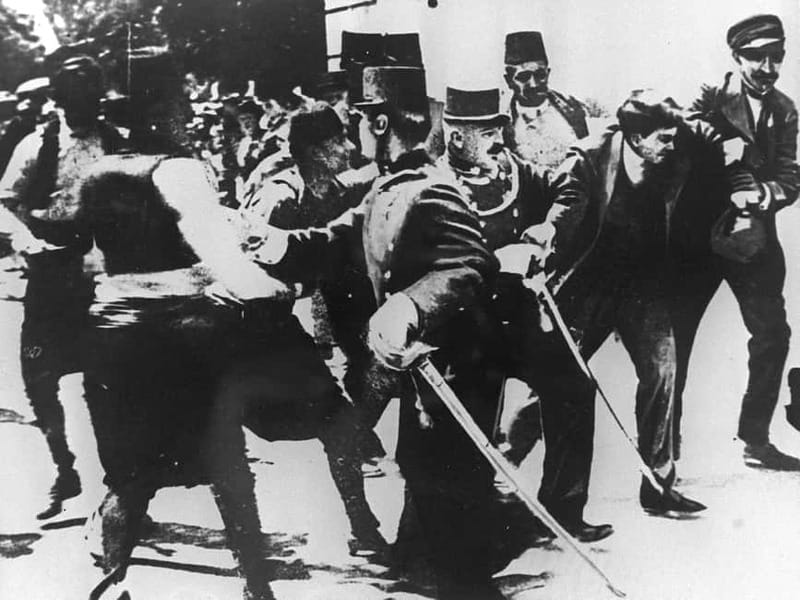
You do not just hear what happened. You learn why the assassination mattered to the people involved. The tour explains the political motives and the role of Gavrilo Princip and the Young Bosnia movement, and it places them inside the broader tensions of 1914.
I like this approach because it avoids two extremes. It does not treat the event like an isolated act of violence with no causes. At the same time, it does not turn it into a political lecture that forgets the human stakes. You get the threads that connect nationalism, occupation, and the sense that the region was headed toward confrontation.
Princip and Young Bosnia get handled as part of a wider struggle, not as villains in a simple story. That is important for Sarajevo, because the city has layers, and those layers are exactly why the assassination was such a spark. The guide helps you connect the local setting to Europe’s atmosphere right before World War I.
If you are the kind of traveler who usually skips “timeline” explanations, this section is still worth your time. The goal is comprehension, not memorization.
Austro-Hungarian Sarajevo landmarks that frame 1914
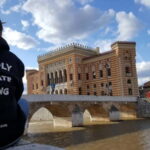
Between Latin Bridge and the museum, the tour walks through key Austro-Hungarian landmarks that shaped Sarajevo. This is where you start to understand how the occupation era left physical marks on the city.
Instead of treating the itinerary as a checklist, the guide uses landmarks as story anchors. You learn what each space represents and how the urban environment reflects power structures. That is how the tour makes the assassination feel less like a lone dramatic incident and more like the result of a built-in system.
This is also where the experience becomes more satisfying for non-specialists. Even if you do not know European history in detail, you can still enjoy the walk. You get city bearings fast, and the landmarks give you something visual to attach to the story.
One more reason this section works: it helps you notice how Sarajevo has changed over time while still carrying traces of Austro-Hungarian rule. That makes the tour a better use of time than jumping straight to the most famous single-photo spots.
Political tensions that led to World War I
The tour’s big promise is insight into the political tensions that led to World War I. It does this by linking the assassination to the chain reaction that followed.
You walk away understanding the assassination as a trigger, not a starting from scratch event. European politics already had fault lines, and the assassination provided a reason and a mechanism for those tensions to escalate.
The guide talks about the significance of the Austro-Hungarian occupation in Bosnia and Herzegovina, and that piece helps you understand why the event could not stay local. Sarajevo was not operating in isolation. It was tied into rivalries and alliances that stretched across the continent.
This section is also where the guide’s storytelling quality matters. Real tour reports highlight guides like Fariz, Aid, Brian, and Bojan for their ability to answer questions and add extra context during the walk. If you like to ask why something happened, this tour style tends to reward that curiosity.
What the guide time actually gives you
You are paying for a professional, English-speaking guide, plus museum entrance. That is the foundation. But the real value shows up in how the guide handles questions and pacing.
The guide matters because the story can get heavy fast. WWI is a big subject with lots of moving parts. You want someone who keeps it clear. The strong reviews point to guides who explain topics in an organized way and stay flexible when rain limits walking.
You also get a guided structure that helps you avoid the common travel mistake of reading too much on your phone while walking. Here, you get the orientation from the guide, and then you can look around with purpose.
You might find the group moves at a comfortable pace for a city walk. The walking time is enough to connect the dots, but short enough that you still feel fresh for the museum and the rest of your day.
If you are visiting in cooler or wet weather, plan for it. Stories mention heavy rain and even freezing conditions. Bring a layer that keeps you comfortable, and consider a small umbrella if you have one. The tour can adapt, but you will enjoy it more if you arrive prepared.
Price and value: is $29 for 2 hours fair?
At $29 per person for a 2-hour tour, this is a good deal if you value interpretation over just seeing monuments. The price includes a professional English-speaking guide and the entrance fee to the Museum 1878-1918. It also includes skipping the ticket line, which helps keep the schedule from dragging.
Here is the value logic I use: you would normally pay for museum admission and spend time figuring out context on your own. This tour bundles both. For many visitors, the museum is the biggest cost, so getting it included makes the price feel sensible rather than inflated.
It is also a smart length. Two hours is often enough to build understanding without burning your whole day. You can take the tour in the morning or early afternoon, then use the rest of your time for Sarajevo’s other neighborhoods and viewpoints.
Who gets the best match from this tour:
- History lovers who want WWI context without a long day
- Travelers who like guided street walks tied to specific events
- Anyone curious about Gavrilo Princip, Young Bosnia, and Austro-Hungarian Sarajevo
- Visitors who want an English-speaking guide and a museum stop without extra planning
Should you book this Sarajevo Franz Ferdinand tour?
I think you should book it if you want a focused, meaningful Sarajevo experience built around the assassination site and the Austro-Hungarian context. The Latin Bridge stop gives you the physical anchor, and the Museum 1878-1918 adds the period details you cannot get from street photos alone.
Book it sooner rather than later if you are excited about understanding how Gavrilo Princip and Young Bosnia connect to the broader tensions leading to World War I. And if you are traveling on a day that might be rainy, you will probably appreciate that the guides seem ready to adjust the walking portion.
Skip it only if you hate structured tours or you need lots of free time to wander at your own pace. With its short duration, you are there to learn the story efficiently, not to drift around indefinitely.
FAQ
How long is the Sarajevo Franz Ferdinand assassination tour?
The tour lasts about 2 hours.
What is included in the price?
The price includes a professional English-speaking guide and entrance fee to the Museum 1878-1918. It also skips the ticket line.
How much does it cost per person?
It is listed at $29 per person.
Where does the tour meet?
The meeting point is the Sarajevo Insider Office at Zelenih beretki 30, Sarajevo 71000.
Is the tour in English?
Yes, the tour is available in English.
What museum do we visit?
You visit the Museum 1878-1918, focusing on the Austro-Hungarian period, with original items from that time.
Does the tour include the assassination location near Latin Bridge?
Yes. You stand at the exact location of the assassination near Latin Bridge.
Can I cancel for a refund?
Yes. Free cancellation is available up to 24 hours in advance for a full refund.
Are there multiple starting times?
There are starting times based on availability, and you can check availability before reserving.
Most recently added near Sarajevo
- Sarajevo : Private Walking Tour With A Guide (Private Tour)★ 5.0 · 1 review
- Sarajevo: Islamic Tour | 500+ years of Glorious Heritage★ 5.0 · 1 review
- Sarajevo: Srebrenica – A Journey of Remembrance★ 5.0 · 1 review
- Transfer tour Sarajevo-Dubrovnik★ 5.0 · 1 review
- Bunker: Tito’s Secret & Boracko Lake Tour from Sarajevo★ 5.0 · 1 review
- Svrzo House Entrance Ticket★ 5.0 · 1 review
- Thrilling Rafting Adventure on the Neretva River with Lunch★ 5.0 · 1 review
- Private transfer (FROM-TO) Sarajevo – Dubrovnik★ 5.0 · 1 review
Sarajevo Tours, compared.
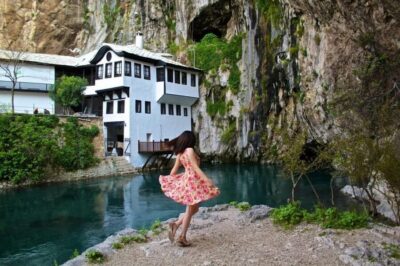
Mostar, Konjic, Blagaj Tekke, Pocitelj & Waterfall
Read our review →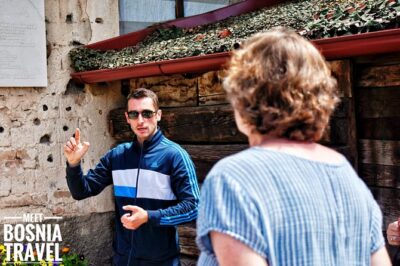
Fall of Yugoslavia, Sarajevo War Tour with Tunnel of Hope Museum and Frontlines
Read our review →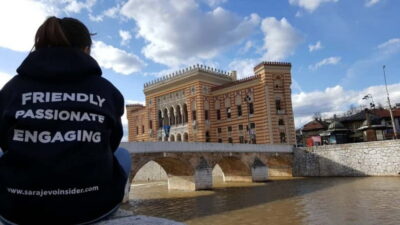
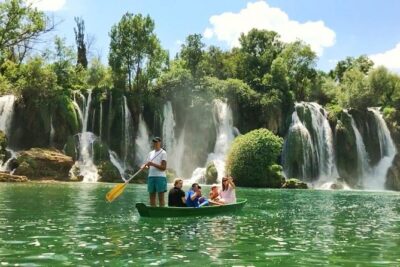
Mostar, Konjic, Sufi House, Pocitelj & Kravice Falls
Read our review →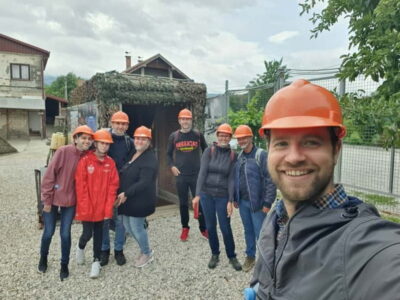
Tunnel Museum Yugoslavia War Tour with War Veteran
Read our review →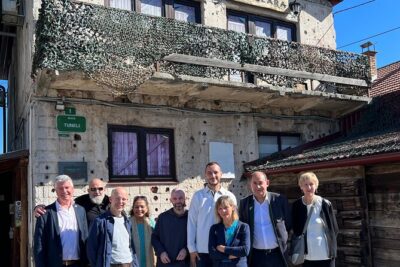
ROSES OF SARAJEVO (Official WAR + CITY tour)- Story of a Survivor
Read our review →
Tunnel Museum: Bosnian & Yugoslav Wars Tour with War Veteran
Read our review →Browse the lists this tour appears in