
Reviewed · TUNNEL OF HOPE & SIEGE SITES
Sarajevo 1425 days under the siege – War Tour
Sarajevo tells its story through concrete and steel. What makes this tour compelling is that it guides you past the big, heavy facts, and into the lived human scale of the siege, with personal storytelling from guides such as Emina Koso and Enes. I especially like the Tunnel of Hope section, including a walk inside the tunnel and a short film that helps you place what you are seeing. One thing to plan for is that the Tunnel of Hope Museum ticket costs extra at €10 per person.
This is a 3 to 4 hour format with hotel pickup and drop-off in an air-conditioned vehicle, bottled water, and a professional guide. You will also get a mobile ticket, and the group size is capped at 50, so it stays manageable while you move between key sites around the city.
In This Review
- Key highlights you should care about
- How the tour works in real life, and what it sets up
- Tunnel of Hope Museum and the 25 m walk under Sarajevo
- Sniper Alley, the child memorial, and the hard context on the route
- Trebević Vidikovac viewpoints from 1,230 m
- The Olympic bobsleigh and luge track, plus cable car views
- Jewish Cemetery Sarajevo, a battleground and a major historical site
- What the $48.39 price buys you, and where the extra costs show up
- The guides make or break this kind of tour
- Who this tour suits best
- Should you book Sarajevo 1425 days under the siege?
- FAQ
- How long is the Sarajevo War Tour?
- What does the tour cost?
- Is hotel pickup and drop-off included?
- Do I need to pay for the Tunnel of Hope?
- Where does the tour start and end?
- Is the tour offered in English?
- How big is the group?
Key highlights you should care about
- A 25-meter walk through the Tunnel of Hope, plus a museum movie and a map of enemy lines to give you context fast
- Personal siege stories from guides who lived it, not just dates and definitions
- Trebević Vidikovac viewpoints from 1,230 m, where the scale of Sarajevo becomes obvious
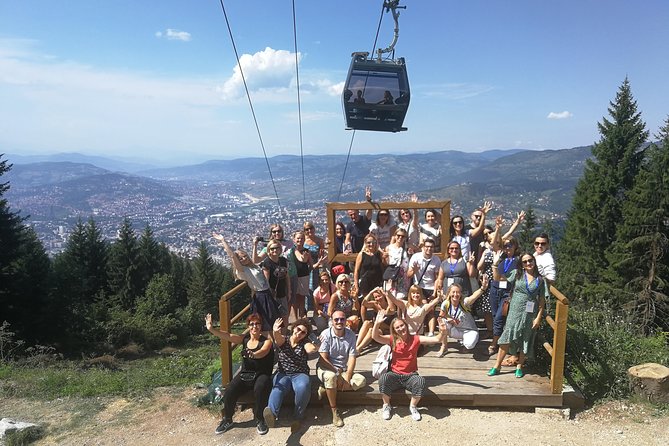
- 1984 Olympic bobsleigh and luge track areas plus strong photo angles, including views connected to the cable car reopening
- Jewish Cemetery Sarajevo, a major historical site tied to conflict during the siege
- Memorial focus on the 1621 murdered children, with a bronze and glass design that is hard to forget
Other siege-era sites around Sarajevo:
- Fall of Yugoslavia, Sarajevo War Tour with Tunnel of Hope Museum and Frontlines
★ 5.0 · 1,314 reviews - Sarajevo: Tunnel Museum Yugoslavia War Tour with War Veteran
★ 5.0 · 1,111 reviews - Sarajevo: Tunnel of Hope Tour – Survival and Resilience
★ 4.8 · 630 reviews - Tunnel Museum: Bosnian & Yugoslav Wars Tour with War Veteran
★ 5.0 · 551 reviews
How the tour works in real life, and what it sets up
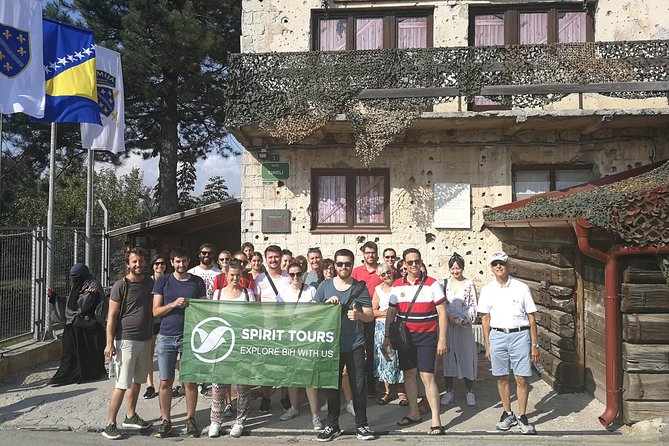
This is one of those Sarajevo experiences where the logistics matter because the subject matter is intense. The tour runs about 3 to 4 hours, and it is designed around a tight loop: you start and end at Ferhadija (with an option for free hotel pickup), ride between locations in an air-conditioned vehicle, and then get short, focused stops.
I like that it gives you structure rather than scattering you across the city with a loose plan. You get a first orientation on the way to the Tunnel area, then you move into the physical evidence of the siege, then you come up for viewpoints where you can see how Sarajevo sits against the surrounding hills. That sequencing helps you understand why people survived the way they did, and why the fighting had such an everyday, close-up presence.
Also, the pacing is practical. Several stops are short by design, which means you are not stuck in long lines or standing around too long, and you can still take photos and absorb what you see.
Tunnel of Hope Museum and the 25 m walk under Sarajevo
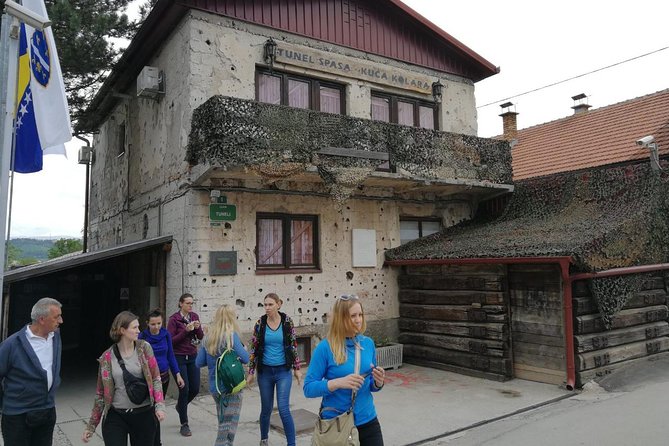
The heart of this tour is the Tunnel of Hope stop, and it is easy to see why it is the most popular part. You start with an introduction from your guide and a quick orientation, then you move into the Tunnel of Hope Museum. Expect a museum experience that does more than show objects. You will see a map of Sarajevo under the siege with enemy lines, watch a 17-minute movie, and then go to the exhibition areas before you walk the tunnel itself.
The tunnel walk is the emotional and physical payoff. The passage is 25 meters long, and walking it turns abstract history into something your body can understand. It is not just a symbol. It is a real corridor that people used during a long blockade, and that detail is what makes this stop hit so hard.
A key note for your budget: the Tunnel of Hope Museum admission is not included in the tour price. It costs €10 per person, so if you are trying to keep total costs tight, add it to your planning from the start. If you dislike surprises, this is the one that matters most.
One more detail worth knowing: the timing at this stop is generous, about 1 hour 30 minutes. That is usually enough time to watch the film, see the main exhibition areas, and still have a moment to take photos and look around without feeling rushed.
Sniper Alley, the child memorial, and the hard context on the route
On the drive toward the tunnel area, the tour does something smart. It does not wait until you reach the museums to start explaining the siege. Your guide points out war-related landmarks along the way, including Sniper Alley and a memorial dedicated to brutally murdered children.
That matters because it shapes how you interpret everything that follows. If you just arrive at memorials cold, you can miss the specific realities they represent. But when your guide sets the scene before you enter the major sites, you start seeing patterns: where civilians were exposed, how daily movement became dangerous, and why the siege is remembered through names and objects rather than just statistics.
The tour also highlights a memorial design dedicated to the 1621 murdered children. The memorial is made of bronze and glass. The sculpture symbolizes a mother trying to protect her children, while a bronze ring represents a strong line of defense. Even if you are not normally a memorial person, the symbolism is direct enough that you will understand it quickly, and it does not feel decorative.
This part of the day is not light. It is reflective, and the tone stays serious. If you want jokes and casual sightseeing energy, this may not be your vibe. But if you want a clear, respectful understanding of what happened and why it still shapes Sarajevo, this is where the tour earns its emotional weight.
Other Sarajevo trips worth comparing
Trebević Vidikovac viewpoints from 1,230 m
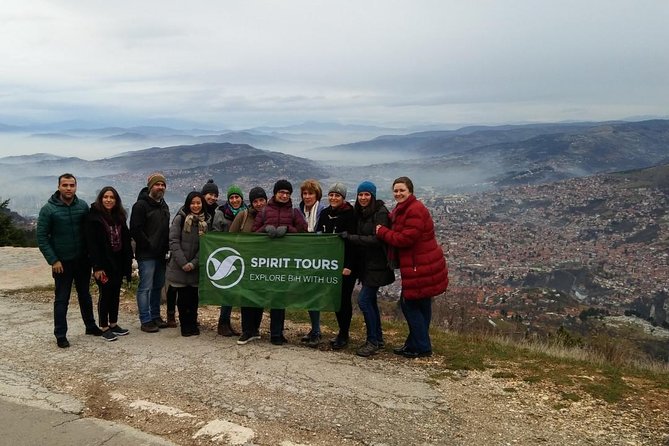
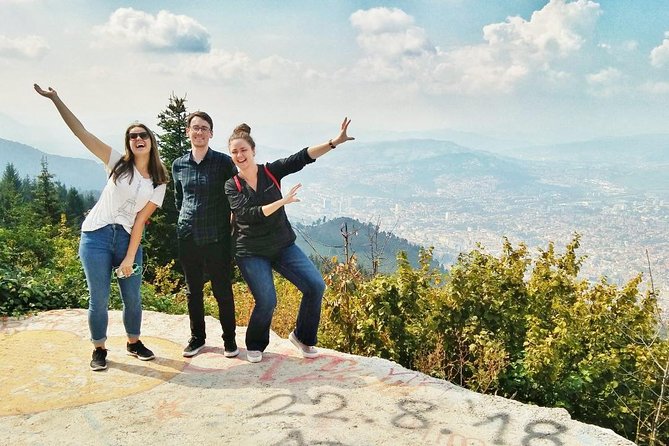
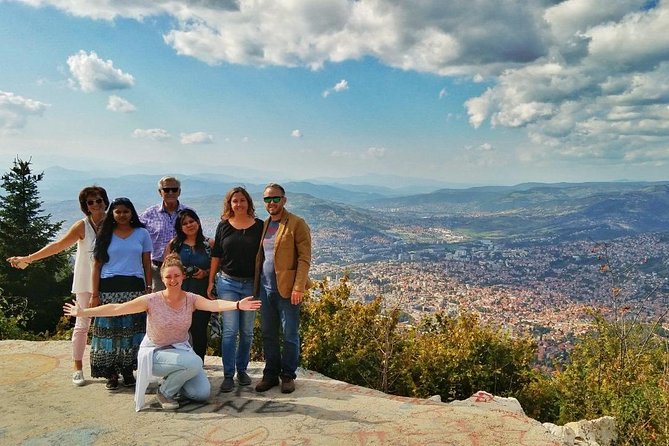
After the tunnel, the tour shifts from underground survival to city-scale perspective. You travel to Trebević Vidikovac, at about 1,230 meters above sea level, and the payoff is a big panoramic look at Sarajevo.
I like this stop because it helps you connect the siege story to geography. Your guide explains enemy lines and war stories in a way that makes the terrain make sense. From up here, Sarajevo stops being a map on your phone and starts becoming a place under pressure, shaped by hills, routes, and distances.
This is also a practical photo stop. You have about 20 minutes here, which is enough time to find a good angle, take a few photos, and then move on without overheating or losing time. The main drawback is weather. Elevated viewpoints can feel different quickly, so plan to dress for changing conditions.
The Olympic bobsleigh and luge track, plus cable car views
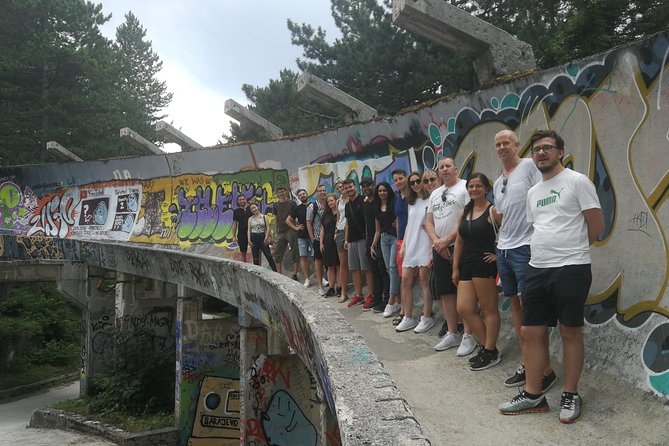
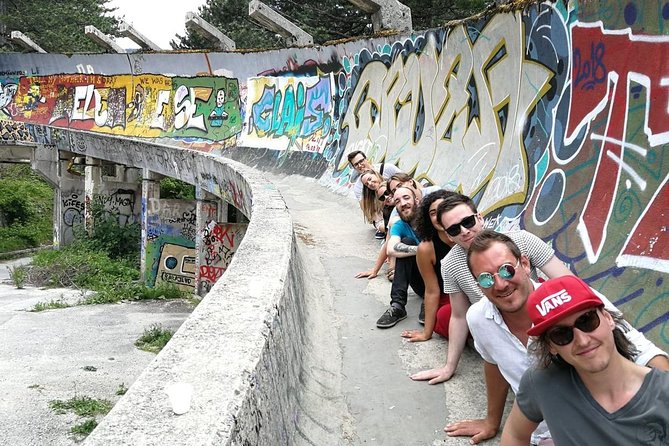
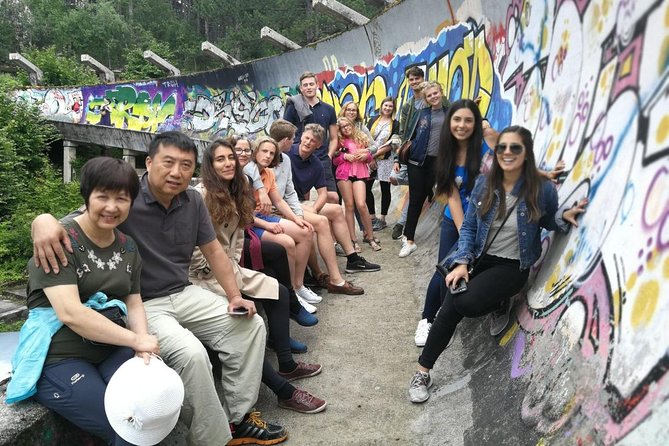
Next comes a location that mixes history with a strange kind of atmosphere. You visit the Sarajevo Olympic bobsleigh and luge track, connected to the Winter Olympic Games hosted by Sarajevo in 1984.
What makes this stop memorable is how it reads in your mind. You are walking in an area tied to sport and international attention, but it is also described as one of the most beautiful abandoned places in the world. The contradiction helps you feel the break between a city’s normal plans and the reality that took over.
While you are moving toward the track, your guide points out views connected to the cable car, including the fact that it was reopened on 6 April 2018. That detail matters for two reasons. First, it gives you a sign of continuity, not just ruin. Second, it gives you another visual anchor so you can orient yourself between stops and connect what you see to how Sarajevo has changed.
The bobsleigh track stop lasts about 30 minutes, and it is typically straightforward: you walk the area at a comfortable pace, listen to the guide’s explanation, and get photo time. If you like taking pictures, this is one of the easiest stops to get good ones without racing the clock.
Jewish Cemetery Sarajevo, a battleground and a major historical site
The tour’s final major site focus is the Jewish Cemetery Sarajevo. This stop is short, about 15 minutes, but it carries real historical weight.
According to the tour information, the cemetery is the second largest in Europe and a candidate for UNESCO World Heritage title. More importantly for the siege context, the cemetery became a battleground between Bosnian Army and Serbian forces during the war. That means you are not only visiting a resting place, you are also seeing how conflict pressed into sacred and cultural spaces.
Because the stop is brief, I suggest treating it as a moment of comprehension rather than a long wander. Let the guide’s framing do its work, then spend your remaining time looking carefully. It is the kind of place where quick movement can feel disrespectful, so the short time window is actually a good fit.
What the $48.39 price buys you, and where the extra costs show up
At $48.39 per person for a 3 to 4 hour tour, the value depends on what you care about. If you want major landmarks plus a guide who explains what you are looking at, this price is reasonable, especially because it includes a lot of practical comforts.
Included in the tour:
- Air-conditioned vehicle for the between-site rides
- Private transportation
- Bottled water
- Professional guide
- Hotel pickup and drop-off
Those inclusions matter more in Sarajevo than you might expect. Distances and timing can make a self-guided day feel long, and the subject matter also benefits from having someone interpret what the city looks like. The tunnel, in particular, is much easier to understand when your guide points out what to notice and why.
The one extra cost you must plan for is the Tunnel of Hope Museum ticket (€10 per person). Everything else in the stop list is marked as free. So if you want to minimize surprises, your budget should roughly be the tour price plus the tunnel admission.
The group size cap (maximum 50) is also part of the value. It is not a huge crowd situation, and it helps your guide keep the pace and explanations coherent.
The guides make or break this kind of tour
A war tour lives or dies on the human delivery. One of the most praised aspects here is that the guides bring personal memory into the storytelling. Names like Emina Koso and Enes come up, and the common thread is that they speak from the kind of experience you cannot replace with textbook summaries.
That is why the tone often lands as factual but human. This is not a comedy day. You should expect a reflective mood, and you should be ready for stories that can leave a mark. On the bright side, that is also why it is often described as essential. You come away feeling like Sarajevo is not just a backdrop, it is the subject.
If you are booking with a specific expectation, set it correctly. Think learning, listening, and careful looking. You do not have to be emotional in advance, but it helps to approach the day with respect for the people behind the landmarks.
Who this tour suits best
This is a strong fit if:
- you want a guided introduction to Sarajevo’s siege through meaningful stops
- you appreciate context before you reach the main monuments
- you like a mix of interpretation and viewpoints, not only museums
- you want hotel pickup so you can keep the day simple
It is less ideal if:
- you want a casual sightseeing day with lots of upbeat energy
- you dislike paying extra on top of the headline price (because the tunnel ticket is additional)
- you are uncomfortable with the emotional subject matter of civilian suffering
One practical tip for your planning: if you are considering a private variation, double-check that what you booked matches the format you expect. There was at least one unhappy experience reported about confusion between public and private arrangements. That is not the majority of feedback, but it is worth confirming before you go.
Should you book Sarajevo 1425 days under the siege?
Yes, if you want an efficient, well-organized way to understand the siege, and you care about hearing the story from a guide who can put it into human terms. The combination of the Tunnel of Hope walk, viewpoint stops around Trebević, the Olympic track area, and the memorial focus gives you both physical evidence and city-scale perspective in one half-day window.
I would book it if your goal is to leave Sarajevo with more than photos. You will come away with a clearer sense of why specific locations matter, and you will feel the emotional purpose of the memorials, especially the tribute to the 1621 murdered children.
If your schedule is tight, this tour is still a manageable commitment. Just budget for the Tunnel of Hope museum admission (€10), and dress for outdoor viewpoints, since that part of the day depends on conditions.
FAQ
How long is the Sarajevo War Tour?
The tour lasts about 3 to 4 hours in total.
What does the tour cost?
The price is $48.39 per person.
Is hotel pickup and drop-off included?
Yes. Pickup and drop-off from your Sarajevo hotel are included, and there is also free pickup from the office meeting point.
Do I need to pay for the Tunnel of Hope?
Yes. Admission to the Tunnel of Hope Museum is not included and costs €10.00 per person.
Where does the tour start and end?
The meeting point is Ferhadija, 71000 Sarajevo. The activity ends back at the same meeting point.
Is the tour offered in English?
Yes, English is listed as an available language.
How big is the group?
The tour has a maximum of 50 travelers.
Most recently added near Sarajevo
- Sarajevo : Private Walking Tour With A Guide (Private Tour)★ 5.0 · 1 review
- Sarajevo: Islamic Tour | 500+ years of Glorious Heritage★ 5.0 · 1 review
- Sarajevo: Srebrenica – A Journey of Remembrance★ 5.0 · 1 review
- Transfer tour Sarajevo-Dubrovnik★ 5.0 · 1 review
- Svrzo House Entrance Ticket★ 5.0 · 1 review
- Bunker: Tito’s Secret & Boracko Lake Tour from Sarajevo★ 5.0 · 1 review
- Thrilling Rafting Adventure on the Neretva River with Lunch★ 5.0 · 1 review
- Private transfer (FROM-TO) Sarajevo – Dubrovnik★ 5.0 · 1 review
Tunnel of Hope & Siege Sites, compared.
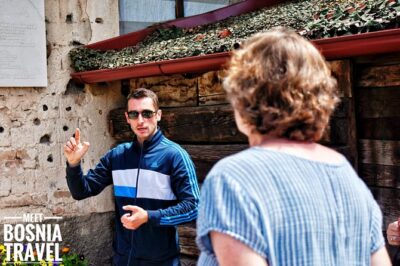
Fall of Yugoslavia, Sarajevo War Tour with Tunnel of Hope Museum and Frontlines
Read our review →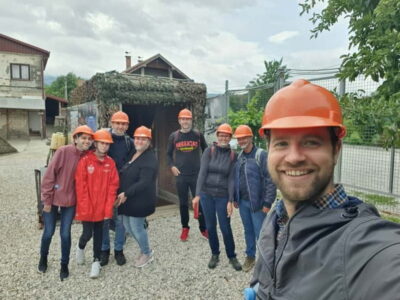
Tunnel Museum Yugoslavia War Tour with War Veteran
Read our review →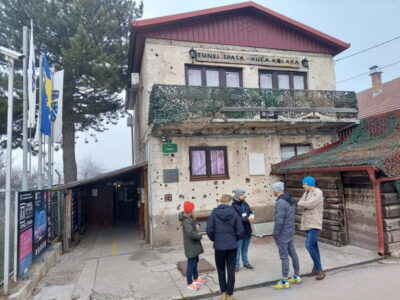
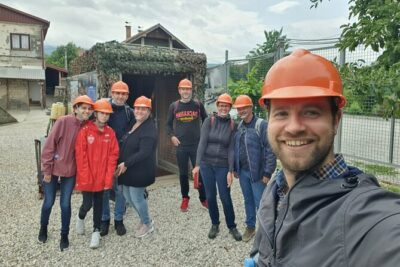
Tunnel Museum: Bosnian & Yugoslav Wars Tour with War Veteran
Read our review →
Sarajevo War Tour: A Veteran’s Story of the Siege (fees included)
Read our review →
Srebrenica Genocide Study Tour with War Veteran
Read our review →
Break-up of Yugoslavia & The War in Mostar: Life Under Siege
Read our review →Browse the lists this tour appears in