
Reviewed · TUNNEL OF HOPE & SIEGE SITES
Tunnel Museum: Bosnian & Yugoslav Wars Tour with War Veteran
Siege history feels uncomfortably close here. You get an air-conditioned ride with a war veteran driver-guide, plus the War Tunnel Museum and Trebević viewpoints that make the siege make sense. The main trade-off is that it is intense subject matter, so plan for an emotional, not a light, afternoon.
This is the kind of tour where the story is delivered in plain human terms. The group stays small, with a max of 20 people, and in practice you may be in an 8-seat van. English is offered, and you’ll have a mobile ticket.
Logistics are pretty traveler-friendly. You can usually arrange hotel pickup if you are staying outside the Old Town, and the tour loops back to where you start. Food is not included, so bring water and plan a meal after.
In This Review
- Key things to know before you go
- Meeting in Ferhadija, getting your bearings fast
- The car ride that links Sarajevo streets to the siege
- Museum stop that adds Sarajevo context beyond the headlines
- The War Tunnel Museum, the story behind Tunnel of Hope
- Trebević Mountain, where the view explains the threat
- Jewish Cemetery under Trebević, quiet and specific
- Yellow Fortress and the view toward the Soldiers Cemetery
- Guides like Adis, Ibrahim, and Enes make it personal
- Value check: what $36.28 gets you, and what it does not
- Pace and physical comfort: plan for a focused afternoon
- Who should book this tour
- Should you book this Sarajevo Tunnel of Hope war tour?
- FAQ
- How long is the Sarajevo Tunnel Museum war tour?
- Is the tour available in English?
- What is included in the price?
- Is food included?
- Do I need to pay for the War Tunnel Museum separately?
- Where do I meet, and does it end nearby?
- What if the weather or timing changes and I need to cancel?
Key things to know before you go
- War veteran narration turns famous sites into a real timeline of what changed day by day
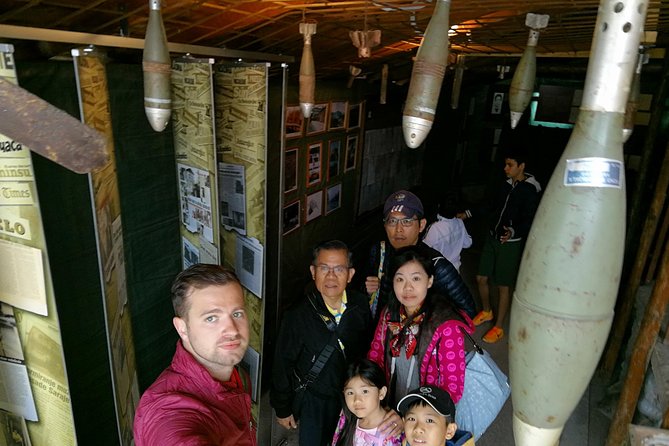
- War Tunnel Museum is the anchor, with a short film and a long presentation about the tunnel’s purpose
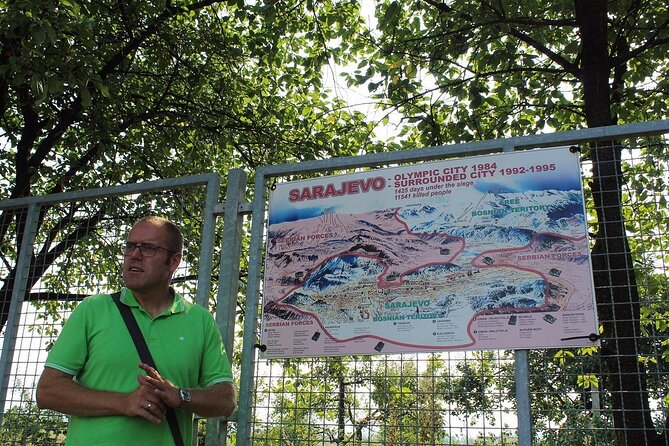
- Trebević viewpoints explain the siege geography fast, especially why certain hills mattered
- Sniper Alley and key siege landmarks help you connect streets and buildings to the danger civilians faced
- Jewish Cemetery and Yellow Fortress add layered history beyond the war headline moments
- Tunnel admission is not included, so budget for that separately at the museum
Other siege-era sites around Sarajevo:
- Fall of Yugoslavia, Sarajevo War Tour with Tunnel of Hope Museum and Frontlines
★ 5.0 · 1,314 reviews - Sarajevo: Tunnel Museum Yugoslavia War Tour with War Veteran
★ 5.0 · 1,111 reviews - Sarajevo: Tunnel of Hope Tour – Survival and Resilience
★ 4.8 · 630 reviews - Sarajevo War Tour: A Veteran’s Story of the Siege (fees included)
★ 5.0 · 326 reviews
Meeting in Ferhadija, getting your bearings fast
Most people start near Velika avlija Laure Papo Bahorete 2, Sarajevo, then head toward the main pedestrian stretch of Ferhadija. Your introduction begins in front of Info Bosnia Tourist Information Center, right by the Sarajevo Meeting of Cultures area. This matters because the early orientation helps you understand what you will see later, including what shows up in the Tunnel Museum film.
Before you even reach the War Tunnel Museum, the guide uses the drive to set the stage. Expect about 25 to 30 minutes of quick, targeted war context, with pointers to buildings and sites you will recognize again once the museum story begins. I like this structure, because it stops the tour from feeling like random stops with no thread.
If you want the most from the day, show up on time. The whole pace depends on that early orientation window.
The car ride that links Sarajevo streets to the siege
Your transportation is handled in an air-conditioned car or minivan, and that comfort is more than a perk. In Sarajevo, you can spend plenty of time outside and on hills, so having climate control for the connective stretches helps you stay focused on the story instead of heat and fatigue.
On the way, the tour hits some of the most important siege-linked sites. Markale massacres are described as two separate bombardments targeting civilians during the Siege of Sarajevo. Then you’ll pass the Eternal Flame memorial, dedicated in April 1946 for military and civilian victims of World War II in Sarajevo.
You also learn about Sniper Alley, the nickname tied to Zmaja od Bosne Street and Meša Selimović Boulevard. The point is not just the name. The guide explains how high-rise buildings along the boulevard gave sniper positions long sight lines, and how that road connected key areas of the city to the Old Town and beyond. When you understand the geography, the siege stops being an abstract event.
One thing to keep in mind: this is not a quiet, sit-and-stare tour. You’re moving and listening, and the guide’s job is to translate complicated events into what the city physically looks like now. If you’re traveling with someone who prefers lighter sightseeing, you’ll want to align expectations before you go.
Museum stop that adds Sarajevo context beyond the headlines
Between the initial drive and the tunnel portion, you also stop at a museum context stop. This is where the Sarajevo Haggadah comes up, an illuminated manuscript and the oldest Sephardic Jewish document in the world containing the traditional Jewish Haggadah, reportedly issued around 1350 in Barcelona.
Why this matters: the siege story is crucial here, but it is also easy to forget that Sarajevo was, and still is, a full city with deep cultural roots. Bringing in an artifact like the Sarajevo Haggadah nudges the tour from war-only framing into a broader understanding of who lived here and what shaped the city’s identity.
You’ll get enough time to see the point, but not so much that the day drags. If you’re a person who likes museum details, you might wish you had more time here, but the trade-off is that it protects time for the Tunnel Museum presentation and the outdoor siege viewpoints.
More museums and collections in Sarajevo:

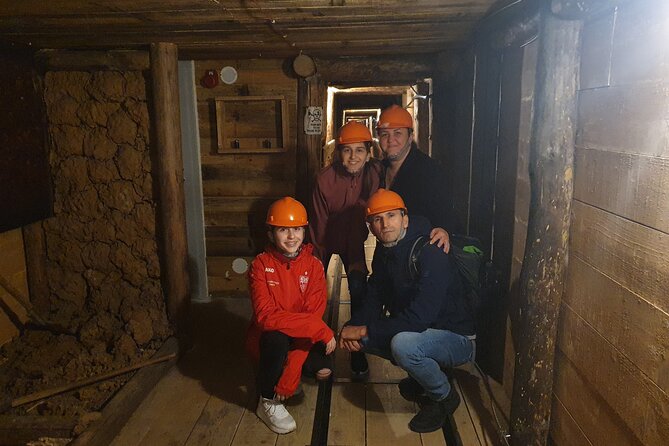
The War Tunnel Museum, the story behind Tunnel of Hope
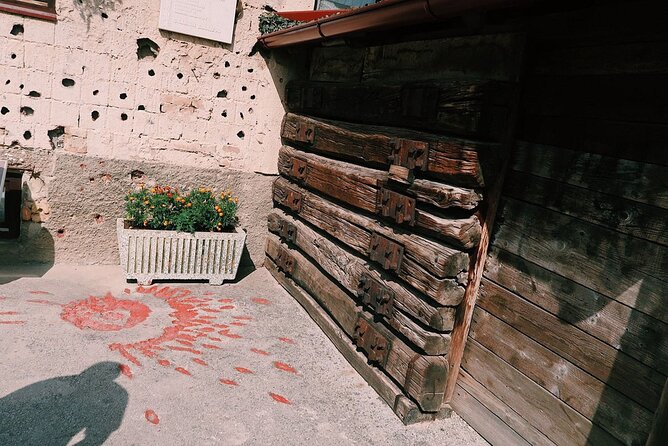
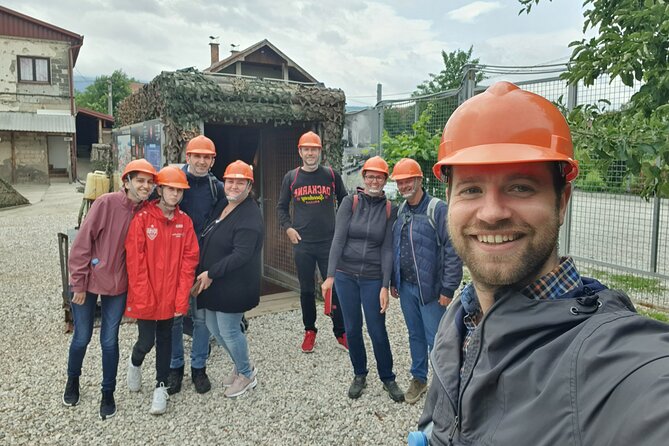
The War Tunnel Museum is the centerpiece. When you arrive, there’s a landmark sign in front of the entrance often referred to as Sarajevo Rose. After that, you watch a short movie before moving into the main presentation.
Plan for the museum portion to take about an hour for the guided presentation. It explains the fall of Yugoslavia, the wars in Slovenia and Croatia, and then the conflict in Bosnia and Herzegovina, including the tunnel’s creation and why it mattered. This is where the tour connects the dots between siege conditions and human engineering.
Also note a practical point: Tunnel Museum admission is not included in the tour price. That is normal for many tours, but it affects value. I treat it like this, you are paying for the guide-led transport and interpretation, and then you add the museum ticket on top.
What you’ll feel here is the shift from city-as-a-place to city-as-a-system under pressure. The tunnel is presented not as a dramatic Hollywood feature, but as a lifeline idea made by ordinary people facing an impossible situation.
Trebević Mountain, where the view explains the threat
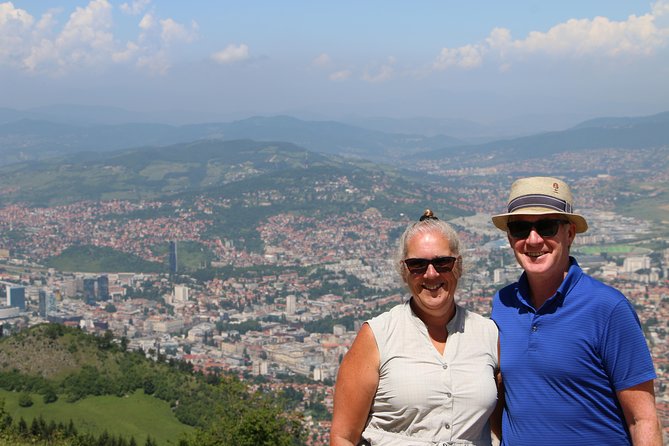
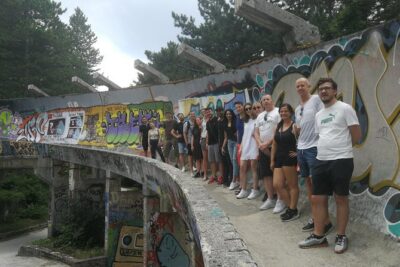
After the museum, you drive toward Trebević, described as the closest mountain to central Sarajevo and a first line during the Siege of Sarajevo. Trebević is where the tour becomes easy to picture.
You get around 30 minutes at the area near the hotel restaurant labeled 8, with a chance to walk and take in panoramic views of Sarajevo. The guide points out how enemy positions took advantage of the terrain and sight lines. This is the best kind of lesson for visual learners. You see the city layout, then understand why certain slopes were so consequential.
This stop is also one reason the tour requires moderate physical fitness. You are not doing a long hike, but you are moving around viewpoints and uneven ground. Wear shoes you don’t mind getting a little dusty, and give yourself a moment to slow down when you look out over the city.
If you’re sensitive to emotional heaviness, Trebević can hit hard because it is a view of the very places the siege used. Still, it’s one of the strongest segments for understanding the siege geography.
Jewish Cemetery under Trebević, quiet and specific
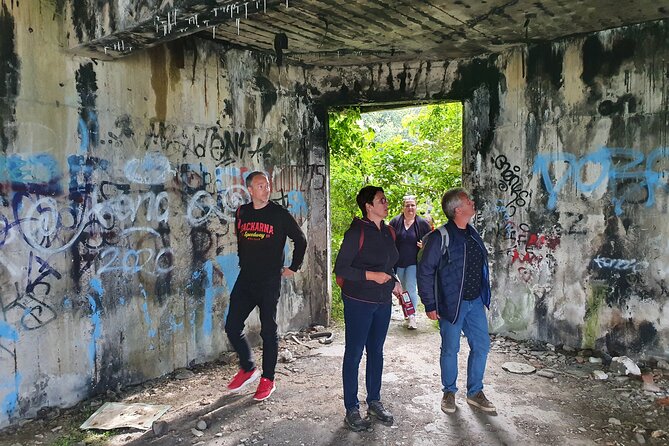
Just under Trebević Mountain sits the Jewish Cemetery Sarajevo, described as the second largest Jewish cemetery in Europe. You’ll have about 20 minutes here, long enough to absorb the atmosphere without turning it into a rushed checklist.
The cemetery includes tombstones with unique shapes said to be influenced by medieval Bosnian tombstones known as stećci (often spelled Stecak in the tour description). This is one of those moments where the war story gets widened into human history.
There’s also a practical takeaway here. If you want photos, plan a little time for choosing angles. The cemetery is not only about what happened during the siege. It is about presence across generations, which makes it a meaningful counterpoint to the conflict-focused stops.
Yellow Fortress and the view toward the Soldiers Cemetery
From the Jewish Cemetery, the tour continues toward the old Ottoman part of the city, where you visit the Yellow Fortress. The reward is a viewpoint over Soldiers Cemetery and the resting place of the first Bosnian president.
This stop is shorter, about 20 minutes, but it provides a strong “wrap-around” effect. You’ve seen civilian-targeting sites, the logistics of survival via the tunnel, and frontline geography at Trebević. Now you get a broader map of remembrance and leadership in the same frame.
If you’re the kind of traveler who likes to understand where people are physically buried in relation to the city’s hills and streets, Yellow Fortress is useful. It turns mourning into spatial understanding, which is a different and often more memorable way to learn.
Guides like Adis, Ibrahim, and Enes make it personal
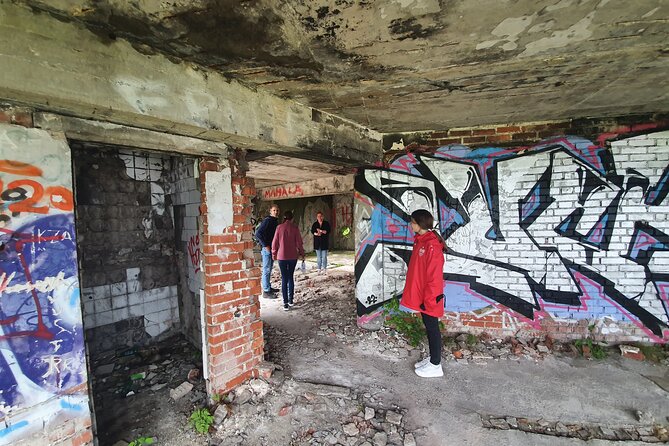
The best praise for this tour comes from the people delivering it. Many guides are war veterans, and the difference shows up in how the story is told.
In the experiences people shared, names like Adis, Ibrahim, Adnan, Enes, Enis, and Asim come up repeatedly for their personal accounts and for handling questions patiently. Some guides also bring a sense of humor, which is not a distraction here. It helps you stay present while the material stays heavy.
I’d frame it this way: you are not just collecting facts. You are hearing how normal life changed, how survival worked, and how the ingenuity and determination of Sarajevo’s residents played out street by street. That kind of narration is hard to replicate with a standard audio guide.
Value check: what $36.28 gets you, and what it does not
At about $36.28 per person for roughly 4 hours, this tour sits in the “good value” zone for Sarajevo, mainly because of two things: transport plus interpretation.
Included are the driver-guide, air-conditioned transport in a car or minivan, and hotel pickup if you are staying outside the Old Town. The tour also includes many stops that are free. What is not included is food, and Tunnel Museum admission, plus hotel drop-off.
This is the key budgeting mindset. If you compare it to a cheaper tour that only drops you at the tunnel, this one adds the connective tissue. The early drive stops and the siege explanations before and after the museum make the Tunnel of Hope story easier to understand. For me, that interpretation is the real value.
The duration is also sensible. Four hours is long enough to get the thread through multiple locations, but short enough that you still have the rest of your day for cafes, browsing, and independent walking.
Pace and physical comfort: plan for a focused afternoon
The itinerary style is fast but not frantic. You’ll be in a vehicle for the transfer pieces and then out for short windows at each location, often around 20 to 30 minutes. This is a big reason the tour works for many travelers with “moderate fitness.” You are not committing to hours of hiking.
Still, you will likely encounter stairs or uneven paths at viewpoint stops, and you may need to stand for parts of the museum viewing and orientation film. Bring a light layer, especially if the weather changes quickly.
Also, bring water. Food is not included, and between the emotional intensity and the walking, you will feel it.
Who should book this tour
I’d steer you here if you want more than sightseeing photos. This tour is ideal when you care about how history connects to the exact shape of a city, and when you appreciate a guide who can explain what it felt like from the inside.
It also fits solo travelers well. Some people reported ending up on a quieter, almost one-on-one style experience when the group size was small. That sort of setup tends to make questions easier.
If you are traveling with kids, children must be accompanied by an adult. And because the topic is intense, you’ll want to judge whether the age and emotional readiness match your family.
This is also a good match for travelers who already read a little about Sarajevo’s siege and want the city itself to answer the questions.
Should you book this Sarajevo Tunnel of Hope war tour?
Yes, if your goal is understanding, not just checking off attractions. The War Tunnel Museum is the big draw, but the surrounding stops are what make it coherent. The guide-driven context, especially with war veteran narration, is the reason many people rate this tour so highly.
Book it if you can handle emotional topics and you don’t mind a focused afternoon. You’ll come away with a clearer picture of how people defended the city, how survival logistics worked, and how remembrance is built into the streets.
Skip it if you want a relaxed, purely scenic half-day. This one is about siege reality, and that purpose shapes everything from the route to the tone.
FAQ
How long is the Sarajevo Tunnel Museum war tour?
It runs about 4 hours (approx.).
Is the tour available in English?
Yes, it is offered in English.
What is included in the price?
The tour includes the driver/guide, transport by air-conditioned car or minivan, and hotel pickup if you stay outside the Old Town of Sarajevo.
Is food included?
No, food is not included. Hotel drop-off is also not included.
Do I need to pay for the War Tunnel Museum separately?
Yes. The War Tunnel Museum admission ticket is not included.
Where do I meet, and does it end nearby?
The tour starts at Velika avlija Laure Papo Bahorete 2, Sarajevo 71000, and it ends back at the same meeting point.
What if the weather or timing changes and I need to cancel?
You can cancel for a full refund up to 24 hours in advance. Changes made less than 24 hours before the experience start time are not accepted. If the minimum number of travelers is not met, you’ll be offered a different date or a full refund.
Most recently added near Sarajevo
- Sarajevo : Private Walking Tour With A Guide (Private Tour)★ 5.0 · 1 review
- Sarajevo: Islamic Tour | 500+ years of Glorious Heritage★ 5.0 · 1 review
- Sarajevo: Srebrenica – A Journey of Remembrance★ 5.0 · 1 review
- Transfer tour Sarajevo-Dubrovnik★ 5.0 · 1 review
- Bunker: Tito’s Secret & Boracko Lake Tour from Sarajevo★ 5.0 · 1 review
- Svrzo House Entrance Ticket★ 5.0 · 1 review
- Thrilling Rafting Adventure on the Neretva River with Lunch★ 5.0 · 1 review
- Private transfer (FROM-TO) Sarajevo – Dubrovnik★ 5.0 · 1 review
Tunnel of Hope & Siege Sites, compared.
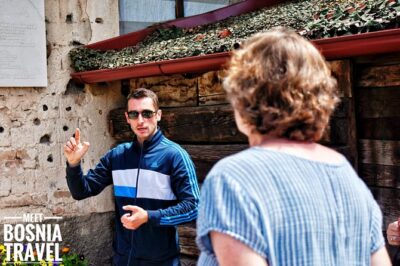
Fall of Yugoslavia, Sarajevo War Tour with Tunnel of Hope Museum and Frontlines
Read our review →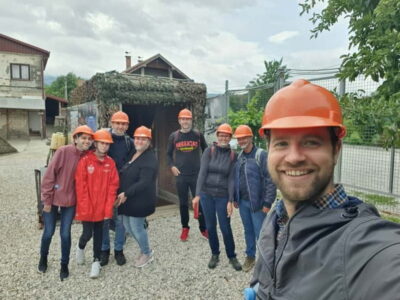
Tunnel Museum Yugoslavia War Tour with War Veteran
Read our review →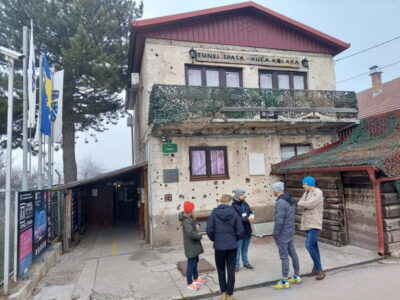
Sarajevo War Tour: A Veteran’s Story of the Siege (fees included)
Read our review →
Srebrenica Genocide Study Tour with War Veteran
Read our review →
Break-up of Yugoslavia & The War in Mostar: Life Under Siege
Read our review →Browse the lists this tour appears in