
Reviewed · TUNNEL OF HOPE & SIEGE SITES
Fall of Yugoslavia, Sarajevo War Tour with Tunnel of Hope Museum and Frontlines
Sarajevo hits you harder when you understand the Siege first. This 4-hour guided tour connects the Tunnel of Hope, Sniper Alley, and key Olympic-era landmarks so you leave with real context for what happened in the 1990s.
I like that the pacing gives you time to look, not just rush. I also like that the guide experience tends to be personal and question-friendly, with plenty of chances to ask how things connected before, during, and after the Siege.
The one thing to consider is that this is a heavy subject, and a few stops are emotionally intense even if you keep moving. Wear comfortable shoes, expect some standing, and plan to take breaks mentally when you need them.
In This Review
- Quick hits before you go
- Why this Sarajevo Siege tour feels different than a drive-by
- Price and value for $36.28, plus the one extra ticket you might pay
- Yellow Fortress: start with the view, not the facts
- Olympic Complex drive-bys: Sarajevo in 1984 meets the Siege years
- Sniper Alley: why a street can change everything
- Gavrilo Princip memorial area: the lead-in to the long chain of events
- Tunnel of Hope Museum: what a city did when it was cut off
- Trebević Vidikovac viewpoint: the air change you need after the tunnel
- Sarajevo Olympic bobsleigh and luge track: 1984, still there
- Guides and drivers: the personal layer that makes it stick
- What to pack and how to time your day
- Who should book this, and who might want a different style of tour
- FAQ
- How long is the Sarajevo War Tunnel and frontlines tour?
- Is the War Tunnel Museum ticket included?
- What’s included in the price besides the guide?
- Does the tour include hotel drop-off?
- What language is the tour offered in?
- Where do I meet the tour?
- Should you book this Sarajevo War Tunnel tour?
Quick hits before you go
- Yellow Fortress panorama with the Siege framed for an easy start before you go underground.
- Tunnel of Hope Museum shows how a surrounded city stayed connected for years.
- Sniper Alley pass-by helps you understand why a street can become a daily danger.
- Olympic Complex stops link Sarajevo’s global 1984 identity to wartime damage.
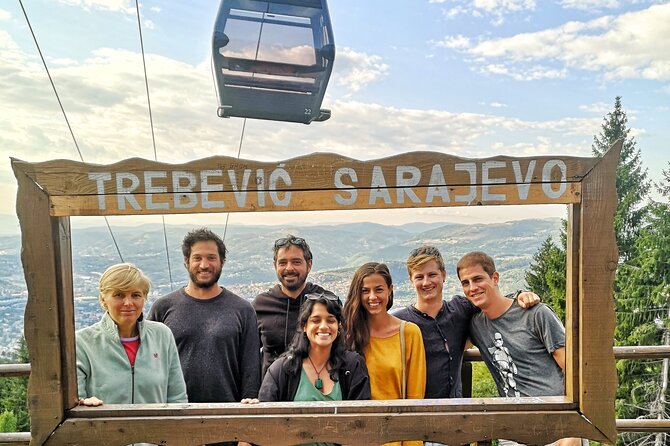
- Trebević viewpoints plus the bobsleigh and luge track add a needed breath of air at the top.
Other siege-era sites around Sarajevo:
- Sarajevo: Tunnel Museum Yugoslavia War Tour with War Veteran
★ 5.0 · 1,111 reviews - Sarajevo: Tunnel of Hope Tour – Survival and Resilience
★ 4.8 · 630 reviews - Tunnel Museum: Bosnian & Yugoslav Wars Tour with War Veteran
★ 5.0 · 551 reviews - Sarajevo War Tour: A Veteran’s Story of the Siege (fees included)
★ 5.0 · 326 reviews
Why this Sarajevo Siege tour feels different than a drive-by
This tour does something many “history highlights” tours skip. It doesn’t just point at old buildings, it explains why those buildings mattered during the Siege and how the city’s geography shaped daily life. You get both the “big picture” of the fall of Yugoslavia and the lived reality of Sarajevo under attack.
You also ride in an air-conditioned vehicle with hotel pickup, which is a big deal in a city where your best photo spots and viewpoints are spread out. It keeps the day from turning into a full-on walking mission, while still giving you real time at the key locations.
Finally, you’ll notice the way guides handle questions. Names that show up in feedback include Ayoub, Emin, Ejub, Kristian, Tarik, Almir, Ago, and Zahmet. The common thread is clarity and care, plus a willingness to slow down if you want to understand something fully.
Price and value for $36.28, plus the one extra ticket you might pay
At $36.28 per person for about four hours, this is priced like a focused half-day. For that money, you typically get: a professional local guide, hotel pickup, a comfortable vehicle, bottled water, and fuel included.
The main add-on is the Tunnel of Hope Museum entrance. The tour price does not include the museum ticket. Adults pay 15 BAM, students pay 5 BAM with ID. If you want to plan smart, budget for that extra entry fee when you count the true cost.
One more practical note: hotel drop-off is not included. The tour ends back at the meeting point, so it’s worth planning your return transport in advance. You’ll still get a smooth experience during the tour itself, but you’ll need to handle the last leg after the tour finishes.
Yellow Fortress: start with the view, not the facts
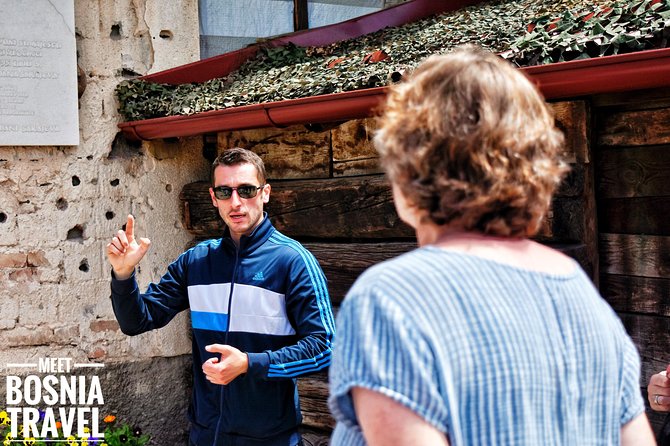
Your day begins at the Yellow Fortress, a spot that gives you an instant sense of Sarajevo’s layout. While you’re up there, your guide sets the stage for the Siege and points out what you can see from the fortress, including the defenders’ cemetery area.
This stop is where the tour earns its emotional impact. When you look down at the city while someone explains the Siege logic, it becomes easier to picture the risks people faced and the decisions that shaped the conflict. It also helps you recognize the places you’ll pass later, because you start with a mental map.
You get about 25 minutes here, and the admission ticket is included. That matters because you’re not rushing to squeeze in a view between unrelated activities.
More museums and collections in Sarajevo:

Olympic Complex drive-bys: Sarajevo in 1984 meets the Siege years
After the fortress, the tour shifts into “see it, connect it” mode. You drive around the Olympic Complex and related areas, and your guide points out war damage and specific reminders of life under siege.
Two details make this part stand out:
- the destroyed children’s hospital you pass on the way
- the grave linked to the Sarajevo Romeo and Juliet story
Even if you think you know the basics, these are the kinds of street-level anchors that keep the history from staying abstract. You can almost feel how a city tries to carry its normal identity, then gets forced into a completely different reality.
You also visit the Stadium Cemetery stop (and you pass the stadium area as part of this wider Olympic complex zone). It’s not just a cemetery “photo stop.” With the guide’s framing, it becomes part of the Siege story, showing where people were laid to rest and why these places sit inside daily Sarajevo life.
Sniper Alley: why a street can change everything
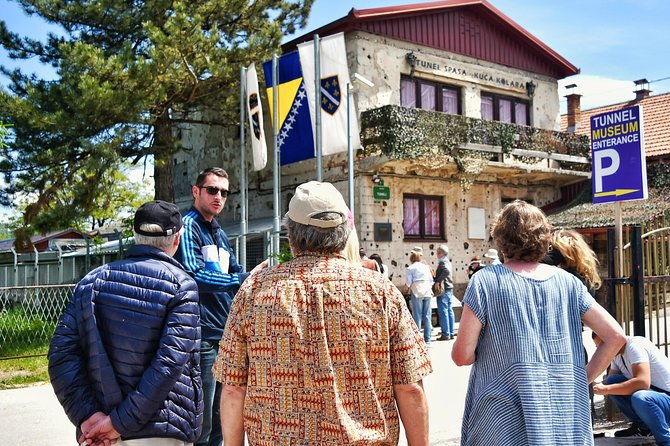
One of the most intense sections comes next. You pass through Sniper Alley, described as the most dangerous street in Sarajevo where snipers were shooting every day.
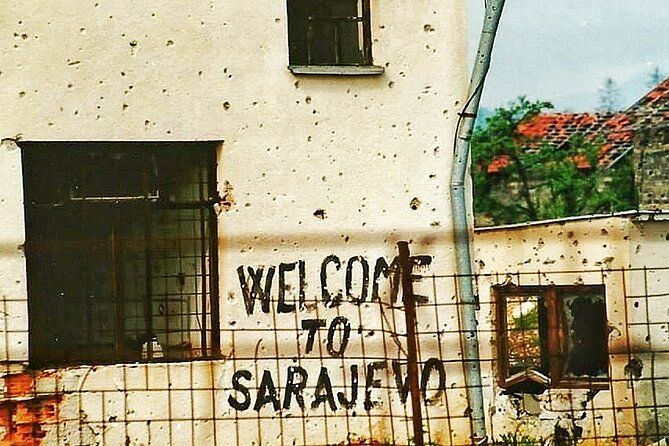
You won’t just hear a dramatic label. The guide explains how the Siege worked on the ground, and you’ll see buildings from the Yugoslav period still marked by the war. That combination matters because it shows the contrast between what the city was designed for and what it became under attack.
Here’s how to get the most from this part:
- slow your photos down, but do take a few
- listen for the explanation of why this area mattered
- keep your questions for later, too, if something doesn’t feel clear
This part can feel heavy, but it’s also one of the best places to understand the “frontlines” concept without vague talk. A street can function like a front line when danger is constant.
Gavrilo Princip memorial area: the lead-in to the long chain of events

As you move through the city, you also pass by the chapel of Gavrilo Princip, the person who assassinated Archduke Franz Ferdinand. The tour also highlights the mausoleum area connected to Princip as part of your route.
This matters because it gives you a historical thread. Instead of treating the 1990s conflict like it appeared out of nowhere, you get a reminder that European political shocks and national tensions can echo for generations. Your guide ties this into the broader story of the fall of Yugoslavia and the road toward Sarajevo’s Siege.
Even if you’re not a history person, this stop helps you understand why people in the region talk about certain events with long memory. You’re not just learning a date, you’re seeing how a place becomes a symbol.
Tunnel of Hope Museum: what a city did when it was cut off
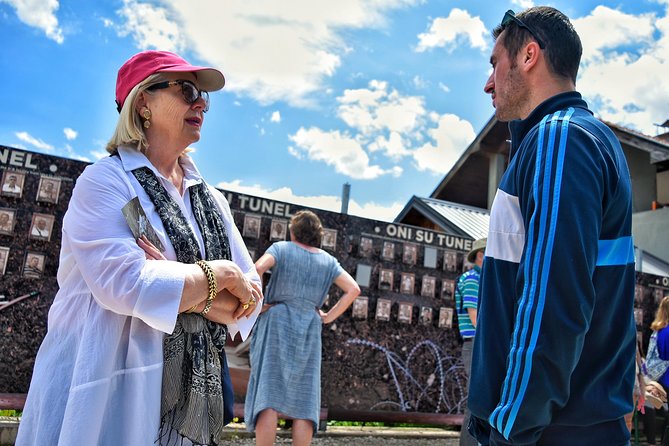
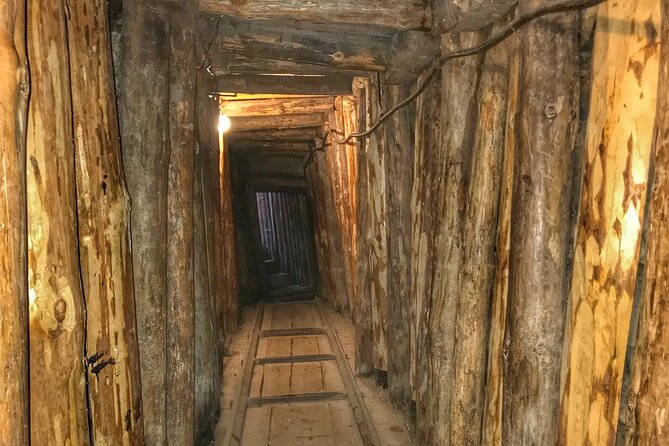
Then comes the heart of the tour: the Sarajevo War Tunnel. The tunnel served as the only entrance to Sarajevo during the four-year Siege, and it was about 800 meters long. Today it functions as the Tunnel of Hope Museum.
The museum visit is about 1 hour, but you’ll pay the entrance fee separately for the museum. For adult tickets, that’s 15 BAM. Students pay less with ID.
What I like most about this stop is that it changes how you picture the Siege. It’s easy to say a city was surrounded. It’s harder to imagine the practical, physical work of keeping contact and movement possible. The tunnel makes that “how” visible.
Practical advice: bring your attention. It’s not a quick photo stop. Give yourself time to read what’s there, and don’t be shy about asking the guide what to focus on if the rooms feel crowded or fast-moving.
Also, since the tunnel is a specific closed space, it’s worth dressing for comfort. You’ll be glad you didn’t plan a day in stiff shoes or tight clothing.
Trebević Vidikovac viewpoint: the air change you need after the tunnel
After the Tunnel of Hope Museum, the tour heads to Trebević Mountain for Trebević Vidikovac, the place with one of the best panoramic views over Sarajevo. Your time here is around 15 minutes, and admission is free for this stop.
This isn’t just for photos. It’s also a mental reset. The tour has been heavy and concrete so far, and the view gives you a breath before the final stop. You can also spot how the city sits in relation to the mountain and why Sarajevo’s geography mattered during the Siege.
If you’re the type who loves understanding from angles, this is where you’ll feel it click. One good look from above can connect several earlier stops in your mind.
Sarajevo Olympic bobsleigh and luge track: 1984, still there
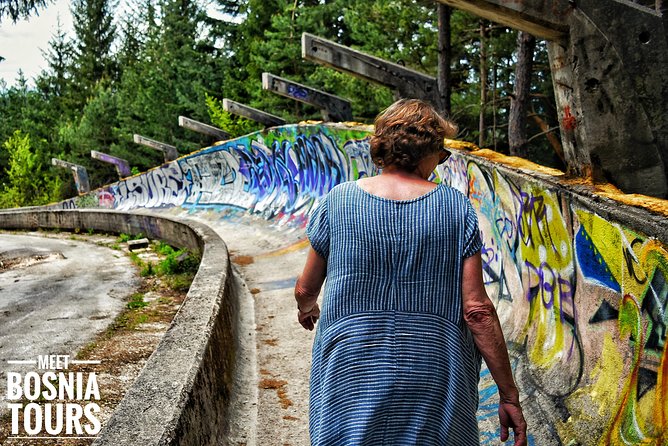
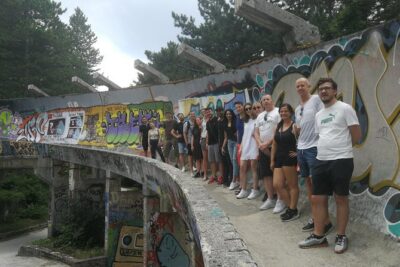
The day ends with the Sarajevo Olympic Bobsleigh and Luge Track on Trebević. This is free time, around 20 minutes, and it’s tied to Sarajevo Winter Olympics in 1984.
This stop works because it adds contrast. You’ve just seen the city under siege. Now you’re looking at a winter-sports site that once made Sarajevo international in a very different way.
You might hear context that ties the Olympic venues to the war period too, especially because the earlier route includes Olympic complex damage and cemetery areas. The final stop helps you remember that Sarajevo wasn’t built for war, it was built for people, sport, and gathering.
And for some people, this is also the moment when the day feels like it “lands.” One common detail in feedback is that the timing can pair well with a return by cable car toward the old town area. If that option is available when you go, it’s a nice way to keep the ending scenic.
Guides and drivers: the personal layer that makes it stick
A strong reason this tour gets such a high rating is how the story is delivered. Many guides are praised for handling questions smoothly and keeping the pace just right, so you can absorb what you’re seeing.
Names that show up in feedback include:
- Ayoub, praised for an unforgettable introduction and a pace that leaves room for questions
- Tarik, who shares personal context connected to family experiences
- Ago and Zahmet, noted for making the tour organized and easy to follow
- Emin, Ejub, and Kristian, mentioned for balancing emotion with clear explanations
One detail that really changes the tone is when your guide or driver adds personal connection. In feedback, a driver described involvement in the conflict as a teenager, which made the reality feel close rather than distant. You don’t need details to feel it. You just need the reminder that the Siege shaped people’s lives, not just history pages.
If you’re worried about the tour feeling like a lecture, don’t be. The better guides make it conversational, not performative. You’ll likely get pauses where you can ask, and the group size cap of 50 helps keep things from turning into a herd.
What to pack and how to time your day
This tour is about four hours, with hotel pickup and a vehicle-based route. You’ll still stand at several stops, and you’ll spend at least 1 hour inside the tunnel museum area.
Bring:
- comfortable walking shoes
- water is provided, but you may want a small extra snack plan later since food is not included
- a phone with enough battery for photos and any maps you might want
Plan your expectations:
- You will see war damage and memorial areas.
- The guide will give historical context, including the lead-in from the fall of Yugoslavia.
- The emotional weight is part of the point, but the tour is structured so you still get viewpoints and a breathing space at Trebević.
If you’re traveling with limited mobility, you might still be able to join since it says most travelers can participate, but the stops include walking and standing in uneven outdoor areas. Comfortable shoes help you handle it.
Who should book this, and who might want a different style of tour
This is a great fit if you want to understand Sarajevo beyond postcards. It’s especially good for first-time visitors who want a clear framework for the Siege, the fall of Yugoslavia context, and the specific places tied to that story.
It’s also a solid pick if you like guided structure. You’ll cover multiple key sites without having to plan a route yourself.
Consider another option if:
- you’re extremely sensitive to war-related memorial content
- you prefer purely scenic walking days with minimal historical weight
- you want a shorter, less structured experience (this is built as a focused half-day)
For most people, though, it lands well because you get both the hard parts and the city views that help you understand the geography.
FAQ
How long is the Sarajevo War Tunnel and frontlines tour?
It runs for about 4 hours (approx.).
Is the War Tunnel Museum ticket included?
No. Tunnel Museum admission is not included. Adults are 15 BAM, students are 5 BAM with ID.
What’s included in the price besides the guide?
You get a professional local guide, hotel pickup, car transport, fuel surcharge, bottled water, and an air-conditioned vehicle.
Does the tour include hotel drop-off?
No. The tour ends back at the meeting point.
What language is the tour offered in?
The tour is offered in English.
Where do I meet the tour?
Meet Bosnia Tours at Gazi Husrev begova 75, at the crossroad of Mula Mustafe Bašeskije, Sarajevo 71000. The meeting point is near public transportation.
Should you book this Sarajevo War Tunnel tour?
If you’re coming to Sarajevo to understand what happened in the 1990s, yes, book it. This tour gives you a logical path through the Siege story, starting with city views from the Yellow Fortress, moving through sniper-related danger on Sniper Alley, and then going underground at the Tunnel of Hope Museum.
The extra museum ticket is the only clear cost add-on, and for most people the value is that you see the key sites with a guide who can explain how they connect. Just go in ready for heavy themes. Then also go in ready for the payoff of Trebević’s views and that 1984 Olympic final stop, which reminds you Sarajevo has always been more than war.
Most recently added near Sarajevo
- Sarajevo : Private Walking Tour With A Guide (Private Tour)★ 5.0 · 1 review
- Sarajevo: Islamic Tour | 500+ years of Glorious Heritage★ 5.0 · 1 review
- Sarajevo: Srebrenica – A Journey of Remembrance★ 5.0 · 1 review
- Transfer tour Sarajevo-Dubrovnik★ 5.0 · 1 review
- Bunker: Tito’s Secret & Boracko Lake Tour from Sarajevo★ 5.0 · 1 review
- Svrzo House Entrance Ticket★ 5.0 · 1 review
- Thrilling Rafting Adventure on the Neretva River with Lunch★ 5.0 · 1 review
- Private transfer (FROM-TO) Sarajevo – Dubrovnik★ 5.0 · 1 review
Tunnel of Hope & Siege Sites, compared.
Tunnel Museum Yugoslavia War Tour with War Veteran
Read our review →
Tunnel Museum: Bosnian & Yugoslav Wars Tour with War Veteran
Read our review →
Sarajevo War Tour: A Veteran’s Story of the Siege (fees included)
Read our review →
Srebrenica Genocide Study Tour with War Veteran
Read our review →
Break-up of Yugoslavia & The War in Mostar: Life Under Siege
Read our review →Browse the lists this tour appears in