
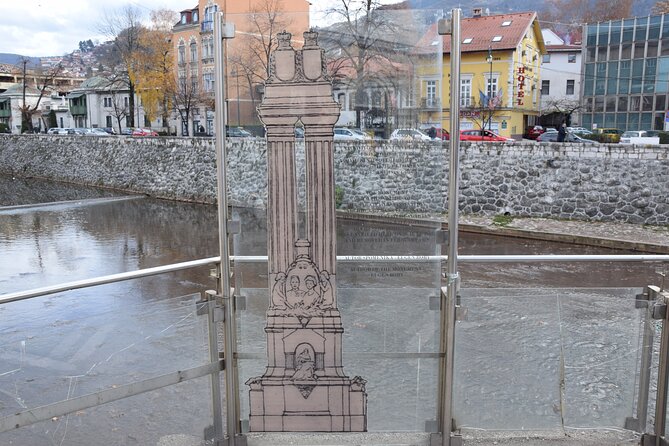
Reviewed · SARAJEVO TOURS
Sarajevo Assassination: The Spark of World War I
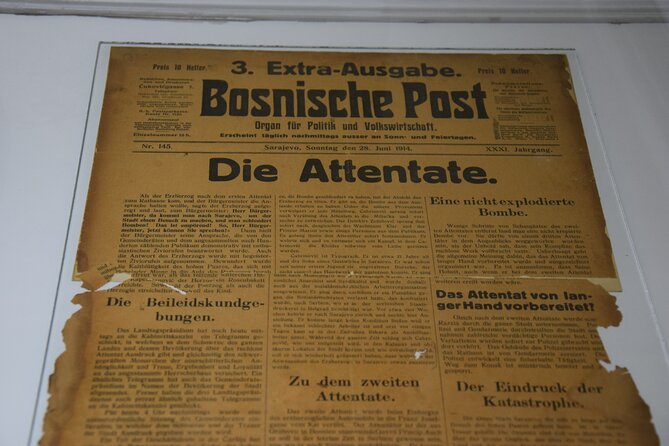
The assassination that sparked World War I happened right here. What I like is how this tour links street-level locations to the big political story around June 28, 1914. You move through Sarajevo’s landmarks in a tight loop, so the day feels focused, not like a history lecture you sit through.
I especially like the small-group size and the fact that you’re not rushed. The route is packed with key sites, yet the pacing still leaves room to look, ask, and understand why each stop matters. And I really appreciate the guide style, with clear explanations and a bit of humor that keeps the heavy subject from feeling dull.
One consideration: two of the most interesting additions are paid separately, the VRX experience and the 1878 to 1918 museum. If you’re trying to keep costs tight, you’ll want to decide up front whether those stops fit your budget.
In This Review
- Key Highlights Worth Planning Around
- Why This Sarajevo Assassination Tour Feels So Practical
- Price and Value: What You’re Really Paying For
- Meeting Point, Start Time, and Group Size Logistics That Actually Matter
- Stop by Stop: The 1914 Assassination Story in 11 Sarajevo Landmarks
- Saint Mark Cemetery and the Vidovdan Heroes Chapel (Free, 20 minutes)
- Presidency of Bosnia and Herzegovina building (Free, 5 minutes)
- Sarajevo VRX museum (Not included, 15 minutes)
- Eternal Flame (Free, 3 minutes)
- Pijaca Markale, the Markale Market (Free, 5 minutes)
- Katedrala Srca Isusova (Free, 5 minutes)
- Latin Bridge (Free, 15 minutes)
- Sarajevo Museum 1878 to 1918 (Not included, 15 minutes)
- Konak (Free, 3 minutes)
- Sarajevska Pivara (Free, 3 minutes)
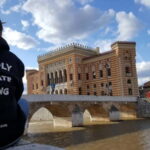
- Sarajevo City Hall, Vijećnica (Not included, 10 minutes)
- The Optional Tickets: VRX and the 1878 to 1918 Museum
- How the Timing Helps You Keep the Rest of Sarajevo Flexible
- Who Should Book This Tour, and Who Might Want a Different Approach
- Should You Book the Sarajevo Assassination Tour?
- FAQ
- What time does the Sarajevo Assassination tour start?
- How long is the tour?
- How many people are in the group?
- What’s included in the tour price?
- Which attractions cost extra tickets?
- Can I cancel for free?
Key Highlights Worth Planning Around
- Tight 2-hour route that finishes early, then you get the rest of your day free
- Max 15 travelers, which makes questions and pace feel real
- Saint Mark Cemetery plus the Vidovdan Heroes Chapel, with free admission
- Latin Bridge and the firing spot area, treated with careful, exact context
- Optional VRX and 1878 to 1918 museum tickets for a deeper, ticketed layer
- Air-conditioned vehicle + city map, so logistics feel easy in Sarajevo
Other 1914 sites in Sarajevo:
- Sarajevo: Franz Ferdinand Assassination & the Start of WWI
★ 4.9 · 41 reviews - The last day of Franz Ferdinand Walking Tour
★ 5.0 · 10 reviews - Sarajevo: Start of The First World War Tour
★ 5.0 · 5 reviews
Why This Sarajevo Assassination Tour Feels So Practical
Sarajevo can be confusing at first. Streets curve, neighborhoods blend, and history is everywhere. This tour helps you get the story in the right order, and fast. In about two hours you’ll connect the motivations of the Young Bosnia movement with what happened on that day, and then you’ll see how the Austro-Hungarian presence shaped much of the city’s look.
I also like the format. It is not just a walk to famous photos. The guide uses each location to explain cause and effect. You start with the conspirators’ resting place, then you move forward toward the places linked to Austro-Hungarian governance and Franz Ferdinand’s movements. That makes the whole day click.
The value part is also clear. The base tour price is modest, and many major stops are free. Then, if you want extra context, you can add the two ticketed museum experiences without committing to a full day. That makes this a smart first Sarajevo tour, especially if you have limited time.
Price and Value: What You’re Really Paying For
The tour costs $29.59 per person and runs about 2 hours. What’s included is a licensed guide, an air-conditioned vehicle, and a city map. That matters because you’re not just relying on your phone to piece things together. You get a guide to connect the dots.
Then there are two optional paid components:
- Sarajevo 1878 to 1918 museum: 5 BAM (about 3 euros) per person
- Sarajevo VRX museum: 20 BAM (about 10 euros) per person
If you do both, you should plan on adding roughly 25 BAM total (about 13 euros) in tickets on top of the tour price. If you do none, you’ll still get a strong route through the free stops like Latin Bridge, the cathedral, Markale Market, and the memorial areas connected to the assassination context.
My suggestion: if you like visual storytelling and want a clearer sense of how Sarajevo felt under Austro-Hungarian rule, budget for the VRX museum and the 1878 to 1918 museum. If you prefer to keep things purely outdoors and photo-based, skip the tickets and still leave with a solid understanding.
Meeting Point, Start Time, and Group Size Logistics That Actually Matter
You meet at Sarajevo Insider – City Tours and Excursions, Zelenih beretki 30 in Sarajevo. The tour starts at 10:00 am, and it ends back at the meeting point. That means you can plan lunch and the rest of your day without guessing how to get home.
The group is kept small, up to 15 travelers. For a topic as intense as this one, that size helps. You’re more likely to hear explanations clearly, and you can ask the follow-up questions that come up when you stand at a specific corner, bridge, or building and realize how close the events are to modern street life.
Also, the vehicle is air-conditioned. Even if you’re visiting in mild weather, you’ll still appreciate the breaks between stops. The tour mixes short walks with quick repositioning, which keeps it from dragging.
And the meeting spot is described as easy to locate. That is more important than it sounds. Sarajevo is easiest when you don’t waste your first hour hunting for the right pickup.
Other Sarajevo trips worth comparing
- Fall of Yugoslavia, Sarajevo War Tour with Tunnel of Hope Museum and Frontlines
★ 5.0 · 1,314 reviews
Stop by Stop: The 1914 Assassination Story in 11 Sarajevo Landmarks
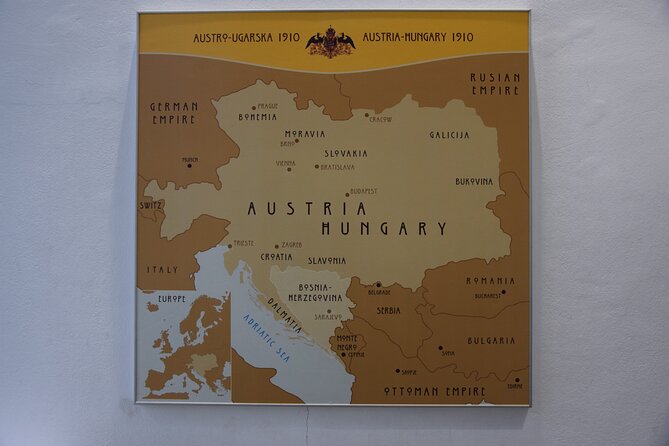
This route is built like a timeline. You start with the conspirators, then you move through the Austro-Hungarian administration landscape, and you end at sites tied directly to Franz Ferdinand’s reception and the assassination itself.
Saint Mark Cemetery and the Vidovdan Heroes Chapel (Free, 20 minutes)
This is where the story gains weight. Gavrilo Princip and his fellow conspirators are buried here, and the tour explains how Austro-Hungarian authorities hid the burials. Nearby, the Vidovdan Heroes Chapel is now a memorial tied to the Young Bosnia movement.
The value here is the context you get before you see the assassination locations. It helps you understand that this was not just an accident of chance on a bridge. It was the result of ideology, organization, and decisions made by real people.
Tip: treat this stop like the emotional anchor of the route. Spend the extra few minutes looking before you move on, because the rest of the tour will feel more meaningful once you’ve processed this first.
Presidency of Bosnia and Herzegovina building (Free, 5 minutes)
This building was built during the Austro-Hungarian administration and once housed imperial officials. On June 28, 1914, the motorcade passed just a short distance away.
Don’t expect a long visit here. It’s brief, but it does a key job: it places governance and power in your mental map. You see how political authority and daily streets overlap.
Sarajevo VRX museum (Not included, 15 minutes)
This is the ticketed add-on that turns the historical route into a guided virtual experience. The tour takes you through the transformation of Sarajevo under Austro-Hungarian rule and the nationalist tensions rising around the assassination.
If you like learning with visual tools, you’ll probably enjoy this. It can also help you picture what you are about to see at Latin Bridge. If you skip it, you’re not losing the core route, but you might miss a layer of how the lead-up felt.
Eternal Flame (Free, 3 minutes)
The Eternal Flame is primarily known as a World War II memorial. What makes it part of this tour is location. It sits near key Austro-Hungarian-era buildings, so it acts as a bridge between eras and reminds you that Sarajevo’s history did not end in 1914.
This stop is short, but it helps you keep the bigger picture in mind.
Pijaca Markale, the Markale Market (Free, 5 minutes)
Markale Market was established during Austro-Hungarian rule as a trade hub. On the morning of the assassination, locals gathered there unaware that the city would soon be tied to global history.
This is one of the stops that brings the day down to everyday life. You’ll stand where commerce and routines were normal, and you’ll realize how quickly history can intrude.
If you want a photo, aim for a quick one and then keep moving. The tour is time-managed on purpose.
Katedrala Srca Isusova (Free, 5 minutes)
Built in 1889, this Neo-Gothic cathedral is tied to Austro-Hungarian efforts to solidify their presence in Bosnia. It sits along the route linked to Franz Ferdinand’s motorcade, so it functions like a witness point in the story.
The benefit here is seeing how imperial power shows up in architecture. It’s also a good pause for street-level orientation, since the cathedral area gives you recognizable shapes and lines.
Latin Bridge (Free, 15 minutes)
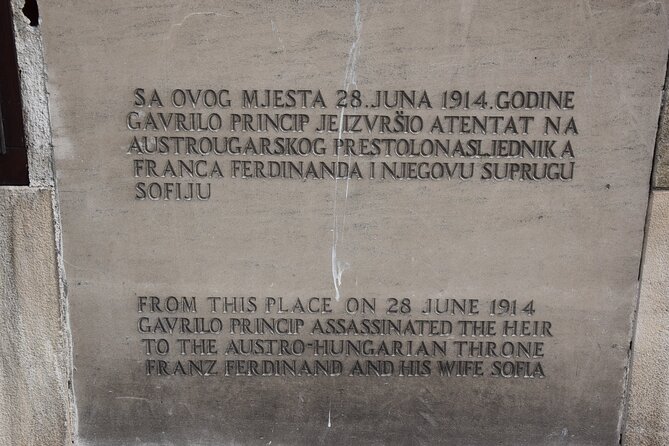
Latin Bridge is the star of the show. The tour explains it as the key site tied to Gavrilo Princip firing the shots that changed world history.
What I like about the way this is handled is specificity. You’ll get guided context that makes the moment easier to place, including references to the door of the coffee shop from where the fatal shot was fired. Standing near that area makes the event feel less like a textbook and more like a real street scene.
Spend your time here carefully. If you take a few minutes to look at your surroundings, you’ll start understanding how a single vehicle route turned into a turning point for Europe.
Sarajevo Museum 1878 to 1918 (Not included, 15 minutes)
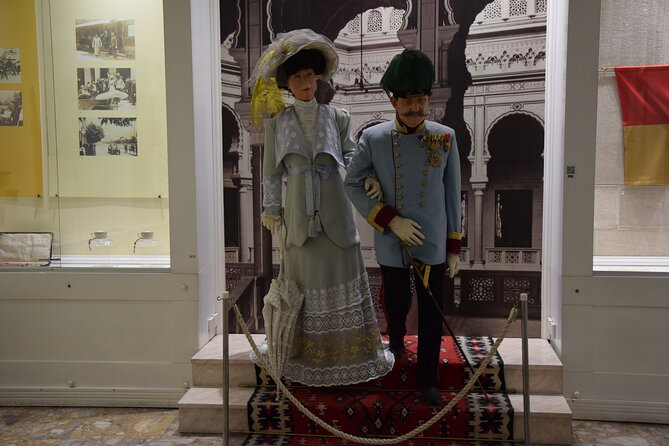
This ticketed museum offers artifacts tied to the Austro-Hungarian period and the assassination. It includes exhibits about Franz Ferdinand’s visit and the aftermath, giving you a deeper background layer once you’ve already stood at the sites outdoors.
This is one of those places where the ticket price can feel worth it if you like evidence, objects, and clear timelines. If you’re more of a walk-and-see person, you can skip it and rely on the guide’s explanations outside. Either way, you should finish this stop knowing more than when you arrived.
Konak (Free, 3 minutes)
Konak was once the residence of Austro-Hungarian governors. The tour frames it as a key place for hosting officials during Franz Ferdinand’s visit. Hours before the assassination, it sat at the center of imperial decision-making in Sarajevo.
This stop is brief, but it adds an important point. The assassination was not happening in a vacuum. Decisions and receptions were happening in parallel.
Sarajevska Pivara (Free, 3 minutes)
The Sarajevo Brewery was part of industrial progress and social life under the Austro-Hungarian era. On the day of the assassination, it is described as a quiet witness to the events unfolding around it.
This stop is short, but it gives you contrast. It helps you remember that cities run on everyday industries even when politics is turning violent.
Sarajevo City Hall, Vijećnica (Not included, 10 minutes)
Sarajevo City Hall is a major symbol of Austro-Hungarian influence, and it hosted Franz Ferdinand’s official reception just before the assassination. The tour connects the building’s steps and timing to the morning before his fate was sealed.
Because entry is not included, you’ll want to decide based on how much you want to spend on indoor time. Even if you don’t purchase admission, the outdoor framing can still help you connect the public reception to the assassination route.
The Optional Tickets: VRX and the 1878 to 1918 Museum
You have a clean choice in this tour: keep it mostly outside, or add two ticketed experiences that explain what you are seeing.
VRX museum (20 BAM) is the one that tends to appeal to people who learn best with guided visuals. The 1878 to 1918 museum (5 BAM) is the one for people who want objects, exhibits, and a structured look at the Austro-Hungarian era and the assassination aftermath.
If you’re on a first visit and you want maximum understanding without a full-day commitment, I’d pick both. If you’re on a tighter budget or prefer just walking, you can still get the core route through the free sites and treat the ticketed museums as a bonus for later.
How the Timing Helps You Keep the Rest of Sarajevo Flexible
The tour runs about two hours, then you’re free for the rest of the day. That is a big deal in a city where you might want to pair history with local meals, river walks, or a slower second look at sites like Latin Bridge.
Also, because you return to the meeting point, you can build a simple plan:
- Lunch near where you’ll naturally want to be afterward
- Pick one more museum or neighborhood walk
- Revisit Latin Bridge at a quieter time if you want photos without the pressure
If you’re traveling with friends who have different interests, the structure helps. The group has enough time to stay together, but the tour length still leaves you room to split into separate plans after.
Who Should Book This Tour, and Who Might Want a Different Approach
This tour is ideal if you want a focused Sarajevo assassination tour that ties the World War I spark to the city’s real locations. It’s also a good pick if you don’t want to research every stop in advance. The guide work does the linking for you.
It also fits history teachers, students, and anyone who already knows the basics but wants better geographic context. You’ll get the sense of where the conspirators fit, where imperial administration fit, and where the assassination scene fits.
If you dislike paying for add-ons or you prefer a mostly indoor museum day, you might feel the tour is too short or too exterior. In that case, you could still use it as a primer, then build your own museum time later.
Should You Book the Sarajevo Assassination Tour?
I think you should book this if you want a high-impact introduction to Sarajevo’s June 28, 1914 story without spending all day on logistics. The small-group setup, the strong guiding, and the route through major sites like Saint Mark Cemetery and Latin Bridge make it easy to learn and easy to remember.
You should also book it if you like practical pacing. Two hours is enough time to build understanding, and the rest of the day is yours to explore at your own speed.
The only reason to hesitate is the optional ticket cost if you’re trying to keep spending very low. Even so, many of the most important locations are free, so you still get good value even without the paid museum stops.
If you can spare the time and you want history anchored to place, this is one of the best ways to get oriented in Sarajevo.
FAQ
What time does the Sarajevo Assassination tour start?
The tour starts at 10:00 am.
How long is the tour?
The duration is about 2 hours.
How many people are in the group?
The tour has a maximum of 15 travelers.
What’s included in the tour price?
The price includes a licensed guide, an air-conditioned vehicle, and a city map.
Which attractions cost extra tickets?
The Sarajevo Museum 1878 to 1918 costs 5 BAM (about 3 euros) and the Sarajevo VRX museum costs 20 BAM (about 10 euros). Their entry fees are not included.
Can I cancel for free?
Yes. You can cancel for free, as long as you cancel at least 24 hours in advance of the experience start time for a full refund.
Most recently added near Sarajevo
- Sarajevo : Private Walking Tour With A Guide (Private Tour)★ 5.0 · 1 review
- Sarajevo: Islamic Tour | 500+ years of Glorious Heritage★ 5.0 · 1 review
- Sarajevo: Srebrenica – A Journey of Remembrance★ 5.0 · 1 review
- Transfer tour Sarajevo-Dubrovnik★ 5.0 · 1 review
- Bunker: Tito’s Secret & Boracko Lake Tour from Sarajevo★ 5.0 · 1 review
- Svrzo House Entrance Ticket★ 5.0 · 1 review
- Thrilling Rafting Adventure on the Neretva River with Lunch★ 5.0 · 1 review
- Private transfer (FROM-TO) Sarajevo – Dubrovnik★ 5.0 · 1 review
Sarajevo Tours, compared.
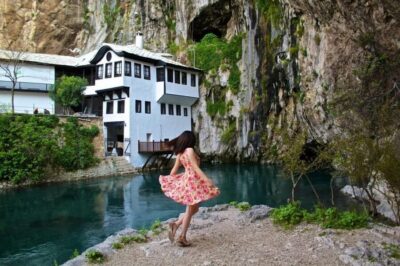
Mostar, Konjic, Blagaj Tekke, Pocitelj & Waterfall
Read our review →
Fall of Yugoslavia, Sarajevo War Tour with Tunnel of Hope Museum and Frontlines
Read our review →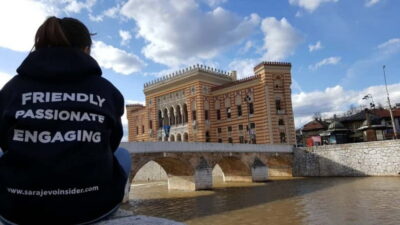
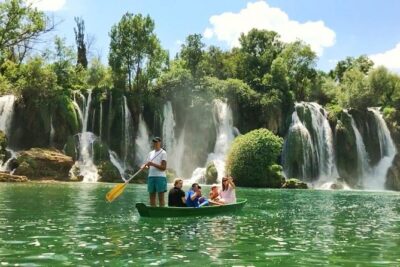
Mostar, Konjic, Sufi House, Pocitelj & Kravice Falls
Read our review →
Tunnel Museum Yugoslavia War Tour with War Veteran
Read our review →
ROSES OF SARAJEVO (Official WAR + CITY tour)- Story of a Survivor
Read our review →
Tunnel Museum: Bosnian & Yugoslav Wars Tour with War Veteran
Read our review →Browse the lists this tour appears in