
Reviewed · TUNNEL OF HOPE & SIEGE SITES
Sarajevo Under Siege: A War History Tour
Sarajevo teaches fast, then stays with you. This 3-hour Sarajevo Under Siege tour turns the city into a map of survival, starting with the White Fortress viewpoint and ending at the rebuilt Vijećnica City Hall.
I love how the guides, including Suvad and Evan from past groups, connect big events to human details, and I love the pacing with air-conditioned driving so you are not stuck doing long stretches of walking. One consideration: the subject matter is intense, and the booking info lists entrance fees even though some stops are marked as ticket free, so I recommend confirming what you will pay on the day.
Pickup is offered from any hotel or location in central Sarajevo, and it begins about 15 minutes before the 1:30 pm start. You get a mobile ticket, WiFi on board, and the tour runs in English as a private outing for your group.
In This Review
- Key highlights you should plan around
- Getting oriented at Vijećnica, then mapping the siege
- Bijela tabija White Fortress: a scenic start with strategic context
- Zetra Olympic Hall neighborhood: personal war memory you cannot fake
- Sniper Alley by car: understanding fear as a daily timetable
- Tunnel of Salvation: walking the 1993 lifeline under the runway
- Lukavica and Dayton: how peace reshaped the city into two narratives
- Vijećnica City Hall and the Library Fire: destruction, rebirth, and identity
- Price and what the $30.10 really buys you
- Private format, pickup timing, and comfort that keeps the tour moving
- Who should book Sarajevo Under Siege?
- Should you book this tour?
- FAQ
- Where is the meeting point for the tour?
- What time does the tour start?
- How long is the Sarajevo Under Siege tour?
- Is hotel pickup offered?
- Is this a private tour?
- Is the tour offered in English, and is there WiFi on board?
- Are entrance fees included in the price?
- What happens if the weather is bad or I need to cancel?
Key highlights you should plan around
- White Fortress (Bijela tabija) panorama first so the war story has real geography behind it
- Zetra Olympic Hall area, lived-in war memories tied to a guide’s family history
- A drive-by of Sniper Alley to understand how movement itself became dangerous
- Tunnel of Salvation walk-through of the 1993 lifeline under the airport runway
- Lukavica and post-war division explained through the Dayton Peace Agreement and what you can still see
- Vijećnica City Hall restoration after the 1992 destruction of the National Library collections
Other siege-era sites around Sarajevo:
- Fall of Yugoslavia, Sarajevo War Tour with Tunnel of Hope Museum and Frontlines
★ 5.0 · 1,314 reviews - Sarajevo: Tunnel Museum Yugoslavia War Tour with War Veteran
★ 5.0 · 1,111 reviews - Sarajevo: Tunnel of Hope Tour – Survival and Resilience
★ 4.8 · 630 reviews - Tunnel Museum: Bosnian & Yugoslav Wars Tour with War Veteran
★ 5.0 · 551 reviews
Getting oriented at Vijećnica, then mapping the siege
Most history tours start with a date. This one starts with a place: Vijećnica, Sarajevo City Hall. You meet at Hafiza Ibrahima Trebinjca 10, right at the symbolic heart of the city, which matters because the Siege of Sarajevo was not only about battles. It was also about culture, identity, and control of the city’s routines.
From here, you head out by car, which I like for two reasons. First, Sarajevo’s siege story is spread across neighborhoods and you will save real time. Second, it keeps you warmer and more comfortable as you move between viewpoints, memorial spaces, and the tunnel.
The tour ends back at the meeting point, so you finish where you started, with your understanding tied to one concrete landmark instead of scattered impressions.
Bijela tabija White Fortress: a scenic start with strategic context
The first stop is Bijela tabija, the White Fortress. It was originally built in the 16th century, and it gives you the kind of view that makes Sarajevo feel instantly readable. From the high ground, you can see why this city mattered to whoever controlled the surrounding routes and approaches.
But the viewpoint is not just pretty. Your guide uses it to explain Sarajevo’s strategic position over time, moving from Ottoman-era significance into the realities of the Siege of Sarajevo. This is the kind of setup that helps the rest of the tour click. When you later hear about sniper fire zones, front lines, and neighborhood divisions, you are not just listening. You are picturing the geography.
This stop is listed for about 30 minutes, and admission is marked as free here. Plan on taking in the views, then turning your attention to the story being told from that exact angle.
Zetra Olympic Hall neighborhood: personal war memory you cannot fake
Next comes Zetra Olympic Hall, but the real point is the surrounding neighborhood and the intimate memories connected to it. Your guide shares the story of where they lived during the war, in an area near the former maternity hospital that was heavily bombed.
This stop is one of the most emotionally direct on the route. You visit the place where the guide’s father was buried, and you also see the street where the guide grew up and played. That combination, a family burial site and a remembered childhood street, gives the Siege of Sarajevo a human scale. It turns the conflict into daily rhythms, not only military timelines.
The time here is about 15 minutes. It is short, but that is part of the value. You get enough to understand the setting without rushing through something that deserves quiet attention.
One practical thought: bring a respectful mindset. This is not a quick photo stop, even if the setting has views. You will get more out of it by listening closely.
More history told where it happened in Sarajevo:


Sniper Alley by car: understanding fear as a daily timetable
After the walking and the viewpoint, the tour shifts to movement by vehicle with a drive along one of Sarajevo’s infamous streets during the war, Sniper Alley. This is described as a main avenue under constant sniper fire, where crossing could be a life-or-death decision.
What I find powerful here is the focus on why people were crossing in the first place. Your guide shares stories about residents risking their lives just to fetch water, food, or reach safety. That detail matters, because it reframes the siege from something abstract into something you recognize instantly: errands, necessities, and the basic problem of simply getting through the day.
You will pass modern buildings now, and that contrast is intentional. It helps you feel the shock of how quickly normal streets became dangerous corridors. Standing there today, it is hard to imagine the same road as a constant threat, but the guide’s narration puts you back into that reality.
Tunnel of Salvation: walking the 1993 lifeline under the runway
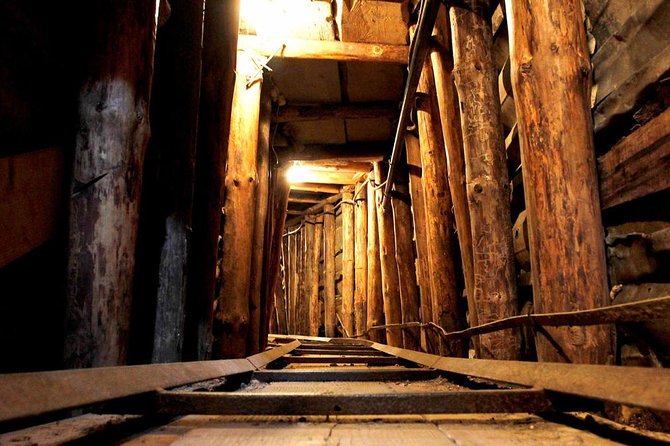
The Tunnel of Salvation, sometimes referred to as the Tunnel of Hope, is the stop most people do not forget. It is one of the most important sites of the Bosnian War. The tour explains that the tunnel was dug secretly beneath the airport runway in 1993, connecting besieged Sarajevo with the outside world.
On this tour, you do not just look at a display. You walk through a section of the original tunnel. It is narrow, underground, and built for function under pressure. That physical experience is why it lands so hard, even if you already know the basic facts from documentaries.
You also see authentic wartime artifacts and watch a short documentary about the Siege. That mix helps you connect three layers:
- what the tunnel looked like,
- what it carried,
- and why it kept people alive.
Time here is about 1 hour 20 minutes, and admission is listed as free for this stop on the route description. That length is good. It lets the story settle into your head instead of feeling like one more rushed museum stop.
Lukavica and Dayton: how peace reshaped the city into two narratives
After the tunnel, you drive through Lukavica, which the tour frames as once part of the front line during the Siege of Sarajevo. Today, it belongs to Republika Srpska. Your guide uses the ride to explain the post-war division of Bosnia and Herzegovina into two entities: the Federation of BiH and Republika Srpska.
Then the guide ties it to the Dayton Peace Agreement and what that meant for Sarajevo’s layout and identity. This portion is especially useful if you have ever wondered why cities can feel split long after the fighting ends.
You will also see graffiti and murals connected to wartime figures, including Ratko Mladić. The tone here is not celebratory. It is a reminder that memories of the war still live in public spaces, and those visuals can reflect political division instead of shared reconciliation.
This segment is built to encourage reflection. If you are looking for a tour that treats peace as more than a signature on paper, this is where you feel that shift.
Vijećnica City Hall and the Library Fire: destruction, rebirth, and identity
The final stop is Sarajevo City Hall, Vijećnica. It was originally built in 1896 during the Austro-Hungarian period. Before the war, it housed the National Library. In August 1992, Serbian forces shelled the building, and it burned almost two million books and manuscripts.
Seeing the restored Vijećnica after that kind of story is a jolt. The tour presents it not as a pretty end point, but as a cultural symbol. You are meant to connect the siege to what was targeted, and you are meant to think about why rebuilding the library and restoring the landmark matters for Sarajevo’s identity today.
Admission for this stop is not clearly listed as free in the general fees section, so I would plan around a possible entrance cost depending on how the operator applies fees that day.
Price and what the $30.10 really buys you
The headline price is $30.10 per person, and it is a fair starting point for a guided, private 3-hour experience. You are paying for more than narration, you are paying for transport and local interpretation.
What is included:
- Air-conditioned vehicle
- Private transportation
- WiFi on board
What is not included:
- Entrance fees listed as €10.25 for adults and €5.25 for students, War tour in Sarajevo.
Here is the practical way to handle it. Some stops in the route description are marked as ticket free, yet the overall fee note lists entrance prices that are not included. That means the real out-of-pocket cost can depend on how the operator applies entrance charges across the sites that day. Before you lock it in, check what your ticket includes for the tunnel and the key landmark, since those are usually the places where fees might apply.
Even with a possible add-on, the value still makes sense if you want a guide who connects each stop into one coherent story, without you trying to piece everything together on your own.
Private format, pickup timing, and comfort that keeps the tour moving
This is a private tour/activity, meaning it is only your group. That matters because the stops are emotional, and you will likely have personal questions. A private format also tends to make it easier for your guide to manage pacing, time at viewpoints, and time spent listening during more solemn moments.
Pickup is available from any hotel or location within Sarajevo city center. Pickup begins 15 minutes before the tour starts, and the start time is 1:30 pm. Your tour includes a mobile ticket and you are close to public transportation, which is useful if you decide to come to the meeting point instead of being picked up.
Because the tour mixes short walking with drives, the air-conditioned vehicle is not a luxury afterthought. It makes it easier to stay focused and comfortable between stops.
Who should book Sarajevo Under Siege?
Book this if you:
- want a history lesson tied to real streets and specific landmarks
- like guided interpretation more than reading plaques alone
- prefer a private group experience with time for questions
- are ready for a serious subject told with sensitivity and respect
This is less ideal if you want a casual, lighthearted city stroll. Even though there are viewpoints and restored buildings, the core story is about siege survival, division, and cultural loss. You should go in mentally prepared for that weight.
Should you book this tour?
If your goal is to understand how Sarajevo’s war shaped everyday life and how the city still carries those memories, I think this is a strong choice. The tour format does something many one-off history stops do not: it builds a route that goes from height and strategy, to neighborhood memory, to the tunnel lifeline, to post-war divisions, and then to Vijećnica as a cultural anchor.
Two final tips for getting the best value:
- Plan for the possibility of entrance fees even if some stops are labeled free on the route notes, and confirm what you will pay for your ticket type.
- Give yourself time to absorb. This tour works best when you treat it as a story you listen to, not a checklist you rush through.
FAQ
Where is the meeting point for the tour?
The tour meets at Vijećnica (VC5M+8GF, Hafiza Ibrahima Trebinjca 10, Sarajevo 71000, Bosnia and Herzegovina).
What time does the tour start?
The start time is 1:30 pm.
How long is the Sarajevo Under Siege tour?
It runs for about 3 hours.
Is hotel pickup offered?
Yes. Pickup is offered from any hotel or location within Sarajevo city center. Pickup starts 15 minutes before the tour begins.
Is this a private tour?
Yes. It is a private tour/activity, meaning only your group participates.
Is the tour offered in English, and is there WiFi on board?
The tour is offered in English, and there is WiFi on board. You also receive a mobile ticket.
Are entrance fees included in the price?
Entrance fees are not included. Entrance fees are listed as €10.25 per person for adults and €5.25 per person for students.
What happens if the weather is bad or I need to cancel?
You can cancel for free up to 24 hours in advance for a full refund. If the experience is canceled due to poor weather, you will be offered a different date or a full refund.
Most recently added near Sarajevo
- Sarajevo : Private Walking Tour With A Guide (Private Tour)★ 5.0 · 1 review
- Sarajevo: Islamic Tour | 500+ years of Glorious Heritage★ 5.0 · 1 review
- Sarajevo: Srebrenica – A Journey of Remembrance★ 5.0 · 1 review
- Transfer tour Sarajevo-Dubrovnik★ 5.0 · 1 review
- Bunker: Tito’s Secret & Boracko Lake Tour from Sarajevo★ 5.0 · 1 review
- Svrzo House Entrance Ticket★ 5.0 · 1 review
- Thrilling Rafting Adventure on the Neretva River with Lunch★ 5.0 · 1 review
- Private transfer (FROM-TO) Sarajevo – Dubrovnik★ 5.0 · 1 review
Tunnel of Hope & Siege Sites, compared.
Fall of Yugoslavia, Sarajevo War Tour with Tunnel of Hope Museum and Frontlines
Read our review →
Tunnel Museum Yugoslavia War Tour with War Veteran
Read our review →
Tunnel Museum: Bosnian & Yugoslav Wars Tour with War Veteran
Read our review →
Sarajevo War Tour: A Veteran’s Story of the Siege (fees included)
Read our review →
Srebrenica Genocide Study Tour with War Veteran
Read our review →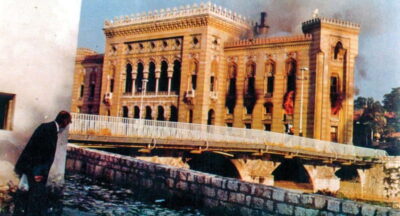
Browse the lists this tour appears in