
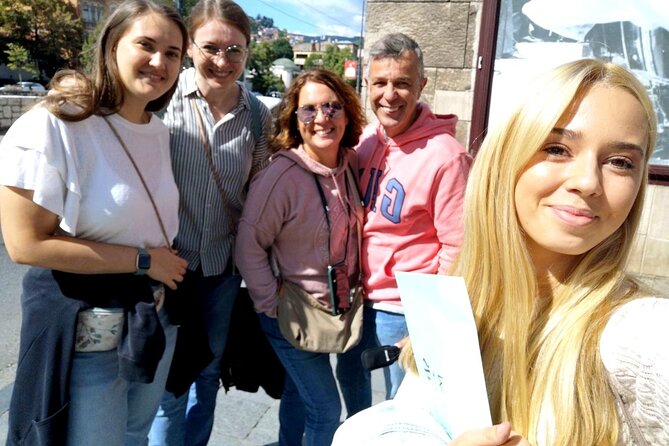
Reviewed · HISTORICAL TOURS
Sarajevo genuine walking tour: Steps through history
Sarajevo history walks right up to you. In about two hours, this guided route threads together Ottoman-era streets, centuries of different faiths, and the Latin Bridge connection to 1914. You’ll also pick up context for why Sarajevo feels so tight and close, even when the stories are huge. Latin Bridge is the dramatic finish.
Two things I really like: the tour is private, so you can ask questions and keep a pace that fits you. And the stops are practical and well chosen, moving from Sarajevo’s City Hall legends to Baščaršija’s landmarks to major religious sites you’ll actually want to see in person. Guides like Amilia and Sanela are repeatedly praised for answering questions and making history feel real, not like classroom facts.
One possible drawback: with so many highlights packed into 2 hours, you won’t get long sit-down time at each place. You’ll see and learn, but it’s a walk, not a slow museum day, so wear comfortable shoes and don’t expect deep reading time.
In This Review
- Key points worth knowing
- Sarajevo City Hall to Latin Bridge, built like a story
- Starting at Sarajevo City Hall and the spite house legend
- Baščaršija Square and Sebilj Fountain, the classic Sarajevo scene
- Old Serbian Orthodox Church to show how close faiths are
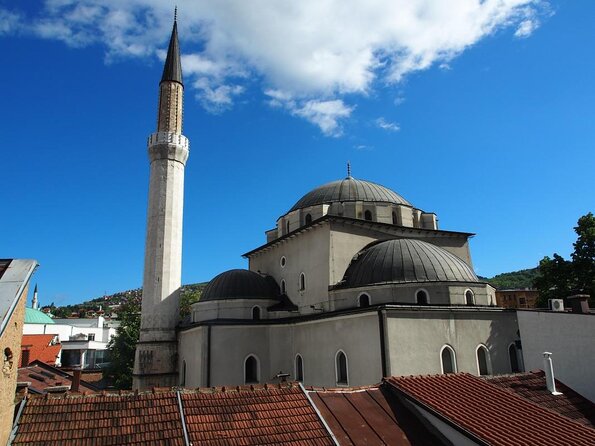
- Gazi Husrev-beg Mosque, Ottoman architecture with added layers
- Jewish Museum stop, a short visit with heavy context
- Sacred Heart Cathedral, faith and survival in one view
- Latin Bridge, the Sarajevo moment that ties to WWI
- How the pace works in real life
- Price and value, what you get for $27.61
- Who this private walking tour fits best
- Should you book this Sarajevo walk?
- FAQ
- Where does the tour start?
- How long is the walking tour?
- Is this a private tour?
- What language is the tour offered in?
- Which major sights does the route include?
- Do the stops require admission tickets?
- Can I cancel and get a full refund?
Key points worth knowing
- Private group format means you only share the route with your party
- A tight route through multi-faith Sarajevo, with religious buildings clustered very close together
- Baščaršija Square plus Sebilj Fountain gives you the classic Sarajevo streets-and-squares feeling
- Ottoman stops with real detail, especially at Gazi Husrev-beg Mosque
- Latin Bridge is the historical payoff, tied to Arch Duke Franz Ferdinand and the start of WWI
- Free admission at every listed stop, so you avoid surprise ticket costs
A few more Walking Tours in Sarajevo
- Sarajevo: Grand Walking Tour Through Time and Cultures
★ 4.8 · 1,236 reviews - Sarajevo: 2 Hours Old Town Walking Tour With Local Guide
★ 5.0 · 505 reviews - Private Walking Tour, Food Tasting and Bosnian Coffee in Sarajevo
★ 5.0 · 255 reviews - Sarajevo Grand Walking Tour
★ 5.0 · 232 reviews
Sarajevo City Hall to Latin Bridge, built like a story
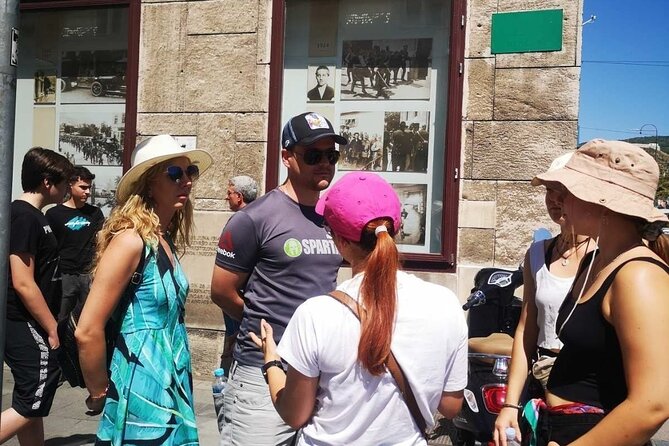
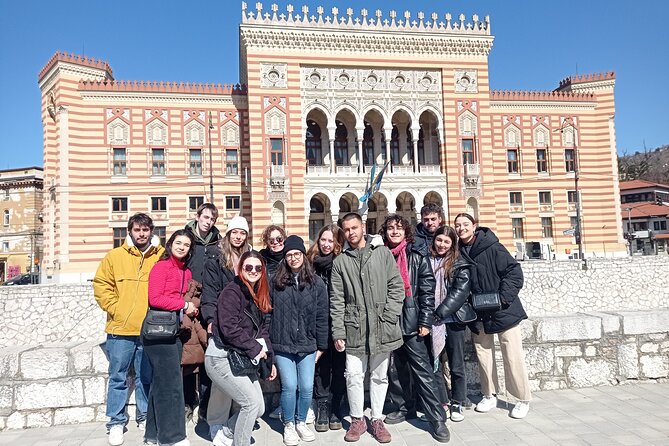
This tour is basically a guided walk through the way Sarajevo layers its past. You start at Sarajevo City Hall, then work your way across Baščaršija and the inner-city religious landmarks, before landing at Latin Bridge, where the famous assassination link connects Sarajevo to the start of WWI. The best part is the flow. Each stop adds a new chapter, and the distance between places keeps the momentum going.
Because it’s private, I like that you are not stuck with the slowest person in the group or the fastest one trying to sprint ahead. Your guide can answer your questions on the spot, and the pace stays human. The reviews also highlight that guides like Amilia and Sanela are strong at responding to questions, which matters on a tour like this, where the history can feel complicated fast.
If you want a Sarajevo overview that still feels specific and grounded, this route does that. It is not trying to cover everything. It focuses on the places that help you understand how Sarajevo got its identity.
Starting at Sarajevo City Hall and the spite house legend
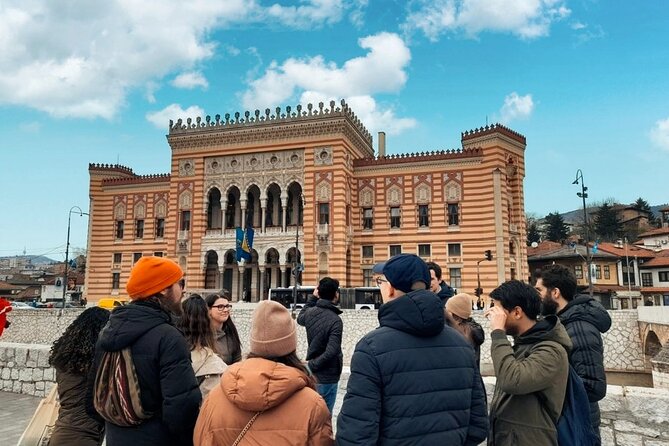
The walk begins at Sarajevo City Hall on Obala Kulina Bana. The building is described as pseudo-Moorish in style, and you get a sense right away that this city likes big, showy architecture when it wants to make a point. You’ll also hear the legend about the spite house, a story attached to the City Hall area that helps put personality into the place.
At around 20 minutes, this first stop is long enough to get your bearings without letting the tour drag. I like this opener because it gives you a foundation before the tour starts bouncing between faiths, eras, and neighborhoods. It’s also free of admission for your listed time here, so you are not paying to access the view of the building and the guide’s explanations.
If you are someone who tends to tune out at the first stop on walking tours, this one is a good test. The City Hall story is the kind of detail that makes the rest of the walk easier to follow.
Baščaršija Square and Sebilj Fountain, the classic Sarajevo scene
Next comes Baščaršija Square and the Sebilj Fountain. This is where Sarajevo shifts into its old-city mood. The fountain is presented as a symbol of Sarajevo’s cultural heritage, and your guide’s job here is to connect the dots between a landmark you’ve probably seen in photos and the lived-in city around it.
You only spend about 15 minutes here, so it helps to treat this as a quick orientation moment. Take the couple of minutes to look closely at the fountain, then let the guide talk through why it matters. If you try to do everything yourself, you might miss the point. If you listen for the city meaning, the whole square feels more readable.
This stop is also free of admission based on the info for the tour. That’s a nice value win, because it keeps your money where it should be, on time and comfort, not on extra tickets.
Another way to spend the day from here:
- Fall of Yugoslavia, Sarajevo War Tour with Tunnel of Hope Museum and Frontlines
★ 5.0 · 1,314 reviews


Old Serbian Orthodox Church to show how close faiths are
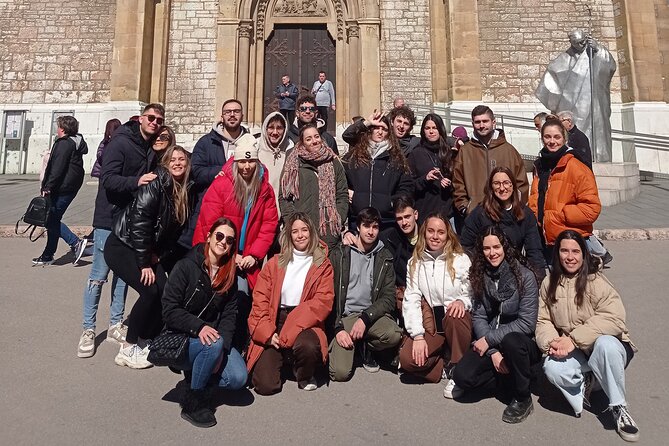
After Baščaršija, the route moves to the Old Serbian Orthodox Church, dedicated to Archangels Michael and Gabriel. This is one of Sarajevo’s older houses of worship, and the guide highlights its Byzantine architecture. Even if you do not know a lot about Byzantine style, the point here is clear. The building is a visual marker of how long Christian traditions have been present in the city.
You get about 10 minutes at this stop, which is short, but enough to spot the architectural cues and understand the church’s role in Sarajevo’s story. It’s a good reminder that “religious landmark” is not just about religion. It’s also about architecture, community presence, and the way a city remembers itself.
One of the tour’s strongest ideas is that Sarajevo’s main religious landmarks sit very close together. After you visit the major multi-faith objects, the guide brings your attention to how close they are, described as about 100 square meters apart. That proximity is a big part of why Sarajevo feels different from many other European capitals.
Gazi Husrev-beg Mosque, Ottoman architecture with added layers
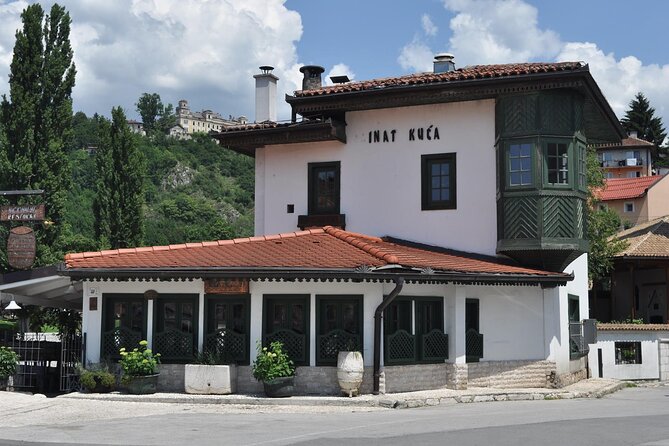
Then you head into the heart of the Baščaršija district to Gazi Husrev-beg Mosque. This stop is timed for about 15 minutes. The focus is on Ottoman architecture, and you also see that the mosque complex includes more than just the worship space.
The info you get here includes a madrasa, a library, and a clock tower. In other words, you are not just looking at a single building. You are looking at a whole complex designed to support religious life and education. For me, that’s what makes this stop more than sightseeing. It shows how institutions worked together in Ottoman Sarajevo.
Admissions are listed as free for your time at stops like this one. So you are not paying extra to get the core experience of seeing the complex and hearing the context. This is also a great place in the walk to ask any questions that came up earlier. If your guide is strong, like Amilia or Sanela were praised for being, you should get clear answers here.
Jewish Museum stop, a short visit with heavy context
Next comes the Jewish quarter and the Jewish Museum of Bosnia and Herzegovina. This part is timed for about 10 minutes. The tour frames it around the stories of resilience and heritage of Sephardic Jews in Bosnia and Herzegovina.
Because the time is short, you’ll want to keep your expectations realistic. This is not a long museum session. It’s a guided, human-scale introduction that helps you understand why the community mattered, and why the museum exists to carry those stories forward. The value here is context, not hours of reading.
It’s also a reminder that Sarajevo’s identity is not only built from one era or one faith story. The route is intentionally multi-threaded, and this stop adds a critical one. If you like your city tours to connect architecture to actual people, this is the kind of stop that will stick.
Sacred Heart Cathedral, faith and survival in one view
After the Jewish Museum stop, the tour moves to the Cathedral of the Sacred Heart of Jesus. You’re in the area for about 15 minutes. The guide’s message is straightforward: the cathedral is a striking piece of architectural beauty, and it also survived periods of conflict. The point is resilience, not just form.
This is another multi-faith stop, and it matters that the tour strings these sites together close in time. When you visit church and mosque and synagogue-related history within the same walk, you start to see how Sarajevo’s identity is shaped by overlap and proximity, not separation.
The tour also emphasizes how the multi-faith objects are very close to each other, described as roughly 100 square meters. That proximity is part of why the city feels both complicated and intimate at the same time. You do not have to travel far to see how different communities left their marks.
Admissions are listed as free for the cathedral time, which helps keep the tour’s overall value strong.
Latin Bridge, the Sarajevo moment that ties to WWI
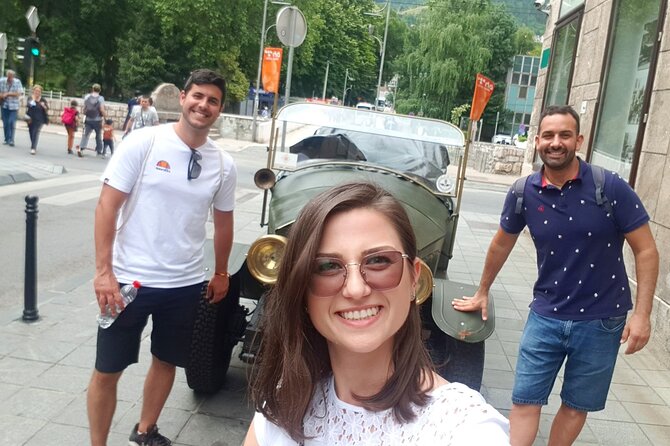
The final major historical anchor is Latin Bridge, where Arch Duke Franz Ferdinand was assassinated and where WWI is connected to. This is a 20-minute stop, which is a good choice. It gives you time to absorb the story without rushing, and it lands as the emotional payoff at the end of the walk.
I like that your guide frames Latin Bridge as a poignant journey, because that’s what it is. It’s not just a bridge. It’s a geographic link in a chain of events that changed Europe. Standing there with context makes it more than a photo stop.
This is also where the private tour format can help. If you have follow-up questions about how Sarajevo fits into bigger European events, your guide can tailor the answer to what you want to understand, rather than giving a one-size lecture.
Admissions are listed as free for your time here, so the “cost” is only your attention.
How the pace works in real life
The total duration is about two hours. The stop times are short by design: City Hall about 20 minutes, then Sebilj around 15, Old Serbian Orthodox about 10, Gazi Husrev-beg about 15, Jewish Museum about 10, Sacred Heart Cathedral about 15, and Latin Bridge about 20. That adds up to a tour that feels structured but not frantic.
You’ll move on foot between locations in the central area, and the tour is described as near public transportation. That matters if you are doing other things before or after, like heading to a museum or dinner.
Practical tip from a walking-tour point of view: because you’ll be switching between different public spaces and religious landmarks, bring comfortable shoes and plan to stand and walk. This is not the kind of day where you want fragile footwear.
Also, if you are the type who likes to linger at photo spots, build in a small buffer. The tour is efficient, so you may not get a long pause at every corner. The payoff is that you end with the Latin Bridge story, instead of running out of time early.
Price and value, what you get for $27.61
At $27.61 per person, this is priced like a solid, local-guide experience rather than a premium, all-day excursion. And the value math is helped by two things.
First, the tour is private. Even though the price is per person, the experience is designed for your group only, which is usually where you start feeling you got your money’s worth. Second, admission tickets are listed as free for the stops. That means you are not adding extra fees mid-route to see the main landmarks.
Two hours also fits how people actually travel. You can slot it into your Sarajevo day without losing half a day to transit or waiting. If you want a quick but meaningful introduction to the city’s identity, this is built for that.
If you prefer long museum time or deep reading, this may not be your best fit. But for a guided walk that turns major landmarks into a connected story, the price feels reasonable.
Who this private walking tour fits best
This tour makes the most sense if you want a guided overview that covers multiple sides of Sarajevo. The route is structured around Ottoman-era and old-city landmarks, plus Christian and Jewish heritage, and the Latin Bridge link to major European history. That combination is what gives the walk its character.
It’s also ideal if you appreciate a guide who answers questions clearly. The reviews praise Amilia and Sanela specifically for being professional and for responding to questions without leaving you stuck.
You might also like it if you have limited time in Sarajevo. Two hours is enough to get oriented, and you leave with the “why” behind what you saw, not just the “what.”
If you are someone who hates walking and wants only indoor stops, this might feel too active. And because most stops are short, it’s not built for slow contemplation. Think of it as a well-paced introduction, not a full day of lingering.
Should you book this Sarajevo walk?
I’d book it if you want a focused, question-friendly private introduction to Sarajevo’s old core. It’s especially worth it if you like the idea of seeing the city as multi-layered, with Ottoman architecture, churches and mosques close together, Jewish heritage, and the Latin Bridge story all in one route.
Skip it if you want a long museum day, or if you need long time at fewer stops. This tour is designed to be efficient, guided, and story driven.
If you do book, I suggest you come ready to ask questions. The whole point of a private format is that you can steer the conversation toward what you care about, whether it’s architecture, how communities lived side by side, or how Sarajevo connects to larger events.
FAQ
Where does the tour start?
You start at Sarajevo City Hall on Obala Kulina Bana, Brodac 1, Sarajevo 71000. The meeting point is near public transportation, and service animals are allowed.
How long is the walking tour?
The experience is about 2 hours. Each stop is timed, with City Hall around 20 minutes, Baščaršija and Sebilj around 15, Old Serbian Orthodox around 10, Gazi Husrev-beg around 15, Jewish Museum around 10, Sacred Heart Cathedral around 15, and Latin Bridge around 20.
Is this a private tour?
Yes. It is private, meaning only your group participates.
What language is the tour offered in?
The tour is offered in English. You also receive a mobile ticket, and confirmation is sent within 48 hours of booking when available.
Which major sights does the route include?
You’ll see Sarajevo City Hall, Sebilj Fountain in Baščaršija Square, the Old Serbian Orthodox Church, Gazi Husrev-beg Mosque, the Jewish Museum of Bosnia and Herzegovina, Sacred Heart Cathedral, and Latin Bridge.
Do the stops require admission tickets?
For the listed stops, admission ticket fees are listed as free.
Can I cancel and get a full refund?
Yes, you can cancel for free up to 24 hours before the experience start time for a full refund. If you cancel less than 24 hours before, the amount paid is not refunded.
More History Told Where It Happened in Sarajevo
- East Bosnia & West Serbia UNESCO heritage day tour from Sarajevo
★ 5.0 · 55 reviews - Sarajevo Full Day Tour: History, Culture, Nature, War & Olympics
★ 5.0 · 27 reviews - SARAJEVO STREET ART TOUR (art, history & mystery) – sARTajevo!
★ 5.0 · 18 reviews - BOSNIAN PYRAMIDS TOUR (nature, history & archeology)
★ 5.0 · 17 reviews
Most recently added near Sarajevo
- Sarajevo : Private Walking Tour With A Guide (Private Tour)★ 5.0 · 1 review
- Sarajevo: Islamic Tour | 500+ years of Glorious Heritage★ 5.0 · 1 review
- Sarajevo: Srebrenica – A Journey of Remembrance★ 5.0 · 1 review
- Transfer tour Sarajevo-Dubrovnik★ 5.0 · 1 review
- Bunker: Tito’s Secret & Boracko Lake Tour from Sarajevo★ 5.0 · 1 review
- Svrzo House Entrance Ticket★ 5.0 · 1 review
- Thrilling Rafting Adventure on the Neretva River with Lunch★ 5.0 · 1 review
- Private transfer (FROM-TO) Sarajevo – Dubrovnik★ 5.0 · 1 review
Historical Tours, compared.
East Bosnia & West Serbia UNESCO heritage day tour from Sarajevo
Read our review →
Sarajevo Full Day Tour: History, Culture, Nature, War & Olympics
Read our review →
SARAJEVO STREET ART TOUR (art, history & mystery) – sARTajevo!
Read our review →
BOSNIAN PYRAMIDS TOUR (nature, history & archeology)
Read our review →
Browse the lists this tour appears in