
Reviewed · TUNNEL OF HOPE & SIEGE SITES
Utopia of Tito’s Yugoslavia, Tito’s Bunker & Siege of Sarajevo
Sarajevo tells its story underground and on peaks. This full-day route connects Cold War planning with the lived reality of the Siege of Sarajevo, while you also get Olympic-era remnants on Igman and Trebević. I love the small group size of up to eight, which makes it easier to ask questions and actually follow the details. I also like that hotel pickup is included, so you spend less time figuring out logistics and more time listening.
One thing to plan for: it’s a long 10-hour day with lots of moving between sites, and lunch is not included.
In This Review
- Key things to know before you go
- A Sarajevo day that moves from nuclear fear to daily survival
- 8:00 am start, short stops, and why the small group matters
- Konjic Bridge: a bright start at a pre-war crossroads
- Tito’s ARK D-0 bunker: Facility D-0 and the logic of surviving nuclear war
- Igman Olympic sites: 1984 optimism meets siege-era memory
- The Sarajevo War Tunnel: the lifeline under the city
- Trebević Vidikovac: the front line on and above the Olympic map
- Olympic bobsleigh and luge track and the Jewish Cemetery: Sarajevo in two registers
- Guides and storytelling: where the tour becomes more than stops
- Price and value for $101.85: what you’re really paying for
- Who should book this Tito’s Bunker and Siege of Sarajevo tour
- Should you book Utopia of Tito’s Yugoslavia, Tito’s Bunker & Siege of Sarajevo?
- FAQ
- What time does the tour start and how long does it last?
- Is hotel pickup included?
- How many people are in the group?
- What are the main stops?
- Are entrance fees included for the bunker and the War Tunnel?
- Is lunch included in the price?
- What is the cancellation policy?
Key things to know before you go
- A two-site core theme: Tito’s ARK D-0 bunker plus the Sarajevo War Tunnel, both included
- Small group limit of eight for a more personal pace and better guide interaction
- Olympic places under siege context at Igman and Trebević, plus the bobsleigh and luge track
- High, wide views from Trebević that help you picture where fighting happened
- Entrance fees are built in for the key museums, with other stops generally free
Other siege-era sites around Sarajevo:
- Fall of Yugoslavia, Sarajevo War Tour with Tunnel of Hope Museum and Frontlines
★ 5.0 · 1,314 reviews - Sarajevo: Tunnel Museum Yugoslavia War Tour with War Veteran
★ 5.0 · 1,111 reviews - Sarajevo: Tunnel of Hope Tour – Survival and Resilience
★ 4.8 · 630 reviews - Tunnel Museum: Bosnian & Yugoslav Wars Tour with War Veteran
★ 5.0 · 551 reviews
A Sarajevo day that moves from nuclear fear to daily survival
This tour is built like a story with two main acts. First you see what Tito’s Yugoslavia imagined for an atomic future, inside ARK D-0. Then the day shifts into the siege reality, where the city’s lifeline ran through the Sarajevo War Tunnel.
You also get the extra layer that makes Sarajevo different from other history stops. Olympic venues and hopeful 1980s imagery are still in the mix, which turns your sightseeing into a sharper lesson: dreams can get crushed, then people rebuild their lives anyway.
8:00 am start, short stops, and why the small group matters
The day begins at 8:00 am, either at the Funky Tours office in the old town (Besarina čikma 5) or with pickup from your hotel in Sarajevo. Expect an air-conditioned vehicle and a professional English-speaking guide and driver.
With a group capped at eight, the pacing feels easier. Instead of rushing through questions, you can ask how one place connects to the next, like how command-and-control thinking in ARK D-0 contrasts with the emergency engineering of the War Tunnel.
Konjic Bridge: a bright start at a pre-war crossroads
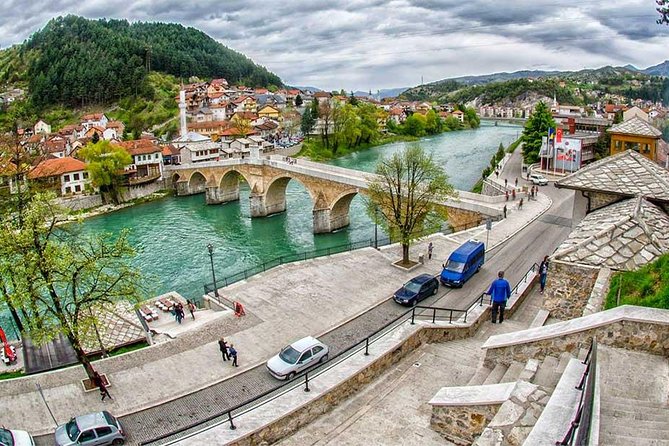
Your first stop is Konjic Bridge, a short visit to the older part of Konjic. The bridge is a 17th-century, 6-arch structure over the turquoise Neretva River, and the timing here often means you get that sunny, postcard-ready light people associate with central Balkans towns.
You’ll also hear how this area ties into the broader Yugoslav story, including the nearby presence of Tito’s Nuclear Bunker, sometimes called Facility D-0. The visit itself is brief, about 30 minutes, with the admission ticket listed as free.
Practical note: this early stop works well as a mental reset before the heavier sites later. You get to orient your brain, then the day turns serious.
Other trips to Konjic and the bunker:
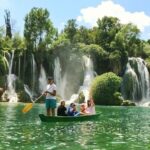
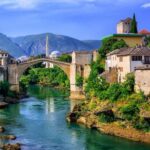
Tito’s ARK D-0 bunker: Facility D-0 and the logic of surviving nuclear war
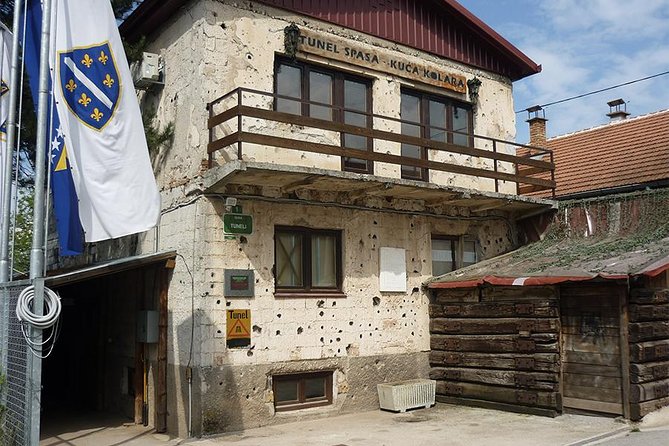
This is the headline stop for many people, and it’s easy to see why. ARK D-0 is described as a 6,500 square meter construction that took 26 years to build. Its job was to withstand a nuclear war and shelter more than 350 leaders and army generals.
What I find compelling here is that it’s not just a museum object. It’s presented as a whole system, built for management and command over armed forces during nuclear catastrophe. You get guided exploration of the facility, and the description also notes the site is used as a venue for a biennial of contemporary art. That mix of old fear and modern interpretation helps you see the bunker as something people keep trying to explain, not just a relic.
As you walk the labyrinth of the facility, the guide’s framing matters. The day’s narration is designed to connect Yugoslavia’s Cold War posture, communist paranoia, and the long shadow of how the country eventually broke apart. In other words, you’re not only touring concrete rooms, you’re learning how regimes think under threat.
You’ll spend about 1 hour 30 minutes here, and the entrance fee is included.
Igman Olympic sites: 1984 optimism meets siege-era memory
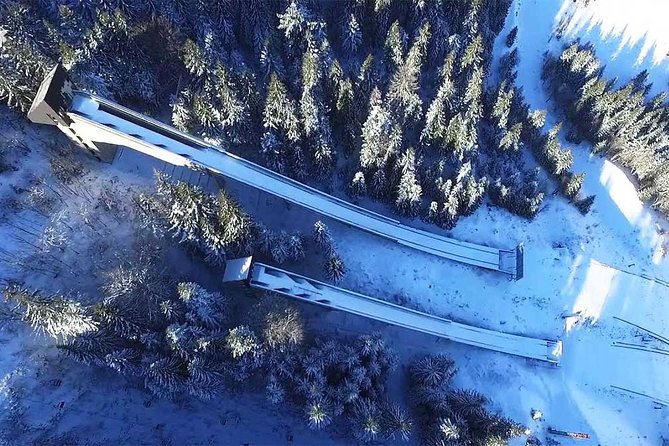
After leaving the bunker zone, the route heads toward Sarajevo and up to Igman Olympic mountain. The tour starts with the Olympic heritage tied to the 1984 Sarajevo Winter Olympics, including ski jumps and photo opportunities around Olympic podium areas.
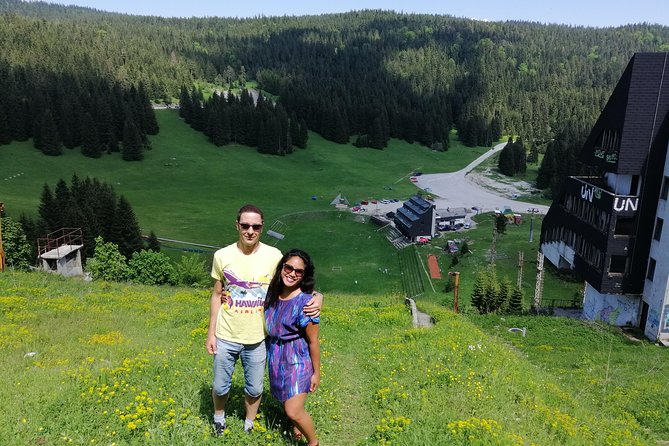
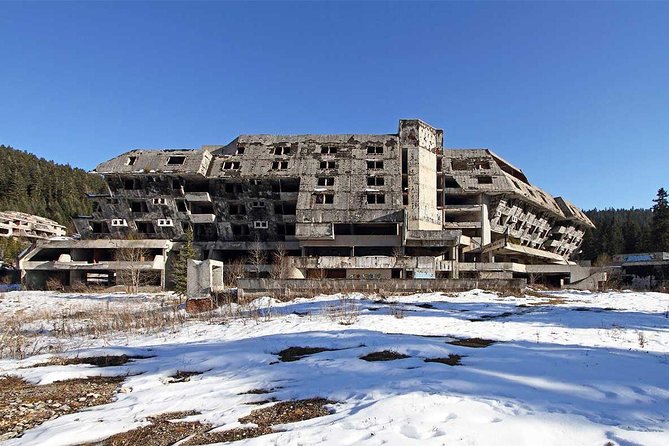
Then it pivots. Igman is not just about sports history. It’s tied to the story of the besieged city, and the mountain’s Olympic structures become a way to explain hardship. The guide also points out the Igman Olympic hotel, a 162-room property described as a showplace for mountain luxury built for the 1984 Games. The key detail is what happened next: the hotel was badly damaged during the Balkan War and the Siege of Sarajevo.
Expect about an hour at Igman. The best part of this stop is the contrast: you can almost feel the difference between a place designed for celebration and a place forced into survival mode.
The Sarajevo War Tunnel: the lifeline under the city
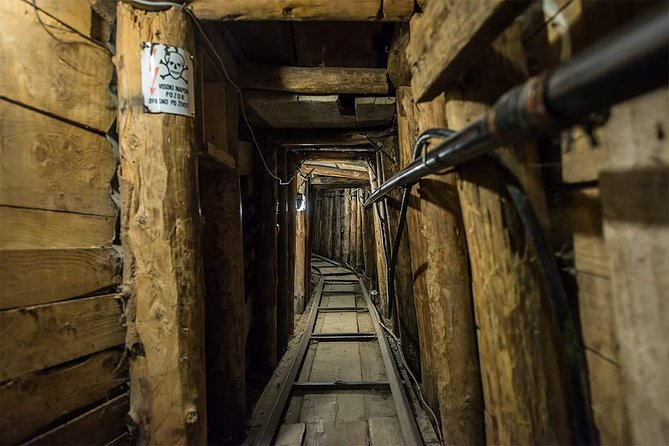
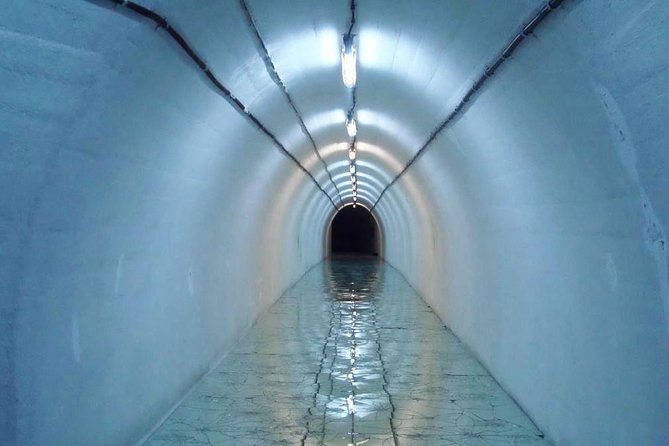
Next comes the Sarajevo War Tunnel, the kind of place that makes you slow down without anyone telling you to. The tour includes the museum exhibition and a short movie explaining the urgent need for building the underpass. Then you go through the tunnel itself.
This is where the day’s theme turns from “what leaders planned” to “how people lived.” ARK D-0 shows the idea of surviving a world-ending scenario. The War Tunnel shows a real-world workaround, built under siege conditions so the city could keep functioning.
The tour time here is about 1 hour 30 minutes, with the admission fee included.
If you’re sensitive to heavy historical content, this stop may hit harder than the bunker. That’s not bad. It’s part of why the combination works: it gives you a fuller picture of what siege survival required.
Trebević Vidikovac: the front line on and above the Olympic map
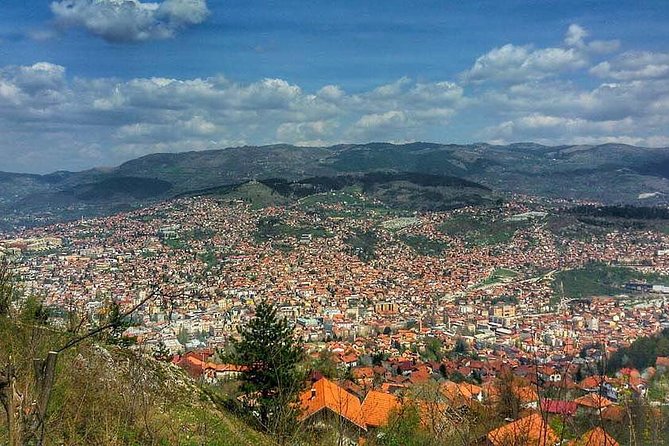
From the tunnel, you continue toward Trebević. Along the way, the tour mentions the Olympic Village Dobrinja, another 1984-era reference point used to connect neighborhood stories to the siege.
Then you reach Trebević Olympic mountain, with the emphasis that much of its length was a first line and a place of battles. This stop is a guided walk through what you can still see where fighting happened, with panoramic views that help you understand how the city’s geography mattered.
You may notice remnants tied to destruction and warfare, including bunkers, minefields, tank caterpillar traces, trenches, and visible shrapnel. The tour also points out sites associated with the 1984 Winter Olympics, such as Zlatište, Osmice, and Sarajevo Bobsleigh. Some of these areas are described as not yet repaired or restored, so you get to see how long the scars of war can remain in place.
The guide also frames Trebević’s height and visibility as crucial to the siege story, including how Republic of Srpska forces had advantages but did not manage to take over Sarajevo city. You’ll get the most from this stop if you think like a defender and an observer, imagining who could see what and why.
After about your allotted time, the tour returns toward the city, setting up two final stops.
Olympic bobsleigh and luge track and the Jewish Cemetery: Sarajevo in two registers
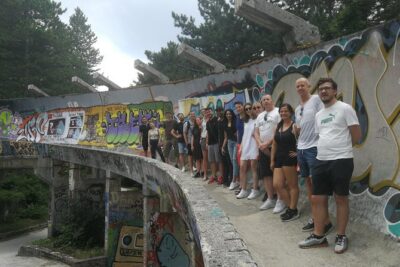
Back in Sarajevo, the route includes the Sarajevo Olympic bobsleigh and luge track. This is described as historically important and also known as a street art paradise. It’s an unusual, human counterpoint after the earlier sites: the track is still a place people create around, even when it carries war-era memory.
Then you finish at the Jewish Cemetery, one of the larger Jewish cemeteries in Europe. During the Siege of Sarajevo, it’s described as a main front line and a sniper nest for the Army of Republic Srpska, overlooking Sarajevo sniper alley. This stop is short, around 20 minutes, but it lands with weight because the ground itself is part of the battlefield story.
Together, these two stops help you understand Sarajevo as layered. You’re not only seeing damage. You’re seeing what people repurpose, what they remember, and what they still cannot erase.
Guides and storytelling: where the tour becomes more than stops
A lot of tours list sites. This one pays attention to how the guide connects them into a single arc.
In the experience of this tour’s participants, several guides are highlighted by name, including Hamza, Emir, Ahmed, Salem, and Agnar. The common thread is passion and clear detail, with one guide described as sharing firsthand experience of living through the history. Even if you never get that exact narrator, you can expect a guide who knows how to make facts feel real without losing you in jargon.
The practical value of good guide storytelling is simple: you remember more, and you understand the “why” behind each place. You also avoid the common problem of turning heavy history into a checklist.
Price and value for $101.85: what you’re really paying for
At $101.85 per person for about 10 hours, the price can look like a lot until you break down what’s included.
You get:
- Pickup from hotels in Sarajevo or meeting at the Funky Tours office
- A professional English-speaking guide and driver
- Air-conditioned transport
- Entrance fees included for Tito’s ARK D-0 bunker and the Sarajevo War Tunnel
- Other stops listed as free, like Konjic Bridge and major Olympic and cemetery sites
The bunker entrance is listed as 10 EUR for adults, and the War Tunnel entrance is listed as 5 EUR for adults (2.5 EUR for children and students). The exact conversion into the $101.85 you pay depends on exchange rates, but the key idea is that your ticket costs for the two headline museums are already baked in.
What’s not included is lunch. That’s the one budget gap you should handle yourself, either by eating before the tour or planning to buy something during breaks in Sarajevo later.
Where the value gets strongest is the scope. You’re not driving yourself to scattered sites across a day, and you’re not buying separate museum entries for the hardest-to-plan stops. Add the capped group size, and the day feels efficient rather than rushed.
Who should book this Tito’s Bunker and Siege of Sarajevo tour
This tour is a good fit if you want:
- A single day overview of Tito-era Cold War thinking and the Siege of Sarajevo
- Olympic-era sites placed in their real historical context
- A small group experience that leaves room for questions
- English guidance for places that can otherwise feel confusing or emotionally distant
It’s also a good pick for first-time visitors to Sarajevo who want a structured day without feeling stuck in a traffic-heavy scramble.
You might think twice if:
- You dislike long days with continuous stops and limited time at each site
- You need lunch included, since meals are not part of the package
- You’re very sensitive to war-related content, since the tunnel, front line viewpoints, and cemetery are heavy subjects
Should you book Utopia of Tito’s Yugoslavia, Tito’s Bunker & Siege of Sarajevo?
If you’re choosing between seeing Sarajevo’s history in pieces, or in one guided storyline, I’d book this. The combination of ARK D-0 and the War Tunnel gives you both the planned, political side and the survival, human side of siege history. Then the Igman and Trebević Olympic references turn it from a dark lecture into a sharper lesson about how places change.
Just plan for a full day and bring your appetite for difficult topics. If that sounds like your kind of travel, this is one Sarajevo tour that stays with you.
FAQ
What time does the tour start and how long does it last?
The tour starts at 8:00 am and lasts about 10 hours.
Is hotel pickup included?
Yes. Pickup can be arranged from any hotel in Sarajevo, or you can meet at the Funky Tours office in the old town.
How many people are in the group?
This activity has a maximum of 8 travelers.
What are the main stops?
You visit Konjic Bridge, ARK D-0 (Tito’s Nuclear Bunker), Igman, the Sarajevo War Tunnel, Trebević Vidikovac, the Olympic bobsleigh and luge track, and the Jewish Cemetery.
Are entrance fees included for the bunker and the War Tunnel?
Yes. Tito’s bunker entrance fee is included, and the Sarajevo War Tunnel entrance fee is also included.
Is lunch included in the price?
No. Lunch is not included.
What is the cancellation policy?
Free cancellation is available. You can cancel up to 24 hours in advance for a full refund.
Most recently added near Sarajevo
- Sarajevo : Private Walking Tour With A Guide (Private Tour)★ 5.0 · 1 review
- Sarajevo: Islamic Tour | 500+ years of Glorious Heritage★ 5.0 · 1 review
- Sarajevo: Srebrenica – A Journey of Remembrance★ 5.0 · 1 review
- Bunker: Tito’s Secret & Boracko Lake Tour from Sarajevo★ 5.0 · 1 review
- Svrzo House Entrance Ticket★ 5.0 · 1 review
- Transfer tour Sarajevo-Dubrovnik★ 5.0 · 1 review
- Thrilling Rafting Adventure on the Neretva River with Lunch★ 5.0 · 1 review
- Private transfer (FROM-TO) Sarajevo – Dubrovnik★ 5.0 · 1 review
Tunnel of Hope & Siege Sites, compared.
Fall of Yugoslavia, Sarajevo War Tour with Tunnel of Hope Museum and Frontlines
Read our review →
Tunnel Museum Yugoslavia War Tour with War Veteran
Read our review →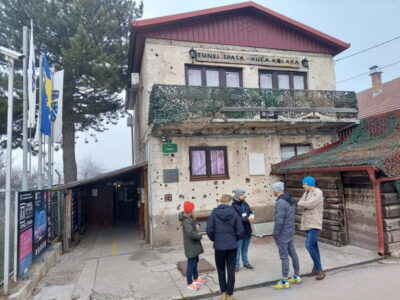
Tunnel Museum: Bosnian & Yugoslav Wars Tour with War Veteran
Read our review →
Sarajevo War Tour: A Veteran’s Story of the Siege (fees included)
Read our review →
Srebrenica Genocide Study Tour with War Veteran
Read our review →
Browse the lists this tour appears in