
Reviewed · MUSEUMS
SARAJEVO CONCEPTUAL ART TOUR (galleries, art and arhitecture)
Sarajevo has scars you can read. This small-group walk connects modern conceptual art with the city’s Sarajevo Roses and public memorials, using a real guide to turn street corners into meaning. I like that you do not just look at art, you get the context that makes it land, especially when the tour touches difficult history. One possible drawback: the timing is tight, so comfortable shoes matter if you are sensitive to a couple hours of hopping between stops.
You meet in central Sarajevo at Đulagina 2 at 1:00 pm, and the route is built for an easy on-foot flow. Even with only 15 people max, it still feels conversational, not rushed. Expect a mix of galleries, street art shaped by war-era events, and outdoor sculpture, with ticketed entry for some stops and free viewing for others.
In This Review
- Key things to know before you go
- What this Sarajevo conceptual art tour gives you, beyond gallery hopping
- Price and value for a 2 to 3 hour art-focused route
- Starting point near Đulagina 2, and how the tour stays easy to follow
- Stop 1: Brodac Gallery in an old prison turned into contemporary art
- Stop 2: Ferhadija pedestrian street and the Sarajevo Roses concrete scar
- Stop 3: Galerija Java in the center, where contemporary art gets a platform
- Stop 4: Veliki Park and Mensud Kečo’s memorial sculpture for Srebrenica
- Stop 5: Gallery Boris Smojo coffee break, then Skenderija Bridge and Festina Lente
- Why the guide matters, especially when the art touches war
- Group size, pacing, and what to pack for a smooth 2 to 3 hours
- Who should book this tour, and who might skip it
- Should you book this Sarajevo Conceptual Art Tour?
- FAQ
- How long is the Sarajevo Conceptual Art Tour?
- What is the tour price?
- What language is the tour offered in?
- How large is the group?
- Where does the tour start and when?
- Where does the tour end?
- Are admission tickets included?
- Is a mobile ticket provided?
- Is free cancellation available?
- What if the minimum number of travelers is not met?
Key things to know before you go
- Small group size (up to 15) keeps questions from getting lost
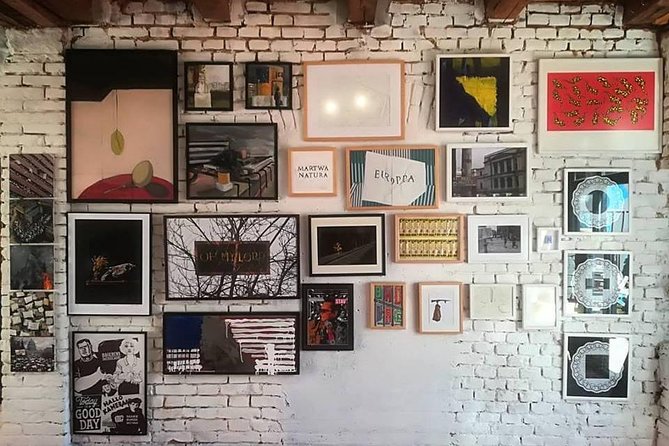
- Brodac Gallery is in an old prison building, now turned into a contemporary art space
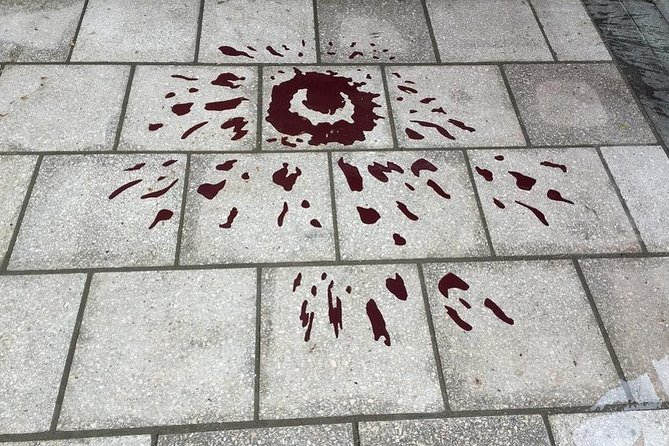
- Sarajevo Roses are a concrete explosion scar filled with red resin, treated as a visual language of the siege
- Galerija Java is centrally located, giving you time with contemporary work in a proper exhibit setting
- Veliki Park sculpture brings a memorial message outside, using materials like concrete, reinforcement bars, plastic, and silicon
- Festina Lente area adds a final viewpoint break before you wrap near Skenderija
More museums and collections in Sarajevo:
- Fall of Yugoslavia, Sarajevo War Tour with Tunnel of Hope Museum and Frontlines
★ 5.0 · 1,314 reviews - Sarajevo: Tunnel Museum Yugoslavia War Tour with War Veteran
★ 5.0 · 1,111 reviews - Tunnel Museum: Bosnian & Yugoslav Wars Tour with War Veteran
★ 5.0 · 551 reviews - Cable Car Olympic Tour With Museum
★ 5.0 · 17 reviews
What this Sarajevo conceptual art tour gives you, beyond gallery hopping
This tour is for you if you like modern art, but you also care about where art comes from in a real place. Sarajevo’s conceptual scene is tied to architecture, memory, and the way the city rebuilt itself after heavy urban warfare. You do not need to be an expert. The guide’s job is to translate, and the route is designed so each stop adds a new layer.
I also like the pace. In 2 to 3 hours, you hit five distinct areas with a mix of ticketed gallery time and free outdoor moments. It is enough to feel like you had a focused art day, without spending half your life indoors.
Price and value for a 2 to 3 hour art-focused route
The price is $33.64 per person, and in this length it is a fair deal for three reasons. First, parts of the tour include admissions (Brodac Gallery and Galerija Java), which already offsets some of the cost. Second, you get a guide who can connect art choices to Sarajevo’s urban story, including firsthand war-era perspective shared by the guide. Third, the group stays small, which usually means your questions get answered in real time.
If you are the type who tries to visit galleries alone, you might spend time figuring out where to go and what to pay attention to. Here, you get a route that is easy to follow, so the value is partly the guidance and partly the time saved.
Starting point near Đulagina 2, and how the tour stays easy to follow
You start at Đulagina 2, Sarajevo 71000, at 1:00 pm, and you end in the Skenderija area. A mobile ticket is provided, and the tour is offered in English. That combination matters because you are not waiting around for a printed ticket or dealing with unclear instructions when you meet.
The tour is also said to be near public transportation and suited for most travelers. Practically, that means you can plan your day around it without overcomplicating your schedule. If your Sarajevo trip is short, this is the kind of activity that fits neatly between other sightseeing plans.
Other Sarajevo trips worth comparing


Stop 1: Brodac Gallery in an old prison turned into contemporary art
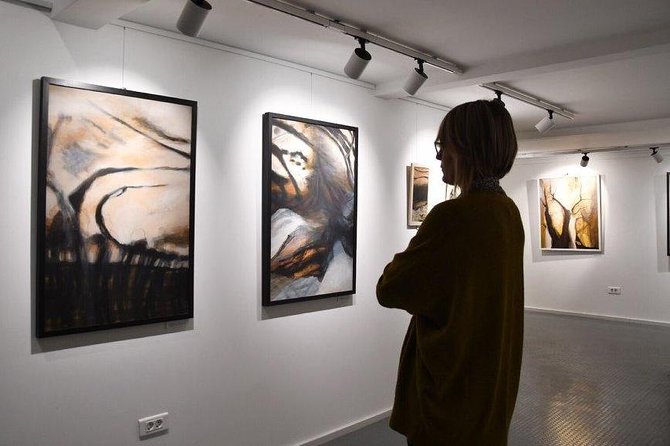
Stop one is Brodac Gallery, and it is located in an old building with a real past. It used to serve as a prison during the Austro-Hungarian occupation, and now it is used for contemporary Bosnian art exhibitions. That shift is not just a fun fact. It changes how you experience the space, because the building carries weight even before you see the art.
You get about 45 minutes here, and admission is included. You will also find a cozy vibe, plus craft beer on offer, including Gelender. I like that the gallery feels like a place you can actually talk in, not just a silent viewing room.
What to watch for: look at how the art is framed inside a former institutional space. You are not just looking at modern art, you are seeing contemporary work placed into a building that already tells a story.
Stop 2: Ferhadija pedestrian street and the Sarajevo Roses concrete scar
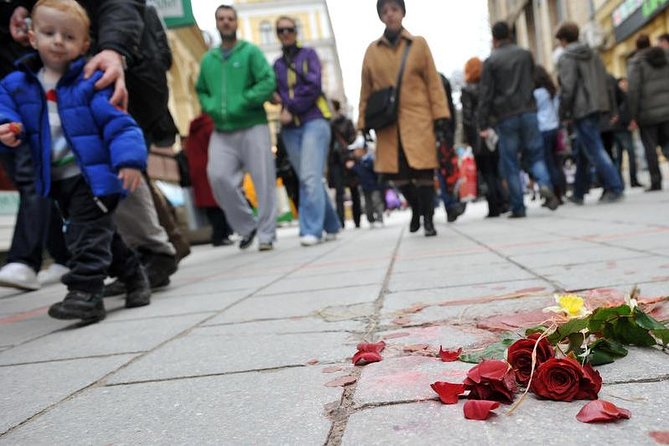
Ferhadija Pedestrian Street is a key east-west walkway in the city. On this part of the route, you focus on one striking feature: Sarajevo Roses. These are not decorative. They are a concrete scar from mortar shell explosion damage that was later filled with red resin.
The explanation is the point here, because the tour ties the visual pattern to the siege period, when thousands of shell explosions affected the city. When fragments spread across concrete, the resulting pattern looks almost floral in arrangement. That is the odd beauty of it, and the guide helps you hold both ideas at once.
You spend about 30 minutes at this stop, and admission is free. Practical tip: bring your phone for photos, but also take a moment to look without it first. This is one of those places where the context matters as much as the image.
Stop 3: Galerija Java in the center, where contemporary art gets a platform
Next is Galerija Java at Titova 21, right in the central part of town. This stop is about how Sarajevo’s contemporary art scene stays alive through spaces that support artists and different mediums. The tour time here is about 1 hour, and admission is included.
What I appreciate about this kind of gallery visit is that it is not just “look at art.” The setting is described as attractive and designed to give artists a chance to present work properly. You also get the sense that the gallery works on supporting and promoting both Bosnian and international artists, with collaborations across artistic mediums.
A good way to enjoy this stop: pick one artwork that feels most personal to you and then ask questions about it. Since the group stays small, you can usually get a clearer explanation than you would by reading placards alone.
Stop 4: Veliki Park and Mensud Kečo’s memorial sculpture for Srebrenica
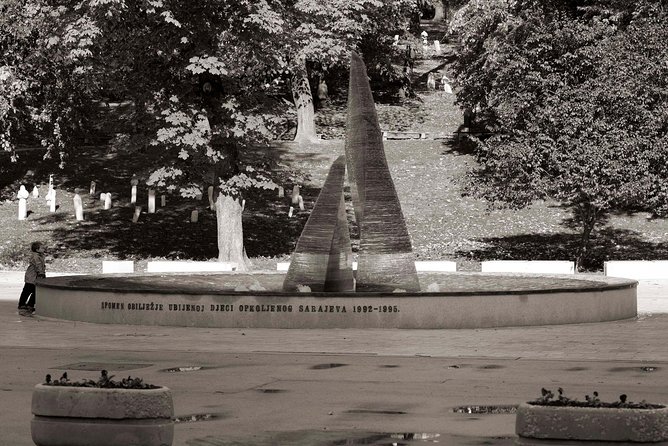
In Veliki Park, the tour turns from gallery space to outdoor memorial art. You see a sculpture by Bosnian artist and sculptor Mensud Kečo, dedicated to the genocide in Srebrenica. The sculpture is titled Nermine, dođi, and it uses materials like concrete, reinforcement bars, plastic, and silicon.
The guide links the work to a distressing documented photograph from Srebrenica. Even without knowing the background before you arrive, this stop gives you a framework for reading the work. You are not just looking at form. You are seeing a transformation of documentation into sculpture.
Plan for about 30 minutes here, and admission is free. Drawback consideration: outdoor memorials can feel emotionally heavy. If you are traveling with anyone who prefers lighter art, this is the stop to prepare for. Give yourselves a minute to process before you move on.
Stop 5: Gallery Boris Smojo coffee break, then Skenderija Bridge and Festina Lente
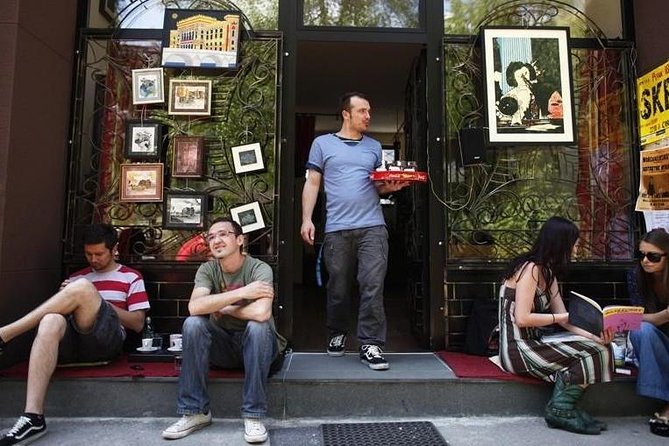
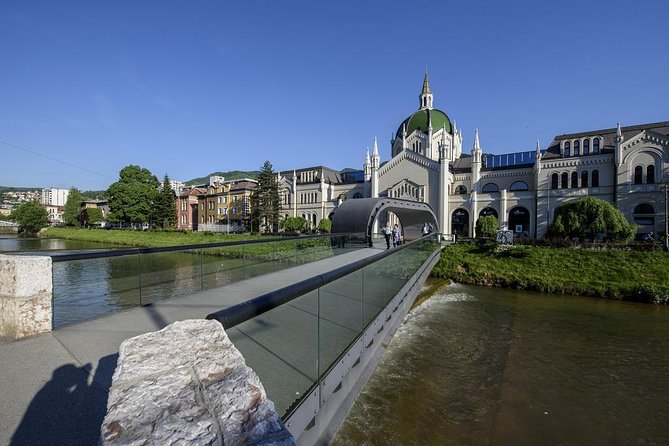
The final stretch includes a break and then a viewpoint. You first make a coffee stop at Gallery Boris Smojo, then head to see Skenderija Bridge, including the Festina Lente bridge feature.
This portion is about 30 minutes, and admission is included for the tour component here. I like that the tour ends with a more open urban landmark feel. It helps you shift from heavy memorial tone back into city-wide perspective, which can be a relief after a couple of more emotionally direct stops.
If you want practical value here: use this time to regroup, grab a drink, and ask the guide a last question you kept for later. By now you have context for what you are seeing, so your questions will probably make more sense to the guide too.
Why the guide matters, especially when the art touches war
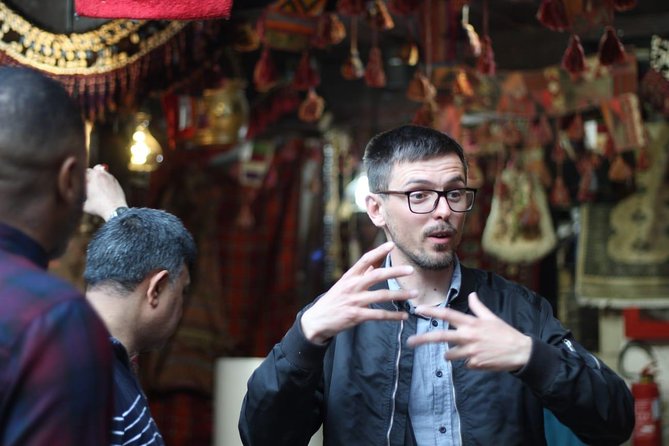
The standout praise from past participants is how the guide handles both history and personal experience. The guide mentioned in reviews is Mak, and the feedback is consistent: he is friendly, answers questions patiently, and shares not only historical context but also his own experiences during the war.
That matters because conceptual art can feel abstract if you only get dates and labels. When a guide explains what a city scar means, or why a memorial is built in a certain way, the art becomes readable. And if you get stuck on a question, Mak is described as consistently helpful.
One extra detail to note from the feedback: Mak has been known to share a book he wrote as a gift. You might not count on that happening, but it signals the kind of relationship this tour aims for, not just a one-way lecture.
Group size, pacing, and what to pack for a smooth 2 to 3 hours
With a maximum of 15 travelers, you should expect a tour that moves like a small conversation with stops, not like a parade. Still, you are walking between areas, and the time per location is tight enough that you will want to keep your pace steady.
Pack light essentials: water, comfortable shoes, and a phone with enough battery for photos. If you plan to visit galleries elsewhere the same day, wear layers. Indoor temperatures can swing, and outdoor stops are short but real.
If you prefer fully guided indoor museum time only, this might feel like more of a “city art reading session” than a museum day. But that is also the point.
Who should book this tour, and who might skip it
Book it if you:
- like modern and conceptual art and want it tied to Sarajevo streets and buildings
- want an art route that requires minimal planning
- enjoy hearing a guide connect art to lived experience and city history
- want both gallery time and outdoor sculpture in one outing
Consider another option if you:
- want long, quiet viewing time with minimal walking
- get easily overwhelmed by memorial content
- are looking for purely decorative, lighthearted art stops
Should you book this Sarajevo Conceptual Art Tour?
I think this is an easy yes for most people who enjoy art with context. The mix of Brodac Gallery, Sarajevo Roses, Galerija Java, Veliki Park, and the Skenderija Bridge area gives you a shaped story of Sarajevo through conceptual and memorial art. The small group size, English delivery, and included admissions at key stops improve the odds you will feel you got your money’s worth.
I would book it especially if your Sarajevo itinerary is short and you want one solid, guided art experience that also helps you understand the city’s urban scars and resilience. If you are sensitive to heavy history, go in with open eyes, take your time at the memorial stop, and then let the final bridge views help reset your mood.
FAQ
How long is the Sarajevo Conceptual Art Tour?
It lasts about 2 to 3 hours.
What is the tour price?
The price is $33.64 per person.
What language is the tour offered in?
The tour is offered in English.
How large is the group?
The tour has a maximum of 15 travelers.
Where does the tour start and when?
The meeting point is Đulagina 2, Sarajevo 71000, and the start time is 1:00 pm.
Where does the tour end?
The tour ends in the Skenderija area of Sarajevo (Skenderija 71000 Sarajevo).
Are admission tickets included?
Admission tickets are included for some stops, including Brodac Gallery and Galerija Java, and the tour component around the Skenderija Bridge stop. Other stops in the route are free to visit.
Is a mobile ticket provided?
Yes, the tour uses a mobile ticket.
Is free cancellation available?
Free cancellation is available. You can cancel up to 24 hours in advance for a full refund.
What if the minimum number of travelers is not met?
If the minimum is not met and the tour is canceled, you will be offered a different date or a full refund.
Most recently added near Sarajevo
- Sarajevo : Private Walking Tour With A Guide (Private Tour)★ 5.0 · 1 review
- Sarajevo: Islamic Tour | 500+ years of Glorious Heritage★ 5.0 · 1 review
- Sarajevo: Srebrenica – A Journey of Remembrance★ 5.0 · 1 review
- Bunker: Tito’s Secret & Boracko Lake Tour from Sarajevo★ 5.0 · 1 review
- Svrzo House Entrance Ticket★ 5.0 · 1 review
- Transfer tour Sarajevo-Dubrovnik★ 5.0 · 1 review
- Thrilling Rafting Adventure on the Neretva River with Lunch★ 5.0 · 1 review
- Private transfer (FROM-TO) Sarajevo – Dubrovnik★ 5.0 · 1 review
Museums, compared.
Fall of Yugoslavia, Sarajevo War Tour with Tunnel of Hope Museum and Frontlines
Read our review →
Tunnel Museum Yugoslavia War Tour with War Veteran
Read our review →
Tunnel Museum: Bosnian & Yugoslav Wars Tour with War Veteran
Read our review →

Browse the lists this tour appears in