
Reviewed · TUNNEL OF HOPE & SIEGE SITES
Times of Misfortune – Life Under Siege and the Tunnel of Hope
Sarajevo under siege is not the kind of thing you forget. This tour pairs sharp street-side sights with a moving look at the Tunnel of Hope, and it explains how the city survived. I especially like that it uses real, wartime locations, not vague storytelling, so you can actually connect names and dates to places.
Two things I like a lot: first, the guide-led approach. I’ve seen how Nermin brings events to life with personal, lived-in context, including details from the people and jobs that kept Sarajevo running. Second, the balance between memorial sites and the “how it worked” parts, like medical efforts and the city’s communication hubs, so the story doesn’t feel one-note.
One possible drawback: the tour is time-structured and involves drives and stops outdoors. If you’re sensitive to heavy themes or you dislike long periods outside, you might want to plan your clothing and energy level carefully, especially since good weather is required.
In This Review
- Key things to know before you go
- Why Times of Misfortune hits hard in Sarajevo
- Meeting point, timing, and what your 3 hours 30 minutes really means
- Yellow Fortress viewpoints and Kovači Cemetery: start with the “why”
- City Hall, Markale Market, and Sarajevo squares: what to watch for on the pass-bys
- Olympic Stadium, Hall Zetra, and Sarajevo’s “two realities”
- Sarajevo Maternity Hospital: when history turns personal
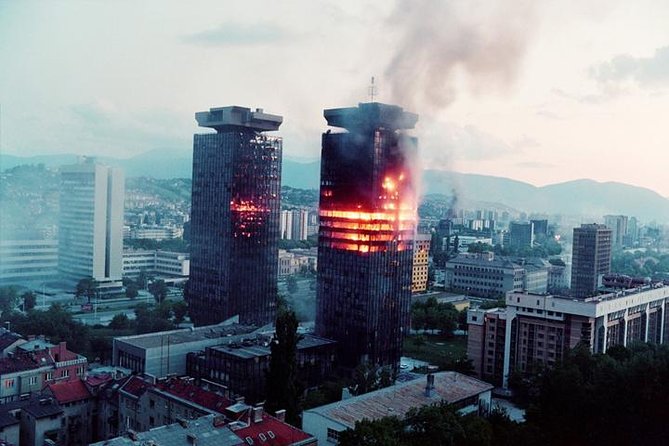
- Parliament, Holiday Inn, RTV Dom, and the siege of information
- Sniper Alley drive: a short ride with heavy context
- Tunnel of Hope Museum: the main event, tickets and all
- Price and value: what you get for $32.58
- Who should book this tour
- Should you book Times of Misfortune?
- FAQ
- How long is the Times of Misfortune tour?
- Is the tour in English?
- What is included in the price?
- Are Tunnel of Hope Museum tickets included?
- Where does the tour start?
- What is the maximum group size?
Key things to know before you go
- Small group size: capped at 20 travelers, which helps the guide keep the story clear and interactive.
- English mobile ticket: you’ll use a mobile ticket, and the tour is offered in English.
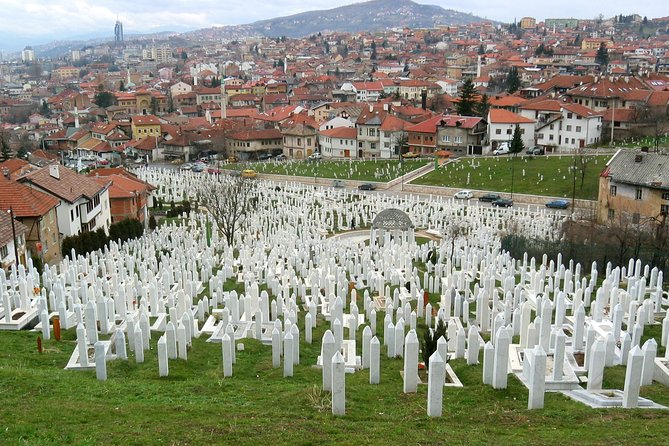
- Cemetery and memorial stops: you’ll pause at Kovači Cemetery, a national memorial tied to the 1992 to 1995 war.
- City landmarks during the siege: you’ll pass key sites like the Presidency Building and the Markale City Market.
- A drive past the most dangerous street: you’ll ride by Sniper Alley, a street known for extreme danger during the siege.
- The Tunnel of Hope is the centerpiece: plan for 1 hour 15 minutes at the museum, and tickets are not included.
Other siege-era sites around Sarajevo:
- Fall of Yugoslavia, Sarajevo War Tour with Tunnel of Hope Museum and Frontlines
★ 5.0 · 1,314 reviews - Sarajevo: Tunnel Museum Yugoslavia War Tour with War Veteran
★ 5.0 · 1,111 reviews - Sarajevo: Tunnel of Hope Tour – Survival and Resilience
★ 4.8 · 630 reviews - Tunnel Museum: Bosnian & Yugoslav Wars Tour with War Veteran
★ 5.0 · 551 reviews
Why Times of Misfortune hits hard in Sarajevo
This isn’t a checklist tour where you hop from photo spot to photo spot. The core idea is simple: you start with the Sarajevo that people lived in, then you follow the siege logic through streets, institutions, and everyday places that suddenly became strategic targets.
I like that the route includes both the official and the human side. You’ll see government-linked landmarks like the Presidency Building and the City Hall, but you’ll also get a grounding in day-to-day survival, including the Sarajevo Maternity Hospital and how medical staff worked during the siege.
That mix matters, because Sarajevo during the war was not just about destruction. It was also about decisions, communications, and desperate problem solving in a city under siege. When the guide has personal experience, it lands differently. In particular, I’m glad this tour can be guided by Nermin, who has been described as extremely knowledgeable and also as a former police officer who could share authentic perspective.
Meeting point, timing, and what your 3 hours 30 minutes really means
You’ll meet at Sarajevo Insider – City Tours and Excursions, Zelenih beretki 30, Sarajevo, and the tour ends back at the same place. It runs about 3 hours 30 minutes total, with transportation included, so you’re not left navigating distances on your own.
A useful way to think about the time is this: you’ll spend the bulk of the tour outdoors for short stops and pass-by views, then you’ll spend the longest block of time at the end inside the Tunnel of Hope Museum. That museum stop is 1 hour 15 minutes, and it’s where most of the emotional weight sits.
Also note the pace. The early stops are short, like the Yellow Fortress (about 20 minutes) and Kovači Cemetery (about 5 minutes). That’s good if you want a focused overview without being stuck in one place too long. It can feel intense if you prefer slower, deeper time at fewer sites, but the overall structure keeps the story moving.
The tour is limited to up to 20 people, and that size helps you hear the guide without the usual chaos. Plus, it’s offered in English, so you should be able to follow the full narrative without relying on translated summaries.
Yellow Fortress viewpoints and Kovači Cemetery: start with the “why”
The tour begins with a quick meeting and orientation, then you head to the Yellow Fortress. This stop is less about shopping and more about geography. A fortress viewpoint gives you a way to understand how control and visibility work in a city under attack. Even if you only have 20 minutes, you come away with a better sense of why certain areas mattered.
Right after that comes Kovači Cemetery, a national memorial connected to Bosnia’s defenders from the 1992 to 1995 war. The short time here is deliberate. You get the moment, you learn what to look for, and then you move on. I like this approach because it avoids turning memorial space into a long photo session. Still, you should come prepared for a reflective stop.
One practical note: cemeteries and viewpoints can involve walking on uneven surfaces. If you have mobility concerns, it’s worth going at your own comfort pace with the group, and mentioning needs to the guide if necessary. The tour is described as suitable for most people, but practical footing matters.
Other Sarajevo trips worth comparing

City Hall, Markale Market, and Sarajevo squares: what to watch for on the pass-bys
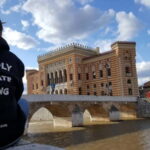
Some tours treat pass-by stops as filler. This one treats them as chapters. You’ll learn about the City Hall role during the war, including destruction and symbolic restoration. That gives you a lens for understanding how institutions can become both targets and symbols of resilience.
Then you’ll pass Markale City Market, a bustling marketplace that also bore witness to key wartime moments. Markets are a strong storytelling setting because they connect to real routines. Food, daily errands, and public gathering all become part of the siege story, not background noise.
You’ll also pass Trg Djece Sarajeva, a square tied to Sarajevo’s endurance. After a cemetery stop and an institutional stop, this kind of square can feel like breathing room, but it still anchors the story in a public, lived-in Sarajevo.
And you’ll view the Presidency Building, the historic seat of Bosnia and Herzegovina’s presidency. Even from the street, it helps to understand why political leadership and communications mattered so much under pressure. The building becomes a waypoint for the larger fall of Yugoslavia story and the collapse of a regional system.
If you’re the kind of traveler who likes to know what’s important before you take out your phone, this section is for you. The guide’s narration is where these pass-by stops become meaningful.
Olympic Stadium, Hall Zetra, and Sarajevo’s “two realities”
One of the tour’s smart moves is showing that Sarajevo isn’t only “the siege city.” You’ll visit Asim Ferhatovic Hase Stadium and the Hall Zetra area. In normal times, these are sports and events venues. During the siege, they took on a different identity.
You get a quick but useful reset: the same city infrastructure that hosts athletics also sits inside a crisis map. That helps you understand why “ordinary” Sarajevo became strategic and why survival was not confined to one kind of place.
This stop is about 10 minutes, so don’t expect a full architectural lecture. Expect orientation: where you are, what it was, what it became during wartime, and why that matters to the story.
And then you keep moving, which brings me to another strong part of the route: the tour does not stop at buildings and bullets. It goes straight into how people got medical care, and that’s where the emotions sharpen.
Sarajevo Maternity Hospital: when history turns personal
You’ll spend time at Klinika za ginekologiju i akušerstvo, the Sarajevo Maternity Hospital. The key idea here is heroic effort under pressure. In a siege, healthcare isn’t optional, but it becomes harder to deliver every day.
The narration helps you understand why hospitals are more than buildings. They are lifelines, staffed by people who kept functioning even as the city’s normal systems were strained. For many visitors, this is one of the hardest stops because it connects war to the most vulnerable moments of life.
Time here is about 10 minutes, which is short, but the guide’s framing can make it feel longer. I’d suggest bringing a calm, ready mindset. You don’t need to become emotional on cue, but you do want room in your head for what it means when routine care becomes an act of resistance.
Parliament, Holiday Inn, RTV Dom, and the siege of information
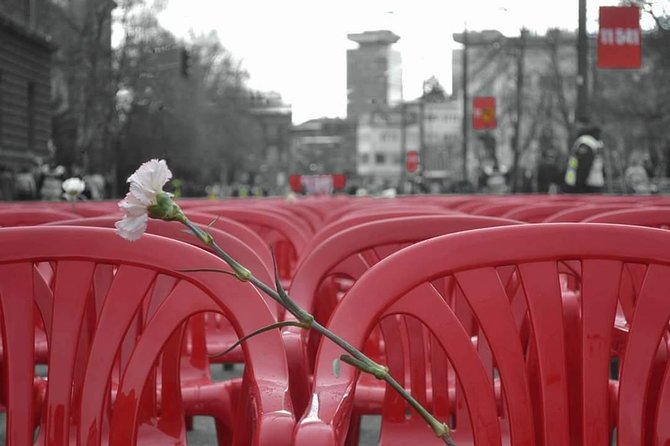
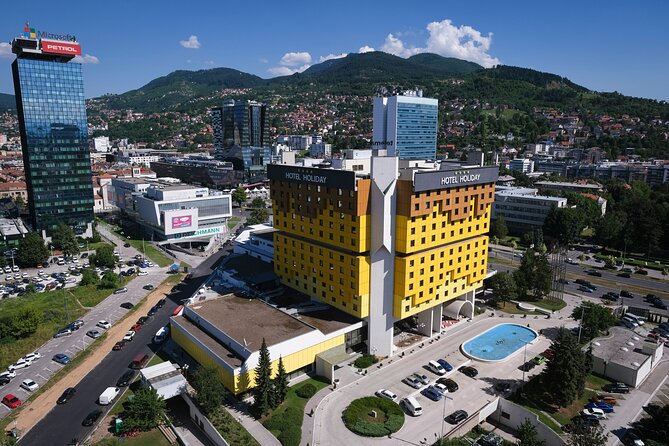
A major piece of siege survival is information. You’ll pass Parliament and the Holiday Inn Hotel, both tied into wartime journalism and political decisions. You might notice how these stops link political authority, media, and public perception all in the same loop.
Then comes RTV Dom, the TV building. Watching or hearing about war can make it feel distant. Television and broadcast in wartime makes it immediate, both for people inside Sarajevo and for the outside world trying to understand what was happening.
This section works best if you let the guide slow you down mentally. Don’t treat it as sightseeing between heavier stops. Think of it as the communication side of the siege, where decisions and narratives could shift survival chances.
Sniper Alley drive: a short ride with heavy context
You’ll drive along Sniper Alley, described as Sarajevo’s most dangerous street during the siege. Even though you don’t spend a long time walking here, this segment can hit harder than expected. It’s one thing to read about danger. It’s another to watch the city from a vehicle while the guide explains what visibility and movement meant under attack.
The practical takeaway: keep your attention on the guide’s directions and where you are. This is not a “take photos anywhere” moment. If you’re taking pictures, do it briefly and safely, and prioritize listening for the story behind the route.
This is also one of the reasons why the tour includes transportation. You see more in less time, and you’re spared the extra walking on potentially rough streets.
Tunnel of Hope Museum: the main event, tickets and all
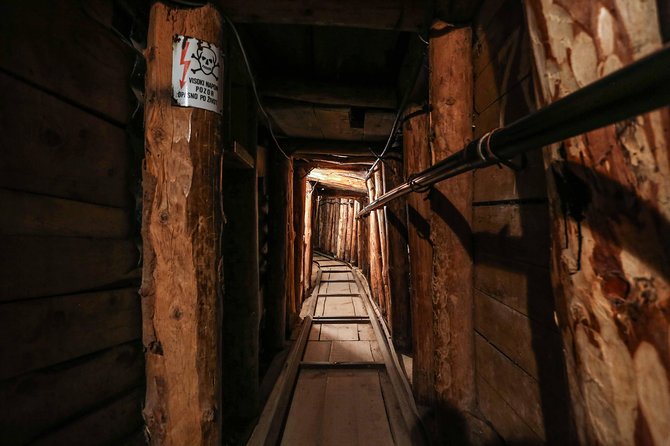
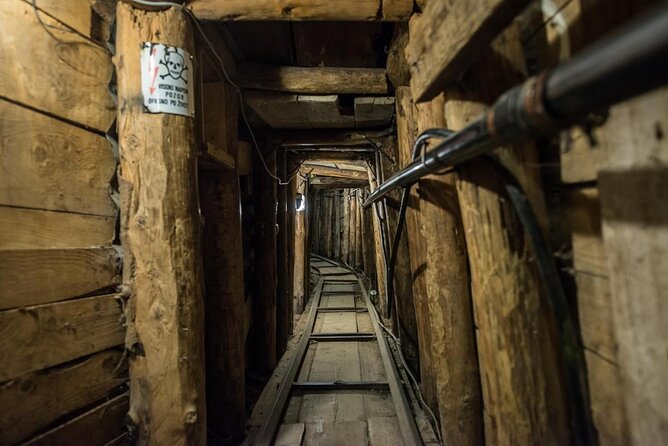
The last stop is the Sarajevo War Tunnel, also known as the Tunnel of Hope. This is the heart of the tour, and it’s where most people tend to feel the biggest shift from understanding to emotion.
You’ll have about 1 hour 15 minutes at the museum. The museum ticket is not included in the tour price. Adults are listed at 20 BAM (about 10.50€), and students are 8 BAM (about 4.50€).
What I like about ending here is timing. Earlier stops build your map of the siege. Then the tunnel gives you the “how” in a physical way. The tunnel connects Sarajevo to the outside world, and the museum explains its construction, purpose, and significance. That makes it easier to grasp why people fought to keep access and why survival depended on ingenuity, not just courage.
Bring a little mental preparation. This is a museum about war and siege reality, so expect it to be moving and to include serious material. If you’re worried about getting overwhelmed, use the time to pace yourself. You don’t have to speed through rooms.
Price and value: what you get for $32.58
At $32.58 per person, you’re paying for a licensed guide plus transportation. The route covers a lot of ground, including multiple viewpoints, memorial stops, pass-by landmarks, and a museum visit with a long time block.
What’s not included is the Tunnel of Hope museum ticket, which adds cost on top. Still, it’s normal for the tunnel to be priced separately because it’s a dedicated museum attraction. For me, the value comes from the guided storytelling that links each location to the bigger siege narrative, plus the fact that you’re not doing this by yourself with limited context.
Also consider the small group size. A cap of 20 travelers helps keep the experience from feeling like a rushed lecture for a crowd. If you care about hearing the details, that matters.
English language service is included, and a mobile ticket makes it easier to stay organized when you’re moving between stops.
Who should book this tour
This is a great match if you want a clear, structured way to understand Sarajevo’s siege and the fall of Yugoslavia era through real places. It’s also ideal if you appreciate a guide who can combine factual context with lived perspective.
It may be less ideal if you want purely light sightseeing, or if you’re looking for a short “hits only” stop. The themes are heavy, and the guide’s narration is built to make the story feel real.
If you like history but get bored by dates and disconnected facts, you’ll probably enjoy this more. The locations give you anchors, and the tunnel museum provides the “big picture” explanation once your mental map is ready.
Should you book Times of Misfortune?
Book it if you want the siege story told in a way that you can visualize: fortifications, memorials, institutions, medical care, media, and then the tunnel. The tour’s strongest ingredient is the guide quality, especially when you get a speaker like Nermin, who shares authentic perspective and personal stories that make the events feel grounded.
Skip or rethink it if you hate intense subject matter, dislike walking on uneven surfaces, or want a purely casual day out. Also, remember that the tunnel tickets are extra, so check that before you go in and budget accordingly.
If you want Sarajevo to make sense, not just look beautiful, this is one of the best ways to do it in a half-day window.
FAQ
How long is the Times of Misfortune tour?
It runs for about 3 hours 30 minutes (approx.), including time at the Tunnel of Hope Museum.
Is the tour in English?
Yes, the tour is offered in English.
What is included in the price?
The price includes a licensed guide and transportation.
Are Tunnel of Hope Museum tickets included?
No. Museum tickets are not included. Adults are listed at 20 BAM, and students are 8 BAM.
Where does the tour start?
The meeting point is at Sarajevo Insider – City Tours and Excursions, Zelenih beretki 30, Sarajevo 71000.
What is the maximum group size?
The tour has a maximum of 20 travelers.
Most recently added near Sarajevo
- Sarajevo : Private Walking Tour With A Guide (Private Tour)★ 5.0 · 1 review
- Sarajevo: Islamic Tour | 500+ years of Glorious Heritage★ 5.0 · 1 review
- Sarajevo: Srebrenica – A Journey of Remembrance★ 5.0 · 1 review
- Transfer tour Sarajevo-Dubrovnik★ 5.0 · 1 review
- Bunker: Tito’s Secret & Boracko Lake Tour from Sarajevo★ 5.0 · 1 review
- Svrzo House Entrance Ticket★ 5.0 · 1 review
- Thrilling Rafting Adventure on the Neretva River with Lunch★ 5.0 · 1 review
- Private transfer (FROM-TO) Sarajevo – Dubrovnik★ 5.0 · 1 review
Tunnel of Hope & Siege Sites, compared.
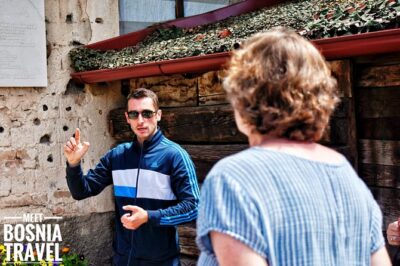
Fall of Yugoslavia, Sarajevo War Tour with Tunnel of Hope Museum and Frontlines
Read our review →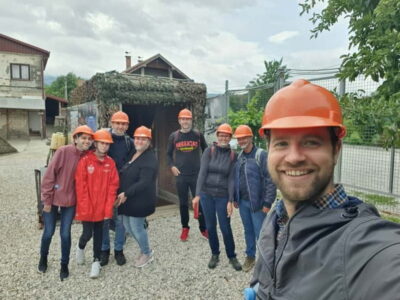
Tunnel Museum Yugoslavia War Tour with War Veteran
Read our review →
Tunnel Museum: Bosnian & Yugoslav Wars Tour with War Veteran
Read our review →
Sarajevo War Tour: A Veteran’s Story of the Siege (fees included)
Read our review →
Srebrenica Genocide Study Tour with War Veteran
Read our review →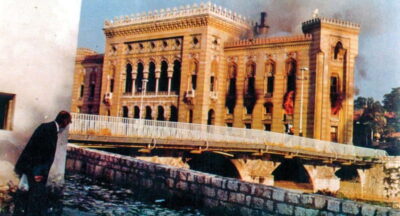
Browse the lists this tour appears in