
Reviewed · GUIDED
2 Days Private Guided Tour in Sarajevo and Mostar
Sarajevo to Mostar is a sharp, unforgettable combo. This private 2-day route pairs Sarajevo’s historic core with the Mostar Old Bridge area, then adds Blagaj, Pocitelj, and Kravice Falls for variety. I especially like the way the days balance monuments you recognize with places that explain what Bosnia went through. One thing to consider: it is a lot of stops in two days, so you’ll want comfy shoes and patience for time in the car when moving between cities.
In one review, the guide was praised as expert, friendly, professional, and genuinely helpful. That matters here, because you’ll see both Ottoman-era landmarks and World War and Bosnian War history, and a good guide helps you connect the dots instead of just checking boxes. The other consideration is weather, since the day trip includes outdoor sights like waterfalls and springs, and the tour says it requires good weather.
In This Review
- Key highlights to expect
- Sarajevo and Mostar, two days that actually move
- Meeting at Sebilj Baščaršija, and why pickup matters
- Day 1 in Sarajevo: Baščaršija to the Latin Bridge zone
- Ottoman and Catholic landmarks: what to notice as you walk
- Tunnel of Hope (Tunel spasa): the stop that changes the mood
- Vrelo Bosne: the included spring break in the schedule
- Day 2 to Mostar: old bridge, Ottoman neighbors, and river views
- Blagaj Tekke and Pocitelj: slowing down at the right moments
- Kravice Falls: the scenic payoff, with included admission time
- Konjic and the Museum on the Neretva River
- Logistics and value: what $179.59 per person buys you
- Who this private Sarajevo and Mostar tour suits best
- Should you book BosnaTur’s 2-day private tour?
- FAQ
- Is this a private tour?
- What is the price and duration?
- Does the tour include tickets or admissions?
- Where does the tour start and where does it end?
- Is pickup available?
- What is the cancellation policy?
Key highlights to expect
- Private, just-your-group pacing so you can ask questions without feeling rushed
- Sarajevo’s mix of Ottoman, Austro-Hungarian, and war history in one compact day
- Tunnel of Hope (Tunel spasa) with included admission time
- Mostar and the Stari Most area with time for the river views and old town feel
- Kravice Falls and Blagaj Tekke as the scenic payoff for a packed schedule
Other Sarajevo trips worth comparing
- Sarajevo: Mostar, Konjic, Blagaj Tekke, Pocitelj & Waterfall
★ 4.9 · 1,666 reviews - Fall of Yugoslavia, Sarajevo War Tour with Tunnel of Hope Museum and Frontlines
★ 5.0 · 1,314 reviews - Sarajevo: Grand Walking Tour Through Time and Cultures
★ 4.8 · 1,236 reviews - Sarajevo: Mostar, Konjic, Sufi House, Pocitelj & Kravice Falls
★ 5.0 · 1,179 reviews
Sarajevo and Mostar, two days that actually move
This is a classic Bosnia and Herzegovina pairing, but it’s built like a practical hop between anchors. You start in Sarajevo, then you spend your second day working through the Herzegovina highlights on the way toward Mostar, before ending back where you started.
For me, the best thing about this kind of private setup is control. You can linger when a street feels right, and you can ask why one building matters historically, not just what it looks like. And with a single provider, BosnaTur, the day-to-day flow is usually easier than trying to stitch together buses and tickets on your own.
The price is listed at $179.59 per person. For a two-day private tour, that can be good value if you care about having an organized route and a guide who can explain the scenes in context. If you’re traveling as a solo person, it can still feel steep, but the included admissions and the fact you’re not juggling logistics can make it feel more reasonable.
Meeting at Sebilj Baščaršija, and why pickup matters
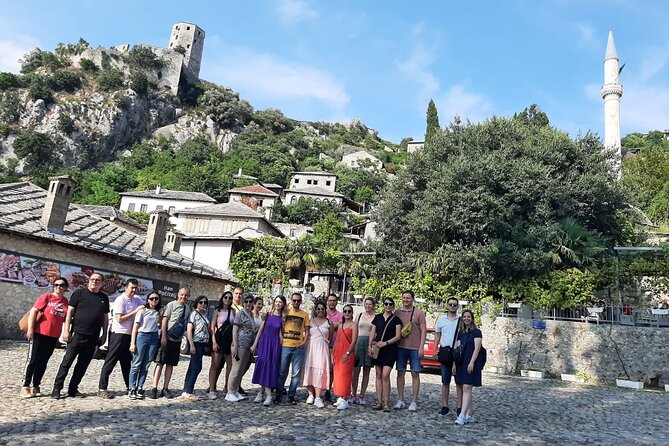
Your tour meeting point is Sebilj Baščaršija 1, Sarajevo 71000. That’s a smart start. Baščaršija is where the old bazaars and pedestrian streets let you get your bearings quickly, and it puts you close to several key Sarajevo landmarks.
Pickup is offered, which is a big deal if you land with luggage or you just don’t want to figure out local transport twice. Also, the tour indicates it’s near public transportation, so even if you’re not using pickup, you’re not stuck in a remote corner.
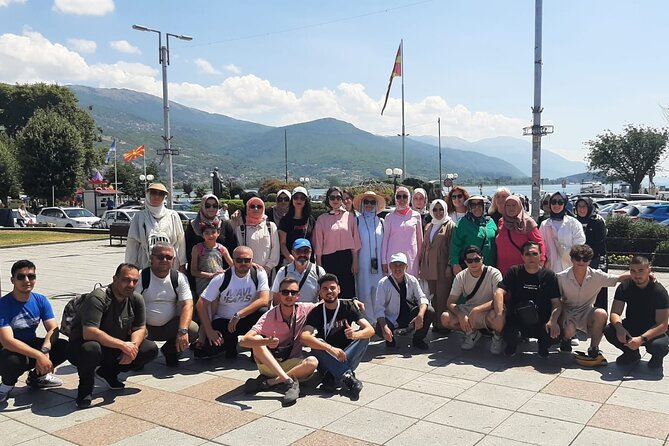
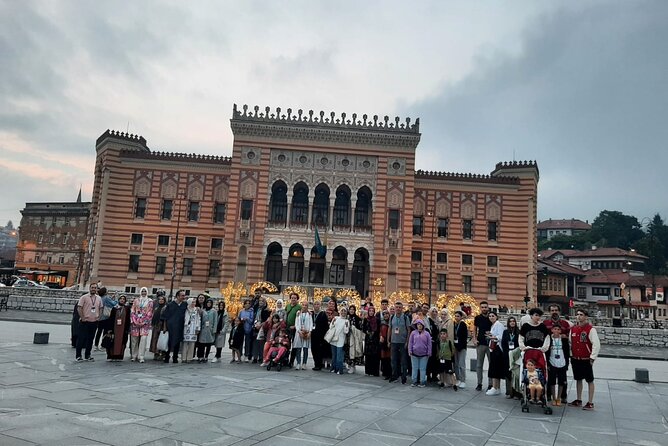
Because it’s private, only your group participates. In practice, that usually means less waiting around and fewer “stand here, listen, move on” moments. It’s still a scheduled day, but the pacing feels more like a guided walk with stops, not a bus tour with a headset.
Day 1 in Sarajevo: Baščaršija to the Latin Bridge zone
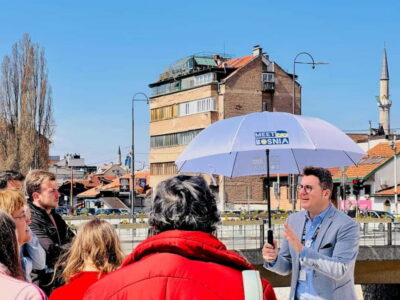
You’ll spend your first day inside the most story-rich pocket of Sarajevo, starting around Sebilj Square in Baščaršija. This area is the heart of the old bazaar atmosphere, with historic streets that help you understand how Sarajevo grew as a crossroads city.
A key early stop is the Gazi Husrev-bey Mosque. It’s an Ottoman landmark built in the early 1500s, commissioned by the governor Gazi Husrev-beg. Even if you’re not a deep architecture person, you’ll likely appreciate the way a single structure anchors centuries of Sarajevo life.
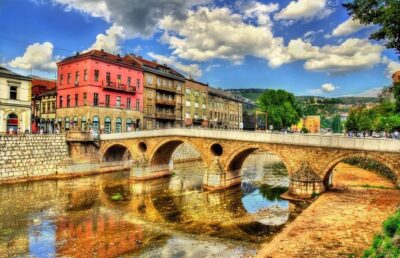
From there, the tour takes you to Latin Bridge area, a short walk from Baščaršija. The bridge is famous for the assassination of Archduke Franz Ferdinand, a moment that helped trigger World War I. The guide context here matters, because the bridge is only part of the story. You want to understand why this city became a stage for big European events.
You’ll also visit other central markers close by, including the Sarajevo City Hall (the tour schedules a short window after lunch), and historic sights like the Emperor’s Mosque (Careva Džamija) and the Sebilj fountain. These stops are brief, but together they create a quick picture of Sarajevo’s Ottoman and Austro-Hungarian layers.
Another way to spend the day from here:
Ottoman and Catholic landmarks: what to notice as you walk
One of the most useful parts of this Sarajevo day is that you don’t just see one cultural flavor. You see multiple, and you can compare how each one is expressed in space.
The Emperor’s Mosque is among the older mosques in Sarajevo, and it helps you place Ottoman religious architecture in the city’s long timeline. Nearby, the tour also includes Pijaca Markale, the Markale Market, tied to tragic Bosnian War events in the 1990s. Even though this is not a long stop, it’s one of the places where the city’s modern memory sits right in everyday life.
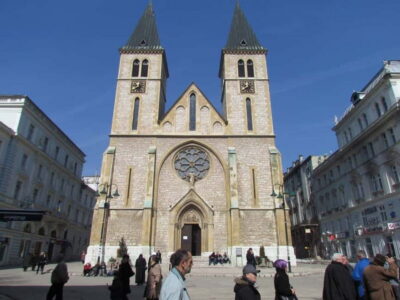
Then there’s the Sacred Heart Cathedral (Katedrala Srca Isusova). It’s a Roman Catholic cathedral with Neo-Gothic style, and it’s a helpful contrast to the mosques and bazaar spaces. If you’re trying to understand Sarajevo as a meeting point of faiths and empires, this is exactly the kind of contrast you want.
A practical tip for this day: wear shoes you can stand in. The stops are compact, and even the short windows add up. If you’re sensitive to walking, bring a water bottle and plan small breaks between clusters.
Tunnel of Hope (Tunel spasa): the stop that changes the mood
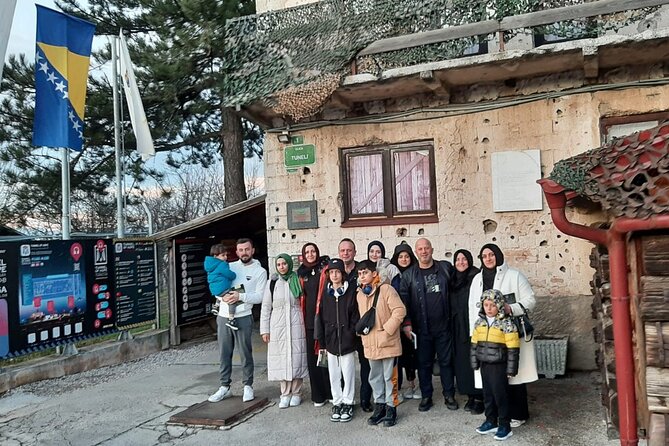
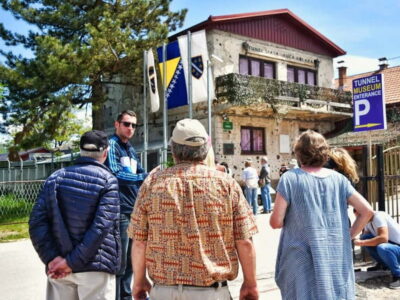
The Sarajevo War Tunnel, also called the Tunnel of Hope (Tunel spasa), is scheduled for about 2 hours, with admission included. This is the most emotionally intense part of the Sarajevo experience, and it’s also the part where a good guide makes the difference between confusion and understanding.
The tunnel museum explains how people adapted during the 1992 to 1995 conflict. The space can feel heavy, and it can be tempting to rush through. Instead, slow down. Look for what the tunnel reveals about daily survival and how the city tried to keep life going while cut off.
Because this stop is longer than most others on Day 1, think of it as your anchor. After the tunnel, the day’s other landmarks may feel more grounded, because you’ll understand the stakes behind the city’s later evolution.
If you’re traveling with kids or anyone who prefers lighter content, you might want to pace this carefully. The rest of Sarajevo is historical and scenic, but this is history with real consequences.
Vrelo Bosne: the included spring break in the schedule
After the heavier topics, the day shifts toward nature with Vrelo Bosne, the Spring of the Bosna River. Admission is included, and the schedule allows about 1 hour.
This is a smart inclusion for a two-day plan because it gives you a change of pace. You get a chance to breathe, reset your senses, and enjoy a quieter setting compared to the bazaar streets and museum spaces.
The practical part: it’s an outdoor stop. Good weather helps. If it’s rainy or cold, the walkways and viewing spots can feel less pleasant, so you’ll appreciate having time inside near other stops if the schedule needs to adjust.
Day 2 to Mostar: old bridge, Ottoman neighbors, and river views
Your second day is essentially a Herzegovina day trip that starts around Mostar. The heart of it is the Mostar Old Bridge (Stari Most) area, scheduled for about 2 hours.
This is the postcard sight for a reason. The Old Bridge sits above the river, and the old town around it has that tight, walkable feel that makes you want to linger. With a private guide, you’re more likely to understand what you’re seeing, not just take photos and move on.
Mostar can be touristy near the bridge. That’s normal. The benefit of having time planned is that you can focus on the riverfront lanes and the old town streets rather than racing between viewpoints.
The most practical mindset for Mostar: plan for uneven walking surfaces and a few stops that require short bursts of movement. If you’re prone to sore feet, consider taking your time and sitting where you can after the bridge area.
Blagaj Tekke and Pocitelj: slowing down at the right moments
Two stops help turn this trip from city sightseeing into a sense of place.
First is Blagaj Tekke, also known as Blagaj Dervish House or Blagaj Tekke. Admission is included, and the schedule allows about 1 hour. You get a historic, atmospheric location near Mostar where the setting helps you imagine life in different centuries.
Then there’s Počitelj (Pocitelj), a historic town near Mostar. Admission is free, and the tour allows about 45 minutes. Počitelj is the kind of place where short time works, because the key sights are compact and the views help you “read” the town from different angles.
What I like about including both Blagaj and Počitelj is how they break the drive time. You’re not stuck in a vehicle for hours with only fuel stops. These are intentional pauses that make the route feel like a journey, not just a checklist.
Kravice Falls: the scenic payoff, with included admission time
No two-day Herzegovina trip feels complete without a nature moment, and Kravice Falls delivers. Admission is included, and the schedule gives about 45 minutes.
Kravice Falls can feel like the reward after longer history stops. It’s one of those places where you want to take a few photos, then put the phone away and just watch water and stone. The guide context can help too, since you’re not just looking at waterfalls, you’re experiencing a local landscape feature tied to the region’s river system.
This is also where you feel the weather factor. The tour notes it requires good weather, and you’ll see why. If conditions are poor, this is exactly the kind of stop that can be less enjoyable.
Konjic and the Museum on the Neretva River
On the way through the region, you’ll also pass Konjic for a short window (about 45 minutes). It’s described as a picturesque town with natural beauty and cultural heritage, and the tour points to the Konjic Bridge area.
Then you stop at the Museum Battle for the Wounded on Neretva River, with admission included and about 45 minutes scheduled. The Battle of the Neretva is tied to World War II, and this museum helps you frame the region as more than just the Balkan conflict of the 1990s.
If you’re the kind of traveler who likes context, this pairing can work well. Sarajevo covers the Bosnian War and Tunnel of Hope. Neretva covers a different chapter. Together, it makes Bosnia’s 20th century feel less like random tragedy and more like a timeline of repeated upheaval.
Logistics and value: what $179.59 per person buys you
At $179.59 per person, this isn’t a budget-only option, but it is built to justify its cost.
Here’s the value angle I’d focus on:
- You get a private format, not a mixed-group scramble.
- The schedule includes multiple included admissions (Tunnel Museum, Vrelo Bosne, Museum Battle for the Wounded, Blagaj Tekke, and Kravice Falls).
- You’re not left to figure out where to start each day, with the meeting point set at Sebilj Baščaršija.
If you’re traveling with friends or family who want a guide and a planned route, this price can start to look like a smart deal. If you’re solo and don’t care about history explanations, you might decide to self-drive or take public transport. Still, even then, a guide can pay off when you want context fast.
The day plan is also dense. That’s not automatically bad, but it’s how private tours work at this scale. If you’re hoping for a slow, two-day “just vibe” trip, you may find this one feels full.
Who this private Sarajevo and Mostar tour suits best
This tour is a strong match if you want:
- a guide who can connect historical landmarks to what they mean
- Ottoman-era sights plus major modern history
- scenic breaks like Vrelo Bosne and Kravice Falls
- a private, flexible feel without having to plan every ticket
It might be less ideal if:
- you hate museums or war history content
- you want long free time in each town without a structured schedule
- you’re traveling with very small kids who struggle with longer indoor sections like the tunnel and museums
One last note based on that single strong review: the guide experience seems to be a major selling point. If you care about a friendly, professional expert who makes the day easier, this is the right type of tour to look for.
Should you book BosnaTur’s 2-day private tour?
I’d book this if your travel style is history plus scenery, and you want a guide-led route that covers both Sarajevo and the Mostar area in a tight timeframe. The included admissions, the private format, and the balance between Ottoman landmarks, war history stops, and outdoor scenery are the big reasons it works.
I would hold off only if you’re likely to struggle with the heavier museum stops or if you’re traveling during questionable weather. With the trip explicitly noting good weather needs, plan to be flexible.
If your goal is to understand Bosnia beyond the highlights, this tour is built for that, especially with a guide you can rely on to explain what you’re seeing.
FAQ
Is this a private tour?
Yes. It is a private tour, and only your group will participate.
What is the price and duration?
The price is $179.59 per person, and the duration is approximately 2 days.
Does the tour include tickets or admissions?
Some admissions are included. The Tunnel Museum admission is included, as is Vrelo Bosne, the Museum Battle for the Wounded on the Neretva River, Blagaj Tekke, and Kravice Falls. Other stops listed are marked free.
Where does the tour start and where does it end?
The tour starts at Sebilj Baščaršija 1, Sarajevo 71000, Bosnia and Herzegovina. It ends back at the meeting point.
Is pickup available?
Pickup is offered.
What is the cancellation policy?
You can cancel for a full refund up to 24 hours in advance of the experience start time. If you cancel less than 24 hours before, you will not receive a refund. If the tour is canceled due to poor weather, you’ll be offered another date or a full refund.
Most recently added near Sarajevo
- Sarajevo : Private Walking Tour With A Guide (Private Tour)★ 5.0 · 1 review
- Sarajevo: Islamic Tour | 500+ years of Glorious Heritage★ 5.0 · 1 review
- Sarajevo: Srebrenica – A Journey of Remembrance★ 5.0 · 1 review
- Transfer tour Sarajevo-Dubrovnik★ 5.0 · 1 review
- Bunker: Tito’s Secret & Boracko Lake Tour from Sarajevo★ 5.0 · 1 review
- Svrzo House Entrance Ticket★ 5.0 · 1 review
- Thrilling Rafting Adventure on the Neretva River with Lunch★ 5.0 · 1 review
- Private transfer (FROM-TO) Sarajevo – Dubrovnik★ 5.0 · 1 review
Guided, compared.
Guided City Highlights Tour with Sarajevo Tunnel
Read our review →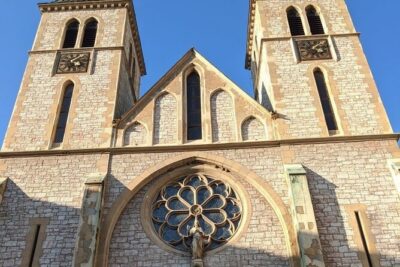
PROFESSIONAL SARAJEVO WALKING TOUR – With guide who guided STING!
Read our review →
Sarajevo Siege Tour with War Veteran Guide (Fees Included)
Read our review →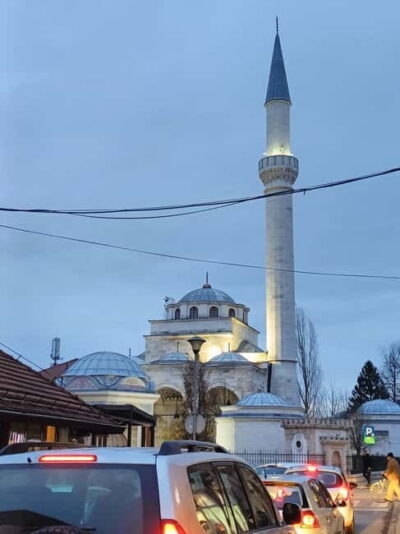
Browse the lists this tour appears in