
Reviewed · WALKING TOURS
Discover Banja Luka: Guided Walking Tour
Banja Luka reads like a timeline on foot. This guided walk is a smart way to understand how Ottoman, Austro-Hungarian, and Yugoslav eras shaped the city, even after an earthquake left much of the old fabric damaged. I especially liked the chance to see Ferhadija Mosque and other major religious buildings up close, and the slow, peaceful river walk that helps the city make sense.
Two things stand out fast: you get a clear guided path through the main sights, and you also learn what those places mean in everyday terms, not just as postcards. The one thing to keep in mind is that because earthquake damage destroyed a lot of historic architecture, you should not expect a perfectly intact old town core.
If you go with a guide like Jakša, you’ll get more than stop-and-go facts. In a private setting, he’s the type who answers questions, takes time, and even helps visitors think through personal topics related to churches and family ties. Still, it is a 3-hour walking tour, so come ready for a fair amount of pavement and bring water.
In This Review
- Key highlights you will actually care about
- Banja Luka’s story: religions and empires, measured in walking time
- Meet your guide in Banja Luka, then get oriented fast
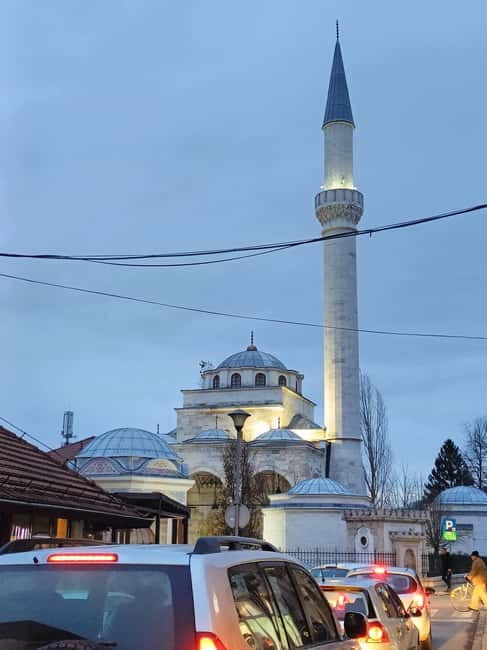
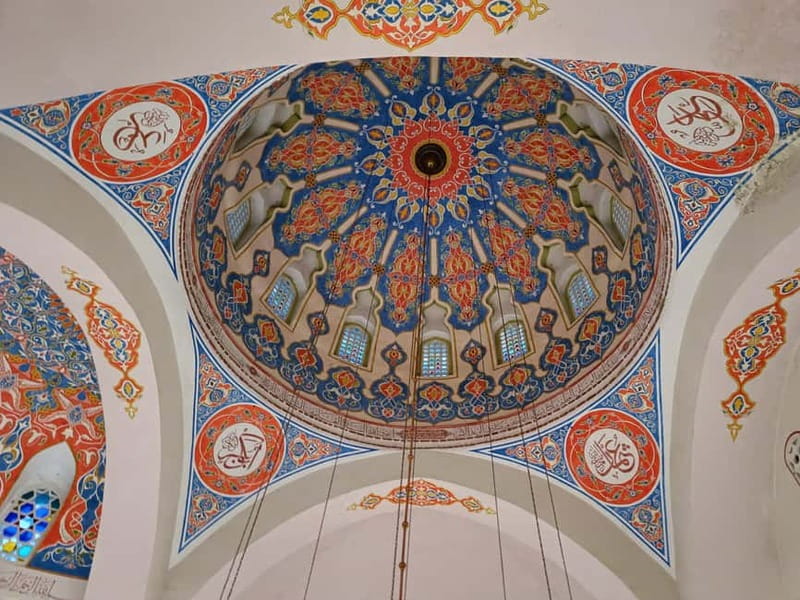
- Ferhadija Mosque: the Ottoman centerpiece you can’t miss
- Cathedral of Christ the Saviour and Saint Bonaventure: two Christian landmarks in one route
- Austro-Hungarian traces and Brutalist blocks after the earthquake
- The river walk: Banja Luka’s artery of life
- Castel Fortress: best viewpoint to see the city’s full picture
- Food break and the city’s culinary story
- How much is $23 for 3 hours, and what do you get?
- Who should book this walk, and who might skip it?
- Small practical tips so you enjoy every stop
- Should you book Discover Banja Luka?
- FAQ
- How long is the Discover Banja Luka walking tour?
- How much does the tour cost?
- What stops are included on the tour?
- Is food or drinks included?
- What languages are the guided tours offered in?
- Is the tour wheelchair accessible?
- What should I bring?
Key highlights you will actually care about
- Ferhadija Mosque plus two cathedrals, so you see the city’s religious mix in a tight route
- Castel Fortress views on the river, a great spot to connect the dots between eras
- A relaxed riverside pace, ideal if you want photos without sprinting between buildings
- Brutalist buildings and earthquake scars, which show modern Banja Luka alongside older layers
- A food break tied to local culinary history, with drinks and food paid on your own
- Private group feel, with live guiding in Italian, German, English, Serbo-Croatian, and Bosnian
A few more walking tours in Banja Luka:
- Unveiling Banja Luka’s urban soul: Walk & Enjoy
★ 4.5 · 5 reviews - Sarajevo: Grand Walking Tour Through Time and Cultures
★ 4.8 · 1,236 reviews - Sarajevo: 2 Hours Old Town Walking Tour With Local Guide
★ 5.0 · 505 reviews - Private Walking Tour, Food Tasting and Bosnian Coffee in Sarajevo
★ 5.0 · 255 reviews
Banja Luka’s story: religions and empires, measured in walking time
Banja Luka sits in Srpska Republic, Bosnia and Herzegovina, and it wears its history openly. What you learn quickly is that this city is not one uniform style. It is a mix of Ottoman, Orthodox, Catholic, and other influences that shaped where people built homes, worship spaces, and civic buildings.
The earthquake is part of the context you will hear during the walk. A lot of older architecture did not survive, so the city you see is a blend of what remained and what was rebuilt or changed. That reality is not a downer if you approach it the right way. It turns the tour into a lesson in resilience, planning, and how cities recover.
If you like your travel with a point, this works. You are not just ticking off monuments. You are learning how different communities lived side by side and how political shifts left physical marks in stone, brick, and even concrete.
Meet your guide in Banja Luka, then get oriented fast
This is a 2-3 hour walking experience with a live tour guide, offered in several languages. You can choose Italian, German, English, Serbo-Croatian, or Bosnian, which matters more than you might think in a place where religious sites and architectural details need the right words.
In private groups, guides often set a pace that fits your questions. That is a big reason this tour scores so high. One guide picked up a guest directly from a hotel and started explaining history while traveling, which is a nice way to waste less time staring at a map.
You should expect lots of “look up, not just ahead” moments. The route is designed so you can compare styles in the same afternoon. For me, the real win is getting your bearings quickly, so later you can wander on your own with confidence.
Ferhadija Mosque: the Ottoman centerpiece you can’t miss
A major highlight is a visit to Ferhadija Mosque. Even if you know the basics of Ottoman architecture, seeing a real mosque in its city context changes the picture. You notice how the building sits in the urban fabric, and how it relates to nearby streets and sightlines.
During the stop, your guide connects the visual details to the bigger story: how Ottoman presence shaped religious life and the look of Banja Luka’s public spaces. You might also hear about how earthquake damage affected the overall historic setting, which helps you interpret why what you see today feels like fragments rather than a full intact scene.
Practical tip: take your photos without rushing the rest of the group. Religious buildings are worth a few steady minutes, not a 20-second sprint. Also, be ready to ask questions. If you care about how different faiths evolved locally, this is the place to start.
Other Banja Luka trips worth comparing
Cathedral of Christ the Saviour and Saint Bonaventure: two Christian landmarks in one route
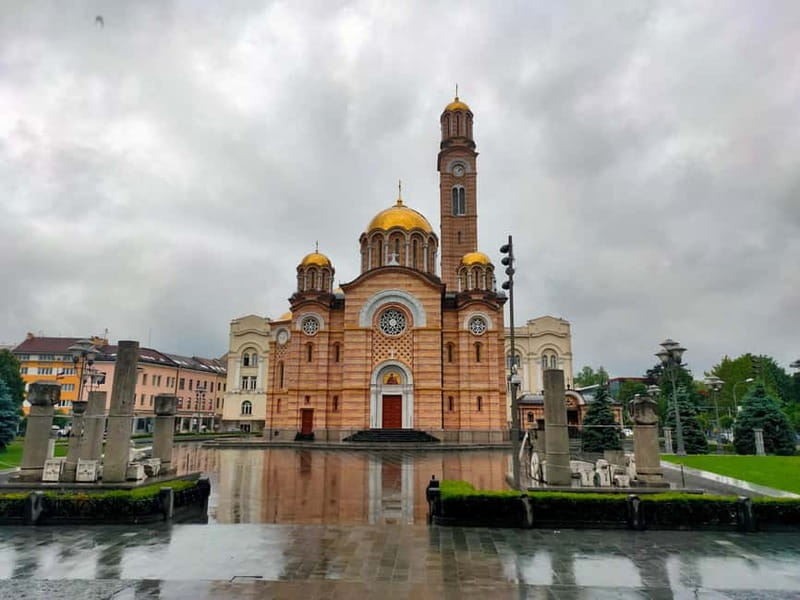
The tour includes visits to both the Cathedral of Christ the Saviour and the Cathedral of Saint Bonaventure. Seeing them back to back is useful because it forces you to compare how Catholic and Orthodox traditions show up in architecture and city presence.
Even if your interest is mostly visual, the guide’s explanations help you notice details you might otherwise miss. You start to understand why these buildings occupy such important positions, and how their presence reflects community identity.
A balanced approach helps here. Banja Luka’s identity is not only one religion layered over another. It is multiple traditions living in the same area, shaped by history and political shifts. By the time you finish both cathedrals, the city feels less like a random set of stops and more like a structured story.
Austro-Hungarian traces and Brutalist blocks after the earthquake
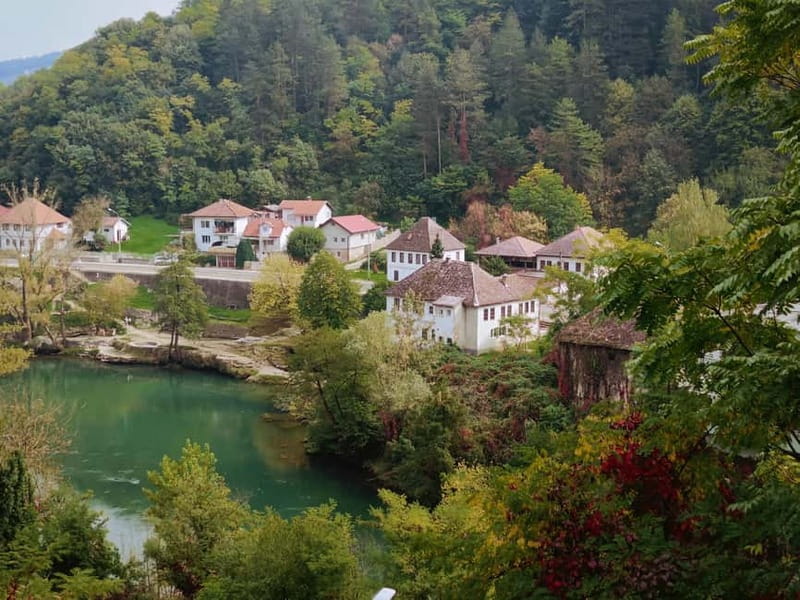
Because the earthquake hit hard, many historic structures were destroyed. That said, you still get plenty of visible evidence of different time periods, including what remains from Austro-Hungarian influence and Brutalist structures that reflect later eras.
This is one of the most interesting parts of the tour, because it teaches you how to read a city when it is not preserved perfectly. In places with intact old centers, you mostly learn what survived. Here, you learn how change looks in real life, not just in old photos.
When you see Brutalist buildings in the mix, do not treat them like an interruption. Treat them like the “now” chapter. The guide helps you connect them to how societies rebuild and re-plan after major disruptions.
Possible consideration: if you came expecting a postcard-perfect medieval town, you may find the vibe more “city in progress.” If you came for understanding, that same reality becomes the point.
The river walk: Banja Luka’s artery of life
One of the most relaxing parts is the walk along the river, described as the city’s artery of life. This segment is not about sprinting between sights. It is about rhythm, breathing space, and letting the city open up around you.
You’ll likely get scenic views that are perfect for photos, and the river gives you a natural line to follow. That helps you compare different buildings and viewpoints without feeling like you are zigzagging endlessly.
This is also where you can reset. Three hours on foot can add up, so the riverside stretch gives your legs a break and your brain a chance to connect what you just learned about religion and architecture to what the city feels like day to day.
Bring water here. It sounds obvious, but warm weather plus walking makes hydration the difference between a fun afternoon and a slightly grumpy one.
Castel Fortress: best viewpoint to see the city’s full picture
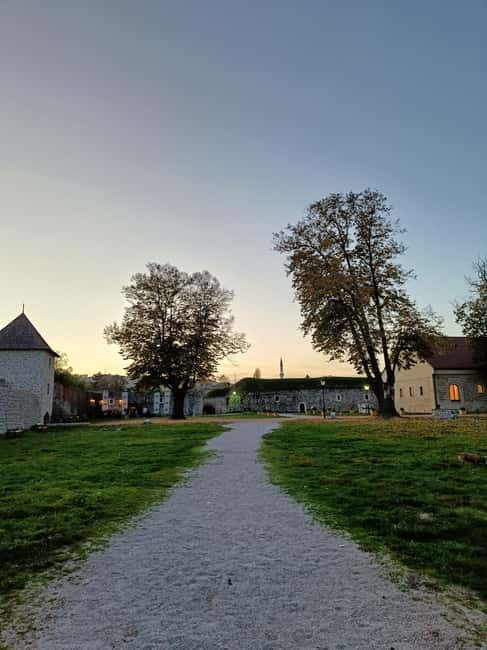
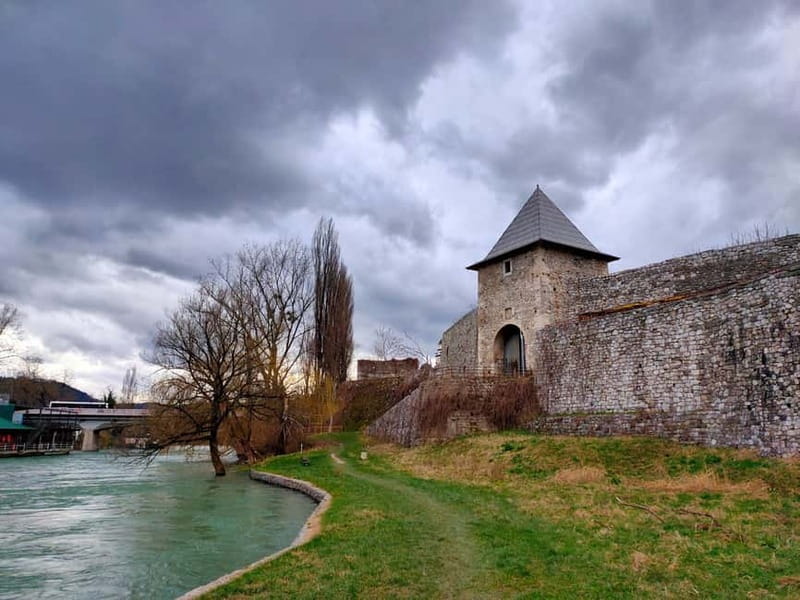
The tour includes a visit to the Castel Fortress on the river, with time to take in city views. This is the moment where everything clicks into place.
From a higher vantage point, you can see how the city spreads, how the river shapes movement, and how different building eras sit next to each other. It is easier to understand why certain religious and civic landmarks appear where they do.
This stop also helps with your “why” questions. Even if you only catch part of the explanations, the view does half the teaching for you. You start to imagine the fortress role in earlier centuries, and how people would have moved through and around this area.
If you are a photographer, spend a bit of time testing angles. River reflections plus fort walls are a good combo, and you do not have to work hard for the shot.
Food break and the city’s culinary story
A highlight is a break to try the city’s culinary history. This is a smart inclusion because food tells you what people valued day after day, not just what leaders built in stone.
Just plan your budget correctly. Drinks and food are not included, so you will pay separately if you choose to eat. That also means you can go at your own pace, whether you want a small bite or a more substantial stop.
If you are trying to travel like a local, pair this food break with what you learned earlier about communities and cultural mix. You’ll find it makes the meal feel connected, not random.
How much is $23 for 3 hours, and what do you get?
At about $23 per person for a 3-hour guided walk, the value comes from the density of meaningful stops. You are not paying for one monument. You are paying for a route that includes major religious landmarks, riverside scenery, and the Castel Fortress viewpoint.
You also get live guiding in multiple languages, so you can ask follow-up questions instead of reading from a sign. That matters in a city like Banja Luka, where context turns architecture into understanding.
What you do not get is covered food and drinks. That is normal for walking tours, but it affects how you should plan your day. If you want lunch during the tour, bring a bit extra budget so you are not making choices based purely on cost.
On balance, if your goal is to understand the city quickly and see the main sights without self-guided guesswork, this price feels fair.
Who should book this walk, and who might skip it?
This tour is a great match if you want:
- a guided overview of Banja Luka’s religious mix
- a walk that connects architecture to history, including earthquake impacts
- strong photo stops, especially along the river and at the Castel Fortress
- an experience led in your chosen language
It may be less ideal if you dislike walking for 2-3 hours or if you want a highly preserved historic center with minimal discussion of damage and reconstruction. Also, since it is designed around multiple sites, it works best if you can keep a moderate pace.
If you prefer private time over crowds, the private group format helps a lot. You can focus on your interests instead of trying to keep up with everyone else’s pace.
Small practical tips so you enjoy every stop
Bring comfortable shoes. This is a walking route, and the best views often require a little extra step count. Pack water, especially in warmer months. Bring a camera if you like architectural and river shots.
If you have specific interests, tell your guide early. People have used the tour to ask very personal questions related to church connections, and a good guide can use that conversation to make the history feel relevant.
Finally, do not treat each building like an isolated object. On this route, you get the most when you compare, contrast, and connect. Think of it like a living map, where every stop is a clue.
Should you book Discover Banja Luka?
I would book it if you want a fast, guided way to understand Banja Luka’s identity through its places of worship, river setting, and the fortress viewpoint. The mix of major sites plus the relaxed riverside pace is a strong combo for first-time visitors.
Skip it or consider another option if you only want light sightseeing and you do not want to think about how the earthquake reshaped the historic core. Also, if you cannot handle 2-3 hours of walking, check what alternative arrangements might be possible before committing.
If you do book, pick the guide language you will be most comfortable speaking. The best tours are the ones where you can ask the question that keeps coming back in your head.
FAQ
How long is the Discover Banja Luka walking tour?
It lasts about 2-3 hours, with a total duration listed as 3 hours. You can check availability for starting times.
How much does the tour cost?
The price is $23 per person.
What stops are included on the tour?
Included stops are the Castel Fortress, Ferhadija mosque, the Cathedral of Christ the Saviour, the Cathedral of Saint Bonaventure, and a walk along the river.
Is food or drinks included?
No. Personal expenses like drinks or food are not included, though the experience includes a break related to the city’s culinary history.
What languages are the guided tours offered in?
The live guide is available in Italian, German, English, Serbo-Croatian, and Bosnian.
Is the tour wheelchair accessible?
Yes, it is listed as wheelchair accessible.
What should I bring?
Wear comfortable walking shoes, bring a camera if you want photos, and carry water for hydration.
Most recently added near Banja Luka
- Banja Luka: Krupa na Vrbasu Guided Hike with Transfers★ 5.0 · 1 review
- Banja Luka Rafting★ 4.5 · 2 reviews
- Rafting Trip on the Vrbas river★ 5.0 · 3 reviews
- Enjoying the River Vrbas★ 4.5 · 5 reviews
- Vrbas River Rafting Adventure with Breakfast★ 4.0 · 5 reviews
- Unveiling Banja Luka’s urban soul: Walk & Enjoy★ 4.5 · 5 reviews
- Banja Luka City Tour & A magical journey on Dayak boat★ 5.0 · 14 reviews
- Krupa on Vrbas★ 5.0 · 28 reviews
Walking Tours, compared.
Private Walking Tour, Food Tasting and Bosnian Coffee in Sarajevo
Read our review →
Browse the lists this tour appears in