
Reviewed · WALKING TOURS
Discover Sarajevo Walking Tour with Local Guide
Sarajevo tells its story in layers. This walking tour is a tight, 2-hour way to see how Ottoman, Austro-Hungarian, and modern influences collide in one compact old town. I love the certified local guide angle, especially when guides like Samira, Enes, Layla, and Senka bring sharp, personal context. I also like that you get a simple, walkable route with bottled water included. One thing to consider is that several major sights have admission tickets not included, so you may spend a little extra if you want to go inside.
You’re looking at a smart-casual day that mostly keeps moving, with a moderate physical fitness requirement. The pace is friendly, but you will be on your feet, and that matters if you tire quickly or plan to linger at every corner.
In This Review
- Why This 2-Hour Sarajevo Walk Is Such a Smart Start
- Meeting on Ferhadija, Next to Sarajevo’s Meeting of Cultures
- Gazi Husrev-beg Mosque: Ottoman Grandeur and a Big “First”
- Morica Han Caravanserai: Where Trade and People Paused
- Sebilj Fountain and Kazandžiluk: A Central Pause and a Copper Street
- Sarajevo City Hall: Austro-Hungarian Neo-Moorish Details
- Latin Bridge: The Place That Changed the World
- Emperor’s Mosque and Bezistan: Early Sarajevo and the Covered Bazaar
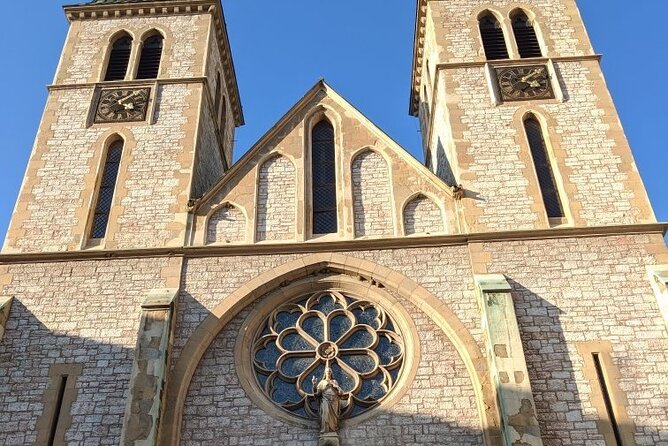
- Orthodox and Catholic Landmarks: Holy Mother and Sacred Heart
- Jewish Sarajevo with the Sephardic Synagogue and the Final Cultures Point
- What You Get for $12.07, and When It’s Worth Your Time
- Should You Book This Sarajevo Walking Tour?
- FAQ
- How long is the Sarajevo walking tour?
- What is the price per person?
- Is the tour offered in English?
- Where does the tour start?
- Where does the tour end?
- What is included in the tour price?
- Are entrance tickets included for all stops?
- How many people are in the group?
- What fitness level do I need?
- Is free cancellation available?
- Do I receive a ticket on my phone?
Why This 2-Hour Sarajevo Walk Is Such a Smart Start
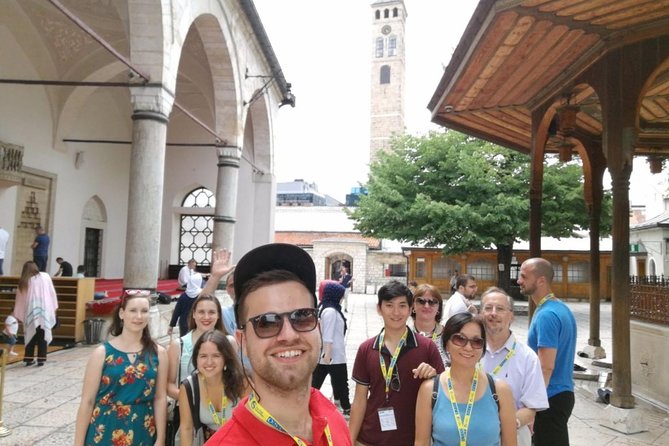
If you want to understand Sarajevo fast, this is a good format. It’s short enough to fit into almost any schedule, yet structured enough that you do not end up wandering randomly. You cover a lot of ground through central streets, and the guide helps you connect what you see with why it matters.
The price, at $12.07 per person, is low for an organized 2-hour guided walk in a city with a lot of sites per square kilometer. You are not paying for transport. You are paying for someone to point out the details, give the historical threads, and keep the story clear as you pass mosques, markets, cathedrals, and memorial sites.
The group stays small, with a maximum of 20 travelers. That usually means you can ask questions and actually hear your guide, even when you stop for photos. And yes, you get bottled water, which is a small inclusion that makes a big difference when the day is warm.
A few more Walking Tours in Sarajevo
- Sarajevo: Grand Walking Tour Through Time and Cultures
★ 4.8 · 1,236 reviews - Sarajevo: 2 Hours Old Town Walking Tour With Local Guide
★ 5.0 · 505 reviews - Private Walking Tour, Food Tasting and Bosnian Coffee in Sarajevo
★ 5.0 · 255 reviews - Sarajevo Grand Walking Tour
★ 5.0 · 232 reviews
Meeting on Ferhadija, Next to Sarajevo’s Meeting of Cultures
You start at the Info Bosnia Tourist Information Center on the main pedestrian street Ferhadija, right next to the Sarajevo Meeting of Cultures point. That location is useful because it frames the whole day. Sarajevo is not one story. It is several stories stacked in the same streets, and you see that right away.
Dress code is smart casual, and the walk is designed for people with moderate physical fitness. Also note the tour is offered in English, and you get a mobile ticket confirmation at booking.
From a practical angle, this kind of start location matters. You can find it easily, and it puts you in the heart of the old town right away. You are not spending the first 20 minutes figuring out where to stand.
Gazi Husrev-beg Mosque: Ottoman Grandeur and a Big “First”
Gazi Husrev-beg Mosque is the first major stop, and it sets the tone. This mosque was built in 1530 to 1531 in an Early Istanbul style. It is the central building of Gazi Husrev-bey’s charitable foundation, the waqf.
The details here are the kind that make architecture feel real. The dome reaches 23 meters, and the minaret rises 45 meters. It is described as the largest historical mosque in Bosnia and Herzegovina, and it is also noted as the first mosque in the world to be illuminated by electricity.
Plan for at least the full 10 minutes to take it in. The tour notes the admission ticket is not included for this stop, so if you want to go inside, you may need to budget separately. Even if you only view it from outside, the sheer scale of the dome and minaret makes it impossible to ignore.
Morica Han Caravanserai: Where Trade and People Paused
Next comes Morica Han, a caravanserai. Built in 1551, it belonged to Gazi Husrev-bey’s endowment, the wakf. It also has a modern restoration story. It burned down in 1957 and was restored between 1971 and 1974.
What I like about including Morica Han is that it shifts the focus from grand buildings to everyday infrastructure. Caravanserais were the places where travelers and goods moved through, and this one is described as having 44 guest rooms and accommodations for up to 300 people, plus 70 horses.
This stop is also framed as Sarajevo’s special case. It is noted as the only surviving caravanserai in Sarajevo. That makes Morica Han feel like a rare survival from a city that has changed a lot over time.
Admission is listed as free here, and the stop is again about 10 minutes. If you like understanding how a city worked, not just how it looked, you’ll get a lot from this moment.
Another way to spend the day from here:
- Fall of Yugoslavia, Sarajevo War Tour with Tunnel of Hope Museum and Frontlines
★ 5.0 · 1,314 reviews
Sebilj Fountain and Kazandžiluk: A Central Pause and a Copper Street
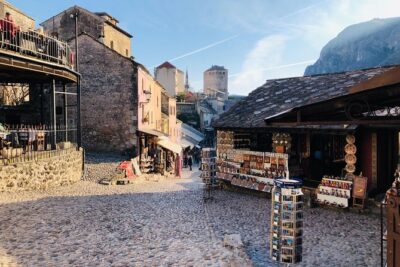
Then you hit Bascarsija, centered on the Sebilj fountain. This is a Neo-Ottoman stone-and-wood fountain. The first Sebilj is said to have been built by Mehmed Pasa Kukavica in 1753, then relocated in 1891 by Austrian architect Alexander Wittek.
The area around it is also associated with pigeons, often called the Square of Pigeons. Even if you are not hunting photos, this is a great spot to reset your senses. You go from big monuments to a lively public space that locals and visitors naturally orbit around.
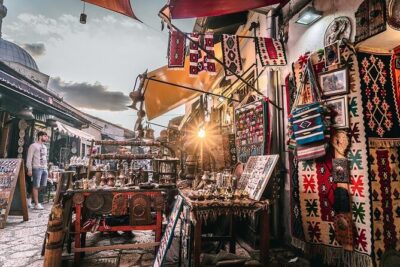
Right after, you’ll walk to Kazandžiluk, Sarajevo’s famous coppersmith street. This part is short, but it gives you an important texture. A city is not just history buildings. It is crafts, trades, and the streets that keep working.
These two stops are listed with free admission for the fountain, and Kazandžiluk is listed as free as well. You can treat them as an easy break without feeling like you missed a paid attraction.
Sarajevo City Hall: Austro-Hungarian Neo-Moorish Details
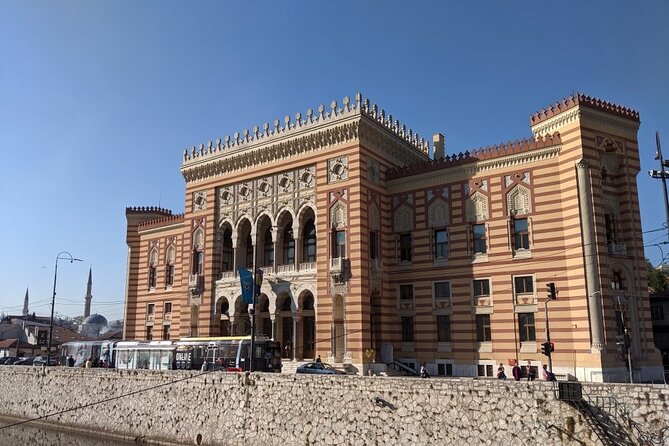
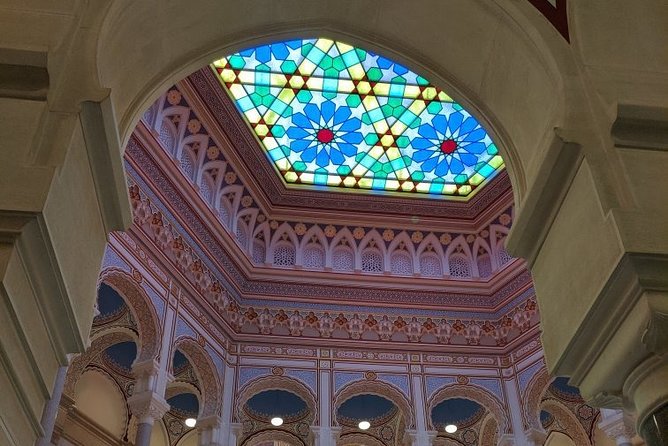
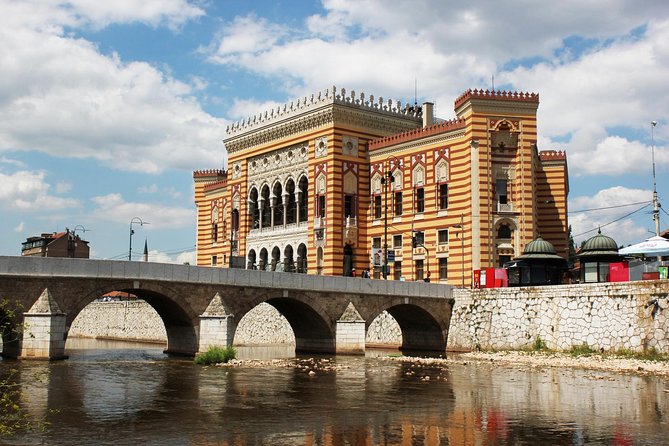
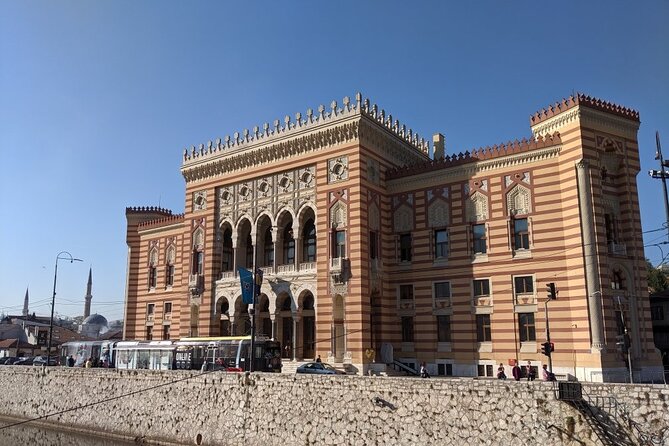
Sarajevo City Hall is your Austro-Hungarian chapter. The building was completed in 1896, and it’s described as the most representative building from that period. Architecturally, it is noted for Neo-Moorish style, inspired by Islamic art in Spain and North Africa.
This stop is useful because it prevents a common mistake: thinking Sarajevo is only Ottoman or only European. You see the mix in one glance, especially when you compare the style cues with the earlier mosque architecture.
The tour lists admission ticket not included for City Hall. So again, you might choose to view from outside and let your time go to photos and street-level details. If you do want to enter, plan for potential extra tickets.
Latin Bridge: The Place That Changed the World
From there, you move to the Latin Bridge area. This is listed as being right next to the famous Latin Bridge, and your guide will explain the assassination of Archduke Franz Ferdinand and Sophie. This is one of those places where the physical location and the historical impact are tightly connected.
The tour flags admission ticket not included for this stop. Since the Latin Bridge is outdoors, you will still get the point even without going through anything ticketed. The value is in the context your guide gives, especially how the story ties into Sarajevo’s broader position in Europe.
This stop tends to make people quiet for a moment. That is not because the tour is sad, it is because the site is specific, and the facts are serious.
Emperor’s Mosque and Bezistan: Early Sarajevo and the Covered Bazaar
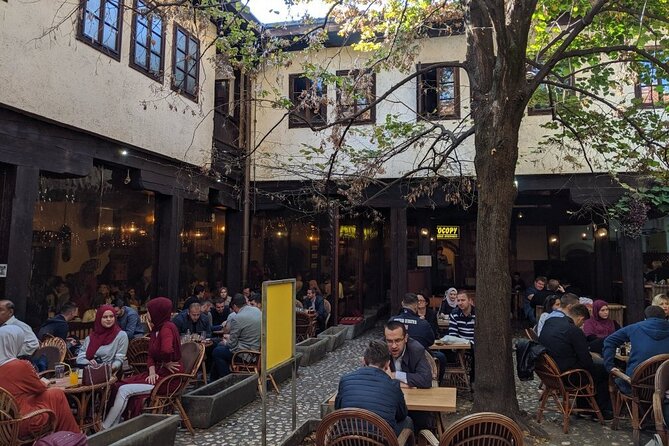
Next is Emperor’s Mosque, also described as the first mosque built in Sarajevo by Isa-bey. That phrasing helps you understand the layers in the city’s religious development. It is not just a pretty building. It is an early marker of where Sarajevo’s story began to take a clear built form.
From there, you go to Gazi-Husrev Beg’s Bezistan, a covered bazaar area. You’ll learn about the Bezistan being built in the same time period as Taslihan, a stone inn that was destroyed during the Austro-Hungarian period.
This is one of my favorite kinds of tour stops. Your guide connects structures that might look similar to the untrained eye, and suddenly you get the urban logic. A covered bazaar is not only for shopping. It is for commerce, storage, weather protection, and social movement.
Both Emperor’s Mosque and Bezistan are listed with free admission. So you can spend your full time watching how these spaces function visually, without worrying about tickets.
Orthodox and Catholic Landmarks: Holy Mother and Sacred Heart
Sarajevo’s religious variety shows up in two different stops.
First is the Serbian Orthodox Cathedral, listed as the Congregational Church of Holy Mother. Your guide will place it in the Ottoman period and notes it as the largest orthodox church in Sarajevo. Even if you just look up from the street, the scale helps you understand why it is described that way.
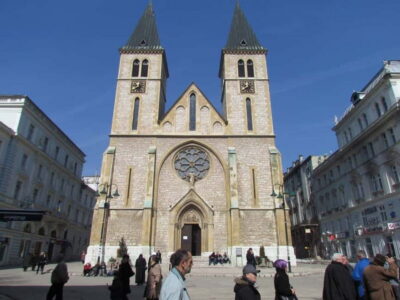
Then you move to Katedrala Srca Isusova, the Cathedral of the Sacred Hearth of Jesus. It is described as one of the first major European-style buildings in Sarajevo.
For the Orthodox Cathedral, the tour lists admission ticket not included. For the Sacred Hearth of Jesus Cathedral, admission is listed as free. That means you can get the value of the stop either way, but your interior time might depend on your comfort with potential ticketing.
The balance here is important. You do not only see one faith’s architecture. You see multiple styles and multiple time periods moving through the same central area.
Jewish Sarajevo with the Sephardic Synagogue and the Final Cultures Point
The Jewish Museum of Bosnia and Herzegovina is your Jewish history stop. It is also referred to as the Old Jewish Temple and described as the Sephardic Synagogue, noted as the first and oldest synagogue built in Sarajevo.
This stop is also listed with admission ticket not included. If you want to enter, plan for potential additional cost, and if you do not, you can still get something from your guide’s framing because the tour is built to connect the city’s religious history to its broader identity.
Finally, you end at the Sarajevo Meeting of Cultures point. This is where East meets West, and it’s described as a location from which you can truly see the uniqueness of Sarajevo. Ending here is smart. You start by being close to the same idea, then you finish after seeing the evidence across mosques, churches, markets, and memorial sites.
The tour finishes back at the Info Bosnia Tourist Information Center area, so you are not left hunting down your way back.
What You Get for $12.07, and When It’s Worth Your Time
At $12.07 per person for about two hours, you are buying three things: direction, interpretation, and efficiency.
Direction: you get a clear route across central Sarajevo, and you do not have to guess which buildings matter.
Interpretation: your guide explains why each site connects to larger historical shifts.
Efficiency: you see a lot of the city’s key landmarks without needing a half-day of planning.
You should consider the ticket situation. Several stops are marked with admission tickets not included, including the Gazi Husrev-beg Mosque and Sarajevo City Hall, plus sites tied to Latin Bridge, the Serbian Orthodox Cathedral, and the Jewish Museum. Many other stops are free, including Morica Han, Sebilj fountain, Kazandžiluk, Emperor’s Mosque, Bezistan, Sacred Hearth Cathedral, and the Meeting of Cultures point.
So your final spend can vary depending on what you choose to enter. The tour still works if you keep it exterior and focus on your guide’s explanations, but if you are an inside-the-building person, you might spend more than the base price.
This tour fits best if you:
- want a focused old town introduction without getting lost
- enjoy learning through real street-level landmarks
- like architecture that shows time periods side by side
- want an organized way to cover a lot in two hours
It may not be ideal if you want a lot of sitting, or if you dislike places where some stops can require extra admission.
You will also get more from this tour if you come with curiosity about how different communities lived together, traded together, worshiped, and built in the same city center.
Should You Book This Sarajevo Walking Tour?
Yes, I’d book it if you want an efficient, guided sampler of Sarajevo’s most important central sites. It is budget-friendly, tightly timed, and designed for people who want context, not just photos.
Book it sooner rather than later if you can, since it is described as being on average booked about 10 days in advance. And if you have a preference for a guide’s style, you can feel confident based on the strong guide recommendations in the tour’s feedback, including guides like Samira, Enes, Layla, and Senka, who are repeatedly praised for friendliness, humor, and clear English.
Just go in with the right mindset: this is a walking tour with meaningful stops, but you may need to pay separate admission for some of the headline interiors. If that works for you, it is an excellent way to get your bearings fast.
FAQ
How long is the Sarajevo walking tour?
It runs for about 2 hours.
What is the price per person?
The price is $12.07 per person.
Is the tour offered in English?
Yes, the tour is offered in English.
Where does the tour start?
The starting point is in front of the Info Bosnia Tourist Information Center on the main pedestrian street Ferhadija, next to the Sarajevo Meeting of Cultures.
Where does the tour end?
It ends back at the Info Bosnia Tourist Information Center.
What is included in the tour price?
A certified guide and a bottle of water are included.
Are entrance tickets included for all stops?
No. Some stops list admission tickets not included, while others are free. For example, Gazi Husrev-beg Mosque and Sarajevo City Hall are marked as not included, while Morica Han and Sebilj fountain are marked as free.
How many people are in the group?
The tour has a maximum of 20 travelers.
What fitness level do I need?
The tour asks for a moderate physical fitness level.
Is free cancellation available?
Yes, you can cancel for a full refund up to 24 hours in advance.
Do I receive a ticket on my phone?
Yes, the tour offers a mobile ticket, and you receive confirmation at booking.
Most recently added near Sarajevo
- Sarajevo : Private Walking Tour With A Guide (Private Tour)★ 5.0 · 1 review
- Sarajevo: Islamic Tour | 500+ years of Glorious Heritage★ 5.0 · 1 review
- Sarajevo: Srebrenica – A Journey of Remembrance★ 5.0 · 1 review
- Transfer tour Sarajevo-Dubrovnik★ 5.0 · 1 review
- Bunker: Tito’s Secret & Boracko Lake Tour from Sarajevo★ 5.0 · 1 review
- Svrzo House Entrance Ticket★ 5.0 · 1 review
- Thrilling Rafting Adventure on the Neretva River with Lunch★ 5.0 · 1 review
- Private transfer (FROM-TO) Sarajevo – Dubrovnik★ 5.0 · 1 review
Walking Tours, compared.
Private Walking Tour, Food Tasting and Bosnian Coffee in Sarajevo
Read our review →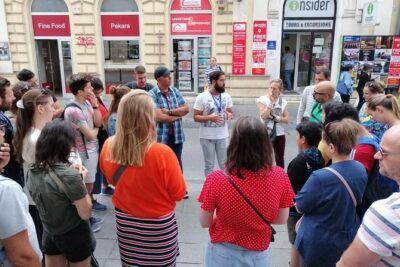
Browse the lists this tour appears in