
Reviewed · WALKING TOURS
PROFESSIONAL SARAJEVO WALKING TOUR – With guide who guided STING!
Sarajevo history comes at walking speed. This 2 to 3 hour evening tour is a tight loop through the city’s biggest landmarks, guided by Mak, the guide tied to the Sting connection, and explained in clear English. I especially liked how Mak keeps you on track with check-ins for understanding, and how you cover major sites without it turning into a sprint. One thing to consider, though, is that the route includes real war and tragedy references, so it can feel heavy in parts.
You also get a very practical setup: small-group pacing, free admission listed for the stops, and a mobile ticket you can use on the day. Start at Đulagina 2 at 6:15 pm, walk for about two to three hours, and end back where you started. For families, it’s a good format because the group stays small and the guide keeps the conversation understandable.
Because it runs in all weather, plan for rain or cold and wear shoes you can trust. Smart casual is the dress code, but comfort matters more once you’re on cobblestones and sidewalks.
In This Review
- Key highlights worth your attention
- Why a 6:15 pm Sarajevo walking loop makes sense
- Meet Mak, the guide behind the Sting connection
- Stop 1: Katedrala Srca Isusova and the Rose theme
- Stop 2: Serbian Orthodox Church, Mondo sculpture, and the park pause
- Stop 3: Ferhadija Pedestrian Street, Eternal Flame, and Tito Street
- Stop 4: Gazi Husrev Beg Medresa, Bezistan Bazaar, and the Clock Tower
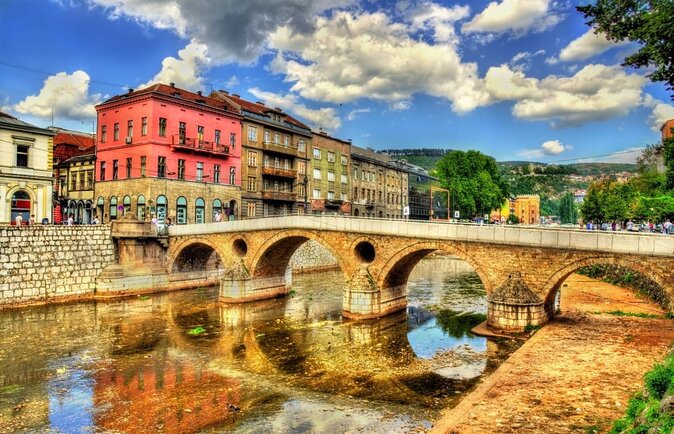
- Stop 5: Princip Gavrilo Mausoleum and the Latin Bridge story
- Stop 6: Sarajevo City Hall, Inat Kuca, and the fortress cluster
- Stop 7: The Yellow Fortress, Kovaci Street, and a food-street break
- Stop 8: Sebilj Fountain, Kazandziluk Street, and Pigeon Square
- Stop 9: Pijaca Markale and the Sarajevo massacre location
- Stop 10: Jewish Museum area, Sephardi synagogue, and Jewish Park
- Stop 11: Latin Bridge, Franz Ferdinand, and Sophie
- Stop 12: Eternal Flame finale and the WWII meaning
- Price and value: why $31.24 can actually be a bargain
- Who this tour is best for
- Should you book this Sarajevo walking tour?
- FAQ
- How long is the Professional Sarajevo walking tour?
- What time does the tour start, and where do I meet?
- Is the tour offered in English?
- How much does the tour cost?
- How many people are in the group?
- Is there a dress code?
- Does it run in bad weather?
- Can I get a refund if I cancel?
Key highlights worth your attention
- Small group size helps keep the pace human, not chaotic.
- Mak’s English guiding style includes frequent clarity checks.
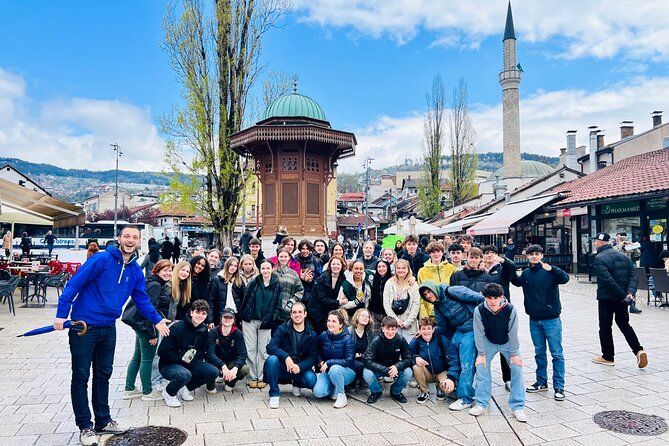
- Major landmarks in one loop, from cathedrals and mosques to memorial sites.
- Free-listed entries at each stop mean fewer surprises with fees.
- Evening timing gives you an easier walk without the midday heat.
A few more Walking Tours in Sarajevo
- Sarajevo: Grand Walking Tour Through Time and Cultures
★ 4.8 · 1,236 reviews - Sarajevo: 2 Hours Old Town Walking Tour With Local Guide
★ 5.0 · 505 reviews - Private Walking Tour, Food Tasting and Bosnian Coffee in Sarajevo
★ 5.0 · 255 reviews - Sarajevo Grand Walking Tour
★ 5.0 · 232 reviews
Why a 6:15 pm Sarajevo walking loop makes sense
Starting in the evening is a smart trick in Sarajevo. At 6:15 pm, the city feels calmer for walking, and you are less likely to arrive with your feet already tired. The tour runs about 2 to 3 hours, which is long enough to learn what matters, but short enough that you still have energy for dinner afterward.
This is also a route designed for seeing a lot without getting lost. The meeting point is Đulagina 2, and the tour ends back at that same spot, so you avoid the logistics headache of figuring out your way across town at the end. If you are using public transportation, the start location is near transit, which is a real plus if you do not want to rely on taxis.
The other practical win is group size. The tour is described as a group option that keeps costs down with a cap around max 15, and the experience details list a maximum of 10 travelers. Either way, this is not a huge herd, and that changes how good the explanations can be.
Meet Mak, the guide behind the Sting connection
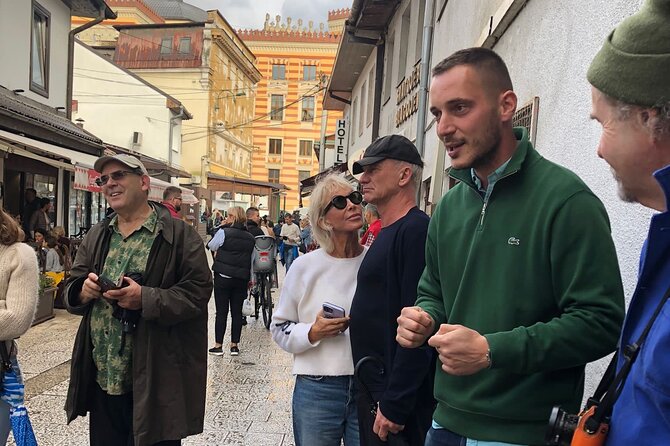
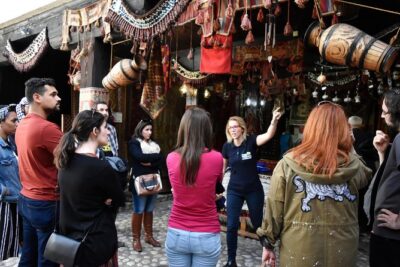
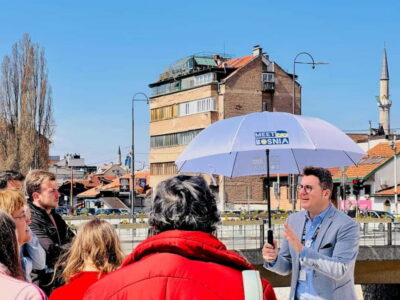
Mak is the kind of guide you want when you care about context, not just photos. The reviews you see around this tour mention his kind, patient approach and his willingness to check in so adults and teens understand. That matters, especially on a topic like Sarajevo, where different eras and communities overlap in the same small city blocks.
The tour is offered in English, and the pace is designed so you can actually follow the story. One review noted that Mak would check from time to time that everything was clear, including for a family with teenagers. If you like learning but hate feeling like you are being dragged through facts, that style is a good match.
There is also a social comfort element. One review mentioned the group tour happening alongside a dog, with Mak being patient. Service animals are allowed, which tells you the operator plans for real life on the street, not just a polished classroom.
Stop 1: Katedrala Srca Isusova and the Rose theme
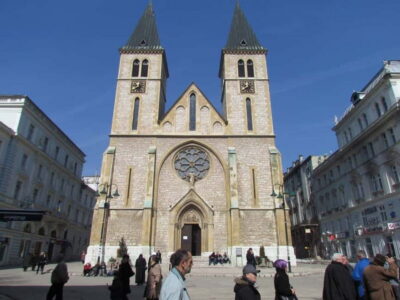
You begin at Katedrala Srca Isusova, the Sacred Heart of Jesus Cathedral. This is a strong first stop because it sets the tone for the city, with a very clear religious landmark that looks and feels distinct.
Right at this stop, the tour includes the Roses of Sarajevo theme for about 15 minutes, with admission listed as free. You do not just get a quick exterior view here. You get a guided explanation that connects the rose symbol to what Sarajevo means to people, not just to buildings.
A drawback at the start? You may arrive with the wrong shoes. Even early in the walk, Sarajevo streets can be uneven, so wear something that you can stand on comfortably without thinking about it.
Another way to spend the day from here:
- Fall of Yugoslavia, Sarajevo War Tour with Tunnel of Hope Museum and Frontlines
★ 5.0 · 1,314 reviews
Stop 2: Serbian Orthodox Church, Mondo sculpture, and the park pause
Next comes the Serbian Orthodox Church of the Nativity of the Theotokos. The tour frames this as more than an architectural stop, it is part of understanding how communities shaped the city. Along with the church, you also get a look at the Mondo sculpture and a nearby city park.
Admission is listed as free for this stop, and the time is about 15 minutes, so you are not stuck here too long. Still, it is long enough to get a sense of how Sarajevo can hold different identities side by side in the same walk.
Practical tip: this is a good moment to reset your brain. After the cathedral and rose theme, the church and sculpture provide a shift in mood, and the nearby park helps you breathe before the next streets.
Stop 3: Ferhadija Pedestrian Street, Eternal Flame, and Tito Street
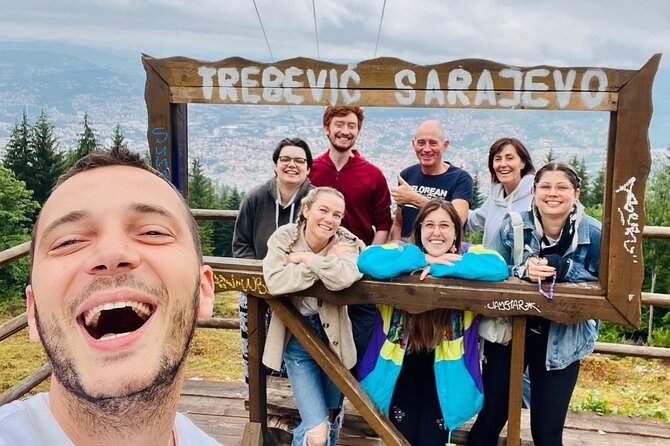
The tour moves into Ferhadija Pedestrian Street, one of the city’s key walking corridors. Here you get stops tied to major symbols and street names, including Eternal Flame, Tito Street, and the First Rose of Sarajevo for about 15 minutes.
This is one of those segments where the guide’s role matters. Street names and monuments do not automatically explain themselves, and in Sarajevo they often connect to multiple time periods. Listening while you walk through the open pedestrian space helps the story stick.
One consideration: this is also the point where you start touching memorial language, including the Eternal Flame references. If you are traveling with kids or anyone who prefers lighter topics, you can decide whether you want to lean into the explanations or take a calmer pace for a moment.
Stop 4: Gazi Husrev Beg Medresa, Bezistan Bazaar, and the Clock Tower
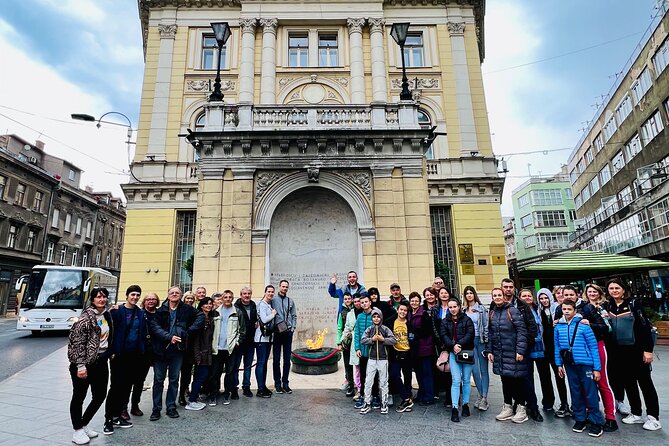
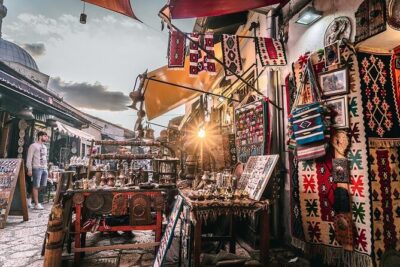
From Ferhadija, you head to Gazi Husrev Begova Medresa. This stop bundles several tightly connected sights, including the Gazi Husrev-Beg mosque, Bezistan Bazaar, Clock Tower, and Jewel Street. The time here is about 20 minutes, with free admission listed.
This is a valuable stop because it blends the spiritual and the everyday. You are not only looking at one building. You see how the mosque complex relates to the market life around it, with bazaar streets that feel like the city’s older rhythm.
If you like shopping, you will probably want to slow down on Jewel Street. The tour keeps it moving, but you can use the guided context to make sense of what you see, then step aside for a quick look if time allows.
Stop 5: Princip Gavrilo Mausoleum and the Latin Bridge story
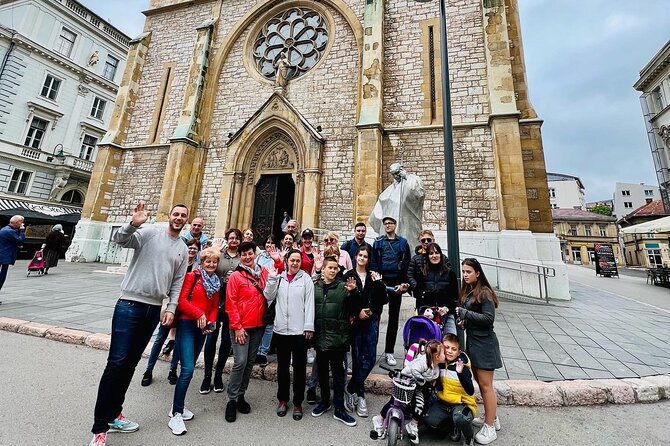
Then comes a heavy but important segment: Mausoleum of Princip Gavrilo. The tour connects this stop to the Latin Bridge area and the assassination spot, again with about 15 minutes and free admission listed.
You will hear how this moment links to World War I, not as a distant textbook event but as a specific Sarajevo location tied to named people. The same Latin Bridge focus returns later, which is useful. It lets you connect the dots instead of forgetting the name two stops later.
If you feel uncomfortable with war history, you can still benefit here by listening for the city-level perspective: how places carry memory, and how Sarajevo built identity around those markers.
Stop 6: Sarajevo City Hall, Inat Kuca, and the fortress cluster
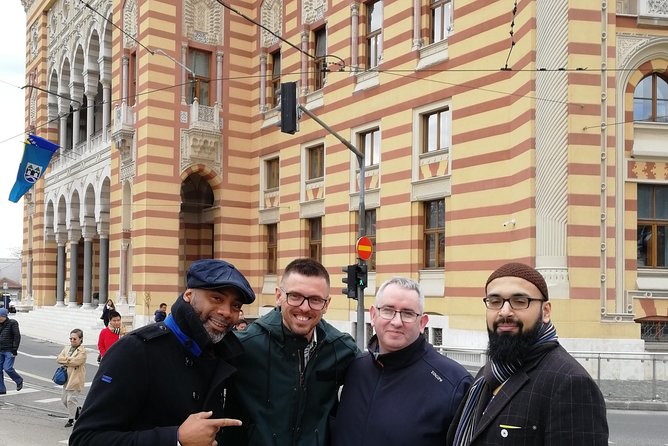
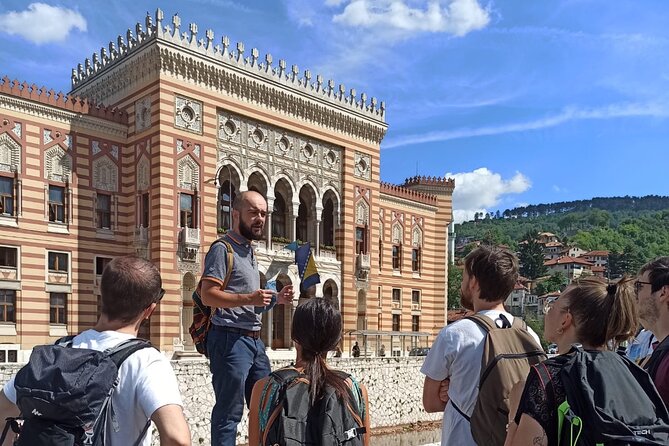
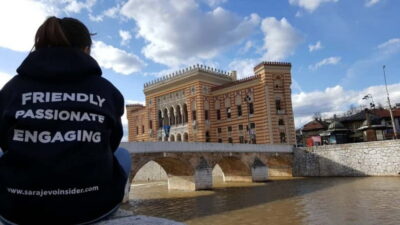
After that, you shift to Sarajevo City Hall and nearby landmarks: Inat Kuca, White Fortress, Yellow Fortress, Jajce Army house, and an area tied to the 1984 Olympic mountain. This stop is about 20 minutes and lists free admission.
This is one of the most “big picture” sections. City Hall and surrounding structures help you understand Sarajevo’s civic side, while the fortresses add the visual sense of protection, control, and survival across different eras.
I like how the guide’s job becomes interpretation here. You are looking at several landmark types, and without explanations it would be easy to treat them like separate photo stops. With a guide, you start seeing them as part of a single story arc.
Stop 7: The Yellow Fortress, Kovaci Street, and a food-street break
Next is The Yellow Fortress, with Kovaci street and the food street included for about 15 minutes. Admission is listed as free.
This stop works well if you are hungry but do not want to break the tour rhythm. The “food street” label gives you a chance to notice where people naturally go for snacks and meals. You can also use this time to plan your next meal after the tour ends.
A small caution: because this segment includes street-level areas, it can get more crowded than the official landmark spots. Keep your phone and small items secure and expect a bit more movement around you.
Stop 8: Sebilj Fountain, Kazandziluk Street, and Pigeon Square
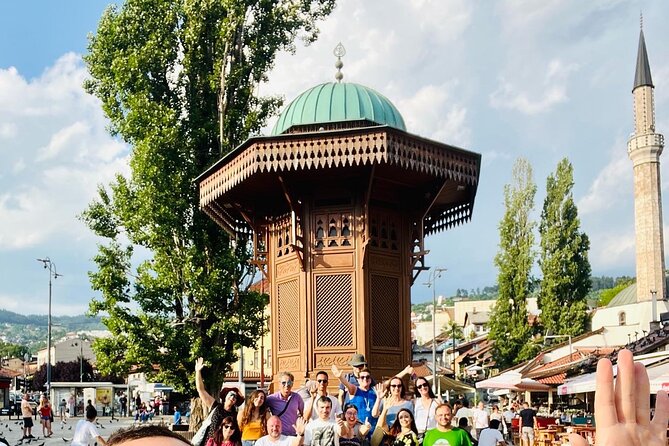
You then reach Sebilj Brunnen (Fountain). The tour connects it to Sebilj, Kazandziluk street, and pigeon square for about 15 minutes, with admission listed as free.
Sebilj is one of those places that instantly feels like a meeting point. The fountain and square setting make it easy for the guide to talk about daily life patterns, street culture, and why these central public spaces matter.
Practical tip: if pigeons are part of your travel anxiety, you will still see them. But this is a perfect time to grab a quick sip of water and take a relaxed look around before the more solemn stops ahead.
Stop 9: Pijaca Markale and the Sarajevo massacre location
Now the tour turns serious again at Pijaca Markale, which is also called the Yellow market. You get the Largest Rose of Sarajevo reference and a Massacre spot stop for about 15 minutes, with free admission listed.
This is not a sightseeing stop in the casual sense. The value is understanding place names and the meaning of memorial markers in Sarajevo’s public spaces. The rose reference helps connect symbol to identity, while the massacre spot brings you face to face with why certain locations are treated with care.
If you want to handle this part thoughtfully, I recommend listening first, taking a photo only if it feels respectful to you, then spending a minute just standing quietly. A guide gives context, but your own pace matters here.
Stop 10: Jewish Museum area, Sephardi synagogue, and Jewish Park
Next is the Jewish Museum of Bosnia and Herzegovina area, including Jewish Park and the Sefardi synagogue. The stop time is about 15 minutes, and admission is listed as free.
This segment adds the community layer that makes Sarajevo feel real. Rather than treating Sarajevo as a single narrative, the tour spreads the story across religious and cultural landmarks you can actually stand in front of.
One practical note: if you are someone who likes to read details at your own pace, 15 minutes can feel short. Still, the guided context is often what turns an unfamiliar site into something you can recognize later.
Stop 11: Latin Bridge, Franz Ferdinand, and Sophie
The Latin Bridge connection comes directly again, including the assassination spot of Franz Ferdinand and his wife Sophie, linked to World War I. This stop is also about 15 minutes, with free admission listed.
Repeating Latin Bridge is a smart teaching choice. It gives you a second chance to absorb the names and the timeline, and it helps you match the story to what you see on the ground.
If you are taking photos, do it quickly then focus on listening. This is one of those places where the story matters more than the angle.
Stop 12: Eternal Flame finale and the WWII meaning
You finish at Eternal Flame with a short 5 minute stop. This one is specifically framed around fascist liberation of Sarajevo during World War II, with admission listed as free.
A short ending like this works because it leaves you with a clear final symbol. After walking through cathedrals, bazaars, and memorial spaces, the Eternal Flame reads like a headline: Sarajevo remembers, and the city teaches memory through street-level markers.
Don’t rush the final seconds. The whole point is to land the narrative, then let the atmosphere do its job.
Price and value: why $31.24 can actually be a bargain
At $31.24 per person, this tour looks affordable, and the real value is how little time you waste. You are paying for guided context, not for transportation or a pile of paid-entry attractions. Admission is listed as free for the key sites across the route, which removes a common cost surprise on city tours.
You also get a format that respects attention span. 2 to 3 hours is enough to cover a serious sample of central Sarajevo, including sites tied to both everyday life and major historical events. The small group cap around 10 travelers helps keep explanations audible and questions possible.
Is it perfect value for everyone? If you want purely scenic stops with zero heavy content, you might feel this is too focused on historical memory. If you want your photos to come with meaning, the price feels right.
Who this tour is best for
I’d point you to this Sarajevo walking tour in English if you want a first-time overview you can understand quickly. It is especially good for:
- People who like seeing religious landmarks and historic streets on foot
- Families traveling with teenagers who still want explanations, not just walking time
- Travelers who prefer small groups and a guide who checks in for clarity
It also works for dog owners in practice. At least one review highlighted Mak’s patience while touring with a dog, and the experience notes that service animals are allowed. If you need that kind of practical reassurance, this tour fits.
Should you book this Sarajevo walking tour?
Yes, if you want a guided walk that covers the city’s most famous stops in a short window and you care about understanding what those places mean. The combination of an English-speaking guide (Mak), a small group cap, and a route that mixes architecture, bazaars, and memorial sites makes it a strong choice for a first visit.
Skip it or plan around it if your ideal day is light and purely scenic. The route includes war and tragedy markers like massacre sites and assassination history, so you should expect emotionally serious storytelling. If that works for you, you will probably appreciate how the guide keeps the pace manageable and the explanations clear.
FAQ
How long is the Professional Sarajevo walking tour?
The tour lasts about 2 to 3 hours.
What time does the tour start, and where do I meet?
It starts at 6:15 pm. The meeting point is Đulagina 2, Sarajevo 71000, Bosnia and Herzegovina, and the tour ends back at the meeting point.
Is the tour offered in English?
Yes, it is offered in English.
How much does the tour cost?
The price is $31.24 per person.
How many people are in the group?
The tour is described as a group booking option with a max of 15, and the experience details also state a maximum of 10 travelers.
Is there a dress code?
The dress code is smart casual.
Does it run in bad weather?
The tour operates in all weather conditions, so you should dress appropriately.
Can I get a refund if I cancel?
Yes. It offers free cancellation, and you can cancel up to 24 hours in advance for a full refund.
Most recently added near Sarajevo
- Sarajevo : Private Walking Tour With A Guide (Private Tour)★ 5.0 · 1 review
- Sarajevo: Islamic Tour | 500+ years of Glorious Heritage★ 5.0 · 1 review
- Sarajevo: Srebrenica – A Journey of Remembrance★ 5.0 · 1 review
- Bunker: Tito’s Secret & Boracko Lake Tour from Sarajevo★ 5.0 · 1 review
- Svrzo House Entrance Ticket★ 5.0 · 1 review
- Transfer tour Sarajevo-Dubrovnik★ 5.0 · 1 review
- Thrilling Rafting Adventure on the Neretva River with Lunch★ 5.0 · 1 review
- Private transfer (FROM-TO) Sarajevo – Dubrovnik★ 5.0 · 1 review
Walking Tours, compared.
Private Walking Tour, Food Tasting and Bosnian Coffee in Sarajevo
Read our review →
Browse the lists this tour appears in