
Reviewed · SARAJEVO TOURS
From Sarajevo: Mostar ruins and abandoned places
Mostar gets talked about for its bridge. This tour adds the rest of the story. You are heading south from Sarajevo to see war damage and abandoned corners, with time for photos and quiet looking.
I especially like the angle here, it treats the landscape as evidence, not a postcard. I also like that you start with WWII ruins in Jablanica, then connect that mood to the destruction around Mostar’s Old Bridge. For a guided day, that pacing makes the history feel human and close.
One thing to consider, this is a darker theme. If you want a purely scenic or upbeat day, you might find the focus on war aftermath a bit heavy.
In This Review
- Key highlights at a glance
- From Sarajevo to Ruins: The Big Picture of This Day
- Price and value: Why $86.68 can make sense
- Meeting point in Sarači 77 and how the day starts
- Stop 1, the tRu Bosnia office pass by: your briefing moment
- Jablanica ruins: a WWII bridge with a quiet punch
- Fortica Hill viewpoints and the Austro-Hungarian traces
- Mostar Old Bridge: ruins, surrounding damage, and your main photo time
- Why the ruins approach changes your understanding of Mostar
- The guide factor: look for warmth and local context
- What to bring for a photography and ruins focused day
- Time management: how the pacing feels over 9 hours
- Who this tour fits best
- Should you book this Sarajevo to Mostar ruins tour?
- FAQ
- What time does the tour start, and how long does it take?
- Where do I meet the tour in Sarajevo?
- Can the guide pick me up somewhere else in Sarajevo?
- Are admission tickets included for the stops?
- How large is the group?
- What is the cancellation policy?
Key highlights at a glance
- Urban exploration style pacing focused on ruins, not just big sights
- Jablanica WWII bridge ruins for a rare Mostar area context
- Fortica Hill viewpoints plus a pass by Austro-Hungarian ruins
- Mostar Old Bridge ruins and surrounding damage with real time to photograph
- Small group size with a maximum of 15 people
Other Sarajevo trips worth comparing
- Sarajevo: Mostar, Konjic, Blagaj Tekke, Pocitelj & Waterfall
★ 4.9 · 1,666 reviews - Fall of Yugoslavia, Sarajevo War Tour with Tunnel of Hope Museum and Frontlines
★ 5.0 · 1,314 reviews - Sarajevo: Grand Walking Tour Through Time and Cultures
★ 4.8 · 1,236 reviews - Sarajevo: Mostar, Konjic, Sufi House, Pocitelj & Kravice Falls
★ 5.0 · 1,179 reviews
From Sarajevo to Ruins: The Big Picture of This Day
This is a Sarajevo to Mostar day trip built for people who want more than the usual photo stop. The theme is ruins and abandoned places, with an honest look at what war left behind and how communities keep changing afterward.
What makes it work is the sequencing. You do not jump straight to the Old Bridge. Instead you start with a ruined bridge from World War II in Jablanica, then you move toward Mostar with a viewpoint stop on Fortica Hill. By the time you reach Mostar, you are primed to notice details in the damage, the recovery, and the parts of the town that feel quieter than the main tourist loop.
The tour is also sized for attention. A maximum of 15 travelers usually means you can ask questions and actually get time to step back and look. If your camera is ready, you will have a chance to frame ruins at your own pace instead of being constantly swept along.
Price and value: Why $86.68 can make sense
At about $86.68 per person for a roughly 9-hour outing, you are paying mainly for transport, a guide, and the route that takes you beyond the classic checklist. The good news is that the stops here are listed with free admission, so you are not stacking extra ticket costs on top of the price.
Is it worth it? If you simply wanted views and a quick Old Bridge visit, you could likely do that with public transport for less. But this trip is paying for direction. You are getting a structured path through ruins tied to WWII and the Bosnian War, plus help spotting what matters for photography and understanding.
For me, this kind of tour is value when it saves you time and confusion. You do not have to figure out how to connect the ruins with the right perspective. You just show up, follow the day, and use the time you are given where your interests are.
Meeting point in Sarači 77 and how the day starts
You meet at Sarači 77 in Sarajevo, in the first-floor room 14. The start time is 8:00 am. If you would rather not go to the office, the provider says pickup is possible at a desired location.
This matters because an early start gives you better light for photography and it helps you reach the first stop without rushing through everything. Also, the meeting point is near public transportation, so you should have some options if you are coming from somewhere else in the city.
Practically, arrive a little early. Ruins days run on momentum. You do not want to be the person who holds up the group while you locate the door.
Another way to spend the day from here:
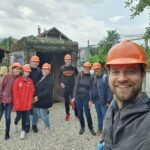

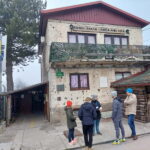
Stop 1, the tRu Bosnia office pass by: your briefing moment
The first listed stop is a pass by at tRu Bosnia, essentially where you connect with the start of the day. Even if there is not much time here, think of it as your setup period. You can use it to get your plan straight, charge your devices, and make sure your camera settings are ready.
Because the subject is heavier than a typical sightseeing route, a short briefing can help you know what you should be paying attention to. That kind of framing changes how you experience the later ruins.
If you are bringing gear, this is the point to do a quick check. Water, a lens cloth, extra battery, and comfortable shoes will matter more than most people think once you start walking around damaged areas.
Jablanica ruins: a WWII bridge with a quiet punch
The day’s first real landmark stop is Jablanica. You visit the ruins of a bridge destroyed during World War II, with about 20 minutes on site and free admission.
Why this stop is more than a warm-up: it sets a time scale. The Bosnia story in Mostar is often discussed through the Bosnian War, but you are also looking at how conflict and infrastructure can echo across decades. When you stand near a ruin like this, you start noticing patterns that repeat in different wars, and you learn to read the meaning of what remains.
Photographically, ruined bridges are strong subjects because of their lines. You can shoot the geometry of broken spans, and you can also capture how the surrounding area grew around absence. Just keep in mind that a short stop means you should move with purpose. Pick two or three angles, then spend the rest of the time calmly.
A small consideration: 20 minutes goes fast. If you want longer time for detailed shots, you will need to work quickly on the first day stop, then save your deeper focus for Mostar.
Fortica Hill viewpoints and the Austro-Hungarian traces
Next comes Fortica Hill. You get about 15 minutes to enjoy views from the platform, plus a passing moment for Austro-Hungarian ruins. Admission is free.
Viewpoints matter on a ruins tour because they help you understand scale. From above, it is easier to see how much damage and change can be packed into a relatively small area. It also helps you plan your photography for later. You can think, okay, this is the angle where the Old Bridge sits in context, this is the direction where light might hit walls and gaps.
The Austro-Hungarian mention is a key detail. It signals that Mostar did not only experience one era of change. Different rulers, different styles, different priorities. When you later see ruins around the Old Bridge, you can interpret them as part of a longer layering of history, not a single dramatic event that appeared out of nowhere.
Practical tip: 15 minutes at a hill viewpoint is short. Wear shoes that feel steady, because a platform can mean uneven ground or slick spots. Bring a light jacket if the morning air is cool, because hill winds can be real.
Mostar Old Bridge: ruins, surrounding damage, and your main photo time
The highlight stop is Mostar Old Bridge. You spend about 2 hours there, with free admission. The bridge itself was ruined during the Bosnian War, and you also see ruins around Mostar.
This is the emotional center of the tour. The Old Bridge is the recognizable symbol, but the point here is not just the famous silhouette. The point is what you can observe in the damage, in the surrounding structures, and in the way the area carries both memory and everyday life.
With two hours, you have time to do more than a quick circuit. I like using this kind of block to split your time: first, walk slow and take a few wider shots that show the bridge and its immediate setting. Then shift to detail photos. Look for texture in masonry, the contrast between repaired surfaces and damaged ones, and the way streets and ruins frame your subjects.
One balanced note: this stop is also the place where you can feel the weight of the theme. If you are sensitive to conflict topics, plan your pace. Take breaks, step away from crowded angles, and give your brain a moment to reset. Ruins days are tiring because you are doing visual interpretation, not just sightseeing.
Why the ruins approach changes your understanding of Mostar
Mostar can be seen as a photo destination. This experience asks you to treat it as a lived document. When you visit ruins tied to two different periods of destruction, WWII in Jablanica and the Bosnian War around Mostar, the city becomes easier to read.
You start understanding that reconstruction is not only buildings and bridges. It is also social energy, migration, and the slow reshaping of neighborhoods. The tour explicitly frames the day around aftermath and declining society, which is not meant to be sensational. It is meant to make you aware that some places do not recover evenly, and some scars take generations to fade.
If you are into archaeology or history through physical evidence, this angle fits. You are not getting everything from a museum label. You are learning to spot what time left behind and what people rebuilt, kept, or left as a reminder.
The guide factor: look for warmth and local context
From the information provided, the guide Kenan is described as insightful and warm, with a lot of local knowledge. That kind of guide energy matters on a tour like this.
On ruins days, a good guide does two things. First, they help you connect the visible damage to the story behind it without turning it into a lecture that kills your curiosity. Second, they guide your attention. You want to notice the details that a casual passerby might miss.
When you book, keep an eye out for tours that emphasize discussion and context, not only movement. Even though this is a small group tour, the guide approach is what turns a list of stops into a coherent day.
What to bring for a photography and ruins focused day
You will get the most out of this type of outing with a few practical items. Since the itinerary moves from viewpoint to ruined bridge areas, you will likely walk and stand longer than you expect.
Bring:
- Comfortable shoes for uneven or rough ground
- A camera with a charged battery, plus a backup if you have one
- Water and a small snack for the midday gap between stops
- A lens cloth or wipes for dusty surfaces
Also, be respectful with your focus. Ruins are not just subjects. They are connected to real harm. I always think of it like this, photograph what you see, not what you exploit.
Time management: how the pacing feels over 9 hours
With about 20 minutes in Jablanica, 15 minutes at Fortica Hill, and around 2 hours for Mostar Old Bridge, the day is front-loaded with shorter stops and then a longer core section. That pacing makes sense because it keeps your travel time from swallowing the main experience.
Still, 9 hours total means you should plan to be mentally flexible. The group may have photo stops where you need to be quick. It also means you should avoid booking anything tight right after your return.
If you want the best photos, treat the 2 hours in Mostar Old Bridge as your most important slot. Use the earlier ruins to practice your angles and camera settings, then shift your effort where time is most generous.
Who this tour fits best
This trip is aimed at fans of urban exploration, archaeology, and photography. It is also a good fit for travelers who want to understand how conflict reshapes places over time, without pretending everything is simple.
You will probably enjoy it if:
- You like photographing buildings and textures, not only skylines
- You are curious about how ruins relate to modern identity
- You prefer a smaller group day with a focused theme
- You can handle an emotionally heavy topic with care
If you want a gentle, mostly carefree sightseeing day, consider a different style tour. This one asks you to look longer than usual.
Should you book this Sarajevo to Mostar ruins tour?
I think it is worth booking if your curiosity is practical and visual. If you want the Old Bridge, but you also want the surrounding story in ruined streets and war-linked infrastructure, this day is built for that.
If you are hoping for a light, distraction-free day, the darker theme will not fit. But if you can handle serious context and you like to photograph thoughtfully, the structure, small group size, free admissions at stops, and the time you get in Mostar make it a strong value.
FAQ
What time does the tour start, and how long does it take?
It starts at 8:00 am and runs for about 9 hours.
Where do I meet the tour in Sarajevo?
The meeting point is Sarači 77, Sarajevo 71000, in the first-floor room 14.
Can the guide pick me up somewhere else in Sarajevo?
Yes, the provider says pickup is available at a desired location.
Are admission tickets included for the stops?
The information says admission tickets are free for the listed sites.
How large is the group?
The tour has a maximum of 15 travelers.
What is the cancellation policy?
Free cancellation is offered up to 24 hours in advance for a full refund. If you cancel within 24 hours of the start time, the amount paid is not refunded.
Most recently added near Sarajevo
- Sarajevo : Private Walking Tour With A Guide (Private Tour)★ 5.0 · 1 review
- Sarajevo: Islamic Tour | 500+ years of Glorious Heritage★ 5.0 · 1 review
- Sarajevo: Srebrenica – A Journey of Remembrance★ 5.0 · 1 review
- Transfer tour Sarajevo-Dubrovnik★ 5.0 · 1 review
- Bunker: Tito’s Secret & Boracko Lake Tour from Sarajevo★ 5.0 · 1 review
- Svrzo House Entrance Ticket★ 5.0 · 1 review
- Thrilling Rafting Adventure on the Neretva River with Lunch★ 5.0 · 1 review
- Private transfer (FROM-TO) Sarajevo – Dubrovnik★ 5.0 · 1 review
Sarajevo Tours, compared.
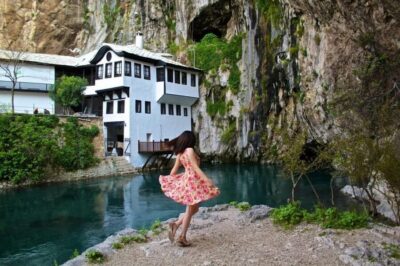
Mostar, Konjic, Blagaj Tekke, Pocitelj & Waterfall
Read our review →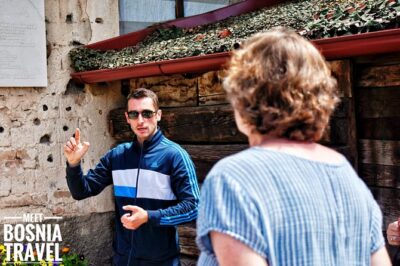
Fall of Yugoslavia, Sarajevo War Tour with Tunnel of Hope Museum and Frontlines
Read our review →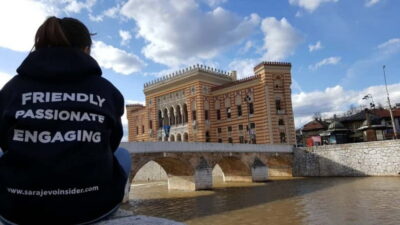
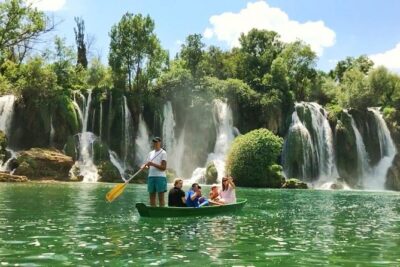
Mostar, Konjic, Sufi House, Pocitelj & Kravice Falls
Read our review →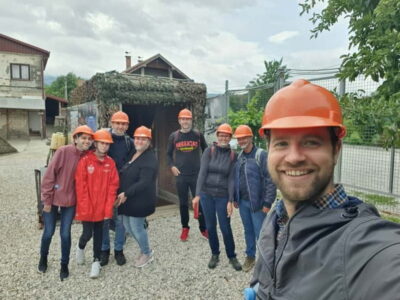
Tunnel Museum Yugoslavia War Tour with War Veteran
Read our review →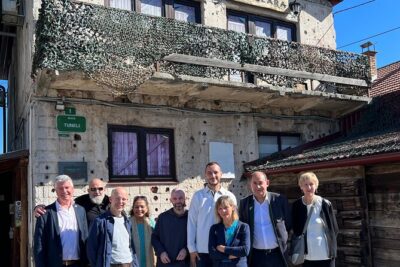
ROSES OF SARAJEVO (Official WAR + CITY tour)- Story of a Survivor
Read our review →
Tunnel Museum: Bosnian & Yugoslav Wars Tour with War Veteran
Read our review →Browse the lists this tour appears in