
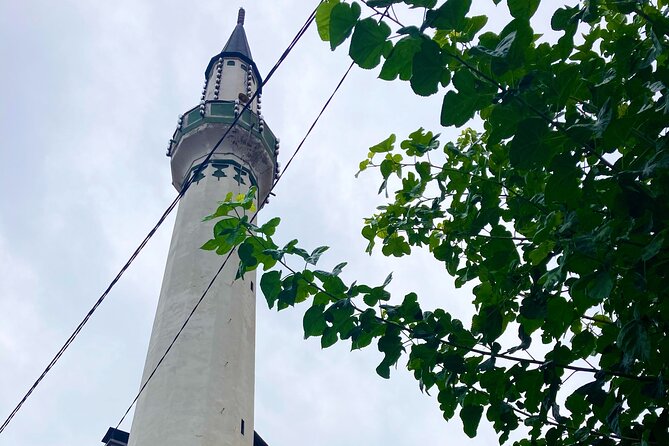
Reviewed · TOURS
Sarajevo: Islamic Traditions and Daily Life Tour
Sarajevo has a way of putting faith and daily routines side by side. This tour strings together mosques, schools, and historic houses into a walk you can follow without a map, all at a bargain price. I especially like how the guide ties the places to real Muslim life in Bosnia, not just dates, and I like the mix of major religious stops with quieter scenes like an Ottoman home. One thing to watch: two of the biggest stops require paid tickets, and the route includes some uphill walking.
You’ll start in the center, meet a certified guide, and get a city map along the way. The group stays small (up to 25), so questions do not get lost, and the tour fits nicely into a packed day with a lot of street time. It runs about 2 hours, so it is not a marathon, but it is active enough that comfortable shoes are a must.
In This Review
- Key things that make this tour worth your time
- A 2-hour Sarajevo walk built around Islamic landmarks
- Starting at Sarajevo Insider, then walking where the story begins
- Mejdan Park: where the city takes root
- Jedileri Sanctuary: spiritual meaning in everyday Sarajevo
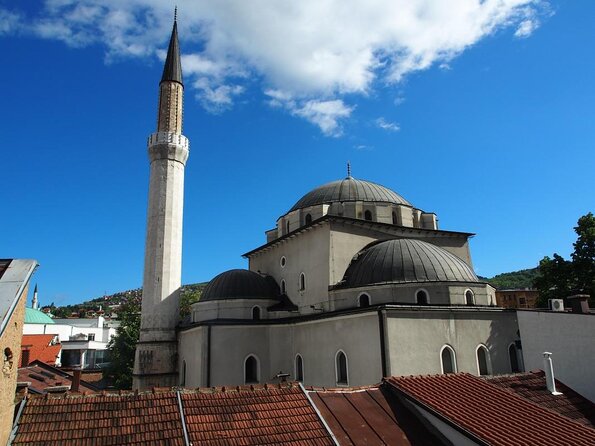
- Emperor’s Mosque: Sarajevo’s oldest mosque and the name story
- Gazi Husrev-beg Mosque: the spiritual and cultural heart, with tickets
- Clock Tower and a lunar clock: time measured differently
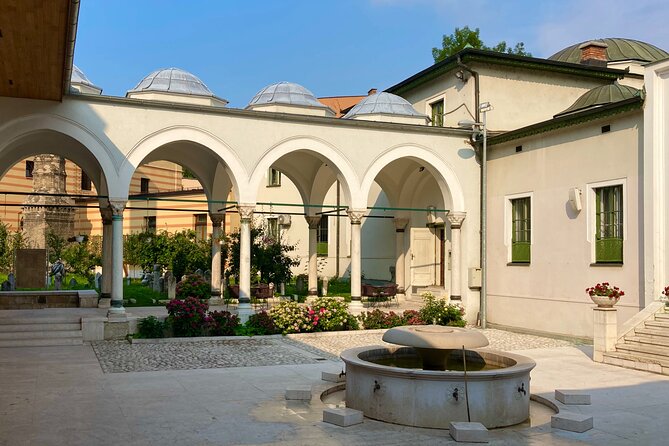
- Gazi Husrev Begova Medresa: education that lasts
- Svrzo’s House: Ottoman daily life you can actually picture
- Faculty of Islamic Studies: architecture with both old and new
- Baščaršija bazaar time: crafts, corners, and market energy
- Sebilj Fountain: a small pause with a tradition behind it
- Bravadžiluk Street: food traditions and artisan crafts
- Alifakovac Cemetery (optional): a quiet, respectful moment
- Morica Han: an Ottoman inn for travelers and community life
- Price and value: what your $30.04 buys you
- Who should book this tour, and who might want a different one
- Quick verdict: should you book this Islamic traditions tour?
- FAQ
- Is the tour in English?
- How long is the Sarajevo Islamic Traditions and Daily Life Tour?
- What is included in the ticket price?
- What entrance fees are not included?
- Where does the tour start and what time is it?
- Is the tour a walking tour with lots of walking?
- Is Alifakovac Cemetery part of the tour for everyone?
- Can I cancel for a full refund?
Key things that make this tour worth your time
- Islam-first storytelling that links architecture to everyday Muslim life in Bosnia
- Major landmarks plus lived-in spaces, like an Ottoman home and old inn
- Timekeeping with meaning, including a rare lunar clock
- A walking route you can grasp quickly, even if it is your first time in Sarajevo
- Optional quiet reflection, with Alifakovac Cemetery included at your choice
Other Sarajevo trips worth comparing
- Sarajevo: Mostar, Konjic, Blagaj Tekke, Pocitelj & Waterfall
★ 4.9 · 1,666 reviews - Fall of Yugoslavia, Sarajevo War Tour with Tunnel of Hope Museum and Frontlines
★ 5.0 · 1,314 reviews - Sarajevo: Grand Walking Tour Through Time and Cultures
★ 4.8 · 1,236 reviews - Sarajevo: Mostar, Konjic, Sufi House, Pocitelj & Kravice Falls
★ 5.0 · 1,179 reviews
A 2-hour Sarajevo walk built around Islamic landmarks
This tour works because it stays focused. You get a strong sense of Sarajevo’s Islamic presence without turning it into a textbook. It is a fast-moving, on-foot route that still makes space for understanding what you are seeing, from the city’s early social gathering points to the places where education and worship shaped daily life.
The pace is the main tradeoff. The total time is about 2 hours, with many stops lasting just a few minutes, so you will not linger like you would on a museum day. I love that it keeps you moving, but you should know it is also a format where your guide’s explanations do a lot of the heavy lifting.
If you want a short, clear introduction to Sarajevo from an Islamic traditions angle, this fits well. It is also a good option if you are the type who likes architecture but gets bored when it turns into only style spotting.
Starting at Sarajevo Insider, then walking where the story begins
Your meeting point is Sarajevo Insider, City Tours and Excursions at Zelenih beretki 30 in central Sarajevo, with a 10:00 am start. The tour ends back at the meeting point, which helps if you want to grab lunch soon after.
You’ll have a mobile ticket, and the tour is offered in English. That matters because the route is full of place names that sound similar, and clear guidance keeps you from getting lost in pronunciation. Since the guide is certified and you get a city map, you can also keep using what you learned later that day.
One practical plus: the start point is near public transportation. Even if you are not staying nearby, you can still slot this into your itinerary without a long commute.
Mejdan Park: where the city takes root
Mejdan Park is the first stop for a reason. This is where Sarajevo was officially established, and it is tied to how people gathered for social life. In other words, you start with the place that explains how the city formed its rhythm, not just where to take a photo.
Because this stop is free and short (about 5 minutes), it is not a long pause. Still, it helps you frame the rest of the walk. When you understand this early gathering space, the later religious and educational sites make more sense as parts of a living community.
Another way to spend the day from here:
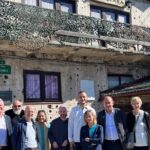
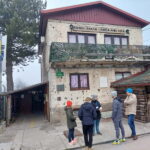
Jedileri Sanctuary: spiritual meaning in everyday Sarajevo
Next comes the Jedileri Sanctuary, also known as Turbe sedam braće, the Sanctuary of the Seven Brothers. You’ll get a quick visit and explanation of its sacred role in Muslim life in Bosnia.
This kind of stop is easy to overlook if you only look at buildings. Here, the value is in learning what the site represents to people. Even a brief visit can shift your mindset from seeing religion as something separate from the city, to seeing it as part of how communities remember, care, and live.
It is also a free stop, so you can focus on the meaning rather than thinking about costs.
Emperor’s Mosque: Sarajevo’s oldest mosque and the name story
The Emperor’s Mosque is next, and it is one of those places that gives you a shortcut into history. You learn that it is the oldest mosque in Sarajevo and you get the explanation about how Islamic heritage shaped the city’s name.
This stop is brief, about 3 minutes, so you will not have time to read every detail on the spot. The best move is to listen closely to what the guide says right there, then decide if you want to revisit later on your own.
If you like context, this is a good pairing with what comes next, because you start moving from early foundations toward Sarajevo’s central religious institutions.
Gazi Husrev-beg Mosque: the spiritual and cultural heart, with tickets
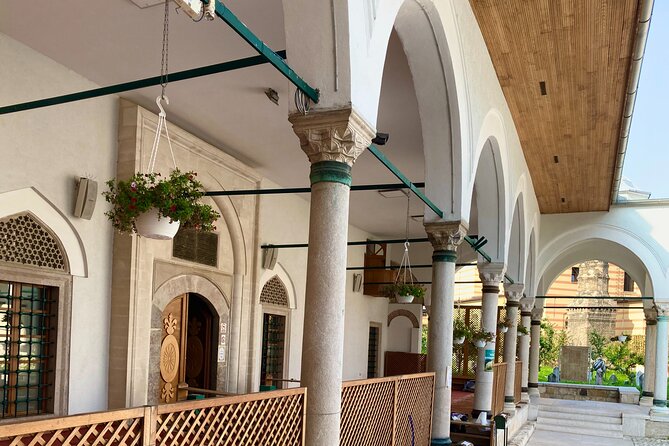
The highlight stop for many people is the Gazi Husrev-beg Mosque, Sarajevo’s iconic central mosque. It is the kind of place where the setting feels intentional, and the guide’s job here is to connect what you see to why the mosque matters to the community.
Plan for the added cost: admission to the Gazi Husrev-bey Mosque and Museum is not included, and it is listed as 8 BAM (4,50€) per person. The visit time here is about 30 minutes, which is a big chunk compared to most other stops on the walk. So if you are choosing whether to pay and enter, know that this is where the longer explanation and viewing time happen.
This is also a good place to ask your questions. A lot of the tour’s themes come together here: faith, culture, learning, and how a city organizes itself around religious life.
Clock Tower and a lunar clock: time measured differently
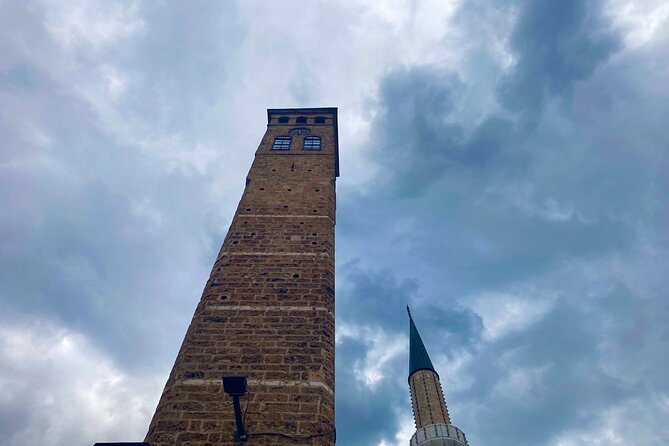
There’s a quick stop to see Sarajevo’s historic Clock Tower, including its rare lunar clock. The key idea you’ll take away is that it connects timekeeping to the Islamic lunar calendar.
This is one of those “wait, that is actually cool” moments. You get a cultural explanation that changes how you see the tower, even if you just get a minute to look.
The stop is short, but it is memorable because it is not only about religion in general. It is about how the calendar shapes practical life, from routines to seasonal rhythms.
Gazi Husrev Begova Medresa: education that lasts
Then you move to the Gazi Husrev Begova Medresa, Sarajevo’s first Islamic high school. You’ll hear about its 1537 legacy and why education became a visible, permanent part of the city.
You’ll spend about 10 minutes here, and the value is in understanding that a medresa was not a side project. It was a core institution that shaped who could learn, teach, and lead.
This stop is not listed as free, but from your tour info, it does not list an entrance fee for this stop itself. Still, keep in mind that some of the larger museum-style entries on the route do cost extra, and the guide can help you decide what to include.
Svrzo’s House: Ottoman daily life you can actually picture
Svrzo’s House is your best “how people lived” stop. It is described as a well-preserved Ottoman home showing daily Muslim life in Bosnia during the 18th century.
You’ll get around 20 minutes, but admission fees apply here too. Entrance fees to the Svrzo’s House Museum are listed as 5 BAM (3,00€) per person. That is small money, but you should think about it as buying context. A guided look at how people lived inside those walls is often more useful than speeding past another exterior view.
If you care about ordinary life over only monumental sites, this is the stop that tends to stick in your mind.
Faculty of Islamic Studies: architecture with both old and new
The Faculty of Islamic Studies at Sarajevo (Univerziteta u Sarajevu) is another quick but satisfying stop. You’ll see a building described as a masterpiece blending Islamic-inspired design with modernist elements, including Neo-Moorish-inspired features.
You’ll spend about 1 minute here, so you cannot treat it like a photo walk. The trick is to notice how the guide frames it: knowledge, design, and culture all in the same setting.
If you like architecture, this is a neat contrast to the older Ottoman buildings, because it shows that Islamic identity in Sarajevo did not stop in the past.
Baščaršija bazaar time: crafts, corners, and market energy
Baščaršija is next, Sarajevo’s old bazaar area, where Ottoman-era trade and culture show up in the streets and craft shops. You’ll have about 20 minutes here, and it is one of the more open-ended parts of the tour.
This is a good spot to slow down slightly and let the guide point out what to look for. Since you are on a guided route, you’ll usually get practical context on what you are seeing, not just a general “shopping here is nice” pitch.
If you want to connect the tour to things you can buy or eat later, this is where your brain starts making plans.
Sebilj Fountain: a small pause with a tradition behind it
Sebilj Brunnen, the fountain, is quick, about 1 minute. Still, it is treated as symbolic. You get the idea of sipping water here as part of local tradition, linked to Muslim life in Sarajevo.
I like stops like this because they remind you that culture is not only in big monuments. It is also in small rituals people repeat.
Even if you take only a moment here, it gives the tour a human scale.
Bravadžiluk Street: food traditions and artisan crafts
Bravadžiluk Street is your next longer strolling section at about 20 minutes. The focus is on flavors of Muslim culinary traditions and artisanal crafts in Sarajevo.
This stop is great for planning your next hours. You can look, taste if you want (the tour itself does not list included food), and decide what you want to chase after the tour ends.
Because this is not a ticketed museum stop, the value is in understanding the cultural thread. The guide can help you connect street-level details to the bigger story you heard at the mosques and schools.
Alifakovac Cemetery (optional): a quiet, respectful moment
There is an optional stop at Alifakovac Cemetery. You’ll see about 2 minutes if you choose to include it, and you’ll use the time to reflect on Sarajevo’s Islamic history through the resting place of notable Muslims in Bosnia.
This is not a place to rush. If cemeteries make you uncomfortable, skip it. If you are curious, bring a quiet mindset. You are there for meaning, not spectacle.
In a tour that mostly moves through lively streets and major institutions, this gives you a pause that feels appropriate.
Morica Han: an Ottoman inn for travelers and community life
Morica Han is the final historical stop on the walk, about 3 minutes. It is described as the best-preserved Ottoman inn in Sarajevo, and it served as a hub for Muslim travelers in Bosnia.
Think of it as a community building, not just a building. Inns like this were where news traveled, introductions happened, and visitors became temporary neighbors.
If you want a feeling for how mobility and hospitality worked in the Ottoman era, Morica Han is a good ending note.
Price and value: what your $30.04 buys you
The price is $30.04 per person for about 2 hours with a certified guide and a city map included. That is a strong value for a guided walk that covers multiple major sites in a compact area.
Where the cost math changes is entrances. Two paid stops are clearly listed:
- Svrzo’s House Museum: 5 BAM (3,00€) per person
- Gazi Husrev Bey’s Mosque and Museum: 8 BAM (4,50€) per person
If you choose to enter both, you will add those to the tour price. If you skip one, you can still get a lot from the guided context around it. Either way, you should go in with the expectation that this is not purely free-site sightseeing.
Also note the tour duration. Because it is only about 2 hours, you are paying for guided interpretation and efficient routing, not for long museum time. If you love slow museum browsing, you might add extra independent time after the walk.
Who should book this tour, and who might want a different one
Book this if you want:
- A clear introduction to Sarajevo’s Islamic traditions through places you can actually visit on foot
- Ottoman daily life context, not just grand buildings
- A route that moves efficiently, with a guide who can answer questions as you go
- An English tour that stays easy to follow, with a mobile ticket and a map
Consider skipping or pairing with something else if you:
- Prefer mostly ticketed museum time or long indoor visits
- Do not like walking on streets with some uphill segments
- Want zero extra admissions beyond what you pay upfront
Quick verdict: should you book this Islamic traditions tour?
Yes, if you want a focused first look at how Islam shaped Sarajevo’s public spaces, education, and daily routines. The free stops are a good number of highlights, and the paid entries are optional choices that can deepen the experience when you feel like you want more than a quick glance.
If you have limited time, this tour gives you a practical route and a set of landmarks you can revisit later. If you are traveling with curiosity rather than only a checklist, you will probably enjoy how the guide connects the city’s architecture to real life.
FAQ
Is the tour in English?
Yes. The tour is offered in English, and you’ll have a certified guide to explain the sites as you walk.
How long is the Sarajevo Islamic Traditions and Daily Life Tour?
It runs about 2 hours.
What is included in the ticket price?
The tour includes a certified guide and a city map.
What entrance fees are not included?
Entrance to Svrzo’s House Museum is 5 BAM (3,00€) per person. Entrance to Gazi Husrev Bey’s Mosque and Museum is 8 BAM (4,50€) per person.
Where does the tour start and what time is it?
It starts at Sarajevo Insider, Zelenih beretki 30, Sarajevo, and the start time is 10:00 am.
Is the tour a walking tour with lots of walking?
Yes, it is a walking tour and does involve some uphill walking, so comfortable shoes help.
Is Alifakovac Cemetery part of the tour for everyone?
No, Alifakovac Cemetery is listed as optional.
Can I cancel for a full refund?
Yes. Cancellation is free if you cancel up to 24 hours in advance for a full refund. If you cancel less than 24 hours before the start time, the amount paid is not refunded.
Most recently added near Sarajevo
- Sarajevo : Private Walking Tour With A Guide (Private Tour)★ 5.0 · 1 review
- Sarajevo: Islamic Tour | 500+ years of Glorious Heritage★ 5.0 · 1 review
- Sarajevo: Srebrenica – A Journey of Remembrance★ 5.0 · 1 review
- Transfer tour Sarajevo-Dubrovnik★ 5.0 · 1 review
- Svrzo House Entrance Ticket★ 5.0 · 1 review
- Bunker: Tito’s Secret & Boracko Lake Tour from Sarajevo★ 5.0 · 1 review
- Thrilling Rafting Adventure on the Neretva River with Lunch★ 5.0 · 1 review
- Private transfer (FROM-TO) Sarajevo – Dubrovnik★ 5.0 · 1 review
Tours, compared.
Fall of Yugoslavia, Sarajevo War Tour with Tunnel of Hope Museum and Frontlines
Read our review →
Blagaj, Počitelj & Kravice Waterfalls Day Tour
Read our review →
Tunnel Museum Yugoslavia War Tour with War Veteran
Read our review →
ROSES OF SARAJEVO (Official WAR + CITY tour)- Story of a Survivor
Read our review →
Discover Herzegovina Day Tour from Mostar: Kravice Waterfalls, Blagaj, Počitelj
Read our review →
Browse the lists this tour appears in