
Reviewed · WALKING TOURS
Sarajevo : Highlights & Hidden Gems Walking Tour
Sarajevo can feel like it has layers. This private 2-hour walking tour gives you the storyline behind Ottoman-era streets, Sarajevo’s religious mix, and key landmarks, with a guide like Enes who is known for being informative and funny. What I like most is the way you hit the big sights without losing the personal details, and you finish with practical pointers for what to do next.
One thing to consider: you cover a lot in a short time. If you want long, slow stops (or extra museum time), you might feel a fast pace over the 2 hours.
In This Review
- Key highlights to look for
- Two hours in Sarajevo, and you actually get your bearings
- Price and what makes it good value
- Starting at Hotel Europe on Vladislava Skarića, then building the story as you walk
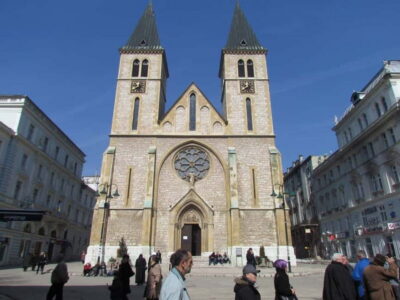
- Sacred Heart of Jesus Cathedral and the Cathedral Church of the Nativity of the Theotokos
- Ferhadija Pedestrian Street, the Eternal Flame, and Tito Street symbolism
- Gazi Husrev-beg Madrasa, the Gazi Husrev-Beg mosque, and Bezistan Bazaar
- Saint Mark Cemetery, then Sarajevo City Hall and the Yellow Bastion viewpoint
- Clock Tower and Jewel Street, then Sebilj fountain and Pijaca Markale’s market mood
- Latin Bridge area and Princip Gavrilo: why this small place changed the world
- Ending at the Jewish Museum of Bosnia and Herzegovina in Jewish Park, with the Sefardi synagogue
- How private and customizable turns “sights” into real guidance
- What types of travelers this suits
- Tips so you enjoy every stop without rushing
- Should you book this Sarajevo walking tour?
Key highlights to look for
- Meet at Hotel Europe for an easy start and a quick setup of Sarajevo’s story
- Sacred Heart Cathedral and the Theotokos Cathedral to see Sarajevo’s religious diversity in one route
- Ferhadija Street, Eternal Flame, and Tito Street as emotional, visible reminders of resilience
- Gazi Husrev-beg Madrasa, Gazi Husrev-Beg mosque, and Bezistan Bazaar for Ottoman-era textures and market-era context
- Views from Sarajevo City Hall and the Yellow Bastion to orient you above the city center
- End at the Jewish Museum and Sefardi synagogue at Jewish Park, grounding the WWI era in later community memory
A few more Walking Tours in Sarajevo
- Sarajevo: Grand Walking Tour Through Time and Cultures
★ 4.8 · 1,236 reviews - Sarajevo: 2 Hours Old Town Walking Tour With Local Guide
★ 5.0 · 505 reviews - Private Walking Tour, Food Tasting and Bosnian Coffee in Sarajevo
★ 5.0 · 255 reviews - Sarajevo Grand Walking Tour
★ 5.0 · 232 reviews
Two hours in Sarajevo, and you actually get your bearings
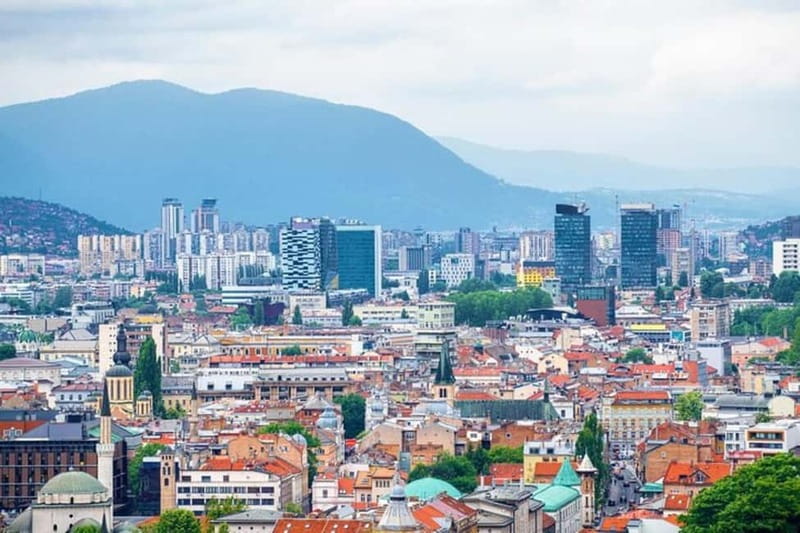
Sarajevo is the kind of city where street corners mean something. In two hours, you can’t absorb everything, but this format helps you understand what you are seeing as you move, instead of guessing. You start with a history and culture setup at Hotel Europe, then walk through the parts of the center that tie together religion, empire-era trade, and modern history.
I also like that the tour is private and customizable. That means you are not stuck with a one-size-fits-all script. If your interests lean religious history, architecture, or the WWI connection, you can ask your guide to spend a bit more time on the parts that matter to you.
Price and what makes it good value
At $82 per person, the price is not cheap-cheap, but it is fair for what you get: a private guide, a route that strings together many major landmarks, and help with tickets for the visits you want. The tour also mixes walking and public transport, which matters because Sarajevo’s center has hills and distances that can slow you down if you are doing it alone.
If you are traveling with a friend or partner, the private setup often feels especially worth it because you are paying for your own time with a guide, not for the possibility of sharing.
Starting at Hotel Europe on Vladislava Skarića, then building the story as you walk
Your tour begins in front of Hotel Europe, at Vladislava Skarića 5. That starting point is handy because it is central and easy to find, and it gives your guide a chance to set the scene before you head into the older streets.
This is where the tour earns points. Instead of jumping straight to photos, you get context first: how Sarajevo’s heritage was shaped by different communities and influences. Then, when you hit Ottoman-era street patterns and key religious sites, you are not just collecting stops, you are connecting them.
I like this approach because it makes the city feel navigable. Even if you are not the kind of traveler who studies maps, you start to recognize themes: markets, houses of worship, memorial sites, and viewpoints that reveal how the center sits in the terrain.
Another way to spend the day from here:
- Fall of Yugoslavia, Sarajevo War Tour with Tunnel of Hope Museum and Frontlines
★ 5.0 · 1,314 reviews


Sacred Heart of Jesus Cathedral and the Cathedral Church of the Nativity of the Theotokos
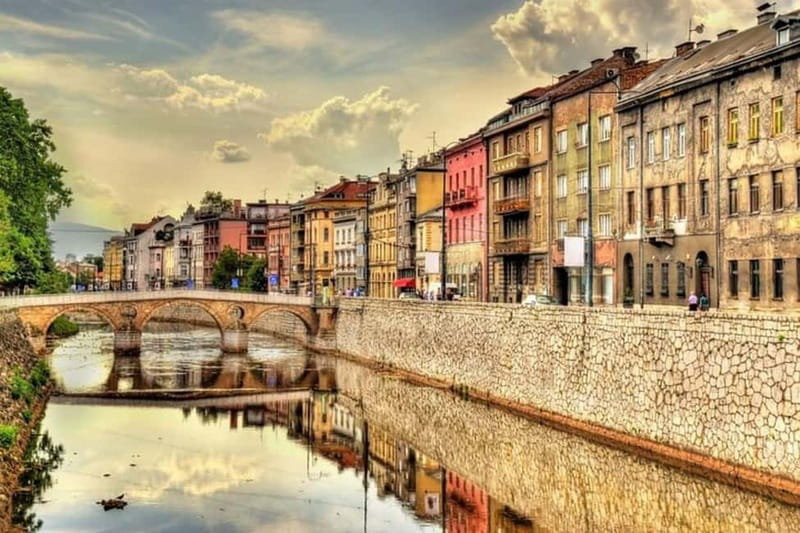
One of the smartest choices in the route is how it tackles Sarajevo’s religious diversity early. You visit the Sacred Heart of Jesus Cathedral, Sarajevo, and then the Cathedral Church of the Nativity of the Theotokos.
For me, the value here is not only architecture. It is perspective. Sarajevo has many layers, and religious buildings are among the most visible ones. With a local guide, you are more likely to notice details you might otherwise skip, like why a particular church sits where it does in the city’s overall structure, and how different communities shaped daily life over time.
Practical note: cathedral visits can mean different lighting, different interior rules, and varying accessibility for certain areas inside. Plan on taking a few careful minutes at each stop, but keep moving. This tour is designed to keep the pace steady, not to turn into a half-day sightseeing marathon.
Ferhadija Pedestrian Street, the Eternal Flame, and Tito Street symbolism
After the cathedrals, you move into the atmosphere of Ferhadija Pedestrian Street. This is where Sarajevo starts to feel like a place people actually use, not just a list of historic sites.
Your guide also brings in key moments tied to memory and resilience, including the Eternal Flame and Tito Street. The emotional power of these sites is easier to grasp when your guide explains what they represent and how they fit into Sarajevo’s identity.
Why this part matters: it connects beauty and grief. In some cities, memorials feel separate from everyday strolling. Here, they are on the path, which makes the history feel immediate instead of distant.
Gazi Husrev-beg Madrasa, the Gazi Husrev-Beg mosque, and Bezistan Bazaar
Next comes a heavy-hitter for Ottoman-era Sarajevo: Gazi Husrev Begova Medresa, which includes the Gazi Husrev-Beg mosque and the Bezistan Bazaar.
This is the stop where I would tell you to slow down just a little, even if the rest of the tour stays brisk. Madrasa buildings and mosque courtyards often give you a sense of design priorities: the way entrances work, how spaces transition, and how people historically moved between education, worship, and commerce.
The bazaar piece is especially useful for travelers who like real-world atmosphere. You get a sense of what the area was built for, markets and movement, not only sightseeing. And because your guide knows the area, you can ask questions that turn your photos into something more meaningful, like what to look for in the details around the bazaar.
Saint Mark Cemetery, then Sarajevo City Hall and the Yellow Bastion viewpoint
Your tour includes Saint Mark Cemetery, then continues toward civic landmarks and wide views: Sarajevo City Hall and the Yellow Bastion (also referred to as the Yellow Fortress).
This sequence is powerful because it shifts from remembrance to scale. Cemetery sites help you understand how the city processes loss and commemoration. Then the city hall and bastion area helps you understand how the center is laid out and how people used to gain perspective, literally from higher ground.
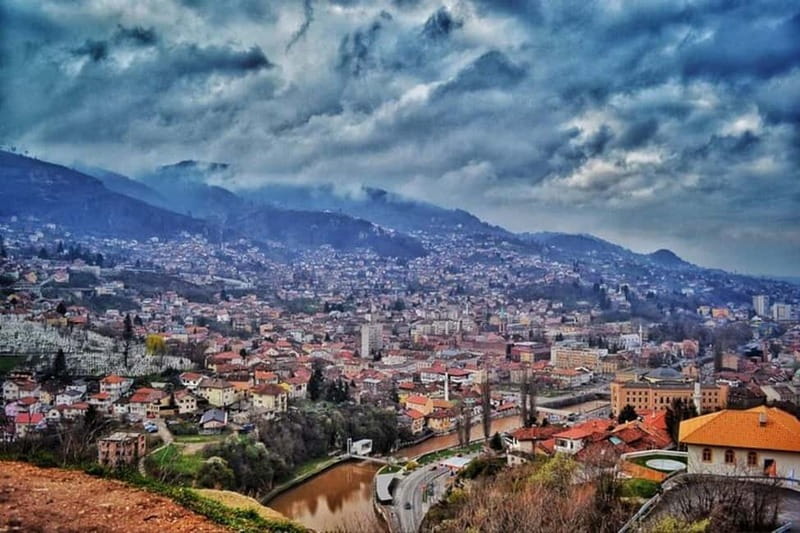
If you like panoramic moments, this is one of the best parts of the route. Even if you only spend a few minutes looking out, the city’s layout starts to make sense, so later, when you walk on your own, you waste less time figuring out where you are.
Clock Tower and Jewel Street, then Sebilj fountain and Pijaca Markale’s market mood
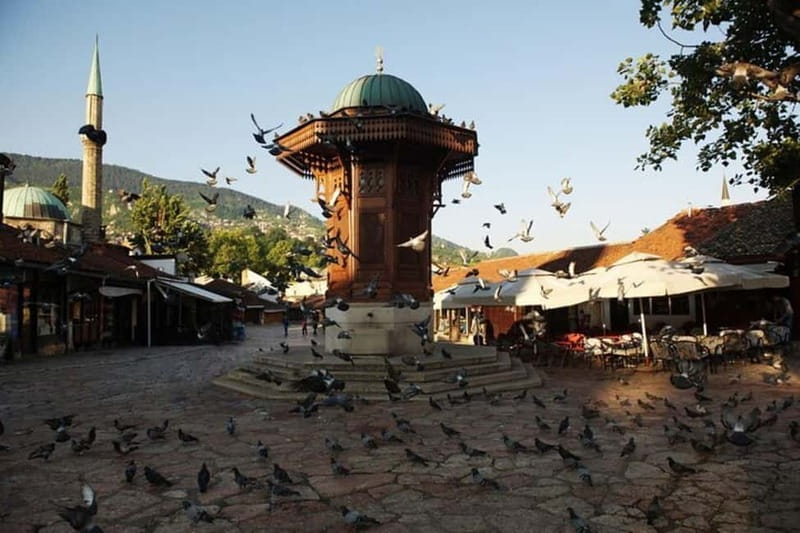
After the viewpoints, your route returns to street level with a classic Sarajevo mix: the Clock Tower and Jewel Street, then Sebilj Brunnen (Fountain).
This is the kind of segment where your guide’s storytelling matters. The fountain is an obvious photo stop, but it is more interesting when you understand the role of public gathering points. Sebilj is one of those places you see, and then you start noticing why it fits into the city center’s flow.
Then you reach Pijaca Markale, where the tour highlights the Yellow Market and the Largest Rose of Sarajevo. Market squares are great because they show a city’s everyday rhythm. Even if you do not plan to shop, you get a feel for how Sarajevo moves from monument to market without losing its character.
Practical tip for this part: wear shoes you trust. This section is mostly outdoors and you are on your feet. Sarajevo streets can be uneven, and you are walking between tight lanes and open squares.
Latin Bridge area and Princip Gavrilo: why this small place changed the world
One of the most significant stops is near Latin Bridge, where you visit the Mausoleum of Princip Gavrilo. Your guide ties this site directly to the assassination that sparked World War I.
This is where the tour earns respect. It does not treat the assassination as trivia. Instead, it helps you understand how global history can be anchored in a very local, very human location. Even in a short tour, you can feel the weight of the moment when you have the context.
I also like that the route does not stop at the WWI story and then move on. It keeps moving, which reflects how Sarajevo itself moves forward. You learn something heavy, then you continue into other parts of the city’s living memory.
Ending at the Jewish Museum of Bosnia and Herzegovina in Jewish Park, with the Sefardi synagogue
The tour finishes at the Jewish Museum of Bosnia and Herzegovina, located in Jewish Park, including the Sefardi synagogue.
Ending here is meaningful. Sarajevo’s story is often told through empire-era and WWI lenses, but the Jewish community chapter matters, and the location gives you a calmer, more reflective close to the route.
If you want a trip that feels balanced, this ending helps. You get religious diversity at the beginning with the major cathedrals, then you get a different kind of cultural history later that ties into the city’s long timeline.
How private and customizable turns “sights” into real guidance
A big reason this tour feels worth it is how private and customizable it is. Your guide can steer the route toward what you care about most: religion, markets, memorials, architecture, or city viewpoints.
And you should take advantage of the advice piece. A local guide can point you to things that are hard to find on your own, like which streets are most interesting at certain times or which nearby areas are best for a second walk. The tour is built to give you that extra layer of usefulness, not just the photos.
What types of travelers this suits
This works especially well if you:
- are in Sarajevo for a short time and want the highlights without feeling lost
- like history but hate dry lectures, you want stories tied to what you see
- enjoy a city walk with a guide who can answer questions on the spot
- want a private route rather than sharing attention with strangers
If you are the kind of traveler who prefers museums for hours or wants zero walking, you might find the pace demanding. In that case, you can use this tour as your first orientation, then plan longer independent time later.
Tips so you enjoy every stop without rushing
Here are a few practical ways to make the most of the experience.
- Plan for a steady walk. It is a 2-hour walking tour with some public transport included, so comfortable shoes matter.
- Bring water or have a quick snack plan. Drink or food is not included, so you do not want to be hungry by the end.
- Use your guide’s questions as a tool. Ask what to do next based on what you liked most, not on what you think you should like.
- If you need accessibility support, know the tour is wheelchair accessible. Still, confirm with the provider about the best way to handle any specific indoor stops you care about.
- Keep expectations realistic for the time. You will see many key sites, but not in a slow, sit-down museum style.
Should you book this Sarajevo walking tour?
If you want a smart first look at Sarajevo, I would book it. The route strings together the biggest, most meaningful parts of the city: Ottoman-era spaces, major religious sites, Ferhadija Street with the Eternal Flame and Tito Street, a memorial tied to World War I, viewpoints from civic landmarks, and a reflective ending at the Jewish Museum and Sefardi synagogue.
The private setup is the deciding factor for me. You get guide-focused storytelling, plus advice you can actually use right after the tour ends. The only reason not to book is if you want a slower, longer deep-dive at a single site or you expect food to be included.
If your goal is to leave Sarajevo feeling oriented and informed, this is one of the quickest ways to get there in 2 hours with a guide you are likely to find genuinely enjoyable.
Most recently added near Sarajevo
- Sarajevo : Private Walking Tour With A Guide (Private Tour)★ 5.0 · 1 review
- Sarajevo: Islamic Tour | 500+ years of Glorious Heritage★ 5.0 · 1 review
- Sarajevo: Srebrenica – A Journey of Remembrance★ 5.0 · 1 review
- Transfer tour Sarajevo-Dubrovnik★ 5.0 · 1 review
- Bunker: Tito’s Secret & Boracko Lake Tour from Sarajevo★ 5.0 · 1 review
- Svrzo House Entrance Ticket★ 5.0 · 1 review
- Thrilling Rafting Adventure on the Neretva River with Lunch★ 5.0 · 1 review
- Private transfer (FROM-TO) Sarajevo – Dubrovnik★ 5.0 · 1 review
Walking Tours, compared.
Private Walking Tour, Food Tasting and Bosnian Coffee in Sarajevo
Read our review →
Browse the lists this tour appears in