
Reviewed · WALKING TOURS
Sarajevo Grand Walking Tour
Sarajevo hits you fast, right on the street. This 3-hour guided walk connects the Ottoman Old Town, Austro-Hungarian landmarks, and the city’s modern scars with stories that make each stop click.
I really like the value here: $20.57 gets you a guide plus a city map, and most stops are listed as free to enter. I also like the mix of places of worship and culture, so you get a practical feel for Sarajevo’s day-to-day diversity, not just a list of monuments.
One possible drawback is the pace. Some highlights are only a couple minutes each, so if you like slow sightseeing and long photos, you may want to plan a return visit to your favorites afterward.
In This Review
- Key points before you lace up
- Where the walk begins: Sarajevo Insider and the Old Town loop
- Latin Bridge to Mejdan Park: one street, one event, world-changing ripple
- Mosques, a Catholic church, and religious Sarajevo you can actually compare
- Brewery, modernist houses, and the Spite House: Sarajevo’s architecture with opinions
- Kovači Cemetery and Kovači Street: where remembrance meets everyday streets
- Baščaršija and the old market lanes: where craft and food live side by side
- Gazi Husrev-beg Mosque and the Meeting of Cultures: two symbols, one city model
- Jewish heritage, Sacred Heart, and the Serbian Orthodox Cathedral in one walking story
- Markale City Market and the Eternal Flame: local life and remembrance close the loop
- Price and value: why $20.57 can feel like a bargain here
- What to expect from the guide: storytelling style, pace, and helpful tips
- Practical tips: what to wear and how to make the 3 hours work for you
- Who this tour is best for
- Should you book this Sarajevo Grand Walking Tour?
- FAQ
- How long is the Sarajevo Grand Walking Tour?
- Is the tour offered in English?
- What is included in the price?
- Are there entrance fees for the stops?
- How large is the group?
- What happens if weather is bad?
Key points before you lace up
- Free-entry style route: many of the scheduled stops are marked free, so you mainly pay for the guide and narration
- Old Town orientation fast: you’ll walk enough streets to understand where things are, including the market area
- A guide who tells the full story: expect scene-setting context, including why 1914 mattered and why the 1992-1995 war still shapes the city
- Easy walking, mostly flat: reviewers called it an easy walk on the flats, but you still cover a lot in 3 hours
- Small-ish groups: maximum size is 30 travelers, which helps the guide keep momentum
- You can ask for local food tips: several guides offered specific recommendations, like where to find the best cevapi
A few more Walking Tours in Sarajevo
- Sarajevo: Grand Walking Tour Through Time and Cultures
★ 4.8 · 1,236 reviews - Sarajevo: 2 Hours Old Town Walking Tour With Local Guide
★ 5.0 · 505 reviews - Private Walking Tour, Food Tasting and Bosnian Coffee in Sarajevo
★ 5.0 · 255 reviews - Sarajevo: Old Town Walking Tour with Local Guide
★ 4.9 · 211 reviews
Where the walk begins: Sarajevo Insider and the Old Town loop
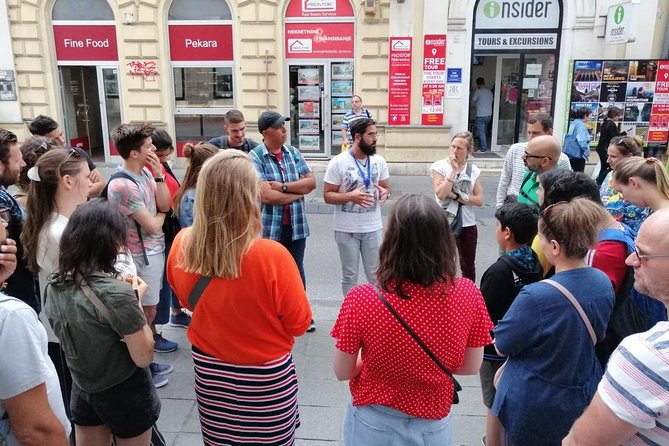
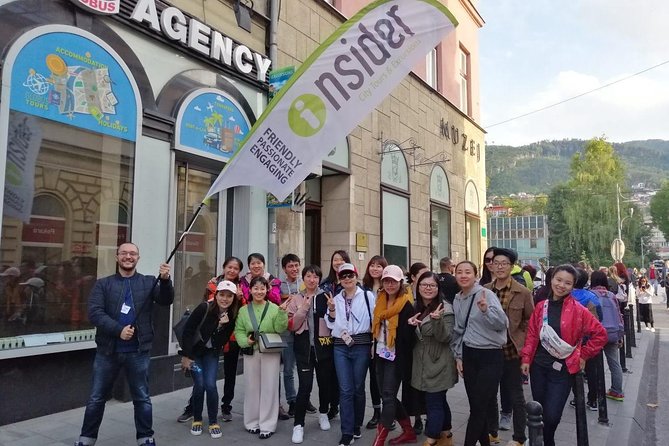
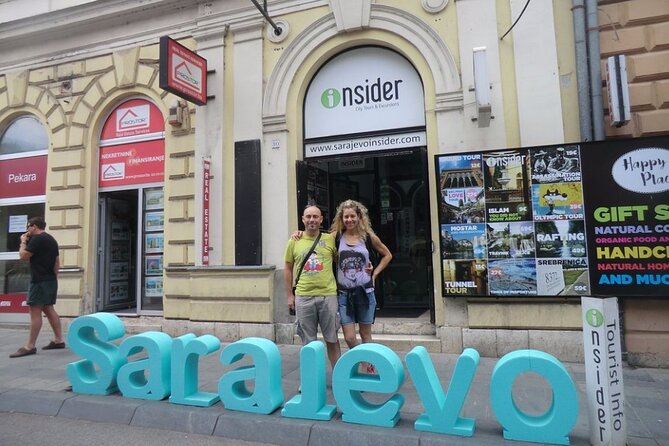
The tour starts at Sarajevo Insider – City Tours and Excursions, Zelenih beretki 30. You end back at the same meeting point, which is handy after a few hours of story-driven walking.
Plan on about 3 hours of sightseeing. It’s offered in English, and you get a mobile ticket, which keeps the start simple. If you’re the type who wants to get your bearings early in a trip, this is a great first-day move.
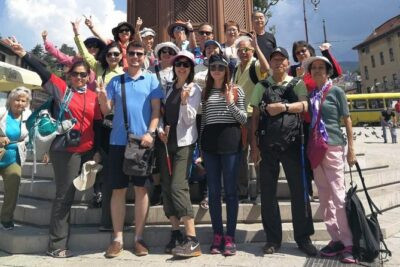
Group size is capped at 30, so you’re not stuck in a huge crowd. In practice, the experience still depends on your guide’s rhythm, and some guides are especially good at adapting when weather shifts.
Latin Bridge to Mejdan Park: one street, one event, world-changing ripple
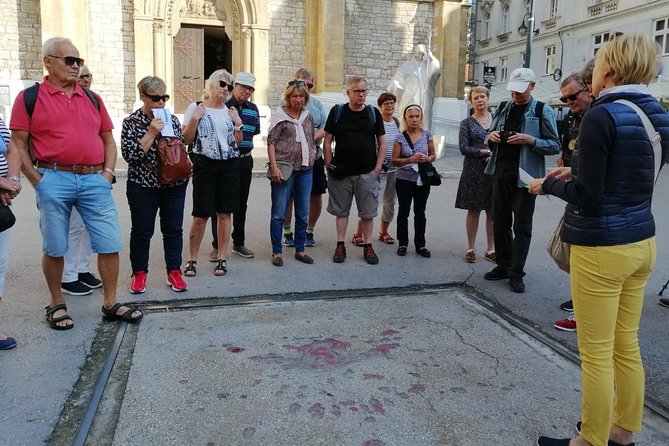
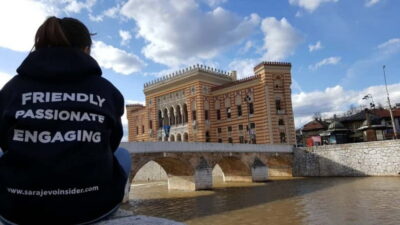
You kick things off at the Latin Bridge, tied to the assassination of Franz Ferdinand. This is where a single moment ignited World War I, and the guide’s narration is the point. The bridge itself is short, but the story gives it weight.
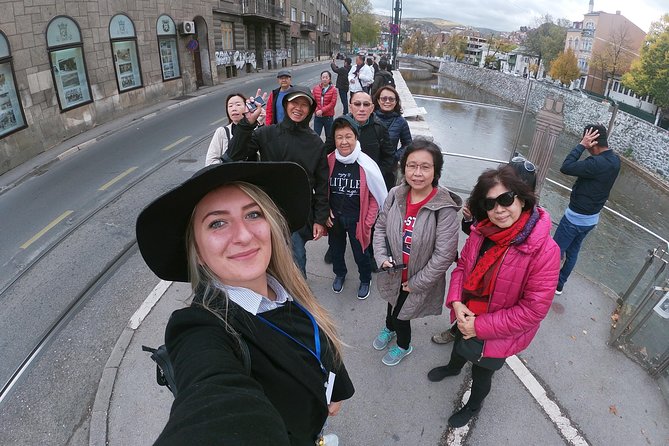
From there, you move to Mejdan Park near the Miljacka River. It’s a quick pause, more about atmosphere than sightseeing. Think green space and a breather before the route starts stacking up Sarajevo’s landmarks again.
Even if you’ve read about 1914 before, the guide’s approach tends to connect events to geography. That matters because Sarajevo’s identity is built on layers, not isolated plaques.
Mosques, a Catholic church, and religious Sarajevo you can actually compare
The walk continues to the Emperor’s Mosque. It’s described as Sarajevo’s oldest mosque and it’s a stop designed for respectful attention. You’ll get the cultural context for why the mosque matters in a city where multiple communities shape daily life.
Next is the Franciscan Church of Saint Anthony. The neo-Gothic look makes it a visual contrast, and that contrast is the lesson. You’re seeing how different faiths claimed space and expressed themselves architecturally.
Later on, you’ll also return to the theme of faith and art with more major landmarks, including the Serbian Orthodox Cathedral and, earlier, a big Catholic cathedral. The route doesn’t treat religion as a side note. It treats it as part of Sarajevo’s map of how people lived together, and how conflict affected that map.
Another way to spend the day from here:
- Fall of Yugoslavia, Sarajevo War Tour with Tunnel of Hope Museum and Frontlines
★ 5.0 · 1,314 reviews


Brewery, modernist houses, and the Spite House: Sarajevo’s architecture with opinions
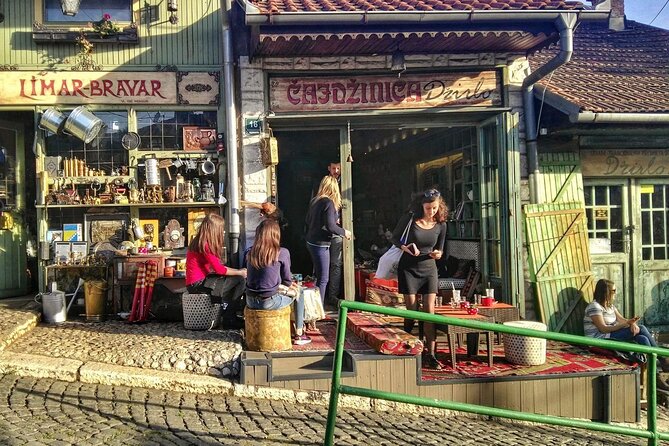
One of the most fun early stops is Sarajevska Pivara, the Sarajevo Brewery. You’re there briefly, but the message is clear: this is one of Bosnia’s oldest industrial complexes and part of the city’s working history, including traditional beer production.
Then the route heads to the Bosnian House Bicakcic-Hadzisabanovic. This one stands out because it’s about modernist architecture, not just classic old-town texture. It helps you see that Sarajevo’s story isn’t frozen in Ottoman time.
A stop you should not rush past is the House of Spite. It’s known for the story of a defiant house rebuilt brick by brick. Even in a few minutes, you get why this is more than a quirky nickname, it’s a symbol of stubborn survival.
Right after that, you reach Sarajevo City Hall. It’s a neo-Moorish landmark that mixes East and West in one big statement. It’s a classic “pause and look up” moment, and the guide’s framing helps you read the building instead of just snapping photos.
Kovači Cemetery and Kovači Street: where remembrance meets everyday streets
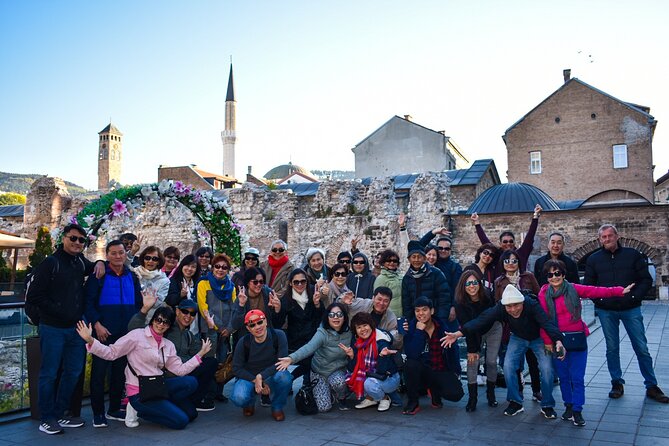
Kovači Cemetery is one of the emotional stops. It’s described as a national memorial honoring Bosnia’s defenders from the 1992-1995 war, and the tone shifts here. You don’t need extra time to feel the weight, but you do want to keep your voice low and your attention on what’s in front of you.
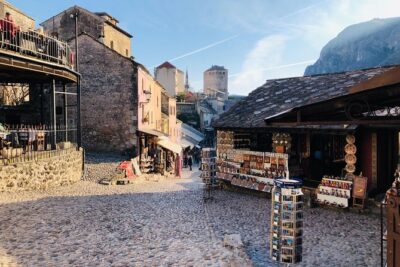
A short walk follows on Kovači Street, where you get Ottoman-era charm plus local shops. This is a practical transition. The route moves from memorial silence to street-level life.
If you’re tired, take it anyway. Even a quick street stroll after a heavy memorial helps you reset your brain and keep the route coherent.
Baščaršija and the old market lanes: where craft and food live side by side
Then you hit Baščaršija, the Old Town marketplace. This is one of the core reasons to do a guided walk here, because the guide helps you understand what you’re seeing and why these streets developed into a central trading space.
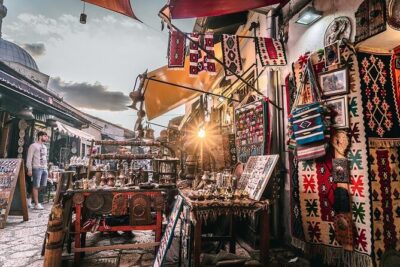
From Baščaršija you move to Bravadžiluk and Kazandžiluk streets. These lanes connect to traditional Bosnian metalwork, plus the food side of the old marketplace. It’s the kind of stop where you’ll want to look at shop signs, not just walk through.
Next up is the Sebilj Brunnen (Fountain). You’ll get the legend tied to it, including the idea of returning to Sarajevo. Even if you’ve seen fountains before, this one is about tradition, and tradition is exactly what the guide brings to the surface.
A few minutes later, you continue to Morica Han, described as Sarajevo’s last Ottoman inn. Inns were more than beds, they were social infrastructure for travelers and traders. That context turns a quick stop into something you’ll remember.
Gazi Husrev-beg Mosque and the Meeting of Cultures: two symbols, one city model
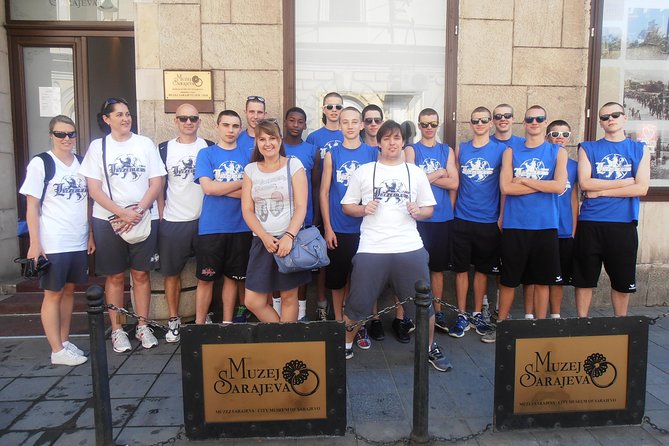
Gazi Husrev Bey’s Mosque is a key spiritual stop, and it’s described as a 16th-century masterpiece. Again, the guide’s job is to help you read what you’re looking at in a respectful way, not just point out details.
Then the route moves to Sarajevo Meeting of Cultures, a symbolic crossroads where cultures merge. This isn’t a “museum stop.” It’s a place meant to make you think about Sarajevo’s identity as a meeting point, not a single tradition.
This part of the tour is also a good moment to ask questions. If there’s anything about local customs, religious history, or how neighborhoods evolved, the guide is positioned perfectly to answer because the walk’s logic is about connection.
Jewish heritage, Sacred Heart, and the Serbian Orthodox Cathedral in one walking story
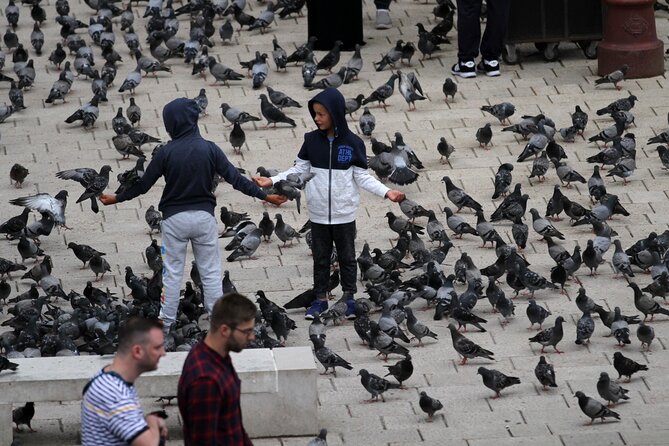
One of the standout cultural stops is the Museum of the Jews of Bosnia and Herzegovina, located at the Old Jewish Temple. It’s specifically tied to Sephardic Jewish heritage and the Sarajevo Haggadah, which is highlighted as priceless. Even if you only see part of the site due to time, the guide’s framing gives it urgency and meaning.
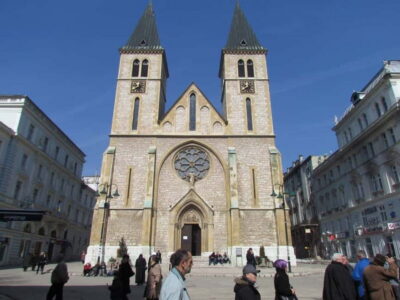
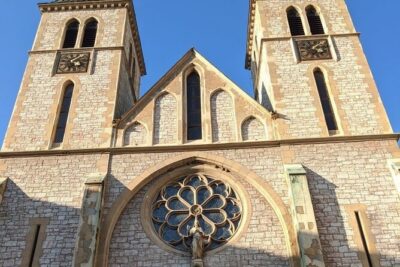
Right after that you’ll stop at the Cathedral of Sacred Jesus Heart, described as Sarajevo’s grand Catholic cathedral and sometimes compared to the city’s Notre Dame. It’s another big visual anchor, and it helps you compare how different communities built monumental spaces.
You’ll then visit the Serbian Orthodox Cathedral with its murals and domes. This is where the route’s theme becomes impossible to miss: you’re walking through a city that expresses faith through art, architecture, and public presence.
If you’re sensitive to emotional topics, keep in mind the tour does mix solemn remembrance with everyday city life. You’ll be given enough time to shift gears, but you should still mentally expect some serious material.
Markale City Market and the Eternal Flame: local life and remembrance close the loop
Markale City Market is a lively stop in the best sense of the word, because it’s practical Sarajevo. It’s described as a market where you can explore local flavors and experience day-to-day culture. If you want souvenirs that aren’t just magnets, this is the kind of place where you might find edible gifts or simple local products.
Finally, you reach the Eternal Flame, a World War II monument. It’s described as symbolizing resilience and remembrance. It’s a fitting last stop, because the whole walk has been about how the past is stored in the city’s streets.
When the tour ends, you’re back at the start point. That matters because it lets you continue your day without figuring out transit or navigating back through the neighborhoods you just learned.
Price and value: why $20.57 can feel like a bargain here
At $20.57 per person for about 3 hours, this is priced for orientation and story. The key value is that you’re not paying for separate attractions during the walk, since the scheduled stops are listed with admission ticket free.
You are paying for interpretation. Sarajevo’s history is complicated, and without a guide it’s easy to get lost in names and dates. The guide narration is what turns places like the Latin Bridge, the Spite House, and the Kovači Cemetery into a single connected city story.
If you’re traveling with limited time, this is also one of the more efficient ways to cover big themes: imperial Europe, Ottoman heritage, religious diversity, and 20th-century conflict. If you have a longer stay, you’ll also have a shortlist of places worth revisiting.
There’s also an option to upgrade to a private tour. That’s useful if your schedule is tight or if you want deeper conversation rather than moving as a group.
What to expect from the guide: storytelling style, pace, and helpful tips
Across guides, one pattern shows up strongly: engaging narration that ties major events to specific locations. Some guides, like Ilma and Hana, are described as especially strong at explaining the city with clear, attentive storytelling. Others, such as Suad, Fariz, or Kenan, are praised for answering lots of questions and adding small local details.
You might also get personal perspective from a guide who remembers the 1990s era. One review praised a guide who was old enough to remember the war firsthand and still talked optimistically about the future. That kind of framing can make a history tour feel human instead of academic.
Pacing is usually brisk. Many stops are designed to be short, so the guide’s ability to keep things smooth matters. If you get a tiny group, you can help by steering the conversation. Ask what you should focus on next, and don’t be shy about saying what you want, more street life, more architecture, or more conflict history.
Several guides also offered specific recommendations for food and coffee, including advice for the best cevapi. At the end of the tour, ask for one meal suggestion and one “must walk” street near where you’ll be staying.
Practical tips: what to wear and how to make the 3 hours work for you
This is a walking tour, and reviewers described it as an easy walk on the flats. Still, you’ll cover enough distance that comfortable shoes matter. Also, the tour requires good weather, so you should dress for conditions that can change during the day.
Bring layers. One guide’s advice to the group included wearing warm clothing. In Sarajevo, weather can swing, and a light rain or wind can make the walk less fun if you show up in thin layers.
If it rains near the end, expect the guide to keep things moving and adjust as needed. That flexibility is part of what makes the experience feel smooth instead of stressful.
Finally, this is a great tour to take on your first day. It gives you a mental map of where the key sites are and how they relate. Then, you can choose what deserves a longer stop on subsequent days.
Who this tour is best for
This tour is ideal if you want a structured way to understand Sarajevo without spending hours researching. It’s also great for first-time visitors who want to cover major highlights across multiple time periods, from Ottoman-era Sarajevo to the Austro-Hungarian and Yugoslav eras, and onward through modern remembrance.
If you’re a history fan, you’ll like the way the guide ties world events to local places. If you care more about architecture and street scenes, the route gives enough variety to keep it interesting without feeling like one long museum day.
If you hate walking schedules and you need long stops at each site, plan carefully. You might love the tour’s overall scope, but you will likely want to come back to any place that catches your eye.
Should you book this Sarajevo Grand Walking Tour?
Book it if you want the fastest possible way to understand Sarajevo as a living city, not just a collection of postcards. The guide-led narration, the mix of religious and cultural landmarks, and the fact that the walk covers huge themes in about 3 hours make this a strong value at $20.57.
Skip it only if you know you need long time at each site. This walk is designed for motion and context, with multiple short stops that reward your attention more than your patience.
If you do book, do two things: wear comfortable shoes and go in curious. Bring one or two questions about what you’re seeing, and you’ll leave with a map in your head and ideas for where to spend extra time next.
FAQ
How long is the Sarajevo Grand Walking Tour?
It’s approximately 3 hours.
Is the tour offered in English?
Yes, it is offered in English.
What is included in the price?
The tour includes a guide and a city map.
Are there entrance fees for the stops?
The scheduled stops are listed as admission ticket free, but the tour does not include all fees and taxes.
How large is the group?
The tour has a maximum of 30 travelers.
What happens if weather is bad?
This experience requires good weather. If it’s canceled due to poor weather, you’ll be offered a different date or a full refund.
Most recently added near Sarajevo
- Sarajevo : Private Walking Tour With A Guide (Private Tour)★ 5.0 · 1 review
- Sarajevo: Islamic Tour | 500+ years of Glorious Heritage★ 5.0 · 1 review
- Sarajevo: Srebrenica – A Journey of Remembrance★ 5.0 · 1 review
- Bunker: Tito’s Secret & Boracko Lake Tour from Sarajevo★ 5.0 · 1 review
- Svrzo House Entrance Ticket★ 5.0 · 1 review
- Transfer tour Sarajevo-Dubrovnik★ 5.0 · 1 review
- Thrilling Rafting Adventure on the Neretva River with Lunch★ 5.0 · 1 review
- Private transfer (FROM-TO) Sarajevo – Dubrovnik★ 5.0 · 1 review
Walking Tours, compared.
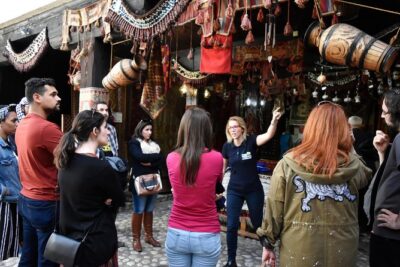
Private Walking Tour, Food Tasting and Bosnian Coffee in Sarajevo
Read our review →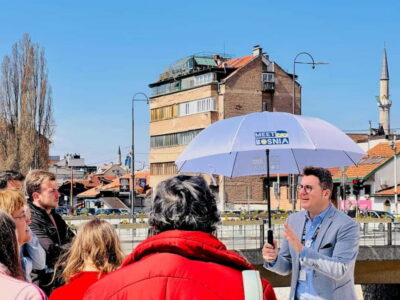
Browse the lists this tour appears in