
Reviewed · WALKING TOURS
Sarajevo Essential Full Walking Tour
Sarajevo changes as you walk. This essential full walking tour is a fast, focused way to see the city’s big landmarks and why they coexist, plus you get clear context from guides like Adnan (Ado). I love how the route pairs standout architecture with street-level stops like Kazandziluk, and you end up with a coherent story in a short time. One thing to plan for, though, is the pace, it is a lot of stops in about 1 to 2 hours, and there are no food or drinks included.
You’ll move through central sights with a local guide in English, typically for a small group (maximum 50). Most stops are free to see, but two key places charge admission, so it helps to know that ahead of time. Pickup can be arranged if you need it, and you’ll use a mobile ticket.
In This Review
- Key highlights you should know before you go
- Walking the essentials in 1 to 2 hours (and why it feels worth $18.15)
- Sacred Heart Cathedral and Sarajevo’s first big landmark hit
- From an oldest synagogue to the Meeting of Cultures message
- Gazi Husrev-beg Mosque, the Sebilj fountain, and the Ottoman street feel
- Kazandziluk coppersmith street: craft you can still see
- Sarajevo City Hall (Vijećnica) and the European story in one building
- Cumurija Bridge, the Spite House, and a built-in snack vibe
- Emperor’s Mosque and the oldest Sarajevo mosque clue
- Latin Bridge (Principov Most), where history sparked the 20th century
- Bezistan and Taslihan: Ottoman trade spaces you can still picture
- Europe Hotel area, the Orthodox Cathedral, and the Multicultural Man monument
- The Sarajevo Rose memorial: a final stop that changes the mood
- How to get the most from this walk (without turning it into a race)
- Should you book the Sarajevo Essential Full Walking Tour?
- FAQ
- How much does the Sarajevo Essential Full Walking Tour cost?
- How long does the tour take?
- Is the tour offered in English?
- Where does the tour start and end?
- Is pickup available?
- Does the tour include museum or city hall entry tickets?
- Are food and drinks included?
- How big is the group?
- Is there a mobile ticket?
- What is the cancellation policy?
Key highlights you should know before you go

- Small-group focus that keeps the walking tour feeling personal
- One tight loop through Catholic, Orthodox, Jewish, and Ottoman sites
- Kazandziluk coppersmith street where craft is still part of daily life
- Adnan (Ado) guidance style praised for clarity and ease
- Mostly free stops, with only a couple paid entrances
- A short time commitment that works even if you have limited hours in Sarajevo
A few more Walking Tours in Sarajevo
- Sarajevo: Grand Walking Tour Through Time and Cultures
★ 4.8 · 1,236 reviews - Sarajevo: 2 Hours Old Town Walking Tour With Local Guide
★ 5.0 · 505 reviews - Private Walking Tour, Food Tasting and Bosnian Coffee in Sarajevo
★ 5.0 · 255 reviews - Sarajevo Grand Walking Tour
★ 5.0 · 232 reviews
Walking the essentials in 1 to 2 hours (and why it feels worth $18.15)
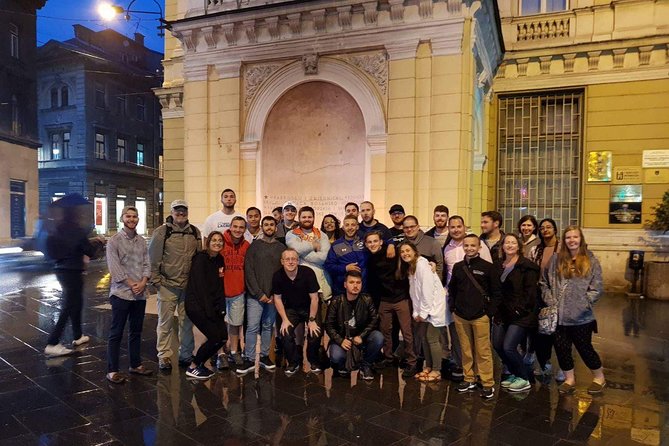
This tour is designed for quick orientation, and that matters in Sarajevo. For about $18.15 per person, you get a guided walk that hits the must-see landmarks without forcing you to connect the dots on your own. The duration is listed as roughly 1 to 2 hours, so you’re not signing up for a half-day commitment when your time is tight.
A big part of the value is that the route is built like a story, not a checklist. You start with a major Catholic cathedral, then move through Jewish heritage, Ottoman architecture, and Austro-Hungarian grandeur, finishing at a more reflective memorial stop. If you enjoy learning how cities got layered over time, this kind of structure is exactly what you want.
Practical note: the tour includes a local guide and also notes a professional guide, so you’ll benefit from narration rather than just pointing. You should still come ready to walk a fair bit. Comfortable shoes matter, and because food and drinks are not included, you’ll want to plan for a snack before or after, especially if you get hungry on the go.
Pickup is offered if you arrange it in advance, and the meeting point is at Spirit Tours on Ferhadija 19. The tour ends back at the meeting point, which is convenient if you’re lining up the rest of your day.
Sacred Heart Cathedral and Sarajevo’s first big landmark hit
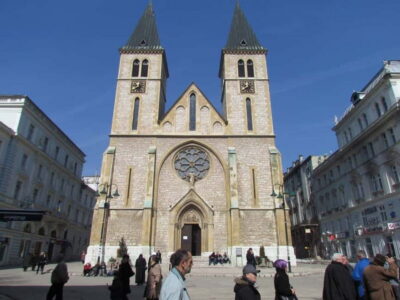
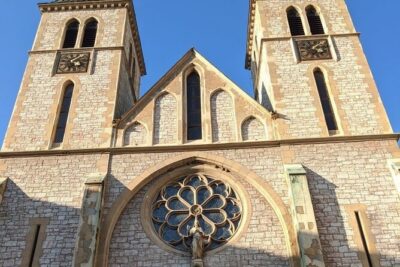
The tour begins at the Cathedral of Jesus’ Sacred Heart, the biggest Catholic church in Sarajevo. It was built in 1889 in the Neo-Gothic style, and it serves as the seat of the Archdiocese of Vrhbosna. Even if you are not a cathedral person, this is a smart first stop, because its scale makes the city’s later mix of cultures feel real rather than abstract.
Expect a short introduction here, and then you’ll keep moving. The time allocation is about 10 minutes, so you’re not getting a long church service visit. You’re getting orientation: where you are, what this building represents, and how Sarajevo’s different communities have shaped the city center.
If you care about architecture, this start is useful. Neo-Gothic forms give you a visual baseline before you switch gears into Ottoman styles that show up later in the walk.
From an oldest synagogue to the Meeting of Cultures message
Next comes the Museum of the Jews of Bosnia and Herzegovina, located within the City Museum of Sarajevo. It sits in the oldest synagogue in Bosnia and Herzegovina, and admission here is listed as not included. That means you may need to pay separately if you want to go inside at the museum itself.
Right after that, the tour shifts to symbolism on the street. On Ferhadija St., near Gazi Husrev Bey’s Bezistan, you’ll see the Sarajevo Meeting of Cultures message. It marks a spot where two dominant cultures once shaped Sarajevo and where, today, you can still read the idea of coexistence in the urban layout.
This pairing is effective: one stop gives you a heritage anchor, and the next gives you a message that is easy to remember as you keep walking. It’s the kind of short stop that helps the rest of the sites click into place.
Another way to spend the day from here:
- Fall of Yugoslavia, Sarajevo War Tour with Tunnel of Hope Museum and Frontlines
★ 5.0 · 1,314 reviews

Gazi Husrev-beg Mosque, the Sebilj fountain, and the Ottoman street feel
From there, the route moves into the heart of Ottoman Sarajevo with the Gazi Husrev-beg Mosque. Built in the 16th century, it’s described as the largest historical mosque in Bosnia and Herzegovina and one of the most representative Ottoman structures in the Balkans. Admission is listed as free for this stop.
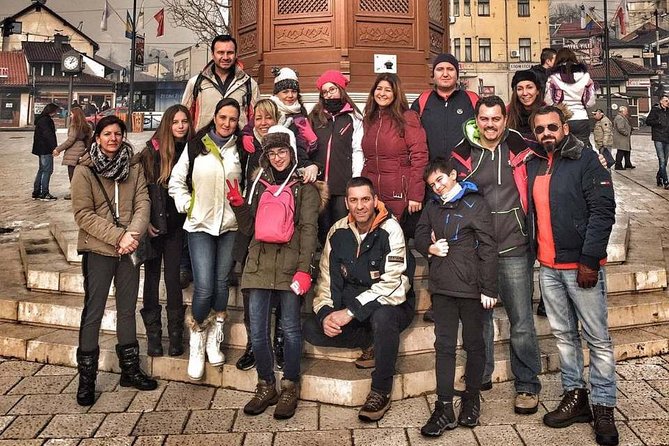
Then you step into Baščaršija Square for the Sebilj Brunnen, a wooden Ottoman-style fountain built by Mehmed Pasha Kukavica in 1753. This is one of those central Sarajevo scenes you’ll see in photos, but on a walking tour you also learn why it sits where it does and what it means within the old market square.
If you like everyday city details, the Sebilj area is a good reset after the larger religious architecture. You get space for quick photos, and you can watch the square’s rhythm for a minute before the route moves on again.
Kazandziluk coppersmith street: craft you can still see
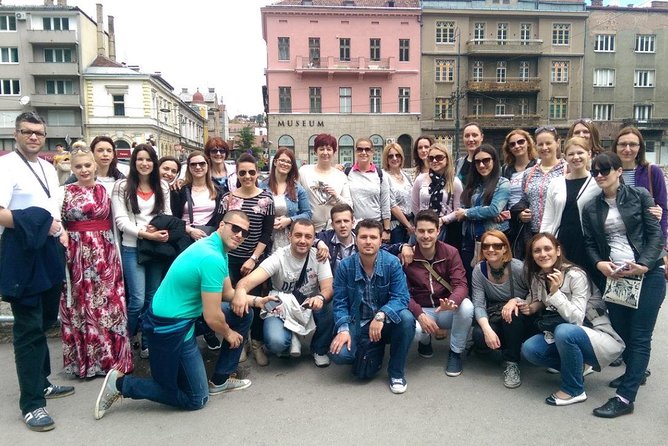
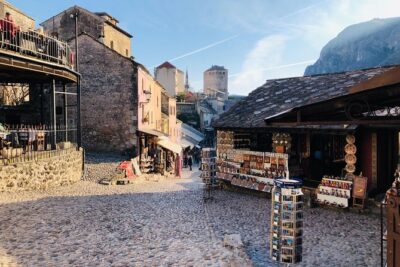
The next stop is Kazandziluk, also known as coppersmith street. Here, the tour leans into the practical side of tradition. The street’s authentic look has been retained for centuries, and the coppersmith craft is described as still living in this area.
This is one of the stops that tends to land well because it is human-scale. Big monuments can feel distant, but a working craft street makes the past feel less like a museum label and more like something you can point to right now.
If you have any interest in design, metalwork, or handmade souvenirs that look tied to place (not just mass-produced items), this is the moment to slow down and look closely. The tour includes about 10 minutes here, so don’t expect a long shopping spree, but do take time to notice the work.
The shop stop experience is also part of why this tour earns top marks, with people appreciating the chance to see real examples of the craft.
Sarajevo City Hall (Vijećnica) and the European story in one building
The itinerary then moves to Sarajevo City Hall, also known as Vijećnica. This Austro-Hungarian building is described as the most extravagant constructed during the occupation period. Admission is listed as not included, so you’ll likely need to plan for a paid ticket if you want to enter.
Even if you only see the exterior, this stop is valuable because it helps explain the European layer of Sarajevo’s identity. Ottoman architecture and European civic grandeur do not just coexist here, they sit close enough that you can compare them while you walk.
After City Hall, you head toward a different kind of “story” stop, a bridge and a famous bit of local humor around an old house.
Cumurija Bridge, the Spite House, and a built-in snack vibe
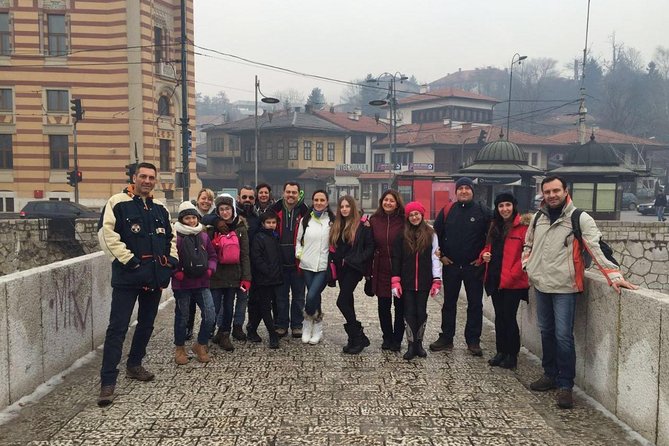
At Cumurija Bridge you’ll hear about the Spite House nearby. The house became known for its nickname because of the owner’s stubbornness, and today it’s described as a protected cultural and historical heritage site. This stop is listed around 5 minutes, and it’s a quick hit rather than a deep dive.
One helpful angle: this area is also associated with restaurant life. The tour does not include food, so treat this as your cue that you’re near places where you can actually sit down after the walk if you want.
Emperor’s Mosque and the oldest Sarajevo mosque clue
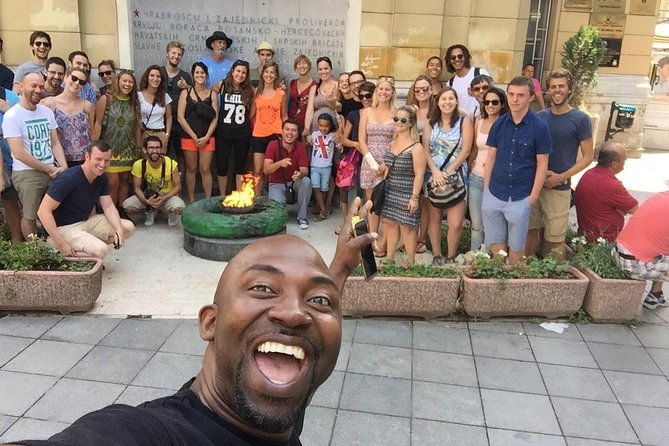
Then comes the Emperor’s Mosque, described as Sarajevo’s oldest mosque and one of the oldest in Bosnia and Herzegovina. It’s presumed it was built soon after the city’s founding in 1462, in honor of Sultan Mehmed II.
Admission is listed as free for this stop. The reason this matters on the tour is timing and context. You’re not just seeing an Ottoman mosque, you’re seeing a starting point, a clue about how early the city’s Islamic architecture took shape.
The stop is short, about 5 minutes, so your takeaway is more about historical placement than about long interior time.
Latin Bridge (Principov Most), where history sparked the 20th century
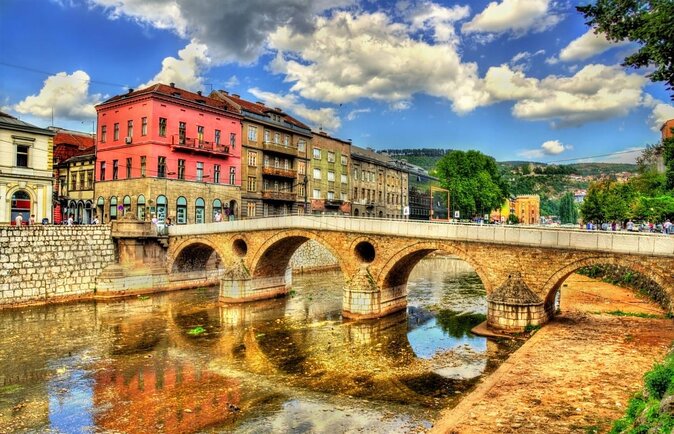
Next is Latin Bridge, also known as Principov Most. It’s famous as the site where Gavrilo Princip assassinated Archduke Franz Ferdinand and his wife, Sofie, and that incident is described as the beginning of the First World War.
This is one of those places where the guide narration does a lot of work. Without context, you might see a bridge and a plaque. With context, the location becomes a turning point you can picture in your head.
The stop is about 10 minutes, and it’s one of the most emotionally heavy parts of the walk. If you tend to get reflective when you see memorial sites, plan a few minutes afterward to reset before the next market-related Ottoman stops.
Bezistan and Taslihan: Ottoman trade spaces you can still picture
After Latin Bridge, the route moves to Gazi-Husrev Beg’s Bezistan, a covered bazaar. It’s described as one of the preserved bezistans from the Ottoman period, built in 1555 in Baščaršija, and it still serves its trade purpose today. Admission is listed as free.
This stop is a strong payoff for the earlier message about multicultural coexistence. Markets are where cultures overlap in daily life, not just in monuments. A covered bazaar is also practical: it gives you a sense of the climate-adapted design of older cities.
Next is Taslihan, built in 1543 as a waqf of Ghazi Husrev-Bey. It’s described as having had a fountain, mosque, yard, shops, and storage rooms. The building suffered severe damage in fires that struck Sarajevo.
Both the bezistan and Taslihan stops are short, about 5 minutes each. But they are useful because they connect the Ottoman “look” of the city to its economic and social function.
Europe Hotel area, the Orthodox Cathedral, and the Multicultural Man monument
The tour keeps walking through central Sarajevo, and you’ll see a few more landmarks that help complete the full religious and cultural picture.
First, there’s Europe Hotel, an Austro-Hungarian building positioned in the heart of the old town area. It’s noted that its exterior splendor alone can be captivating. This is listed as about 5 minutes, and it’s mostly a visual waypoint.
Then comes Centar, the Cathedral Church of the Nativity of the Theotokos. It’s described as the largest Serbian Orthodox church in Sarajevo and one of the largest in the Balkans. Admission is listed as free.
From there, the tour reaches the Monument All Man Multicultural, described as a tribute to multiethnicity. It’s positioned near three major religious symbols, the Catholic cathedral, a Muslim mosque, and a Christian Orthodox church. The carving message is given in Italian and Bosnian, and the idea is spelled out: a multicultural human building the world.
This sequence matters. You’re no longer just learning names and dates. You’re seeing how Sarajevo positions different faiths close enough to share a public center, and how it tries to teach that idea through public art.
The Sarajevo Rose memorial: a final stop that changes the mood
The tour ends with a stop at Sarajevo Rose, described as a type of memorial made from concrete scar caused by a mortar shell explosion, later filled with red resin. This is listed as about 10 minutes, and it is longer than several of the quick exterior waypoints.
This stop shifts the tone from architecture and trade to memory. It’s a reminder that Sarajevo’s story is not only about cultures meeting, but also about the pain that followed when conflict reached the city.
After that, the tour returns to the meeting point at Spirit Tours, keeping your logistics simple.
How to get the most from this walk (without turning it into a race)
Here’s how I’d approach this tour so you get real value, not just a blur of sightseeing.
Bring comfortable shoes. The walk is short in time, but you’ll be moving between a lot of central stops. If your legs are tired, you can still enjoy the narration, but you’ll see the most when you can linger for a minute at each place.
Have the right mindset for the admissions. Most stops are free to view, but the Museum of the Jews of Bosnia and Herzegovina and Sarajevo City Hall have admission listed as not included. If those are priorities for you, plan on paying entrance at least for the one you care about most.
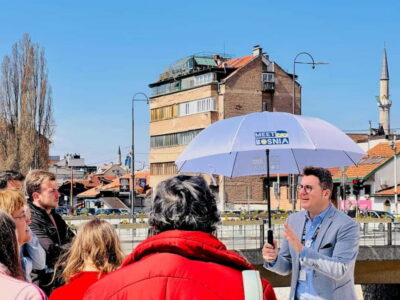
Ask questions. If your guide is Adnan (Ado), the style described is clear and easy to follow, and people appreciated having room for questions. Even if you are not, this kind of historic walking tour tends to work best when you talk.
Use the short times strategically. With stops of 5 to 10 minutes, your best approach is to decide what matters to you at each one. For example, spend longer on Kazandziluk if you like crafts, and keep your photos quick at the memorial and bridges.
Since food and drinks are not included, treat the tour like an early or mid-day anchor. Eat before, or plan a post-walk meal nearby, especially around central areas where you can sit down.
Should you book the Sarajevo Essential Full Walking Tour?
Yes, I think you should book it if you want a fast, guided way to understand Sarajevo’s mix of faiths and architecture without doing homework first. It is strong value for $18.15, and the structure of the route helps the city make sense quickly, from Sacred Heart Cathedral to Gazi Husrev-beg Mosque, from Latin Bridge to the Ottoman market spaces.
If you hate walking, dislike short stops, or want a slow museum-style visit, this might feel too quick. But if you like a guided narrative and you want the essentials in a tight time window, this is a solid choice.
FAQ
How much does the Sarajevo Essential Full Walking Tour cost?
The price is listed as $18.15 per person.
How long does the tour take?
It runs for about 1 to 2 hours.
Is the tour offered in English?
Yes, it is offered in English.
Where does the tour start and end?
It starts at Spirit Tours, Ferhadija 19, Sarajevo 71000, Bosnia and Herzegovina, and it ends back at the same meeting point.
Is pickup available?
Pickup is offered. If you need it, you can organize a hotel, apartment, or hostel pickup in advance.
Does the tour include museum or city hall entry tickets?
Not always. The Museum of the Jews of Bosnia and Herzegovina and Sarajevo City Hall are listed as admission not included. Other stops are listed as free.
Are food and drinks included?
No, food and drinks are not included.
How big is the group?
The tour has a maximum of 50 travelers.
Is there a mobile ticket?
Yes, it includes a mobile ticket.
What is the cancellation policy?
Free cancellation is available. You can cancel up to 24 hours in advance for a full refund. If you cancel less than 24 hours before the start time, the amount you paid will not be refunded.
Most recently added near Sarajevo
- Sarajevo : Private Walking Tour With A Guide (Private Tour)★ 5.0 · 1 review
- Sarajevo: Islamic Tour | 500+ years of Glorious Heritage★ 5.0 · 1 review
- Sarajevo: Srebrenica – A Journey of Remembrance★ 5.0 · 1 review
- Transfer tour Sarajevo-Dubrovnik★ 5.0 · 1 review
- Bunker: Tito’s Secret & Boracko Lake Tour from Sarajevo★ 5.0 · 1 review
- Svrzo House Entrance Ticket★ 5.0 · 1 review
- Thrilling Rafting Adventure on the Neretva River with Lunch★ 5.0 · 1 review
- Private transfer (FROM-TO) Sarajevo – Dubrovnik★ 5.0 · 1 review
Walking Tours, compared.
Private Walking Tour, Food Tasting and Bosnian Coffee in Sarajevo
Read our review →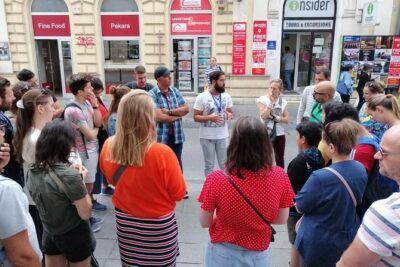
Browse the lists this tour appears in