
Reviewed · WALKING TOURS
Sarajevo: 2 Hours Old Town Walking Tour
Sarajevo’s Old Town hits fast. This 2.5-hour walking tour is a smart way to get your bearings in the historic core, with an English-speaking guide linking the city’s Ottoman, Austro-Hungarian, and Slavic layers into one walkable route. I like that it moves at a human pace, using Old Town landmarks as your map, while keeping things practical with a mobile ticket and a group size capped at 40.
What I really like is the focus on the main streets and signature stops, from the City Hall area to Bascarsija square and the craft-focused lanes. I also appreciate the way the route builds in time to pause, including a reported break for Turkish coffee, which helps this tour feel less like a checklist and more like a neighborhood stroll.
One thing to plan for: some major sights have entrance fees not included, so your final cost may run a bit higher than the base $29.93 if you choose to go inside everything.
In This Review
- Quick takeaways before you go
- How this Sarajevo Old Town walk helps you see the city faster
- Where you begin, City Hall square and the Ottoman bridge setup
- Coppersmith Store Hidic and the craft streets you can still shop today
- Bascarsija square, the social heartbeat of the Old Town
- Morica Han, a preserved caravansaray you can actually compare
- Gazi Husrev-beg Mosque area and the big person behind the legacy
- Latin Bridge, the assassination site linked to World War I
- Taslihan and Bezistan, where Ottoman trade and Austro-Hungarian hotel life overlap
- Sarajevo meeting of cultures, the line between East and West
- Jewish Museum of Bosnia and Herzegovina, Sephard and Ashkenazi heritage context
- Sacred Heart Cathedral area, Austro-Hungarian architecture feel
- Pijaca Markale, an open market tied to siege memory
- Eternal Flame and Tito’s street, a communist era monument stop
- Serbian Orthodox Cathedral area, another heritage thread
- Price and what $29.93 gets you in real terms
- Logistics that affect your comfort, time, and decision-making
- Should you book this Sarajevo Old Town walking tour?
Quick takeaways before you go
- A compact 2.5-hour route that hits a lot of Sarajevo’s recognizable Old Town landmarks without feeling rushed
- English-speaking guide with enough structure to explain why each place matters
- Mix of empires and communities shown through stops like the Ottoman-era mosque area, Austro-Hungarian architecture, and Jewish heritage sites
- Caravansaray history you can actually see, including Morica Han and comparison stops connected to older trade lodging
- A practical break built into the experience, including a reported chance for Turkish coffee
- Some entrances cost extra, so budget for tickets at a few stops if you want indoor time
A few more Walking Tours in Sarajevo
- Sarajevo: Grand Walking Tour Through Time and Cultures
★ 4.8 · 1,236 reviews - Sarajevo: 2 Hours Old Town Walking Tour With Local Guide
★ 5.0 · 505 reviews - Private Walking Tour, Food Tasting and Bosnian Coffee in Sarajevo
★ 5.0 · 255 reviews - Sarajevo Grand Walking Tour
★ 5.0 · 232 reviews
How this Sarajevo Old Town walk helps you see the city faster
Sarajevo can feel like a lot at first, especially when you are surrounded by different styles of buildings in short distances. This is why I like this format: you are on foot, in the pedestrian Old Town area, and the route is designed to connect the dots between eras, not just parade you past photos.
You start at Avdage Šahinagića (71000 Sarajevo) and finish back at the same point, which makes planning easy. The tour runs starting at 9:00 am and lasts about 2 hours 30 minutes, which is long enough to cover serious ground but short enough that you will still have energy for lunch.
At this price point, the value is not only the guide, it is the organization. Paying $29.93 per person is reasonable for a guided, English-language experience that touches the big sights you would otherwise have to chase with buses, tickets, and guesswork.
Where you begin, City Hall square and the Ottoman bridge setup
The tour kicks off at the square opposite Sarajevo City Hall. This opening stop is basically your orientation moment. You get an introduction to Sarajevo Old Town, and you also get a quick framing of nearby highlights like the Spite House and Seher Cehaja Ottoman stone bridge.
Even if you have seen Sarajevo photos online, this first segment helps you read what you are looking at. Instead of treating the buildings like separate attractions, you learn how the Old Town layout groups key landmarks around the river of history that shaped the city.
One practical note: the City Hall stop includes a note that admission tickets are not included. If you are the kind of person who likes to go indoors at every stop, you will want to keep some extra cash ready. If you mainly care about the exterior and the stories, you can still enjoy this start without paying extra.
Coppersmith Store Hidic and the craft streets you can still shop today
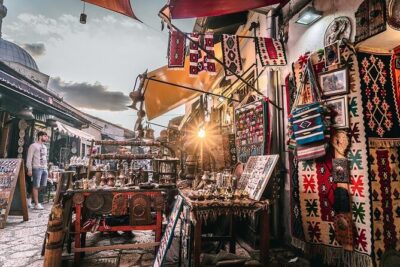
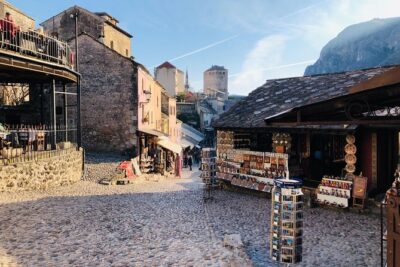
From the City Hall area, you move into the pedestrian zone and work your way toward the craft lanes. A standout is Coppersmith street, described as the only one originally preserved. That single detail matters because it signals authenticity of place, not just a theme street.
At Coppersmith Store Hidic, you visit a handcraft shop. The value here is simple: you get a chance to see how traditional crafts present themselves right where they are made and sold. You are not just watching from across the street. You can ask questions, browse at your own speed, and pick up something small if you want a real souvenir tied to the neighborhood.
If you like to avoid tourist traps, this segment is a good sign. It is focused on artisans and original lanes, not just photo spots. The tour notes this stop as free for admission, so you can spend your money on what you truly want.
Another way to spend the day from here:
- Fall of Yugoslavia, Sarajevo War Tour with Tunnel of Hope Museum and Frontlines
★ 5.0 · 1,314 reviews

Bascarsija square, the social heartbeat of the Old Town
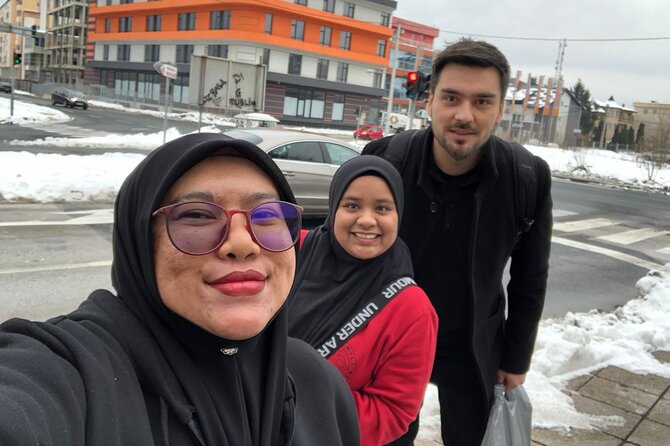
Bascarsija is described as the gravitational pull for tourists, but the useful part is how the guide frames it as a locals meeting place. You are told that long ago the square served traders and merchants, which helps you understand why it feels like the center of gravity even today.
This stop is not about going inside. It is about seeing how the square works as a gathering point. If you want a place to people-watch while still keeping the tour momentum, Bascarsija is where it fits.
Admission is free here, so it is also one of the easiest moments to spend as much time as you need, without a paid entry decision hanging over you.
Morica Han, a preserved caravansaray you can actually compare
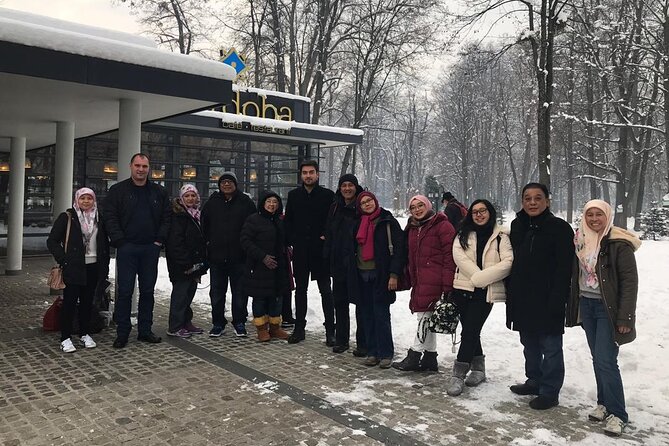
Next up is Morica Han, described as the only preserved caravansaray in Old Town Sarajevo. A caravansaray is essentially trader lodging for traveling commerce, and that context gives the site an extra layer: you are not just looking at old stone, you are looking at the infrastructure that helped trade move through the city.
This stop is free, and it works well for two types of travelers. If you love architecture, you get a real structure tied to the city’s commercial past. If you prefer human stories, the caravans stay concept helps you connect trade history to the living streets around you.
Gazi Husrev-beg Mosque area and the big person behind the legacy
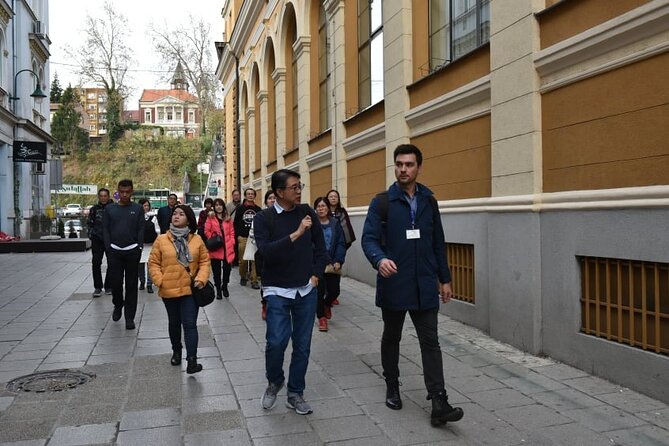
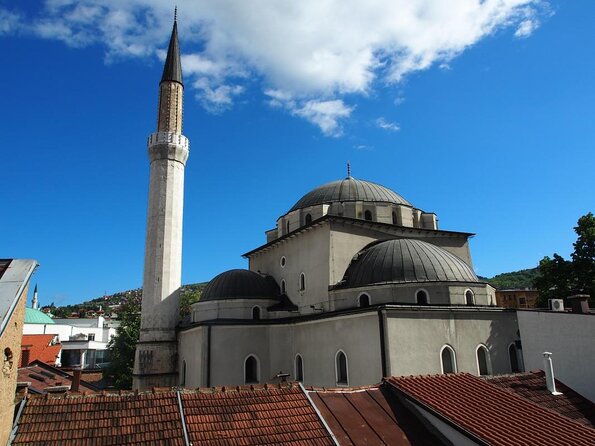
A key stop is Gazi Husrev-beg Mosque. The tour explains that you learn about Gazi Husrev-beg, described as one of the most famous people in Sarajevo’s history, with the guide focusing on how he spent his fortune building things that served locals for centuries.
This is one of the stops where the walking tour format pays off. You do not just hear a name. You connect that person to the city’s built environment and long-term community services.
Admission is noted as not included for this stop. So again, consider whether you want indoor time. If you mainly want the storyline and the atmosphere, you can still get a lot from the outside views and the guide’s context.
Latin Bridge, the assassination site linked to World War I
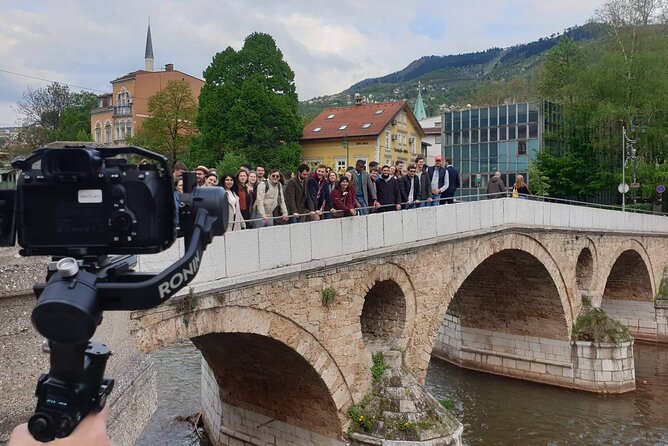
Latin Bridge is the stop tied to one of the most famous turning points in modern European history. The tour calls it the site where Gavrilo Princip assassinated Archduke Franz Ferdinand and his wife, an event that triggered World War I.
This is a heavy moment, but it is also exactly the kind of stop a good guided route should include. Without context, the bridge can feel like a landmark. With context, it becomes an anchor point for understanding why Sarajevo sits so centrally in 20th-century history discussions.
Latin Bridge is listed as a free stop, which is nice because you do not have to pay to access the area tied to this story. Give yourself time here, because it is the kind of scene where the details matter, and 20 minutes is usually enough to hear the story and look around without feeling rushed.
Taslihan and Bezistan, where Ottoman trade and Austro-Hungarian hotel life overlap
Two related stops follow that are great for architecture comparison: Taslihan and Gazi-Husrev Beg’s Bezistan.
Taslihan is described as the remains of the largest caravansaray, overlapping with the largest Austro-Hungarian hotel. That overlap is the point. You are seeing how different eras used the same kind of commercial logic, even if their styles changed.
Then you move to Gazi-Husrev Beg’s Bezistan, described as a XVI century shopping mall. You get a sense of continuity in how Sarajevo organized buying and selling in covered spaces.
Both stops are listed as free for admission, and the short time slots can feel intentionally efficient. If you like quick stops where you still get enough information to make sense of what you see, you will probably enjoy this pair.
Sarajevo meeting of cultures, the line between East and West
You also stop at Sarajevo Meeting of Culture, framed as the line between East and West, between Ottoman and Austro-Hungarian empire influences. This is one of those moments where the guide’s explanation can matter more than what you would assume from a quick glance.
I find these kinds of stops helpful because they teach you how to read the street. Instead of wondering why buildings look different next to each other, you start to see it as an outcome of historical push and pull.
Admission is free, and the stop duration is short. That works best if you listen carefully at the moment and then look around yourself while you have it in mind.
Jewish Museum of Bosnia and Herzegovina, Sephard and Ashkenazi heritage context
Next is the Jewish Museum of Bosnia and Herzegovina, presented as an Old Jewish Temple where you learn about Sephard and Ashkenazi Jewish heritage in Sarajevo.
This stop is longer than a lot of the others at 20 minutes, which suggests the guide expects you to actually take in the story and not just pass by. Admission is noted as not included, so if you want to go inside, factor that into your plans. If you do not want extra ticketing, you might still catch key context from what the guide covers during the time allotted.
For many visitors, this is the stop that turns Old Town from architecture appreciation into understanding how different communities shaped daily life.
Sacred Heart Cathedral area, Austro-Hungarian architecture feel
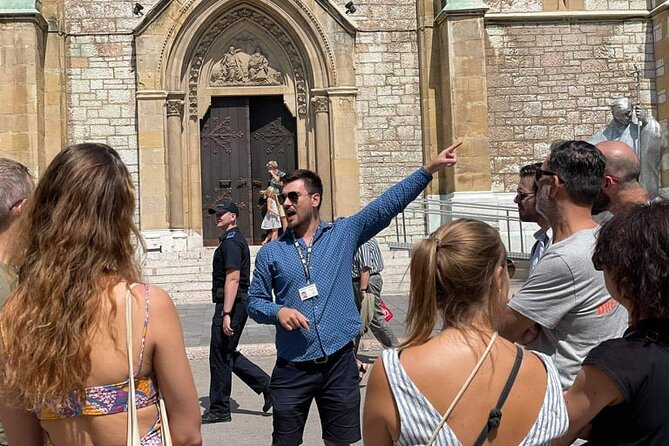
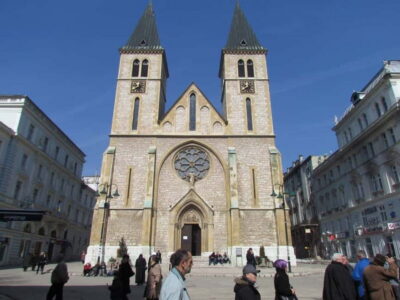
The tour then heads to Katedrala Srca Isusova, with the description emphasizing Austro-Hungarian architecture surrounding the square in front of the Sacred Heart Cathedral. The guide’s framing is that you will feel like you are in a typical European town.
Even without adding extra history, I like this stop because it gives your brain a visual contrast to the Ottoman-influenced areas. When you have multiple styles layered together, it helps to have a clear moment where one style becomes the dominant mood.
Admission is listed as free for this stop. That makes it a good one to include in your walking priorities, especially if you are trying to keep costs down.
Pijaca Markale, an open market tied to siege memory
Then you reach Pijaca Markale, described as an open market and a place where you remember a massacre during the siege of Sarajevo. This is another moment where the guide’s tone and context matter.
Because this stop is about memory, not just commerce, I recommend you treat it as reflective time. Ten minutes is enough to understand what the site represents and then move on without making it awkward.
This stop is listed as free. It is also a place where the everyday setting, market life, and historical memory sit side by side, which is part of what makes Sarajevo feel so layered.
Eternal Flame and Tito’s street, a communist era monument stop
The next section takes you to the Eternal Flame, described as connected to times of Communism and Socialism before the fall of Yugoslavia, and it also mentions Tito’s street and the Eternal Flame monument.
This stop is useful because it rounds out the story beyond the older Ottoman and Austro-Hungarian eras. It adds a more recent chapter that shaped how people organized public space.
Admission is free, and the time is 10 minutes. That is a manageable length for a monument stop, especially on a day when you still want energy for the rest of Old Town.
Serbian Orthodox Cathedral area, another heritage thread
The final heritage stop on the route is the Serbian Orthodox Cathedral, described as Serbian Orthodox heritage in Sarajevo. Admission is listed as not included for this stop.
This is a good ending note because it reinforces that Sarajevo’s identity is not only about empires and architecture, it is also about the communities and faith traditions that are part of the city’s story.
The tour ends back at the meeting point, so you have a clean exit plan once you are done.
Price and what $29.93 gets you in real terms
At $29.93 per person for about 2 hours 30 minutes, you are paying for three things: an English-speaking guide, a route that strings together key Old Town landmarks, and time saved on figuring out what to see in what order.
The value is strongest if you want structure. If you already know your way around Sarajevo and plan to enter multiple paid attractions on your own schedule, a guided walk may feel less necessary. But if you want to walk, learn, and keep things organized, this is a fair deal.
Just be aware that several stops explicitly note admission tickets are not included. The tour includes City Hall area (ticket not included), Gazi Husrev-beg Mosque (ticket not included), Jewish Museum (ticket not included), and the Serbian Orthodox Cathedral (ticket not included). If you only do free exterior viewing at those places, you will stay closer to the base price.
Logistics that affect your comfort, time, and decision-making
This tour is capped at a maximum of 40 travelers, which should keep it from turning into an endless shuffle. It also helps that you are moving between major Old Town nodes that are friendly to walking.
The start point is Avdage Šahinagića, and you meet at the same place you return to at the end. That means you are not stuck figuring out a new pickup area.
You are also told it is near public transportation, and service animals are allowed. Most travelers can participate, so this should work for many ages and stamina levels, as long as you are comfortable with a steady walking pace for the full 2.5 hours.
Should you book this Sarajevo Old Town walking tour?
If you want a fast, organized introduction to Sarajevo’s Old Town, I think this is a good booking. It hits the signature landmarks you will see on maps, but the real win is the guide’s connections between Ottoman, Austro-Hungarian, and local community history at stops like the Coppersmith street area, Morica Han, the Latin Bridge story, and the Museum and cathedral segments.
Book it if:
- you like learning while you walk, with an English-speaking guide
- you want a practical route with stops that include both free areas and a few likely paid entries
- you are trying to cover a lot in a short morning without stress
Skip or adjust your expectations if:
- you strongly prefer tours where every single sight entrance is included
- you want long time inside museums or churches, because several key stops are capped at short time windows
If you do book, I would plan your day so you have room for an unplanned pause. When the route includes moments like Latin Bridge and the siege-related Markale area, you will want a little breathing space, not just photo-clicking and moving on.
Most recently added near Sarajevo
- Sarajevo : Private Walking Tour With A Guide (Private Tour)★ 5.0 · 1 review
- Sarajevo: Islamic Tour | 500+ years of Glorious Heritage★ 5.0 · 1 review
- Sarajevo: Srebrenica – A Journey of Remembrance★ 5.0 · 1 review
- Transfer tour Sarajevo-Dubrovnik★ 5.0 · 1 review
- Bunker: Tito’s Secret & Boracko Lake Tour from Sarajevo★ 5.0 · 1 review
- Svrzo House Entrance Ticket★ 5.0 · 1 review
- Thrilling Rafting Adventure on the Neretva River with Lunch★ 5.0 · 1 review
- Private transfer (FROM-TO) Sarajevo – Dubrovnik★ 5.0 · 1 review
Walking Tours, compared.
Private Walking Tour, Food Tasting and Bosnian Coffee in Sarajevo
Read our review →
Browse the lists this tour appears in