
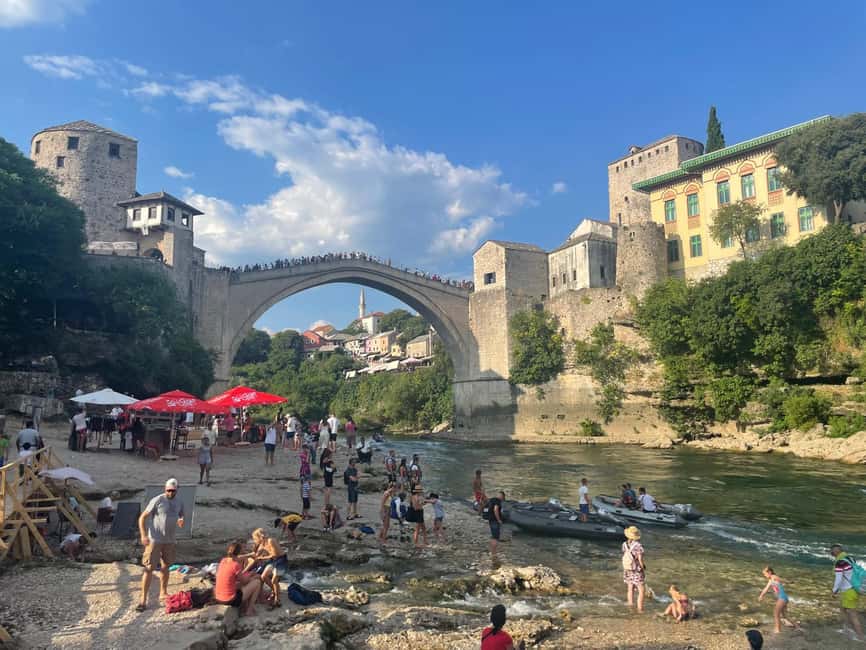
Reviewed · TOURS
From Sarajevo:Mostar Ruins and Abandoned Places Tour
Some places feel louder than noise. This small-group tour follows the edges of Mostar and Herzegovina, where ruins, war memory, and nature sit side by side, and it is especially tuned for photography. You’ll start with the destroyed bridge from the 1943 Neretva battle in Jablanica, then keep moving through abandoned and half-forgotten spaces.
I particularly like the way the day mixes photo stops with actual on-the-ground context, not just quick scenery. The chance to get hands-on explanations at the Sniper Tower (and later the Old Bridge) makes the images land with meaning. One drawback to keep in mind: the route includes dark topics like war impacts and population decline, so this is not a purely lighthearted history outing.
In This Review
- Key highlights worth knowing
- A photo-forward day beyond Mostar’s famous bridge
- Sarajevo start, then the long van ride into Herzegovina
- Jablanica’s destroyed bridge: the 1943 Neretva battle in one hard view
- Fortica ruins and panoramic views: Austro-Hungarian leftovers above Mostar
- The Mostar center walk: Sniper Tower, guided context, and war-era reality
- Old Bridge in Mostar, reconstructed in 2004
- Konjic break and the Vardak Mosque missing minaret story
- Price and value: $84 for a 9-hour, English, small-group route
- Who this tour suits best (and who might want to skip it)
- What to pack and how to handle the darker parts respectfully
- Should you book this Mostar Ruins and Abandoned Places tour?
- FAQ
- How long is the Mostar Ruins and Abandoned Places Tour from Sarajevo?
- What is the price per person?
- Is the tour led by an English-speaking guide?
- How many people are in the group?
- What key places does the tour include?
- Is the Jablanica Destroyed Bridge Museum included?
- Where do I meet for the tour?
- What should I bring?
Key highlights worth knowing
- Small group of up to 8 with an English live guide, so you can ask questions without shouting over a crowd
- Photography-focused pacing, built around stops like Fortica and Mostar’s war-era structures
- Jablanica’s Neretva battle bridge in 1943, including the option to add the destroyed-bridge museum (entry fee not included)
- Sniper Tower history tied to the Bosnian War, with a guided walk through its meaning
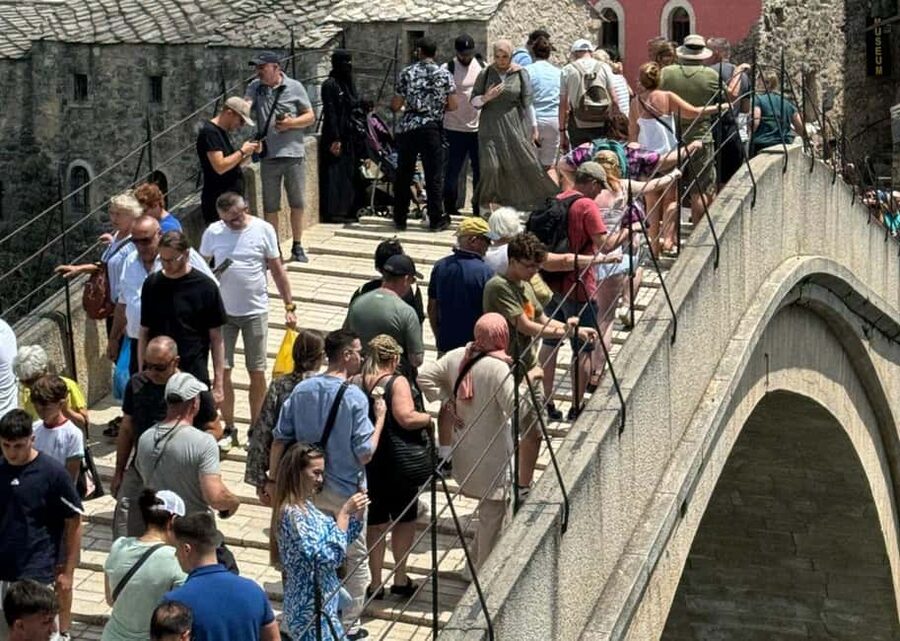
- Old Bridge in Mostar plus the story of how it was reconstructed in 2004
- Konjic and Vardak Mosque’s missing minaret, a small-town stop with a sharp, human detail
Other Sarajevo trips worth comparing
- Sarajevo: Mostar, Konjic, Blagaj Tekke, Pocitelj & Waterfall
★ 4.9 · 1,666 reviews - Fall of Yugoslavia, Sarajevo War Tour with Tunnel of Hope Museum and Frontlines
★ 5.0 · 1,314 reviews - Sarajevo: Grand Walking Tour Through Time and Cultures
★ 4.8 · 1,236 reviews - Sarajevo: Mostar, Konjic, Sufi House, Pocitelj & Kravice Falls
★ 5.0 · 1,179 reviews
A photo-forward day beyond Mostar’s famous bridge
If you think you already know Mostar from postcards, this tour changes the angle fast. The focus is not just on what survived. It’s about what got left behind, what got damaged, and what people rebuilt, often with very little. The day runs about 9 hours, but it feels more like a guided visual route, with enough time to step out, look closely, and take photos without racing.
I love that the tour is clearly built for photography. That matters because abandoned places can be chaotic to shoot if you do not know where to stand. Having a guide steer you to the best sightlines and explain what you’re looking at turns your camera roll from random dark corners into a story.
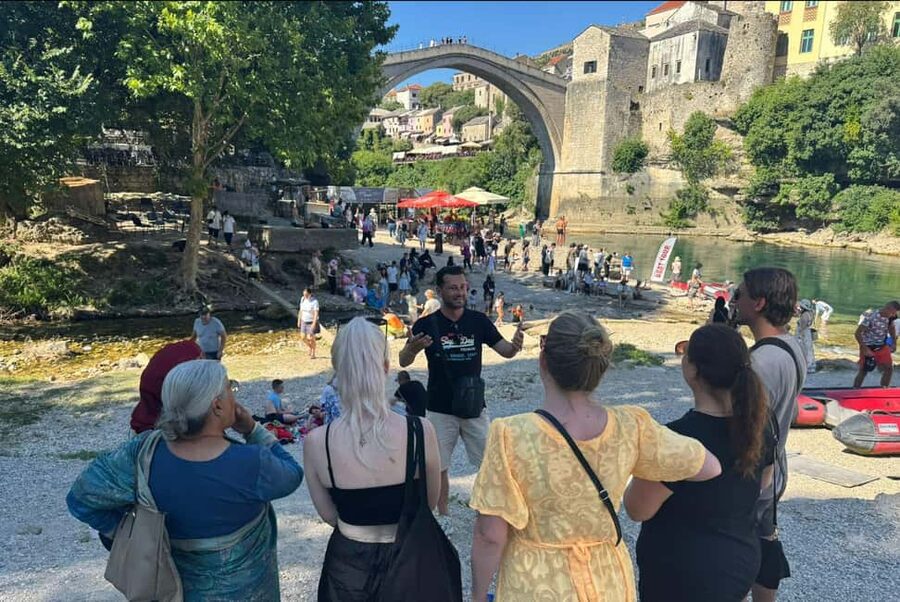
I also like the “small group” advantage. With up to 8 participants, the guide can slow down when someone wants a second look at a wall, doorway, or viewpoint. It also means the tour stays relaxed, even though the topic gets heavy in places.
The downside is simple: you should be ready for war-related sites and the reality of a post-war society. If you need a soft landing the whole day, this might not match your mood. If you want meaning alongside your photos, it fits well.
Sarajevo start, then the long van ride into Herzegovina
You meet at Morića Han Caravansaray, 1st Floor, Room 14. From there, the van takes you out through the broader Herzegovina-Neretva Canton area, starting with Sarači 77 in the tour flow. The drive includes about 1.5 hours of van time before the first major stop.
This “getting there” part is not wasted. It’s when you get your bearings and your guide sets up how the day will connect: battle history, ruined architecture, and the way daily life continued afterward. If you’re the type who likes to know why you’re seeing something before you photograph it, you’ll appreciate that structure.
Practical tip: bring water and wear comfortable shoes. Even when stops are short, ruins and war sites can mean uneven ground and stairs. I also suggest charging your phone camera or battery early, because you’ll likely want it for both wide shots and close details.
Jablanica’s destroyed bridge: the 1943 Neretva battle in one hard view
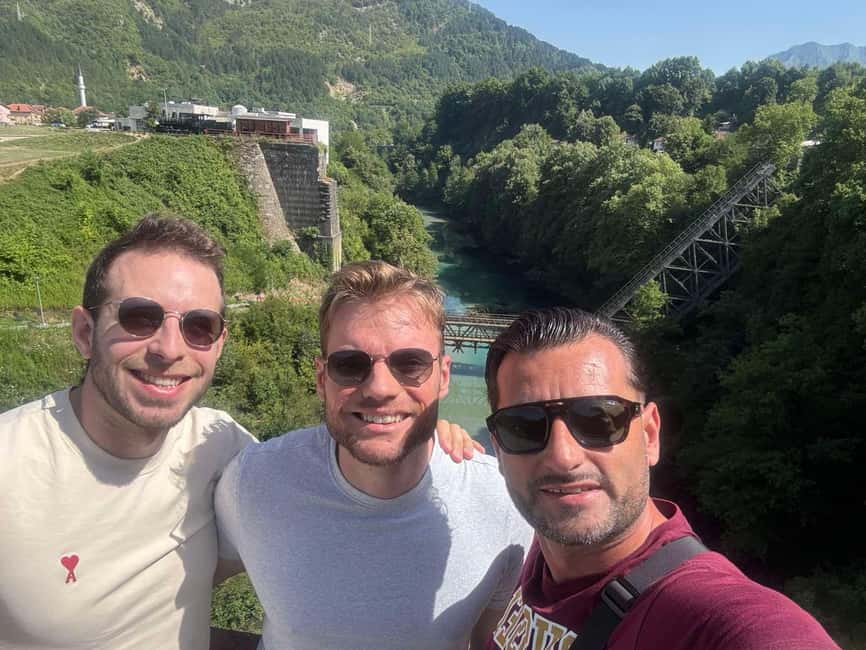
Your first big moment comes in Jablanica. This is where you see the bridge destroyed during the Neretva battle in 1943. The structure is not just a backdrop. It’s a direct visual reminder of how war reshaped infrastructure and separated communities.
There’s also time for a visit of about 30 minutes around this area. If you want extra context, there is an optional add-on: the Jablanica Destroyed Bridge Museum. Entry is not included, and it costs 4 BAM. Since the tour includes skip-the-ticket-line, you can often spend more time inside and less time waiting, if you choose the museum.
What I find valuable here is how the story is concrete. Many war-history tours stay abstract with dates and names. This stop makes you look at a thing that physically broke. Then you can connect that to later scenes, like abandoned structures in Mostar and the way people rebuild.
Photography note: bring a lens mode that lets you handle both distance and detail. Bridges and memorial-style ruins often give you strong lines, and the best images usually come from stepping back first, then moving in for texture shots.
Another way to spend the day from here:
Fortica ruins and panoramic views: Austro-Hungarian leftovers above Mostar
After Jablanica, you head toward Fortica and the viewpoint above Mostar. Expect about 1 hour of van time, then a short photo stop of 15 minutes at Fortica. It sounds brief, but a viewpoint works best when the schedule is tight and the group isn’t wandering. You get a clear window to shoot and orient yourself.
Fortica is tied to Austro-Hungarian ruins and gives you panoramic views of Mostar. That combination is the key. You are not only photographing a skyline. You’re photographing a layered history, where an older empire era meets later war damage and today’s city life. Even if you only catch a few frames, you’ll feel the geography of Mostar much faster than you would by wandering on your own.
This is a good moment to slow down and look without your camera for 10 seconds. Try to spot where the river bends, where bridges sit, and how the urban texture changes. Then use your camera to capture what you just noticed.
A possible consideration: because the stop is short, it’s not the place to explore deeply on foot. If you want longer ruin-hunting time, treat Fortica as your orientation and photo-building block, then let Mostar itself carry the rest of the day.
The Mostar center walk: Sniper Tower, guided context, and war-era reality
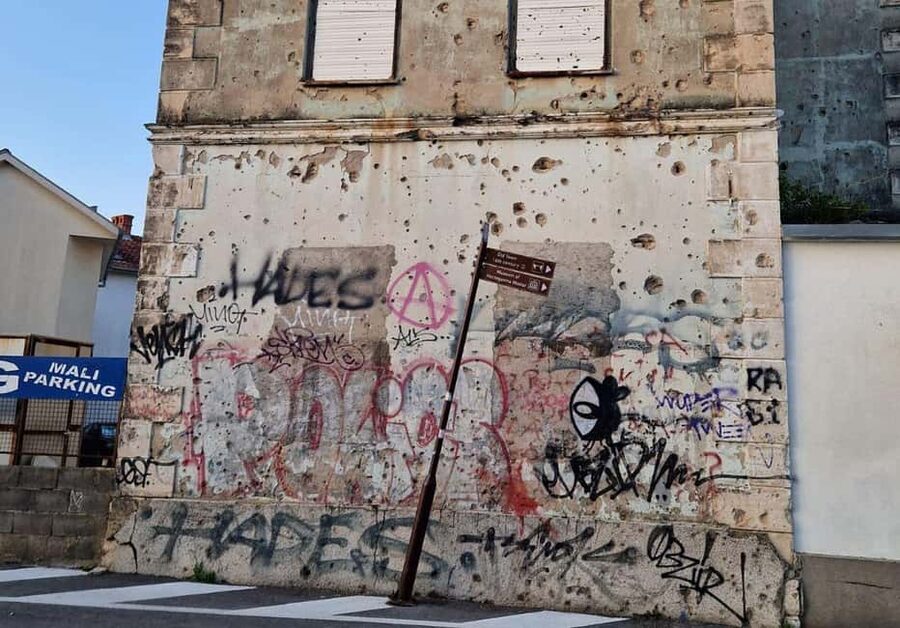
Next comes Mostar’s city center, where your guided portion lasts about 2 hours. This is the heart of the tour’s “ruins and mysteries” feel, and it centers on the Sniper Tower.
The guide helps you understand the tower’s history connected to the Bosnian War. The Sniper Tower isn’t just an abandoned structure to photograph from outside. It’s the kind of place where you can feel how close combat was to daily life, even when you are just standing there in daylight. When your guide explains the logic of the site, you start seeing the urban landscape differently: sightlines, movement, and why certain corners mattered.
Then comes a shift in mood. After the guided context, you move into the Old Bridge area, and the day starts balancing pain with repair.
What I especially like about this segment is the tone. It is not sensational. It’s factual and grounded. That makes it easier to process, and it also helps your photos read as documentation rather than shock shots.
Old Bridge in Mostar, reconstructed in 2004
In Mostar, you’ll visit the Old Bridge. It’s a landmark people come for, but this tour frames it through the war lens too. The bridge was destroyed during the Bosnian War and reconstructed in 2004. Knowing that timeline changes how you see the stonework, because you’re no longer looking at a single “pretty bridge.” You’re looking at a specific act of rebuilding.
This stop also works well for photography because the Old Bridge gives you strong compositions even with limited time. You can shoot from different angles, and the river and city backdrop help the bridge feel like part of a living place, not only a monument.
If you’re a careful photographer, give yourself time to do two things: one wider photo that shows the bridge in context, and one closer shot that catches texture. The closer shot helps your brain hold onto what was rebuilt. The wider shot helps your brain remember why the city still revolves around that crossing.
Konjic break and the Vardak Mosque missing minaret story
On the way back toward Sarajevo, you stop in Konjic. There’s about 20 minutes for a break. Even if it’s short, it gives your body a reset and helps the day feel less like a straight sprint of history.
Konjic is where you hear the story of the Vardak Mosque’s missing minaret. This is one of those details that doesn’t require a long explanation to stick in your mind. It’s a visible scar in the skyline, and your guide’s description gives it meaning in context of the Bosnian War.
This kind of stop is valuable because it spreads the story beyond big-name landmarks. You start to realize that the war shaped not only famous sites, but also the daily visual identity of smaller towns.
Because the break is limited, keep your expectations simple. Use it for water, a quick bathroom stop if needed, and maybe a few casual street photos. Save your “serious shooting” effort for the earlier tower and bridge scenes where the tour builds the context.
Price and value: $84 for a 9-hour, English, small-group route
At $84 per person for a 9-hour tour, you’re paying for more than transportation. You’re paying for a guided story that connects multiple ruined and war-affected places across the region, with enough time at each stop to take photos and absorb what you’re seeing.
The value shows in three places:
- Small group up to 8 means less wait time and better question time
- English live guide means you’re not stuck guessing at what ruined structures represent
- Multiple major stops in different towns means you get regional context without building your own route
Add-ons are optional. The only clearly mentioned extra is the 4 BAM museum entry at Jablanica (if you choose it). The tour also includes skip-the-ticket-line, which can be a real time-saver if you decide to go inside.
One more value point: the tour is photo-focused. Some tours throw you out of the van and move on fast. Here, the structure supports slower looking. That is the difference between collecting images and creating a coherent visual story of Bosnia and Herzegovina’s post-war landscape.
Who this tour suits best (and who might want to skip it)
This tour is a strong match if you:
- love photography and want your camera time paired with context
- enjoy war-era history but prefer it explained in a practical, guided way
- want to see more than Mostar’s famous sights, including nearby towns like Jablanica and Konjic
It may feel like a mismatch if you:
- want a purely cheerful day with minimal heavy topics
- dislike ruins and abandoned structures, even when they come with explanations
- need very long walking time, because several stops are intentionally short photo segments
One helpful note from recent experiences with this provider: the English guide Kenan has been praised for being friendly and for sharing lots of information about modern Bosnia and Herzegovina as well as Yugoslavia-era context. That kind of storytelling can make the day feel more coherent, especially if you are new to the region.
What to pack and how to handle the darker parts respectfully
The tour asks for practical things: comfortable shoes, a camera, and water. I’d add one more mindset: be ready for strong visuals and emotional context. Your guide will cover war and the reality of population decline in the region, so it helps to carry a bit of sensitivity.
For photography, bring:
- a camera you’re comfortable with in mixed light
- a small lens plan, like one wide option for monuments and one tighter option for textures and details
- extra battery or storage if you shoot a lot
For the walking side, plan on uneven ground at ruins and war sites. Even if the group stays mostly controlled, you’ll still want stable footwear. Also, take your time. Quick snapshots are fine, but the best images often come after you understand what you’re actually photographing.
If you want to keep the day from feeling overwhelming, use the viewpoint and bridge stops as your breathing space. Fortica gives you a way to reorient visually, and the Old Bridge reconstruction story offers a sense of forward motion, even while the tour doesn’t sugarcoat the past.
Should you book this Mostar Ruins and Abandoned Places tour?
I think you should book it if you want Mostar and Herzegovina through a lens that goes beyond postcards. The combination of Jablanica’s destroyed 1943 bridge, the Sniper Tower, Fortica’s Austro-Hungarian ruins and views, the Old Bridge reconstructed in 2004, and the Konjic Vardak Mosque minaret story gives you a full day of connected scenes.
Book it with a clear expectation: it’s photography-focused and includes dark history topics. If that’s your kind of travel, you’ll come away with images that actually mean something, not just pretty ruins.
If you want only light, sightseeing, pick a different Mostar day. But if you’re curious, thoughtful, and ready to look closely, this route is a solid use of your time.
FAQ
How long is the Mostar Ruins and Abandoned Places Tour from Sarajevo?
It runs for 9 hours.
What is the price per person?
The price is $84 per person.
Is the tour led by an English-speaking guide?
Yes, there is a live tour guide in English.
How many people are in the group?
The tour is small group sized, limited to 8 participants.
What key places does the tour include?
It includes Jablanica to see the destroyed bridge from the 1943 Neretva battle, Fortica with Austro-Hungarian ruins and views, the Sniper Tower, the Old Bridge in Mostar, and a stop in Konjic for the Vardak Mosque story.
Is the Jablanica Destroyed Bridge Museum included?
No. Entry to the Jablanica Destroyed Bridge Museum is optional, and the fee is 4 BAM.
Where do I meet for the tour?
The meeting point is Morića Han Caravansaray, 1st Floor, Room 14.
What should I bring?
Bring comfortable shoes, a camera, and water.
Most recently added near Sarajevo
- Sarajevo : Private Walking Tour With A Guide (Private Tour)★ 5.0 · 1 review
- Sarajevo: Islamic Tour | 500+ years of Glorious Heritage★ 5.0 · 1 review
- Sarajevo: Srebrenica – A Journey of Remembrance★ 5.0 · 1 review
- Bunker: Tito’s Secret & Boracko Lake Tour from Sarajevo★ 5.0 · 1 review
- Svrzo House Entrance Ticket★ 5.0 · 1 review
- Transfer tour Sarajevo-Dubrovnik★ 5.0 · 1 review
- Thrilling Rafting Adventure on the Neretva River with Lunch★ 5.0 · 1 review
- Private transfer (FROM-TO) Sarajevo – Dubrovnik★ 5.0 · 1 review
Tours, compared.
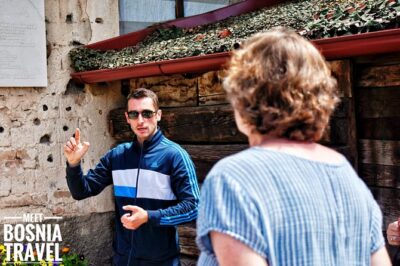
Fall of Yugoslavia, Sarajevo War Tour with Tunnel of Hope Museum and Frontlines
Read our review →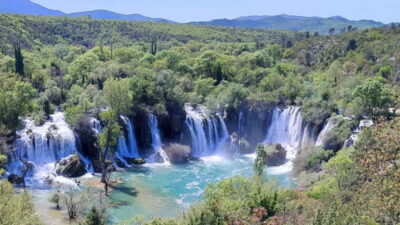
Blagaj, Počitelj & Kravice Waterfalls Day Tour
Read our review →
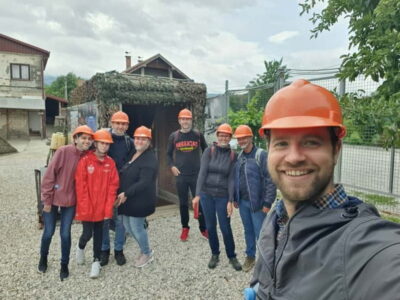
Tunnel Museum Yugoslavia War Tour with War Veteran
Read our review →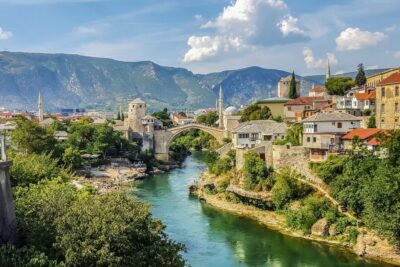
ROSES OF SARAJEVO (Official WAR + CITY tour)- Story of a Survivor
Read our review →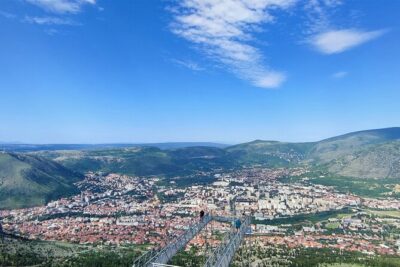
Discover Herzegovina Day Tour from Mostar: Kravice Waterfalls, Blagaj, Počitelj
Read our review →
Browse the lists this tour appears in