
Reviewed · TOURS
Bosnia Croatia Montenegro – 7 Days Balkan Tour
A Balkan trip moves fast, and this one is built that way. I especially like the mix of guided walking tours and real time to roam, plus the careful focus on Ottoman, Austro-Hungarian, and Adriatic highlights.
The only thing to watch is that a few stops list admission as not included, so you may pay for individual museums or religious sites depending on your interests.
In This Review
- Key moments that make this tour work
- Price and value for a 7-day Balkan loop
- Sarajevo on foot: Bascarsija to Latin Bridge
- Fortress views and Olympic leftovers: Yellow Fortress and the bobsleigh track
- Vrelo Bosne springs and the War Tunnel: Bosnia’s survival memory
- Herzegovina day: Konjic, Blagaj, and Počitelj
- Kravice Falls and Mostar: the two big payoff stops
- Split’s Diocletian’s Palace and the reset in Neum
- Dubrovnik walls and Budva old town: two very different Adriatic moods
- Kotor Bay and Perast by boat, plus a quick step in Trebinje
- The pacing: how the schedule fits real life
- Who this 7-day Balkan tour suits best
- Should you book this Sarajevo to Montenegro tour?
- FAQ
- How long is the Bosnia Croatia Montenegro 7 Days Balkan Tour?
- Where does the tour start and where does it end?
- What is included in the hotel stay?
- What transportation is provided?
- Are entrance fees included?
- Is lunch or dinner included?
- Do we get free time in the cities?
- How big is the group?
- Can I cancel and get a full refund?
Key moments that make this tour work
- Small group size (max 15) keeps the days from feeling chaotic.
- City-to-city local guides in the major hubs, so you get context fast.
- Sarajevo’s layered history, from Old Town streets to siege survival memory.
- Herzegovina stops that feel scenic, not rushed, like Blagaj and Kravice Falls.
- Adriatic variety in Croatia and Montenegro, from Split to walled Dubrovnik and Kotor Bay.
Other Sarajevo trips worth comparing
- Sarajevo: Mostar, Konjic, Blagaj Tekke, Pocitelj & Waterfall
★ 4.9 · 1,666 reviews - Fall of Yugoslavia, Sarajevo War Tour with Tunnel of Hope Museum and Frontlines
★ 5.0 · 1,314 reviews - Sarajevo: Grand Walking Tour Through Time and Cultures
★ 4.8 · 1,236 reviews - Sarajevo: Mostar, Konjic, Sufi House, Pocitelj & Kravice Falls
★ 5.0 · 1,179 reviews
Price and value for a 7-day Balkan loop
At $2,268.95 per person for about 7 days, this tour is not a cheap backpack move. But it is built like a “most of the work is done for you” trip: air-conditioned transport, 6 nights in 4-star hotels, breakfast included, licensed local guides in the cities, and fees and taxes covered.
Here’s what you are really paying for. First, you get a tight route across three countries without the stress of connections and planning every transfer. Second, you get guidance where it matters, like Sarajevo and the walled cities, so you spend less time guessing and more time walking with purpose.
One more value point: the itinerary includes multiple UNESCO-protected, world-famous places. Even if you do not collect plaques, that usually means the sites are dense, walkable, and historically important, which makes a guided approach more worthwhile.
Sarajevo on foot: Bascarsija to Latin Bridge
Sarajevo is where the trip earns its nickname as a history sampler. You start in the Ottoman Old Town, centered on Bascarsija square and the iconic Sebilj fountain. This is the kind of opening that helps you get your bearings quickly, because the streets, markets, and landmarks connect into one readable map.
From there, the tour shifts into craft and daily life with a stop at the Coppersmith Store Hidic on coppersmith street. It is short, but it is the good kind of stop. You are not just buying a souvenir, you are watching a trade that got passed down through generations from father to son.
Next, you hit architecture that shows how many civilizations layered over this city. The Gazi Husrev-beg Mosque stop explains the big endowment around it, including the Islamic school and other historic functions. Admission is not marked as included here, so if you want inside access, budget a little extra.
Then comes the dramatic pivot to modern history with the Latin Bridge stop tied to the assassination of Archduke Franz Ferdinand, an event that helped trigger World War I. This is one of those stops where the physical spot matters, but the story is what makes it stick.
You also get religious and cultural stops around the center of the city. The Jewish Museum of Bosnia and Herzegovina gives you a look at heritage from the 1500s onward, while the Cathedral square stop focuses on Austro-Hungarian architecture. The Serbian Orthodox Cathedral is listed as a shorter stop, with admission not included.
My practical advice: in Sarajevo, wear shoes that can handle uneven sidewalks. The walking feels easy, but the Old Town streets can be a little rough, and you want to enjoy it instead of watching your footing.
Fortress views and Olympic leftovers: Yellow Fortress and the bobsleigh track
Day two starts above the city. The Yellow Fortress viewpoint gives you that “now I get it” perspective over Sarajevo in the Miljacka River valley with the Olympic mountains in the background. It also helps you notice how the city architecture changes as you look around.
Then you head to the Sarajevo Olympic Bobsleigh and Luge Track on Trebevic mountain. It is not a grand museum stop, and it is not meant to be. Instead, the walk through the forest to the abandoned track gives you a different Sarajevo angle, one that connects past optimism to later reality.
If you like seeing how places change over time, this stop is a win. It is also a nice break from heavy history in the sense that the setting is natural, and the walking is light.
Another way to spend the day from here:
Vrelo Bosne springs and the War Tunnel: Bosnia’s survival memory
This day gets emotionally heavier in the best way, with two stops that are both practical to understand.
First is Vrelo Bosne, the Bosna River spring area beneath Olympic mountain Igman. The springs were built around 140 years ago by Austro-Hungarians. The stop is listed as included, and that matters because it keeps you from chasing tickets and timing on your own.
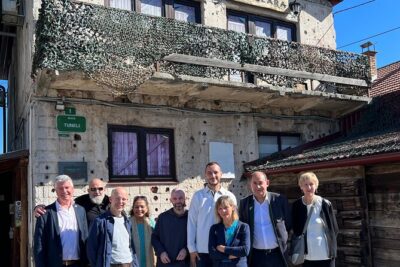
Then comes Sarajevo War Tunnel, which is described as one of the most visited museums in the city. It gives a clear explanation about the siege of Sarajevo and how people survived. The tunnel stop is listed as included, so you can focus on the experience rather than budgeting each item.
Balance note: this is not a “fun photo op” moment, but it is one of the most important stops on the itinerary. If you have limited time in Sarajevo, I would treat this as non-negotiable.
Herzegovina day: Konjic, Blagaj, and Počitelj
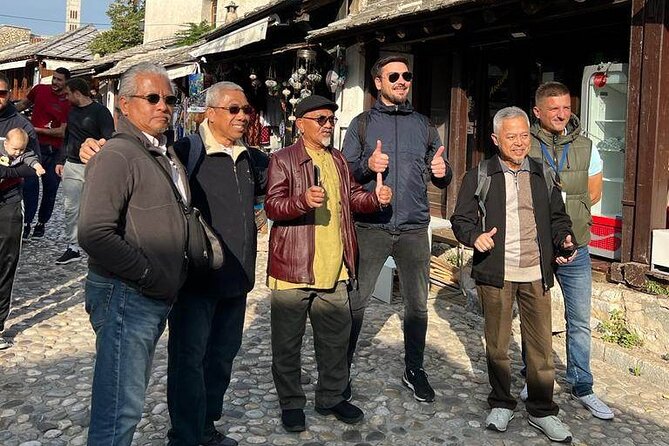
After Sarajevo, the trip pivots toward Herzegovina, and the terrain helps. You trade dense city walking for short hops between scenic towns, with enough time to feel like you left the capital but not enough to make the route tiring.
In Konjic, you get an Old Town stop with the 17th-century stone bridge built by Ottomans. Admission is listed as free here, and even if you do not spend long, the bridge anchors the Ottoman influence in a way that still looks real, not staged.
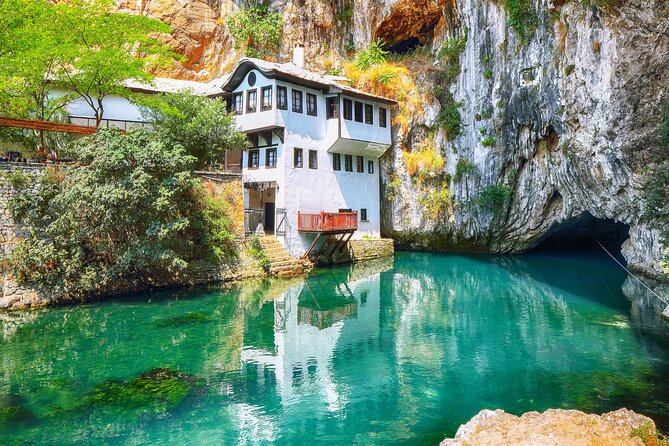
Next is Blagaj, with a focus on the Buna River spring, a karst phenomenon where the river sources from a single cave. The stop is simple, about getting to the location and understanding what makes it special. It is listed as free admission.
Then you go to Počitelj, a medieval stone town on a hill above the Neretva River. It is smaller and charming, and that is the point. This is the day’s “slow moment,” a place where you can pause, look at the architecture, and let the location do some of the explaining.
Kravice Falls and Mostar: the two big payoff stops
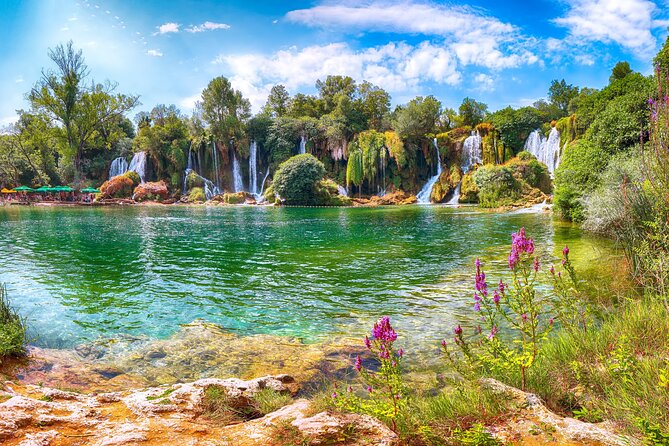
Kravice Falls is listed as included. The description focuses on a wide amphitheater-style waterfall, around 130 meters, with cold water and a rest-friendly spot. If you like outdoor scenery, this is where you actually get to breathe for a bit.
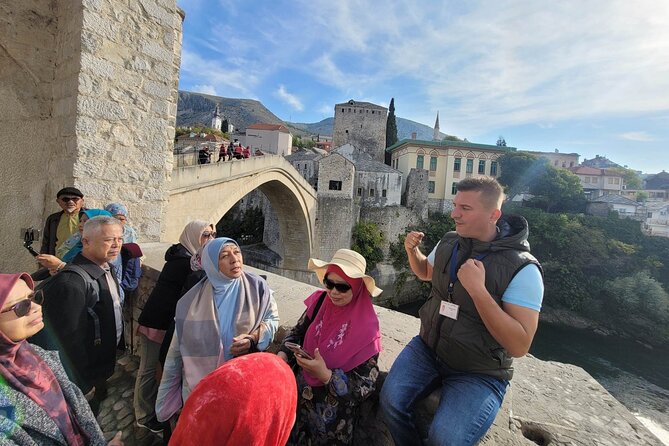
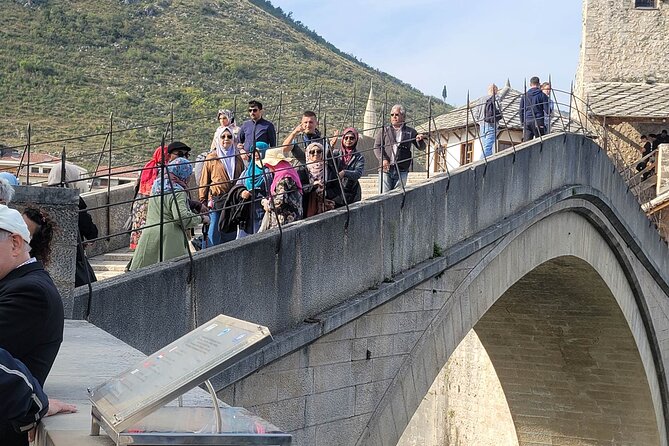
Then the trip heads to Mostar, and the pacing helps. Before hotel check-in, you explore the Old Town area with key landmarks: the Old Bridge, the Crooked bridge, the bazaar, and the Mehmet Koski Pasha Mosque. The stop is listed as free for the guided portion.
Mostar can feel like one of those places you either rush or you miss. This itinerary takes the middle path by giving you structured time for the highlights first, then letting your hotel base handle the rest later.
Practical thought: bring a light layer. By the Adriatic and in the river towns, temperatures can shift quickly, and shade can be inconsistent.
Split’s Diocletian’s Palace and the reset in Neum
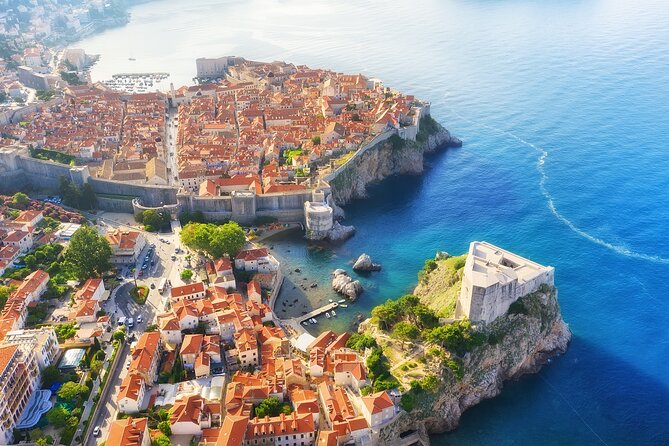
The route continues into Croatia with a strong city anchor in Split. You arrive and then have a licensed local tour guide for the Old Town, starting on the waterfront promenade and moving into Diocletian’s Palace. After the walking tour, you get about 3 hours free time to explore on your own.
That mix is smart. A guide helps you understand what you are seeing inside the palace complex. Then the free time lets you choose how deep to go, whether that means more wandering or just enjoying café time and people watching.
After Split, you keep driving to Neum, where you check in and enjoy a free and easy block. This is not a big sights day. It is a reset. It also gives you a lower-stress transition between Croatia and Montenegro, which helps keep energy for the walled-city days that come next.
Dubrovnik walls and Budva old town: two very different Adriatic moods
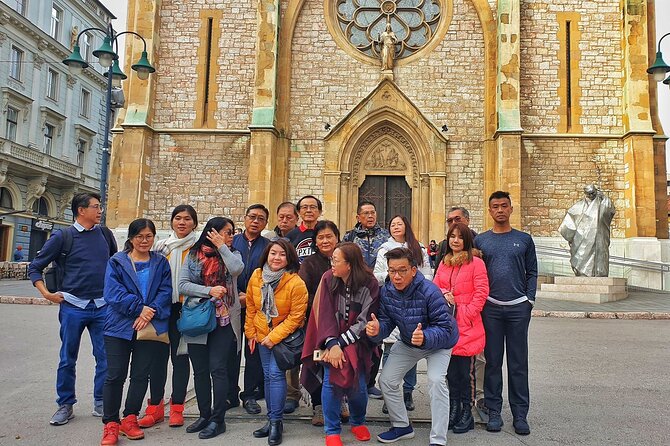
Dubrovnik is next, and the itinerary is built for getting the most out of limited time.
You arrive and have a walking tour inside the stone walls with a licensed local guide. After that, you get about 3 hours of free time to explore the Old Town. That’s the right structure because the inside-the-walls layout can feel complex if you do it alone, and the guide helps you interpret the street network.
Then you continue to Montenegro and check into Budva. You get another old-town visit inside the stone walls, followed by a long free time block in the evening.
How to decide which mood you’ll like more. Dubrovnik often feels about grandeur and famous views. Budva often feels more about old-town strolling with seaside energy. Having both in the same trip makes the Adriatic feel like a full spectrum, not just one postcard.
Kotor Bay and Perast by boat, plus a quick step in Trebinje
Kotor is where the trip turns scenic again. You get a licensed local guide for a walking tour, then about 3 hours free time to explore. The bay setting makes Kotor feel like a natural stage, so the time on the ground matters.
From Kotor, you drive to Perast and take a boat ride to Lady of the Rocks. This is one of those stops that is short and memorable because you see the bay from the water, not just from streets.
Then the itinerary includes Trebinje on the way back toward Sarajevo, with a visit to the Old Town and a short break. It is listed as free and only about 30 minutes, so treat it as a flavor stop rather than a full day attraction.
This kind of “quick culture hit” can be surprisingly useful. It breaks the long-drive rhythm and keeps the route from feeling like nonstop transit.
The pacing: how the schedule fits real life
One reason this tour works is that it mixes focused guided segments with free time. Sarajevo’s first day is packed with walking highlights, but many are short stops. Day two also alternates viewpoints and museum-style history with included admissions, so you are not constantly planning around ticket lines.
You also get a clear pattern: major city arrival includes a guided walking tour, then you get a chunk of free time to explore independently. Split gets 3 hours. Dubrovnik gets 3 hours. Kotor gets 3 hours. Even when the schedule is busy, the itinerary gives you room to breathe.
Where you might want to plan for extra spending is the stops marked as admission not included. That includes the Gazi Husrev-beg Mosque, the Jewish Museum, and some religious sites like the Serbian Orthodox Cathedral. The tour also states all fees and taxes are included, so the safest approach is to treat those admissions as optional add-ons you decide based on your interest that day.
Who this 7-day Balkan tour suits best
This is a strong match if you want a guided route through big-name Balkan highlights without the work of booking transfers and figuring out what to see. It also fits couples, friends, and small groups that can handle long drive days, because you do spend time on the road between cities.
It is also a good fit if you care about context. Sarajevo and the siege tunnel give serious historical grounding, and the Ottoman and Austro-Hungarian stops help you understand why the city looks the way it does.
I would think twice if you prefer lots of downtime and slower exploration. This itinerary is active and covers a lot of territory in 7 days, including multiple UNESCO-level sites across the Adriatic.
Should you book this Sarajevo to Montenegro tour?
Book it if you want maximum highlights with minimal planning and you are happy to follow a structured route with local guides. The biggest strength is the way it links big sights in Sarajevo, Mostar, Split, Dubrovnik, Budva, and Kotor, while still giving you free time blocks that make it feel less like a bus tour.
Skip it or consider a lighter version if you hate long days of transportation. Also, if you are strict about budgeting, remember that a few entries are marked as not included, so you may pay small amounts on-site depending on what you choose to go into.
If you do want a well-timed Balkan sampler that trades guesswork for clarity, this one is a solid choice.
FAQ
How long is the Bosnia Croatia Montenegro 7 Days Balkan Tour?
It is listed as 7 days, approximately.
Where does the tour start and where does it end?
The tour focuses on Sarajevo, Bosnia and Herzegovina, and the final day includes a transfer to the airport or another location in Sarajevo.
What is included in the hotel stay?
You get 6 nights in 4-star hotels, and breakfast is included for those 6 days.
What transportation is provided?
You travel in an air-conditioned vehicle. The tour also includes an English speaking driver or tour director, with licensed local guides in the cities.
Are entrance fees included?
The tour says all fees and taxes are included, but some specific places are listed as admission not included, like the Gazi Husrev-beg Mosque and the Jewish Museum of Bosnia and Herzegovina. You may want to plan for a few extra tickets depending on what you choose to enter.
Is lunch or dinner included?
Lunch and dinner are not included.
Do we get free time in the cities?
Yes. Some stops explicitly include free time, such as 3 hours in Split, 3 hours in Dubrovnik, and 3 hours in Kotor, plus free and easy time in Neum and Sarajevo.
How big is the group?
The tour has a maximum of 15 travelers.
Can I cancel and get a full refund?
Free cancellation is available up to 24 hours in advance for a full refund. If you cancel less than 24 hours before the start time, it is not refunded.
Most recently added near Sarajevo
- Sarajevo : Private Walking Tour With A Guide (Private Tour)★ 5.0 · 1 review
- Sarajevo: Islamic Tour | 500+ years of Glorious Heritage★ 5.0 · 1 review
- Sarajevo: Srebrenica – A Journey of Remembrance★ 5.0 · 1 review
- Transfer tour Sarajevo-Dubrovnik★ 5.0 · 1 review
- Bunker: Tito’s Secret & Boracko Lake Tour from Sarajevo★ 5.0 · 1 review
- Svrzo House Entrance Ticket★ 5.0 · 1 review
- Thrilling Rafting Adventure on the Neretva River with Lunch★ 5.0 · 1 review
- Private transfer (FROM-TO) Sarajevo – Dubrovnik★ 5.0 · 1 review
Tours, compared.
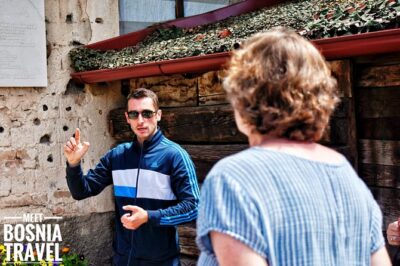
Fall of Yugoslavia, Sarajevo War Tour with Tunnel of Hope Museum and Frontlines
Read our review →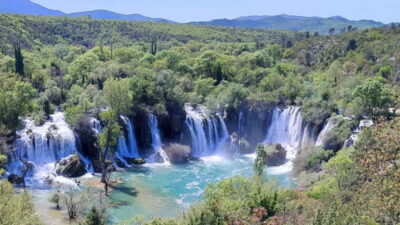
Blagaj, Počitelj & Kravice Waterfalls Day Tour
Read our review →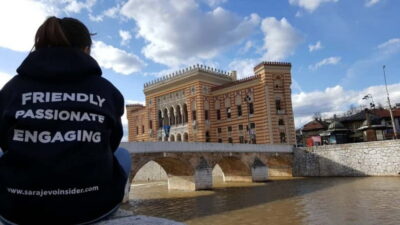
Tunnel Museum Yugoslavia War Tour with War Veteran
Read our review →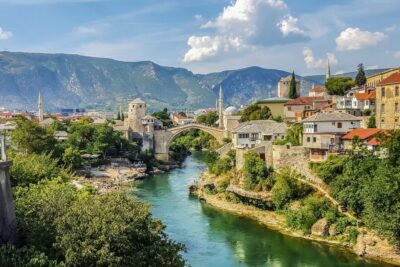
ROSES OF SARAJEVO (Official WAR + CITY tour)- Story of a Survivor
Read our review →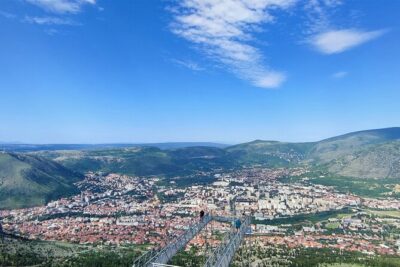
Discover Herzegovina Day Tour from Mostar: Kravice Waterfalls, Blagaj, Počitelj
Read our review →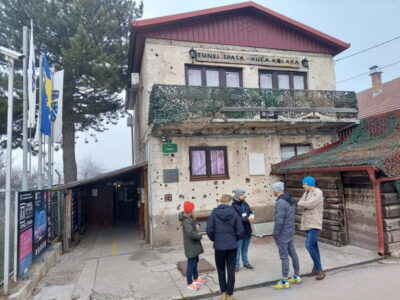
Browse the lists this tour appears in