
Reviewed · WALKING TOURS
Unveiling Banja Luka’s urban soul: Walk & Enjoy
Banja Luka reveals itself on quiet streets. This 2 hour walk is a simple way to understand the city’s Kastel Fortress setting and the beauty of Ferhadija Mosque, without getting lost or drowning in facts. I especially like how the guide connects the riverfront, the old trade area, and the city’s big religious landmarks into one story, and I like that the pace is made for sightseeing, not rushing. The main drawback: it is a walking tour the whole way, so you will want comfortable shoes and a bit of stamina.
You get picked up from your hotel, you get a mobile ticket, and you move through town with an English speaking guide and driver. The stops are short and focused, including museum time at Kastel and a quick look at the Cathedral of Christ the Saviour in the center. Tickets for the fortress and the cathedral are listed as free, which makes it a pretty good value for a private outing.
One more reality check: this experience runs only when the weather is reasonable. If conditions are poor, the walk may be rescheduled or refunded, so keep an eye on the forecast.
In This Review
- Key things I’d prioritize on this walk
- Walking is the fastest way to feel Banja Luka’s rhythm
- Price and logistics, what $65.06 actually buys you
- Hotel pickup and a smooth start in English
- Kastel Fortress, where the Vrbas sets the stage
- Ferhadija Mosque (built 1579) and the 16th century story
- The Banja Luka market stop, trade you can almost feel
- Cathedral of Christ the Saviour, the post WWI turning point
- Ending with local flavor, how cevapi fits the day
- Value check: a private walk with free sights and real guidance
- Who should book this walk and who should skip it
- Should you book Walk & Enjoy in Banja Luka?
- FAQ
- How long is the Walk & Enjoy tour in Banja Luka?
- Is the tour offered in English?
- Do I get hotel pickup?
- Is this a private tour?
- What stops are included?
- Are admission tickets included?
- Do I need a mobile ticket?
- Is the tour dependent on weather?
- What is the cancellation policy?
Key things I’d prioritize on this walk
- Kastel Fortress, oldest city monument with time set aside for the museum area
- Ferhadija Mosque (built 1579), one of Bosnia and Herzegovina’s signature Islamic architecture examples
- Vrbas river context with Kastel positioned on the left bank between key crossings
- Banja Luka market time with centuries of trade and a guide who keeps it human scale
- Cathedral of Christ the Saviour with clear architectural context for what to look for
A few more walking tours in Banja Luka:
- Discover Banja Luka: Guided Walking Tour
★ 4.9 · 9 reviews - Sarajevo: Grand Walking Tour Through Time and Cultures
★ 4.8 · 1,236 reviews - Sarajevo: 2 Hours Old Town Walking Tour With Local Guide
★ 5.0 · 505 reviews - Private Walking Tour, Food Tasting and Bosnian Coffee in Sarajevo
★ 5.0 · 255 reviews
Walking is the fastest way to feel Banja Luka’s rhythm
Banja Luka works best when you slow down. On this tour, I like that you are not just ticking off monuments. You are learning how the city’s geography shapes its identity, with the Vrbas river and historic core constantly in the background.
This is also a smart format if you are short on time. Two hours is enough to see the big anchors, plus enough side context that you start to understand why these buildings, and the market around them, belong together in one urban story. If you enjoy getting oriented quickly, this kind of walk pays off fast.
Price and logistics, what $65.06 actually buys you
At $65.06 per person for about two hours, the value comes from the structure. You are not paying for a long day of travel. You are paying for a private, English guided walk that includes pickup and time inside key sights.
Two practical wins help the price make sense:
- Free admission tickets are listed for Kastel Fortress (30 minutes) and for the Cathedral of Christ the Saviour (15 minutes).
- You get hotel pickup and a mobile ticket, which lowers friction when you are in an unfamiliar city.
My only caution is the one people sometimes forget with walking tours: there is no vehicle ride between stops built into the experience. So plan for walking time, and bring water. If the day is hot or your legs are not feeling great, shorten your expectations and focus on absorbing the guide’s explanations at each stop.
Hotel pickup and a smooth start in English
The tour starts with pickup right where you are staying, in front of your hotel or accommodation, at an arranged time. You contact the provider one day before the start, which is helpful because it reduces the guessing game that can happen with city meetups.
It is offered in English, and it is listed as private, meaning only your group participates. That matters more than you might think. When the guide has just your group, explanations can be paced to your questions, and the walk tends to feel less like a lecture and more like real conversation.
The tour also runs every day with broad hours listed. So if your schedule is messy, you usually have a workable option rather than being locked into one tiny window.
Other Banja Luka trips worth comparing
Kastel Fortress, where the Vrbas sets the stage
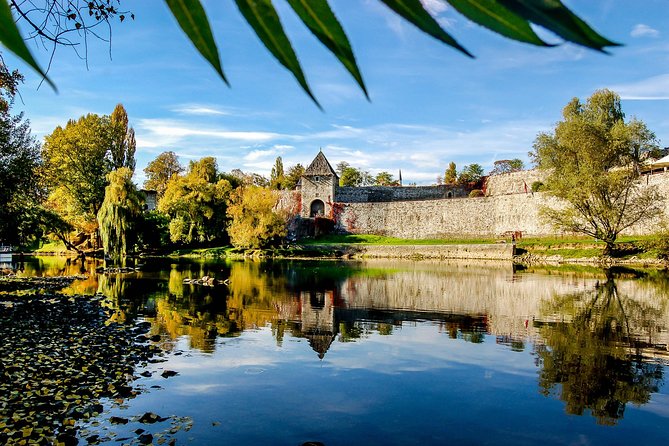
Kastel Fortress is the oldest historical monument in Banja Luka, and the location helps you understand why it mattered. You are looking at it from the left bank of the Vrbas river, in an area between today’s City Bridge and the crossing near the Crkvena river. That framing is not trivia. It is the logic of defense, trade, and control.
On this walk you get about 30 minutes at Kastel, and the admission ticket is listed as free. There is also museum time included in the visit. One review called out the museum visit specifically, and that makes sense because fortress complexes often hold the city’s objects and interpretation in one place.
What I love about this stop is how it trains your eyes. After the fortress, the rest of the walk feels more legible. You start noticing how the river corridor relates to the city center, and how older power centers sit near routes and crossings.
A small planning tip: fortress sites can include uneven ground. Even if the walk itself is not described as difficult, I would still wear shoes with grip, especially if weather is damp.
Ferhadija Mosque (built 1579) and the 16th century story

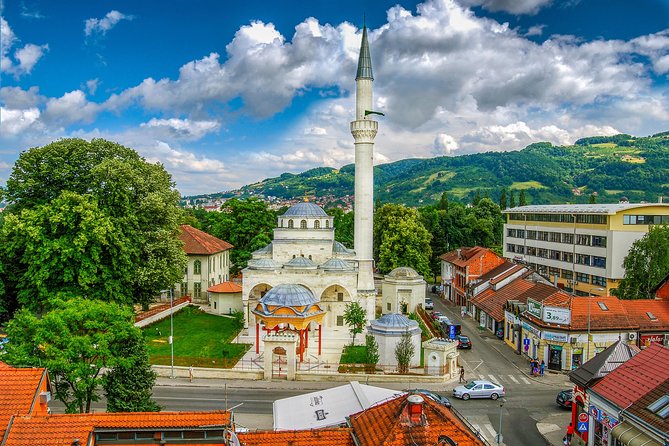
After Kastel, the pace shifts from fortress context to architecture and faith. The next major stop is Ferhadija Mosque, built in 1579. The guide frames it as the greatest achievement of Islamic architecture in Bosnia and Herzegovina in the 16th century.
I like this stop because it is specific. You are not just looking at a famous building. You are given a time period and a standard to look for. When you know a structure’s century and significance, you can spend your attention on details like design rhythm, proportions, and how the building sits within the urban fabric around it.
This is also where the walk becomes more than monuments. The guide’s explanations help you connect the mosque to the city’s longer timeline, including how religious architecture and city life share the same streets and rhythms.
Practical note: religious buildings often have rules about behavior and dress. The tour does not spell these out here, so follow local guidance when you arrive, and keep things respectful.
The Banja Luka market stop, trade you can almost feel
From the religious landmark, the route turns into everyday city life at the market. This is not a generic photo stop. It is where trade has been going on for centuries, and the guide helps you understand what you are seeing.
You get time to explore the market and learn local attractions. That pairing is the key. Markets can be overwhelming if you only wander on your own, especially when you do not know what matters. With a guide, you can focus on the logic of the area, the kinds of goods typical to the setting, and the way the market connects to the city’s central walkways.
I also like the tone of this stop. Market tours can sometimes turn into a shopping push, but here it is framed as city discovery. You are learning the role of trade in shaping the area, not buying your way into the experience.
If you want a simple strategy: move slow, pause where the guide suggests, and take in smells and textures as much as sights. This is one of those moments where you remember the city with your whole senses, not just through photos.
Cathedral of Christ the Saviour, the post WWI turning point
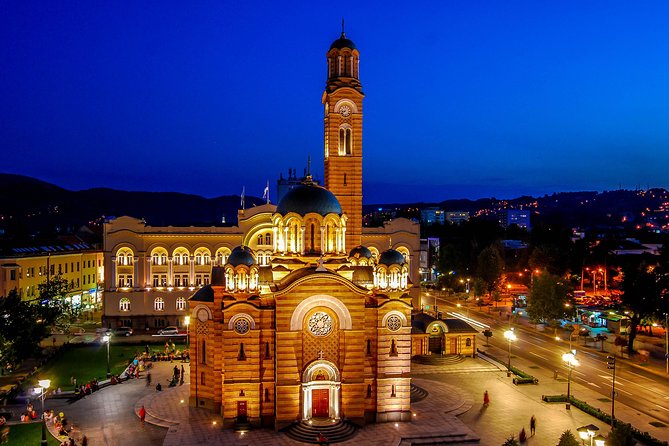
The final major landmark is the Cathedral of Christ the Saviour (with description tied to the Saint Trinity Church). This stop is shorter, about 15 minutes, and the admission ticket is listed as free.
Here’s the kind of context that makes a short visit feel worth it. The church in the city center was the first bigger architectural venture in Banja Luka after World War I. It was built on an empty space in front of the cafe Balkan from 1925. The designer mentioned is Dušan Živanović from Belgrade, and the style is described as Serbian and Byzantine.
That mix of facts helps you do more than look. You can stand in one place and interpret what you are seeing: the Serbian and Byzantine influence gives you a lens for style elements, and the post WWI timing gives you a lens for why the building represented something new in the city at the time.
A timing tip: because the stop is brief, plan to arrive ready to focus. If you are tired, use the 15 minutes to listen to the guide’s points, then do one quick look around on your own.
Ending with local flavor, how cevapi fits the day
One review highlighted a typical local snack at the end of the walk, specifically cevapi. I like that kind of ending because it links the architecture and market context to how people actually live.
Even if you do not plan to treat it like a formal meal, a small local bite helps you seal the memory of the places you just learned about. Markets are about food and daily rhythms, and the end snack fits naturally with that theme.
If you have dietary needs, you might want to ask the guide what is best for you. The tour description here does not include details of the snack beyond the local idea, so keep your expectations flexible and communicate clearly.
Value check: a private walk with free sights and real guidance
For me, this tour makes sense if you want a guided city introduction that does not turn into a half day of logistics. You get:
- Private group attention
- English guidance
- Hotel pickup
- Mobile ticket
- Short visits to major anchors
- Free admission tickets for the fortress and the cathedral
The walking nature is the tradeoff. If you are hoping for a mixed mode tour where you sit in a vehicle sometimes, this format will not match that expectation. But if you like compact, efficient city learning, two hours can be plenty, especially when each stop has a clear purpose.
Also, because admission is listed as free at two of the stops, you are not paying extra ticket costs on top of the base price. That helps you feel confident you are spending your budget on the guide and the experience, not on add ons.
Who should book this walk and who should skip it
This is a great match if:
- You want an urban orientation to Banja Luka fast
- You enjoy architecture explanations, especially with dates and designers
- You like markets and want someone to translate what you are looking at
- You prefer a private experience rather than a big group
You might skip or adjust expectations if:
- You struggle with walking for an extended stretch
- You are looking for a tour with significant time in a vehicle
- Weather is often unreliable for your dates, since the experience requires good conditions
Should you book Walk & Enjoy in Banja Luka?
I think you should book it if your goal is simple: understand Banja Luka’s city core in about two hours, with clear stops and practical guidance. The combination of Kastel Fortress, Ferhadija Mosque, the market, and the Cathedral of Christ the Saviour gives you a balanced snapshot of the city’s layers, faith, and daily life.
Book it especially if you appreciate details like the mosque’s 1579 build date, the fortress’s relationship to the Vrbas river, and the cathedral’s post WWI context tied to Dušan Živanović. Those are the kinds of specifics that make a short tour feel memorable.
If you hate walking tours or you need a lot of downtime, pick a different style of sightseeing. Otherwise, this one is a solid, efficient way to get your bearings fast and leave with a much clearer picture of what Banja Luka is.
FAQ
How long is the Walk & Enjoy tour in Banja Luka?
The tour lasts about 2 hours.
Is the tour offered in English?
Yes, the tour is offered in English.
Do I get hotel pickup?
Yes. Pickup is offered in front of your hotel or accommodation at an arranged time. You should contact the provider one day before the tour start.
Is this a private tour?
Yes. It is private, and only your group participates.
What stops are included?
You visit Kastel Fortress, Ferhadija Mosque, the Banja Luka market, and the Cathedral of Christ the Saviour.
Are admission tickets included?
Admission ticket is listed as free for Kastel Fortress and for the Cathedral of Christ the Saviour.
Do I need a mobile ticket?
Yes. A mobile ticket is offered for the experience.
Is the tour dependent on weather?
Yes. This experience requires good weather. If it is canceled due to poor weather, you will be offered a different date or a full refund.
What is the cancellation policy?
You can cancel up to 24 hours in advance for a full refund. If you cancel less than 24 hours before the start time, the amount you paid will not be refunded.
Most recently added near Banja Luka
- Banja Luka: Krupa na Vrbasu Guided Hike with Transfers★ 5.0 · 1 review
- Banja Luka Rafting★ 4.5 · 2 reviews
- Rafting Trip on the Vrbas river★ 5.0 · 3 reviews
- Enjoying the River Vrbas★ 4.5 · 5 reviews
- Vrbas River Rafting Adventure with Breakfast★ 4.0 · 5 reviews
- Discover Banja Luka: Guided Walking Tour★ 4.9 · 9 reviews
- Banja Luka City Tour & A magical journey on Dayak boat★ 5.0 · 14 reviews
- Krupa on Vrbas★ 5.0 · 28 reviews
Walking Tours, compared.
Private Walking Tour, Food Tasting and Bosnian Coffee in Sarajevo
Read our review →
Browse the lists this tour appears in