
Reviewed · WALKING TOURS
Mostar Old Town Walking Tour – Best Seller
Mostar feels like a story you can walk into. This old town route is one of the easiest ways to connect the dots between Spanish Square and Mostar’s famous waterfront landmarks, without losing time. I especially like how it mixes everyday city life with big symbolism, and how the stop at Bišćevića House turns Ottoman architecture into something you can actually picture.
Two things I value most: you get a guided narrative that helps the sites click fast, and the pacing gives you room to look around instead of just passing through. The only drawback to consider is that it’s a good-weather type of walk, so if the skies are rough, you may need to reschedule.
In This Review
- Key Points You’ll Appreciate
- Spanish Square to Bišćevića House: Getting Oriented in Mostar
- Musala and the River-Logic of Mostar
- Inside Bišćevića House: Ottoman Life in Wooden Rooms
- Old Bridge Area: From Ottoman Origins to Reconstruction
- Kujundziluk Bazaar: Coppersmiths, Tailors, and Leather Makers
- Kriva Ćuprija Crooked Bridge: A Smaller Landmark With Big Charm
- Price and Pace: Is $35.50 Good Value for Mostar?
- Guide Gordon Makes the Difference
- Who Should Book This Mostar Old Town Tour?
- Should You Book the Mostar Old Town Walking Tour?
- FAQ
- How long is the Mostar Old Town Walking Tour?
- What is the tour price?
- Is the tour in English?
- What is included in the tour price?
- Is the Old Bridge and bazaar time included, or is it only a house visit?
- Where do I start and where does the tour end?
- Do I need to buy tickets in advance?
- What if the weather is bad?
- What is the cancellation window?
Key Points You’ll Appreciate
- A tight route (1 to 2 hours) that covers multiple Mostar highlights without turning into a full day.
- Guided English tour with a small group (max 15), which makes questions and photo stops easier.
- Bišćevića House entry included, so you are not scrambling for tickets mid-walk.
- Old Bridge area storytelling that explains Ottoman origins, wartime destruction, and reconstruction.
- Kujundziluk bazaar crafts angle, from coppersmiths to leather workers.
- Kriva Ćuprija (Crooked Bridge) adds a quieter, older-feeling stop with strong photo potential.
A few more Walking Tours in Mostar
- Mostar Private Walking Tour
★ 5.0 · 93 reviews - Walking tour in Old Town Mostar
★ 4.4 · 35 reviews - Charming Mostar: Private Mostar Walking Tour
★ 5.0 · 23 reviews - Best of Mostar – Private Walking Tour
★ 5.0 · 21 reviews
Spanish Square to Bišćevića House: Getting Oriented in Mostar
You start at Španjolski trg (Spanish Square), with the kind of central location that instantly helps you understand Mostar’s layout. This square is named for Spanish volunteers who fought in the Bosnian War. That history makes it more than just a meeting point. It also works as a social hub, and it tends to draw students because schools and the University of Mostar are close by.
From the start, I like that the tour balances two types of travel value. One is orientation, so you understand where the river fits into the old town. The other is context, so you are not just taking photos of pretty corners. You get both, and you do it quickly.
After Spanish Square, the route carries you toward the Neretva River area, where Mostar’s character gets clearer. The tour’s length is short enough that you can keep your energy for strolling and looking, but long enough to hit several meaningful sites.
Musala and the River-Logic of Mostar
One of the smartest parts of this walk is the stop near the Neretva at Musala. It brings a more modern contrast to Mostar’s Ottoman Old Town. That contrast matters because it shows how the city didn’t freeze in time. It kept evolving while keeping visible echoes of layered history.
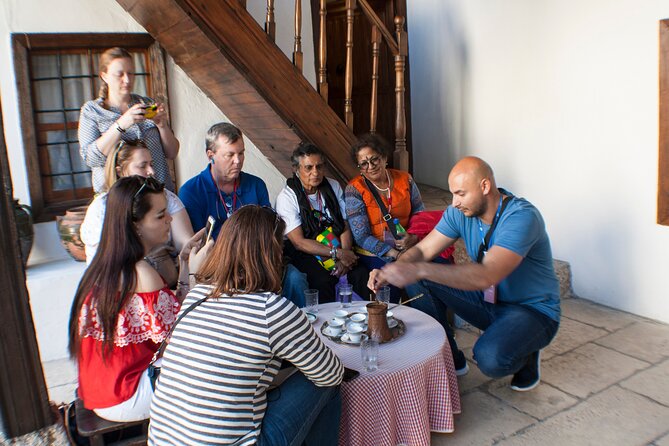
Musala is also a practical pause point. This is a place where you can do simple travel stuff well: watch people, grab local coffee if you want, and let the pace slow down for a moment. If you are the kind of traveler who likes to understand a place by how locals actually use it, you will probably enjoy this stop.
And then there is the river-and-prayer angle that makes Musala area history feel physical. You hear about a mosque situation where a rivulet from Radobolja flows under the mosque and joins the Neretva to the south of the Old Bridge. The detail that the imam remained on the mainland during prayer, while believers were on the water, gives you a vivid example of how the landscape shaped daily life.
If you only know Mostar for the Old Bridge, this stop widens your view. It answers a real question you might have while walking, why the waterfront feels so integrated into daily routines.
Inside Bišćevića House: Ottoman Life in Wooden Rooms
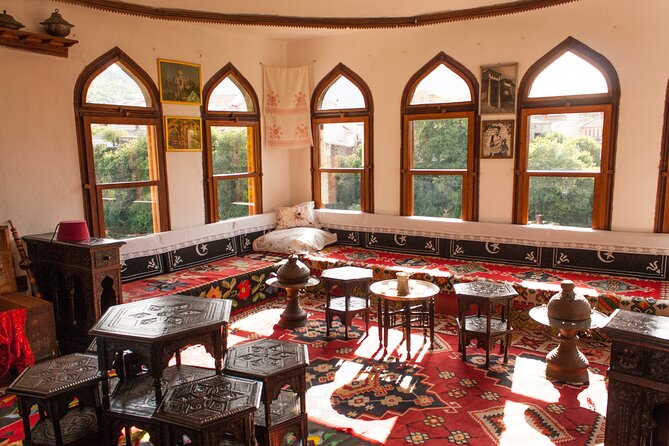
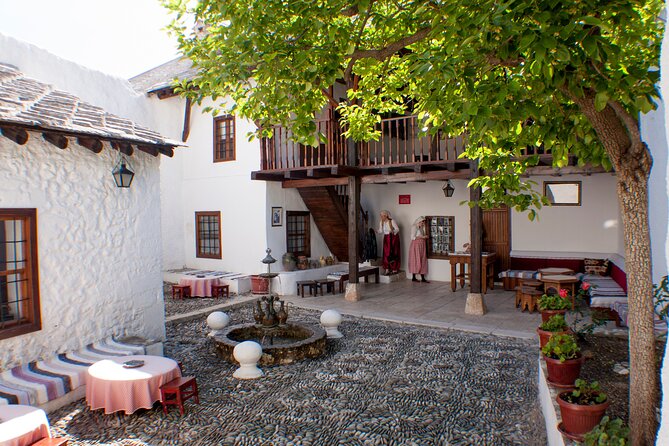
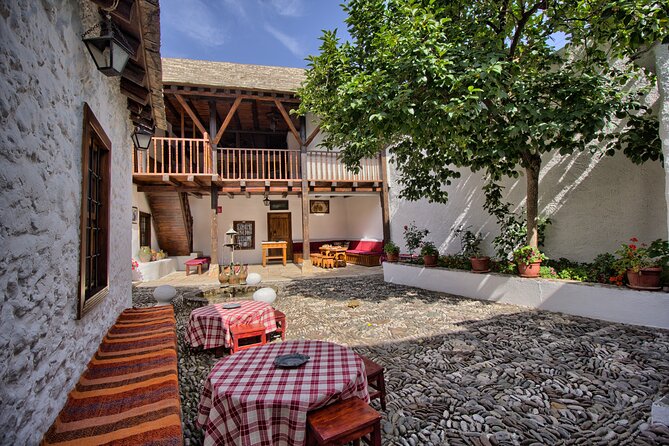
Next comes Bišćevića House, a 17th-century Ottoman family residence that is included with the tour. The payoff here is that you stop treating Ottoman Mostar as a postcard and start seeing how people lived.
What stands out: the wooden interiors, handmade carpets, and the calmer river views that frame the home. Those elements are not just decorative. They help you imagine how the house worked day to day, from materials that were common in the region to the way natural light and sightlines would have mattered in a home near the river.
I also like that this stop is relatively calm compared with the most crowded photo zones. It gives your brain a break. After moving through streets and landmarks, stepping into a preserved residence helps you reset and remember what you are actually looking at.
Potential drawback? If you are not interested in interiors or period homes, you might feel the time here could be spent more outdoors. But if you want the tour to explain Mostar beyond the bridge, this included entrance makes a strong case for booking.
Another way to spend the day from here:
Old Bridge Area: From Ottoman Origins to Reconstruction
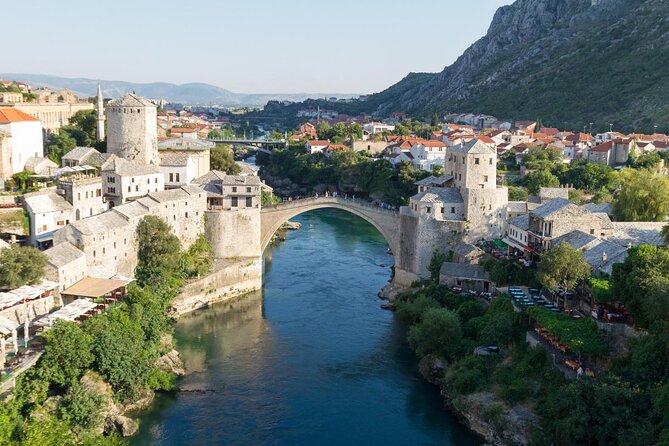
Now you reach the part most people come for: the Old Bridge area of the Old City of Mostar. Here you begin at Mostar’s most iconic landmark and get the story behind it.
You learn about the bridge’s Ottoman origins, its wartime destruction, and its symbolic reconstruction. That sequence matters because it turns the bridge from a single photo into a timeline. You understand why the bridge is not just old, it is also meaning-heavy.
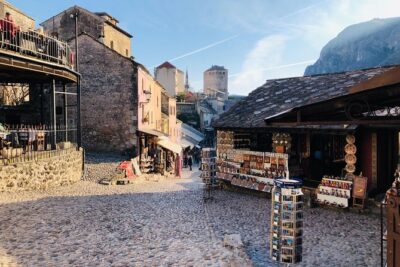
From there, the tour continues through the Old Town’s cobbled lanes and colorful bazaars. This is where guidance really helps. Without a narrative, you can wander and still not understand what you are seeing. With a guide, the streets start to feel organized, like each turn has a reason.
This section is also one of your best opportunities to slow down and look up. The old town buildings around the bridge area can be impressive, and they help you see Mostar as more than one landmark.
One practical note: expect a lively atmosphere near the Old Bridge. Even with a guided group, you may want to be a little patient in tight areas, especially if other visitors are stopping for photos at the same time.
Kujundziluk Bazaar: Coppersmiths, Tailors, and Leather Makers
After the bridge zone, the tour moves to Bazar Kujundziluk, located on today’s old part of town on the left bank of the Neretva. The name comes from coppersmiths (Kujundžiluk after the numerous coppersmiths, kujundžije). There were also many tailors, but leather craft was especially prominent, with tanners considered great masters for processing leather.
This stop is useful even if you do not plan to buy anything. Crafts tell you what an economy valued and what skills mattered. So when you walk through small artisan workshops and see handicrafts, you get a more grounded version of Mostar’s past.
What you can do here is simple: browse, compare, and look for objects that connect to the names in the area. If you spot metalwork, leather goods, or tailored items, you can connect them directly to why the neighborhood is named the way it is.
The only caution is time and attention. Bazaar streets can tempt you to get distracted. Keep your eyes up and your feet steady, especially on uneven cobbles, and use the guide to point out the places that best reflect the craft story.
Kriva Ćuprija Crooked Bridge: A Smaller Landmark With Big Charm
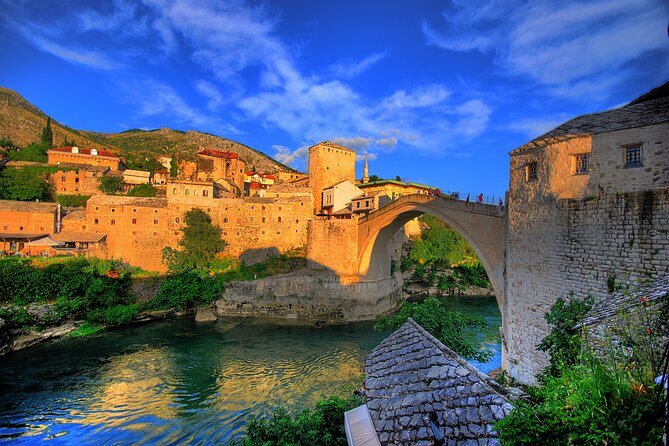
The tour’s final stretch includes a stop at the Crooked Bridge (Kriva Ćuprija). This is described as a tucked-away corner in the old quarter, and it lives up to that quietly charming reputation.
Here’s the historical angle that makes the stop more than just a pretty bridge. It is believed to be a miniature prototype of the famous Old Bridge (Stari Most). It dates back to the 16th century and arches over the Radobolja River.
What I like is how this stop changes the mood. The Old Bridge area is intense in symbolism and foot traffic. Kriva Ćuprija is a gentler ending, a place where you can take photos and feel like you found something slightly calmer on your own.
If you enjoy “different angle” sightseeing, this is the perfect finale. It helps you compare bridges, materials, and river behavior, all within the same short walking day.
Price and Pace: Is $35.50 Good Value for Mostar?
At $35.50 per person, this tour sits in the affordable-to-mid range for a guided walking experience in a major heritage city. The price feels more justified than some cheaper options because you get two key inclusions: a professional guide and entry to Ottoman House Bišćevića.
That matters because entrance fees can silently add up on your own. Here, the tour handles at least one paid component for you. It also helps you keep flow, since the guided route reduces decision-making like where to buy tickets, when to go, and how to sequence stops.
Also, the duration is about 1 to 2 hours, which is a big value point if your schedule is tight. You can fit this into a morning plan, pair it with a longer meal nearby, or use it as a first-day orientation walk so you know where to return later.
Group size is limited to a maximum of 15 travelers, which usually means less chaos than bigger city tours. The tour is offered in English and includes a mobile ticket, so it is designed for modern convenience without adding extra logistical friction.
The one thing to keep in mind is that it ends at Bišćevića House. So you will want your return plans to start from that side of town, or you might factor in an easy walk or transit.
Guide Gordon Makes the Difference
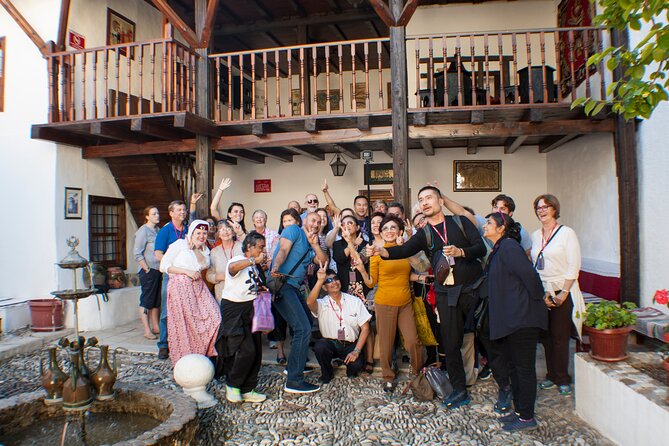
One of the strongest reasons to book is how the guide experience lands. In particular, Gordon is highlighted as clear and well explained. That is not a small thing. In Mostar, stories can get lost unless someone connects the dots between architecture, river geography, and conflict history.
The pacing is also described as right-sized. You get enough time to appreciate the sights without feeling rushed. For me, that “just enough” feeling is the sweet spot on a walking tour, especially when you are juggling photos, uneven pavement, and trying to stay present in the moment.
If you value explanation over just checklists, this is the kind of tour where the guide helps you remember what mattered.
Who Should Book This Mostar Old Town Tour?
I think this tour is best for people who want a high-meaning, low-time plan. If you have limited hours in Mostar, or if it is your first time in town, you will likely love how quickly it connects iconic landmarks with quieter context stops.
It is also a good fit if you enjoy a balance of:
- major sites, like the Old Bridge area
- local feel, like the Musala pause near the river
- a real interior stop, Bišćevića House, that gives you texture beyond street views
- a craft-minded stop in Kujundziluk
You might want something longer or different if your idea of a Mostar day is mostly museums, deep dives into single neighborhoods, or long, slow shopping time. This is built for movement and overview, not for spending hours in one place.
Should You Book the Mostar Old Town Walking Tour?
If you want an organized way to experience Mostar’s old town in about 1 to 2 hours, I would book it. The combination of Old Bridge storytelling, an included Ottoman house visit, and the added texture of Kujundziluk plus Kriva Ćuprija makes it feel like a lot is happening for a relatively short time.
My final advice: wear comfortable shoes, because cobbled streets add up. If the weather looks questionable, keep an eye on the plan since this one is described as weather dependent. And if you are the type who learns best when a guide ties sites together, you should especially enjoy this format.
FAQ
How long is the Mostar Old Town Walking Tour?
It runs for about 1 to 2 hours.
What is the tour price?
The price is $35.50 per person.
Is the tour in English?
Yes, it is offered in English.
What is included in the tour price?
The tour includes a professional guide and the entrance fee for Ottoman House Bišćevića.
Is the Old Bridge and bazaar time included, or is it only a house visit?
The route includes the Old Bridge area and Bazar Kujundziluk as well as Bišćevića House.
Where do I start and where does the tour end?
The meeting point is Španjolski trg8RV4+CR6, Mostar 88000. The tour ends at Biscevic House, Biščevića bb, Mostar 88000.
Do I need to buy tickets in advance?
The tour uses a mobile ticket, and you do not need to pay the included house entrance separately.
What if the weather is bad?
The experience requires good weather. If it is canceled due to poor weather, you will be offered a different date or a full refund.
What is the cancellation window?
You can cancel for a full refund up to 24 hours in advance of the start time. If you cancel less than 24 hours before, the amount paid is not refunded.
Most recently added near Mostar
- Going North and visit Sarajevo in a Day Tour from Mostar★ 5.0 · 1 review
- The Ottoman Experience Tour in Mostar★ 5.0 · 1 review
- Authentic Antique Museum Home★ 5.0 · 1 review
- Mostar: Private Walking Tour with Local Guide★ 4.0 · 1 review
- Top Secret Tito’s Bunker in a day tour from Mostar★ 5.0 · 1 review
- City Tour: Mostar Medival Town★ 5.0 · 1 review
- Wine Tour & Tasting (Herzegovina)★ 5.0 · 1 review
- Mostar Sunset Walking Tour with Wine Tasting★ 5.0 · 1 review
Walking Tours, compared.
Private Walking Tour, Food Tasting and Bosnian Coffee in Sarajevo
Read our review →
Browse the lists this tour appears in