
Reviewed · HISTORICAL TOURS
HISTORY OF ISLAM IN SARAJEVO TOUR
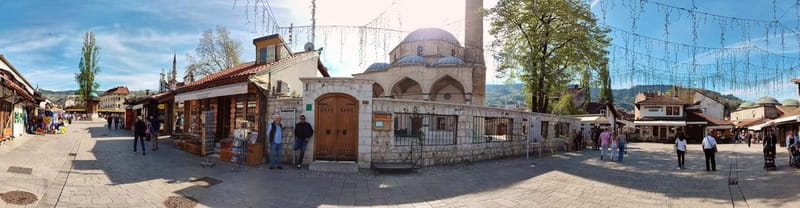
Sarajevo has a way of making faith feel human and local. This 2-hour History of Islam in Sarajevo walk connects Ottoman rule, everyday street life, and major Islamic landmarks in a tight, easy route. I like that it moves briskly between key sites with a live guide, including stops like Gazi Husrev-beg Mosque and Baščaršija.
What I love most is how many meaningful stops you fit in one go, without turning it into a lecture. You also get real context for how Islam took root after the Ottomans, plus time in the Old Town where coffee smell and market sounds are part of the lesson.
The main consideration is timing and comfort: it’s a compact 2-hour schedule, and it is not suitable for people over 95.
In This Review
- Key highlights to look for
- Ottoman Sarajevo, and why this story still matters
- Price and logistics: 2 hours, tram ride, and a clear payoff
- Stop 1: Emperor’s Mosque and the electric-lighting story
- Stop 2: Baščaršija, the bazaar heartbeat, and interfaith contrast
- Stop 3: Fakultet islamskih nauka u Sarajevu, seeing education in the city
- Stop 4: Morića Han and the Ottoman city in miniature
- Stop 5: Gazi Husrev-bey Mosque, the city’s centerpiece
- Stop 6: Sarajevo Clock Tower and the rhythm of the street
- Stop 7: Gazi Husrev-beg Madrasa and Library, where scholarship shows up
- Stop 8: Bezistan and the market logic of Ottoman Sarajevo
- Stop 9: Tašlihan, finish strong and keep exploring
- The guide factor: why Aid’s style really matters
- Who should book this tour, and who may want to skip it
- Should you book the History of Islam in Sarajevo tour?
- FAQ
- How long is the History of Islam in Sarajevo tour?
- Where does the tour pick up, and where does it end?
- What’s included in the price?
- What should I bring, and is cash important?
- Is alcohol allowed on the tour?
- Is there a cancellation window, and is the tour suitable for very elderly guests?
Key highlights to look for
- Ottoman Sarajevo overview with the story of how Ottoman rule shaped the city
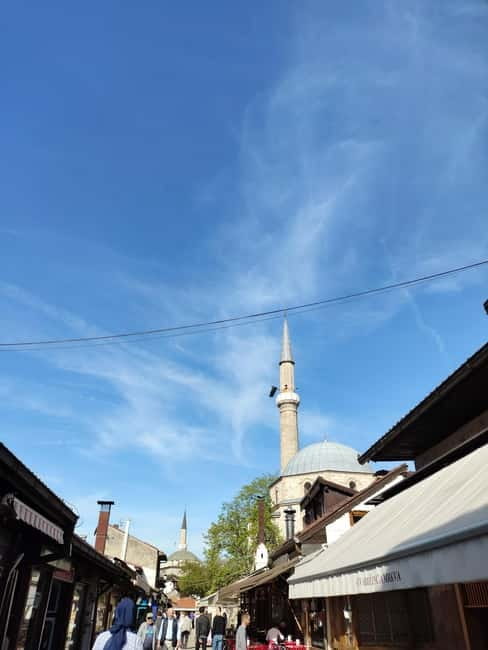
- Emperor’s Mosque, including the tour’s electric-lighting highlight
- Baščaršija Old Town, where daily life, souvenirs, and call to prayer blend together
- Islamic learning landmarks like Gazi Husrev-beg’s Madrasa and Library
- Historic market feel at stops such as Morića Han, Bezistan, and Tašlihan
- Small group pacing (up to 20) that makes photo stops feel workable
More history told where it happened in Sarajevo:
- East Bosnia & West Serbia UNESCO heritage day tour from Sarajevo
★ 5.0 · 55 reviews - Sarajevo Full Day Tour: History, Culture, Nature, War & Olympics
★ 5.0 · 27 reviews - Sarajevo genuine walking tour: Steps through history
★ 5.0 · 22 reviews - SARAJEVO STREET ART TOUR (art, history & mystery) – sARTajevo!
★ 5.0 · 18 reviews
Ottoman Sarajevo, and why this story still matters
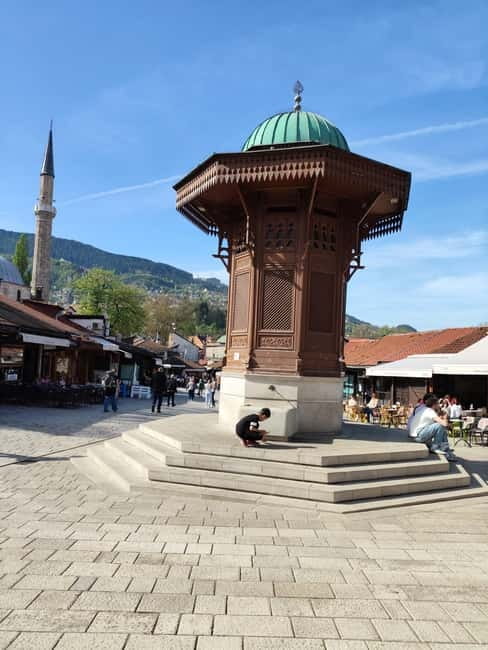
If you want Sarajevo to make sense fast, this kind of walking tour helps. Sarajevo is often described through its buildings, but the bigger story is how different communities lived close enough to shape one another. After the Ottoman conquest, Bosnia became a region where Islam became the majority faith, and that shift changed the city’s identity in visible ways.
I like that the tour frames this history as something you can see on the street, not something you have to picture from a book. You’ll hear how the Ottomans entered Bosnia Herzegovina shortly after Sultan Mehmet II al Fatih’s conquest of Constantinople, and how Sarajevo grew into one of the empire’s prosperous urban centers.
And you get a sense of why people used the nickname Jerusalem of Europe. When Muslims, Christians, and Jews lived together in the same city, the result was not just “tolerance” as a slogan, but daily coexistence. That shows up in the route, which includes both Islamic landmarks and, at times, pauses near a cathedral and synagogue to underline the interfaith picture.
Price and logistics: 2 hours, tram ride, and a clear payoff
At $23 per person for a 2-hour guided walk, this is the kind of experience that usually makes sense for your first visit. You are not paying for one building. You’re paying for guided context that stitches together many stops: mosques, education-related buildings, bazaar streets, and Ottoman-era city fabric.
A few practical bits make it easy to execute:
- Pickup is either Hotel Holiday (Holiday Inn) or Sarajevo City Hall
- You take the tram for about 10 minutes before reaching the main sights
- Group size is capped at 20, so you’re not swallowed by the crowd
- You get a tram ticket, fresh water, and a live English guide
- Finish point is Tašlihan, which is convenient if you want to keep exploring on foot after
Also, bring cash. Bosnia and Herzegovina tends to run on cash preferences, and the tour’s timing gives you photo stops in the kind of areas where you might want to buy small souvenirs or drinks.
One more thing to know: tips are not included. That matters if you’re budgeting, even though the tour includes the basics you need to move comfortably.
Stop 1: Emperor’s Mosque and the electric-lighting story
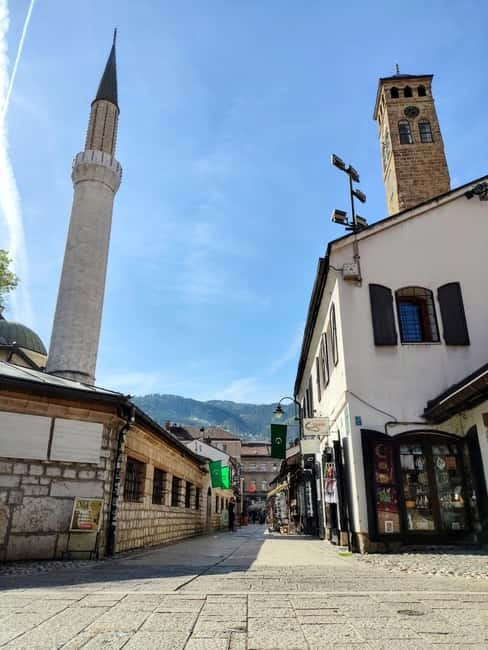
The tour begins with a strong “start here” anchor at Emperor’s Mosque. You’ll get a photo stop and a guided explanation, usually around 15 minutes.
What makes this stop memorable is the highlight included with the experience: the claim that this mosque was the first mosque in the world with electric lighting. Even if you’ve heard Sarajevo has fascinating history, this is the sort of detail that makes it feel real and specific.
Why I think this is a smart opening: it sets the emotional tone early. You’re not just seeing Islamic architecture as an object. You’re seeing how Sarajevo’s Muslim community also engaged with technology and modernity in its own time and place, and the guide helps you connect that to the broader Ottoman-era story.
Practical note: because it’s a photo stop plus explanation, wear shoes you can stand in comfortably for short stretches.
Other Sarajevo trips worth comparing
- Fall of Yugoslavia, Sarajevo War Tour with Tunnel of Hope Museum and Frontlines
★ 5.0 · 1,314 reviews
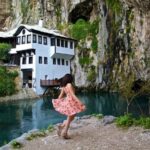
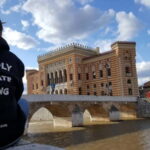
Stop 2: Baščaršija, the bazaar heartbeat, and interfaith contrast
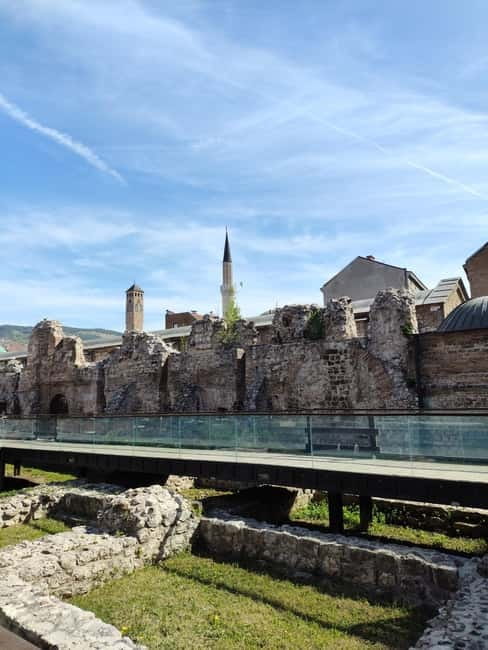
Next comes Baščaršija, Sarajevo’s Old Town bazaar area, with guided time for photos and orientation. This is one of the best places to understand why Sarajevo earned nicknames tied to sacred meaning while still feeling ordinary in a good way.
Here are the details that make Baščaršija work in a history tour:
- You get the sensory layer: the smell of coffee, the soundscape, and the feeling of market streets
- You’ll see small, everyday expressions of culture, like colorful Persian-like carpets and copper souvenirs
- The guide ties the built environment to the story of coexistence between communities
You may also get moments that connect directly to interfaith Sarajevo, including stops that highlight a cathedral and synagogue as part of the broader community picture. That interfaith contrast is useful because it keeps you from reducing Sarajevo to a single religious narrative.
A drawback to keep in mind: this part is lively. The tour is fast enough to cover highlights, but if you hate crowds or prefer lots of quiet time, this is the section where you’ll feel the energy the most.
Stop 3: Fakultet islamskih nauka u Sarajevu, seeing education in the city
After the bazaar atmosphere, the tour shifts to learning and institutions with a photo and short guided moment at Fakultet islamskih nauka u Sarajevu.
Even with just a few minutes here, it adds a lot. Mosque history is only one part of the Islamic story in Sarajevo. Education matters too, because it explains how religious life, community leadership, and scholarship supported each other over time.
This stop is also a good “reset” if the bazaar felt sensory overload. A faculty building reads differently than a street market. It signals the city’s focus on study, not only worship.
Stop 4: Morića Han and the Ottoman city in miniature
Then you pause at Morića Han for a photo stop with guided context. This is a short stop, but I like it because it gives you a breather and a change of scene between the big anchor monuments.
In practical terms, it works like this:
- You get a quick taste of the Ottoman-era urban style in a way that doesn’t require a long museum-style visit
- You keep your momentum through the Old Town without losing the thread of the history story
The only real caution is that the stop is brief. If you want a deep look at the structure itself, this tour is more about orientation and meaning than slow architectural study.
Stop 5: Gazi Husrev-bey Mosque, the city’s centerpiece
Next comes one of the key reasons people choose this tour: Gazi Husrev-beg Mosque. You get another photo stop plus guided time for about 15 minutes.
This is where the tour’s promises start clicking into place. The guide can connect why Sarajevo’s Ottoman-era Muslim community became so prominent, and how the city’s religious sites helped shape social life and local identity.
I also appreciate that this stop is paired with surrounding learning and library buildings later. When the guide moves you forward to nearby institutions, you begin to see the “ecosystem” of faith: places of worship linked to places of education and preservation of knowledge.
If you’re hoping for a visual moment you can remember later, this is it. It’s the sort of landmark you can point to in your photos and still feel the story behind it.
Stop 6: Sarajevo Clock Tower and the rhythm of the street
After the mosque, you head to the Sarajevo Clock Tower for a shorter photo and guided stop, around 5 minutes.
It’s easy to skip clock towers on a checklist. But here, it’s useful. It helps you orient yourself in the city and gives you a non-religious landmark that still sits inside the historical neighborhood. In other words, you’re not floating between religious sites. You’re moving through a functioning city with timekeeping and movement built into it.
Use this stop to regroup. If your feet are starting to complain, this brief moment helps you reset before the learning and library segment.
Stop 7: Gazi Husrev-beg Madrasa and Library, where scholarship shows up
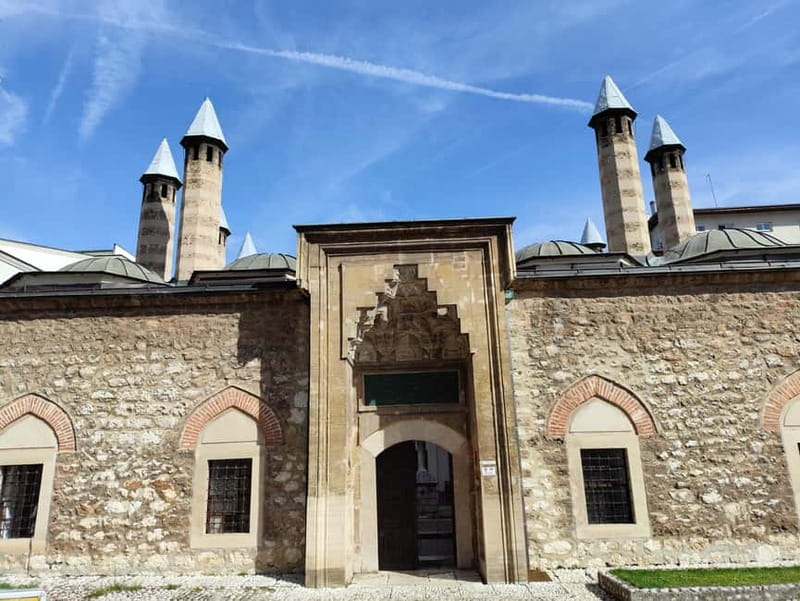
Then the tour moves into the learning complex with:
- Gazi Husrev-beg Madrasa (photo stop plus guided time)
- Gazi Husrev-beg Library (photo stop plus guided time)
These are short stops, about 5 minutes each, but they matter because they shift your perspective. You’re not only seeing a city of worship. You’re seeing how a community valued education and how institutions were part of the urban landscape.
If you’re the type of traveler who likes to understand how societies work, this is a strong section. Even in brief explanations, you’ll come away thinking about teachers, students, and knowledge preservation as part of Sarajevo’s identity.
My tip: when the guide speaks here, don’t treat it like filler between “big” mosques. Ask yourself, how did education shape who held authority in the city, and how did it connect to daily religious life?
Stop 8: Bezistan and the market logic of Ottoman Sarajevo
Next is Gazi Husrev-beg’s Bezistan for a short guided stop. A bezistan is basically a place where commerce and city life converge, and it helps balance the religious and educational stops.
I like this part because it rounds out the story. Islam in Sarajevo is not only about temples. It’s also about the way communities lived, traded, met, and organized daily routines around shared spaces.
It’s also a good photo stop without being exhausting. The tour keeps moving, but you still get to mark one more Ottoman-era structure on your mental map.
Stop 9: Tašlihan, finish strong and keep exploring
The tour wraps up at Tašlihan, with a photo stop and guided time around 15 minutes, then finish at the location.
Ending at a major Old Town site is practical. You’re not dumped at the far edge of the city. You’re placed somewhere you can continue walking, snack, or connect to other sights without needing to replan everything.
If you’re the kind of traveler who likes to keep control after a tour ends, this finish point is helpful. You can turn the guide’s big-picture story into your own half-day route.
The guide factor: why Aid’s style really matters
One detail that stood out in feedback about this experience is the quality of the guide. Aid is described as friendly and highly informative, and the way the tour is paced supports that.
That matters because a history tour can easily become either:
- a dry timeline, or
- a vague story with no anchors
Here, the route provides anchors, and the guide brings them to life. The tour also ties into culture and even politics alongside history, which is important if you want to understand why Sarajevo’s identity keeps echoing through time.
Who should book this tour, and who may want to skip it
This is a great fit if:
- You want a first-time friendly way to understand Sarajevo’s Ottoman-era Islamic story
- You like walking tours with multiple stops rather than one monument and done
- You want both faith history and street-level context, with a bazaar feel and interfaith references
- You appreciate an English guide who can explain meaning as you go
I’d think twice if:
- You want long, slow museum-style time at each location
- You dislike crowds in busy market areas
- You need a highly accessible experience, since the tour is compact and not suitable for people over 95
Should you book the History of Islam in Sarajevo tour?
Book it if you want a smart, guided overview that feels grounded in real places. At $23 for 2 hours, with tram ticket, water, and a packed route of Islamic landmarks plus Old Town atmosphere, it’s strong value for a first visit.
Skip it if your idea of a great tour is deep, unhurried study at one site. This experience is built for seeing many connected landmarks quickly, and it works best when you accept that you’re getting orientation and context more than museum depth.
FAQ
How long is the History of Islam in Sarajevo tour?
The tour lasts 2 hours.
Where does the tour pick up, and where does it end?
Pickup options are Hotel Holiday (Holiday Inn) and Sarajevo City Hall. The tour finishes at Tašlihan.
What’s included in the price?
You get a live English tour guide, fresh water, and a tram ticket.
What should I bring, and is cash important?
Bring cash. People in Bosnia and Herzegovina generally prefer cash.
Is alcohol allowed on the tour?
No. Alcohol and drugs are not allowed.
Is there a cancellation window, and is the tour suitable for very elderly guests?
You can cancel up to 24 hours in advance for a full refund. The tour is not suitable for people over 95 years.
Most recently added near Sarajevo
- Sarajevo : Private Walking Tour With A Guide (Private Tour)★ 5.0 · 1 review
- Sarajevo: Islamic Tour | 500+ years of Glorious Heritage★ 5.0 · 1 review
- Sarajevo: Srebrenica – A Journey of Remembrance★ 5.0 · 1 review
- Transfer tour Sarajevo-Dubrovnik★ 5.0 · 1 review
- Bunker: Tito’s Secret & Boracko Lake Tour from Sarajevo★ 5.0 · 1 review
- Svrzo House Entrance Ticket★ 5.0 · 1 review
- Thrilling Rafting Adventure on the Neretva River with Lunch★ 5.0 · 1 review
- Private transfer (FROM-TO) Sarajevo – Dubrovnik★ 5.0 · 1 review
Historical Tours, compared.
East Bosnia & West Serbia UNESCO heritage day tour from Sarajevo
Read our review →
Sarajevo Full Day Tour: History, Culture, Nature, War & Olympics
Read our review →
Sarajevo genuine walking tour: Steps through history
Read our review →
SARAJEVO STREET ART TOUR (art, history & mystery) – sARTajevo!
Read our review →
BOSNIAN PYRAMIDS TOUR (nature, history & archeology)
Read our review →
Browse the lists this tour appears in