
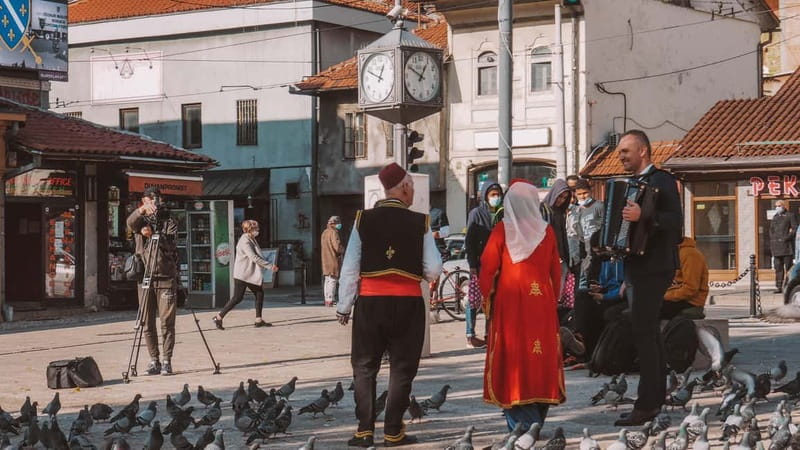
Reviewed · BOSNIAN FOOD & COFFEE TASTINGS
Sarajevo: City Tour with Bosnian coffee ritual ☕️
Sarajevo tastes like time travel. I love the Bosnian coffee ritual and how the guide stitches together centuries of Sarajevo, from Slavs through Austro-Hungary and Yugoslavia. I also love the small group vibe, so questions feel normal. One possible drawback: at 210 minutes, you move from stop to stop and you do not get long sit-down breaks.
This tour is built around real places you can point to, from the Sacred Heart Cathedral starting point to the Latin Bridge finish route. You get guided time at major landmarks, plus hands-on culture at a coppersmith workshop and practical food tasting along the way.
If you enjoy a city tour that mixes storytelling with food and craft, this one has a clear theme. Just know it is not a slow wander through one neighborhood. It is a structured route that aims to get you oriented fast, then leave you free to explore on your own after.
In This Review
- Key things to notice before you book
- The Sarajevo angle: coffee, craft, and a centuries-long map
- Price and timing: is $38 worth 210 minutes?
- Starting at Sacred Heart Cathedral, then into Sarajevo’s layered identities
- Mosque visit and the coffee ritual that turns a tour into a social experience
- Baščaršija and Kazandžiluk: old bazaar energy, craft, and market tastes
- Copper crafters in the workshop: the point where the tour becomes hands-on
- City Hall, Latin Bridge, and the Yugoslavia thread
- City Market Hall, Eternal Flame, and the Cathedral closeout
- Food and coffee: what you should actually expect to taste
- Who this tour fits best (and who should skip it)
- Practical tips before you go
- Should you book Sarajevo: City Tour with Bosnian coffee ritual?
- FAQ
- Where does the Sarajevo tour start and end?
- What is the duration of the experience?
- How much does the tour cost?
- How big is the group?
- What languages is the live guide available in?
- What is included in the coffee experience?
- What food and craft activities are included?
Key things to notice before you book
- Bosnian coffee ritual, plus how locals describe it: You taste strong coffee and learn about the three kinds of coffee you drink at home.
- Small group max 8 people: Less waiting, more interaction, and fewer people for the guide to juggle.
- Copper craft with a workshop visit: You see traditional coppersmith techniques in person, not just photos.
- Food tasting that matches the city: Baklava, cured meats, and cheeses show up at traditional stops.
- Jerusalem of Europe framing: The guide explains why Sarajevo earns that nickname and what it means on the ground.
- A landmark-heavy route: Mosque, city buildings, market halls, Latin Bridge, and other iconic sites all fit into 3.5 hours.
A few more City Tours in Sarajevo
- ROSES OF SARAJEVO (Official WAR + CITY tour)- Story of a Survivor
★ 5.0 · 770 reviews - Sarajevo: Guided City Highlights Tour with Sarajevo Tunnel
★ 4.8 · 79 reviews - Sarajevo: Sarajevo City Market, Old Town Food Tasting Tour
★ 4.9 · 69 reviews - Sarajevo: Nighttime City Highlights Walking Tour
★ 4.9 · 52 reviews
The Sarajevo angle: coffee, craft, and a centuries-long map
What makes this Sarajevo experience different from a standard “walk and look” city tour is the thread that ties everything together. Coffee is not treated like a random snack. It is introduced as a social ritual, something that is part of daily life and conversation. That matters because it gives you a lens for the rest of the city. When you later stand near major landmarks, you are not only thinking architecture or politics. You are thinking habits, hospitality, and how people actually meet and talk.
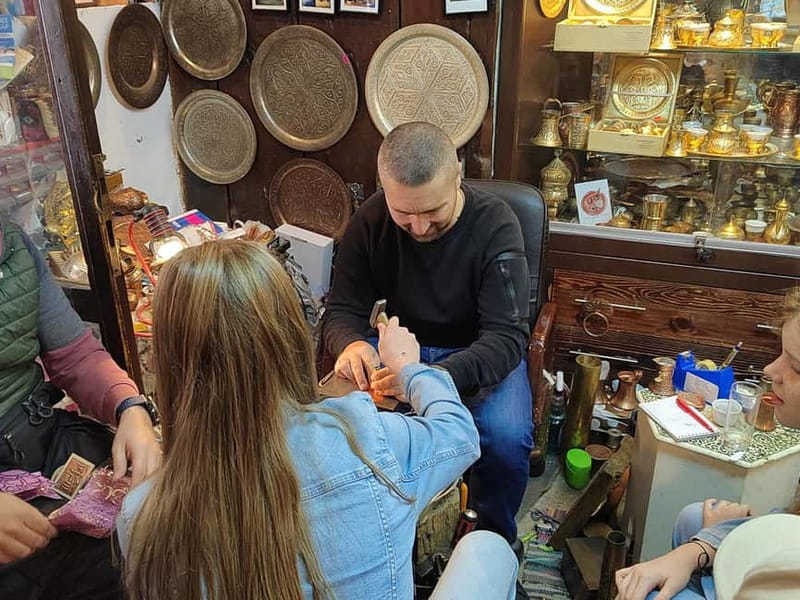
Then there is the second thread: craft. You spend real time at a coppersmith workshop, watching traditional copper work and learning techniques that were passed down through generations. That sort of stop can turn a city tour from scenery into a lived-in feeling. Even if you do not care about metalwork, it forces you to slow your brain down for a moment and pay attention.
Finally, the tour is structured as a time travel route. You move from the age of Bosnian kingdom and the Slavs, through the Ottoman period and Austro-Hungary, then forward through the World Wars and the Yugoslavia era. The guide keeps the stories moving so it feels like one city with layers, not a pile of unrelated facts.
Price and timing: is $38 worth 210 minutes?
At $38 per person for 210 minutes, the value is really about what is included. You are not paying only for a guide and some landmarks. The tour includes:
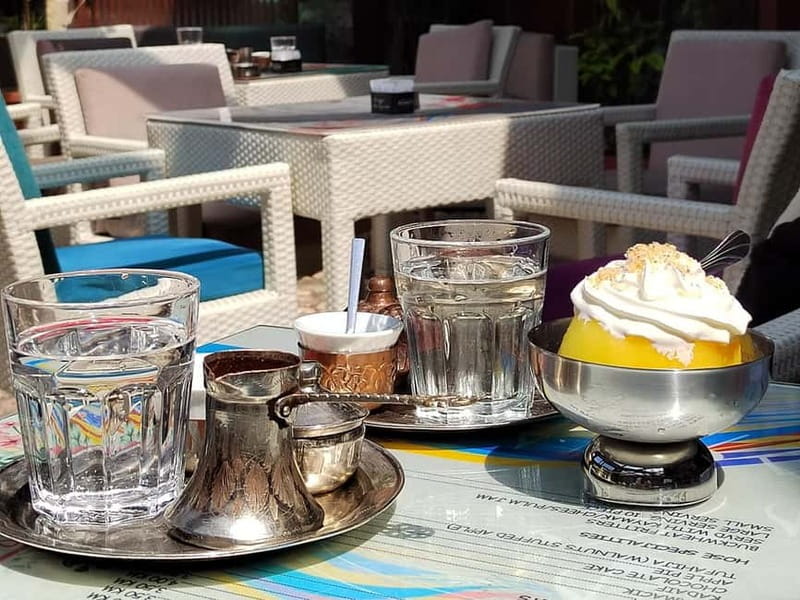
- a cup of Bosnian coffee served traditionally
- baklava and another Bosnian dessert sample
- tastings of local cheeses and cured meats at a local market
- a visit to a local coppersmith workshop
- multiple guided landmark stops across central Sarajevo
For me, the best “value check” is this: if you had to do all of those pieces yourself, you would likely spend time coordinating, lining up entry tickets, and finding places that match the theme. Here, the route is already built, and the food and coffee are part of the schedule rather than an afterthought.
The main tradeoff is tempo. Three and a half hours sounds long, but it is not a full half day in city-tour time. You will likely be on your feet and moving between stops. If you like long photo breaks or long museum-style pauses, you might feel slightly rushed. If you like getting your bearings quickly, this timing fits well.
Starting at Sacred Heart Cathedral, then into Sarajevo’s layered identities
Your day begins at the Sacred Heart Cathedral, then the route immediately sets a tone: Sarajevo is a meeting point, not a single story.
One of the first big stops is the Museum of the Jews of Bosnia and Herzegovina, where you get a guided tour. This early placement is smart. It helps you understand that Sarajevo’s identity is not only about one empire or one political moment. It is also about communities that have lived here and shaped the city.
Right after, you visit the Sarajevo Meeting of Cultures. That stop reinforces the idea that Sarajevo sits at crossroads. The tour framing is practical too. You are shown places, then given context so the nickname Jerusalem of Europe does not stay abstract.
From a visitor perspective, the benefit of this opening sequence is clarity. After these first stops, you tend to look at the rest of the city differently. You start noticing connections between different cultural spaces rather than treating each landmark as a standalone postcard.
A few more Coffee & Food Tastings in Sarajevo

Mosque visit and the coffee ritual that turns a tour into a social experience
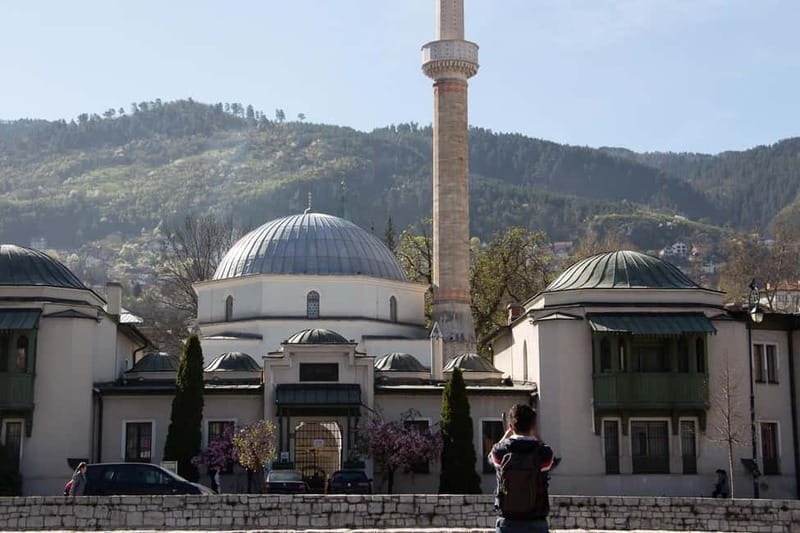
A major landmark on the route is the Gazi Husrev-beg Mosque, where you get a guided tour. Even if you are not a history fanatic, a guided stop helps you understand what you are looking at and why it matters in the city’s everyday life.
Then the tour pivots to the core experience: coffee.
At the local café, you taste Bosnian coffee, prepared and served traditionally. The guide also teaches the Bosnian coffee ritual, with a focus on why it is considered the backbone of Bosnian society. You learn that Bosnian coffee is strong and sweet, and that it fits into daily life at different times of day.
You also learn about the three kinds of coffee you drink at home. The tour does not list them in the details you have here, so I would treat this as a hands-on cultural lesson rather than a “guess the menu” kind of activity. What you walk away with is practical. You will know how to order, how to talk about it, and how to understand the ritual meaning behind the cup.
If you like experiences that create a bridge between food and culture, you will appreciate how the coffee part is placed in the middle of the sightseeing. It keeps the story human.
Baščaršija and Kazandžiluk: old bazaar energy, craft, and market tastes
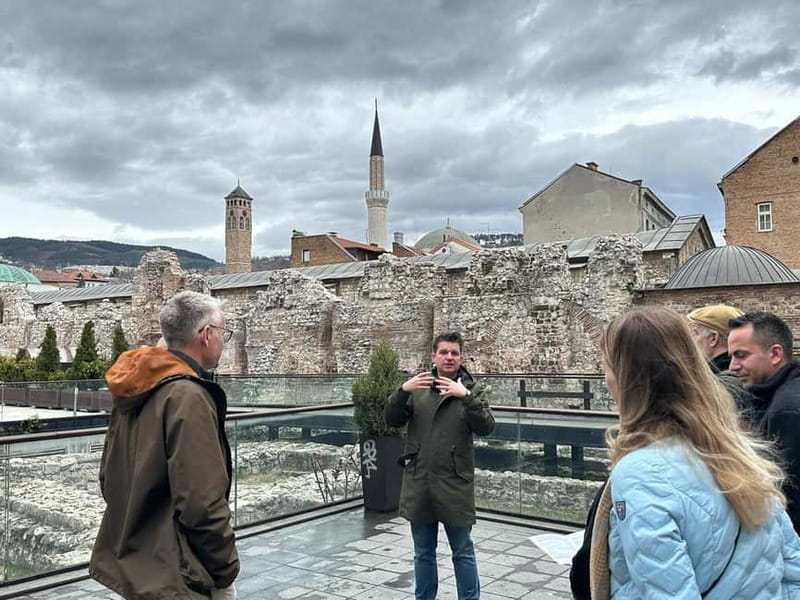
Next you move into Baščaršija, a guided tour stop that puts you into the old bazaar area where you can feel the city’s trading and craft culture. This is one of those places where you can spend more time than planned, so the guided timing matters. The guide helps you focus on what to notice without turning it into a lecture.
After that, you visit Kazandžiluk, described as an arts and crafts market. This is the kind of area where you can look at work, ask questions, and connect what you see later at the workshop with what is available in the market.
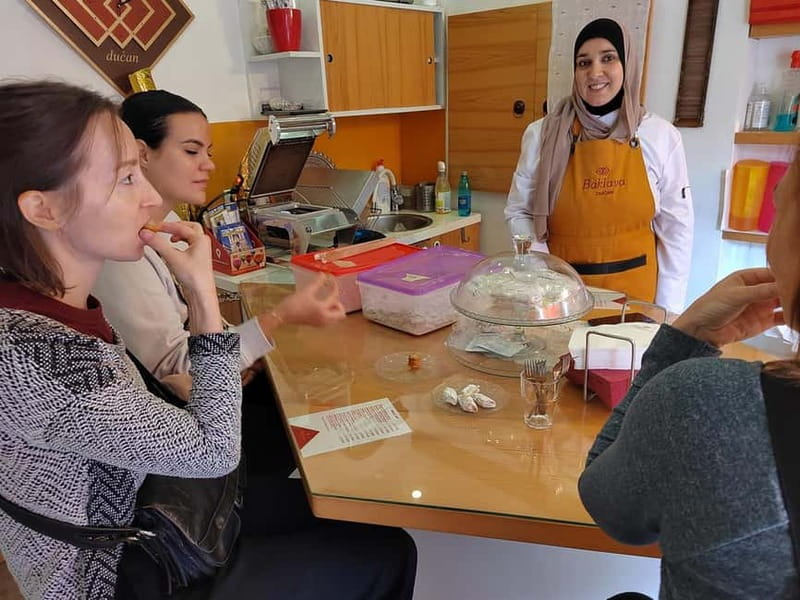
Food makes its way into this segment too. At a local bakery stop, you get food tasting. The tour includes baklava, plus a beloved Bosnian dessert. Then, at another point in the market areas, you sample local cheeses and cured meats.
What I like about this food structure is that it is not just random snacking. It matches what the city sells and what locals keep coming back for. Even if you are traveling with a light appetite, the tastings are usually enough to understand flavors and stop you from going “what was that place called again?”
One consideration: if you have dietary restrictions, the tour data here only says cheese, cured meats, baklava, and a dessert sample. It does not say alternatives. If you need vegetarian, vegan, or allergy-friendly options, you should message the provider before booking so you do not get stuck guessing.
Copper crafters in the workshop: the point where the tour becomes hands-on
One of the strongest included experiences is the visit to a local coppersmith workshop. This is where traditional artisanship becomes real, because you can see the master at work and learn techniques passed down through generations.
This is not just a photo stop. The tour is positioned as an intimate, interactive experience in a small group of max 8 people, which usually makes it easier for the guide to explain what you are seeing and for you to ask questions.
Why this matters for you: Sarajevo’s history can feel big and abstract when it is only told through dates and empires. A workshop does something different. It shows how skill survives time. Even if you only catch part of the explanation, the sight and sound of metalwork usually helps your brain remember the rest of the tour’s themes.
If you like crafts, design, or cultural traditions that live in everyday objects, this stop is a highlight. If you are only here for the famous monuments, it might be the moment that unexpectedly becomes your favorite.
City Hall, Latin Bridge, and the Yugoslavia thread
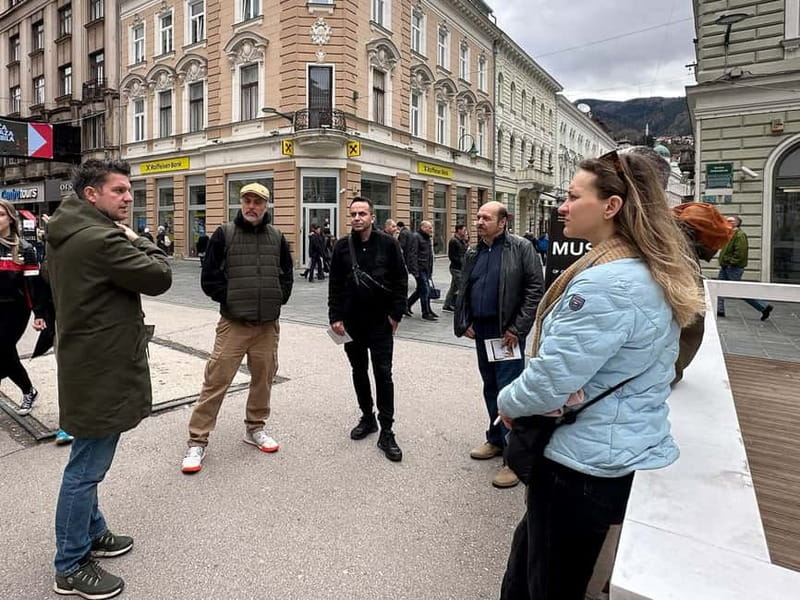
As you continue, you hit big civic and symbolic sites, including Sarajevo City Hall and the Latin Bridge, both guided.
The tour explicitly frames this section as part of the Sarajevo timeline, including the World Wars and the Yugoslavia era and the meeting with Tito. That means the stops are not just “look, architecture.” The guide ties them into the story of Sarajevo’s 20th-century role.
The Latin Bridge stop is particularly important because it tends to make history feel immediate. Even without getting extra details here, the location itself works like a trigger for the guide’s narrative. You can stand there and realize that events happening in this area shaped how the city is remembered.
The benefit for you is a better sense of orientation. When you later read or watch anything about the region, the places you saw on the route help anchor the story in geography. That is what turns a guided tour into a memory you can use.
City Market Hall, Eternal Flame, and the Cathedral closeout
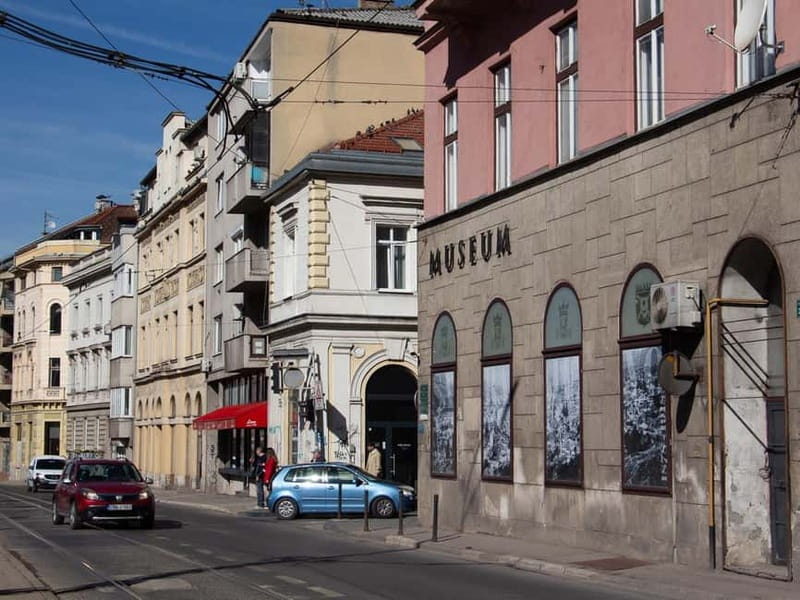
You also visit the City Market Hall, and the tour includes food tasting there as well as a guided visit. This keeps the theme consistent: markets are where culture shows up in practical ways, from what people sell to what people eat.
Then you see the Eternal Flame, guided. This kind of stop is less about shopping and more about symbolism. In the tour flow, it supports the idea that Sarajevo’s identity is tied to its 20th-century experiences and commemorations.
Finally, the route includes the Cathedral Church of the Nativity of the Theotokos, guided, and then you return to Sacred Heart Cathedral.
I like how the closing sequence works. It moves from markets and public spaces into places that feel ceremonial, then returns you back to the starting point. That makes it easier to plan your own dinner afterwards, because you finish in a known area rather than disappearing into the city.
Food and coffee: what you should actually expect to taste
By the time you finish, the food theme is no longer a side dish. It is part of the way the tour teaches Sarajevo.
Here is what the tour includes in tasting form:
- a cup of Bosnian coffee, traditionally prepared and served
- baklava sampled at a traditional manufacturer
- a beloved Bosnian dessert sample
- local cheeses and cured meats at the local market
- food tasting at the local bakery and again at City Market Hall
This is enough variety to feel like you ate Sarajevo, without turning the tour into a full meal marathon. My practical advice: come with an appetite, but do not count on big portions. Think “tasting” not “dinner.”
Coffee is likely to be the moment you remember most clearly because it comes with a ritual lesson. If you have ever had coffee in Sarajevo before, this might still teach you something new about how locals frame the experience at home.
Who this tour fits best (and who should skip it)
This tour is a great match if you:
- want a structured route through major Sarajevo landmarks in about 3.5 hours
- love food and coffee culture, not just sightseeing
- enjoy crafts and want to see coppersmith work up close
- prefer a small group experience with max 8 people, so your questions do not get lost
It may be less ideal if you:
- want lots of free time to wander without a set schedule
- need very specific dietary accommodations and cannot confirm alternatives
- dislike tours that mix culture with a time-sequence story, because the guide is clearly focused on connecting eras
If you are the kind of traveler who likes to understand a city’s “why” while still getting plenty of “see,” this one fits well.
Practical tips before you go
- Plan to stay present for the story. The tour’s power is in how the guide links landmarks across time, not in memorizing dates.
- Bring a readiness for food tastings. You will taste multiple items, including cheese, cured meats, baklava, and a dessert sample.
- Use the coffee lesson to guide your expectations for later. After the ritual portion, you will know what to look for when you see Bosnian coffee served.
- If you want photos, aim for quick shots at each stop. The schedule is tight enough that long sessions can cut into the guided flow.
Should you book Sarajevo: City Tour with Bosnian coffee ritual?
Book it if you want a compact, themed introduction to Sarajevo that combines landmarks, a strong cultural focus on coffee, and a real craft workshop visit. At $38 and 210 minutes with max 8 people, the included coffee and tastings make it feel like more than a basic walking tour.
Skip it if you want a slow, self-paced day with minimal structure or if your dietary needs are complex and you cannot confirm suitable options. The route is designed to move, so you need to be comfortable with a guided, stop-by-stop pace.
If that sounds like your style, you will probably come away with two lasting takeaways: a clearer map of Sarajevo’s layered past, and a genuine sense of what the Bosnian coffee ritual means in daily life.
FAQ
Where does the Sarajevo tour start and end?
The tour starts at Sacred Heart Cathedral and returns to Sacred Heart Cathedral at the end.
What is the duration of the experience?
The tour lasts 210 minutes.
How much does the tour cost?
The price is $38 per person.
How big is the group?
The group is limited to a small group of max 8 participants.
What languages is the live guide available in?
The live tour guide is available in German, English, Bosnian, Croatian, and Serbian.
What is included in the coffee experience?
You will taste a cup of Bosnian coffee prepared and served traditionally, and you will learn about the Bosnian coffee ritual and the three kinds of coffee you drink at home.
What food and craft activities are included?
You can expect baklava, samples of local cheeses and cured meats at the local market, and a visit to a local coppersmith workshop where you can see the master at work.
Most recently added near Sarajevo
- Sarajevo : Private Walking Tour With A Guide (Private Tour)★ 5.0 · 1 review
- Sarajevo: Islamic Tour | 500+ years of Glorious Heritage★ 5.0 · 1 review
- Sarajevo: Srebrenica – A Journey of Remembrance★ 5.0 · 1 review
- Bunker: Tito’s Secret & Boracko Lake Tour from Sarajevo★ 5.0 · 1 review
- Svrzo House Entrance Ticket★ 5.0 · 1 review
- Transfer tour Sarajevo-Dubrovnik★ 5.0 · 1 review
- Thrilling Rafting Adventure on the Neretva River with Lunch★ 5.0 · 1 review
- Private transfer (FROM-TO) Sarajevo – Dubrovnik★ 5.0 · 1 review
Bosnian Food & Coffee Tastings, compared.
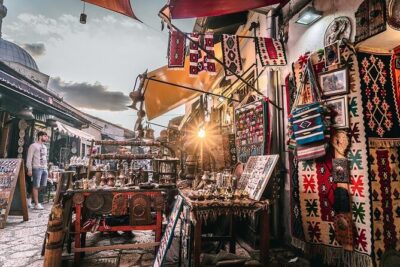
Private Walking Tour, Food Tasting and Bosnian Coffee in Sarajevo
Read our review →
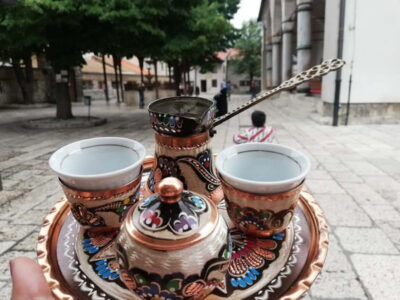
Sarajevo City Market, Old Town Food Tasting Tour
Read our review →
Traditional Bosnian Cooking Class in Mostar with Lunch and Drinks
Read our review →
Sarajevo Old Town: Bosnian Coffee, Baklava & Panoramic Views
Read our review →Browse the lists this tour appears in