
Reviewed · JAJCE, TRAVNIK & PLIVA LAKES
Bosnian Kingdom Capitals: Travnik & Jajce Tour from Sarajevo
Bosnia can feel like it takes forever to reach the good bits, but this one-day route is efficient. You get Travnik and Jajce in a single push, with Ottoman-era sights, kingdom-capital viewpoints, and time outdoors around Pliva. I love how much faith and empire you see in one day, from mosques and turbes to catacombs and Roman traces. I also like the pace that mixes short walks with museum time, so you do not just sit on a bus all day. One consideration: it is a long day, about 10 to 12 hours, and a real chunk of that time is driving.
The tour is run from Sarajevo, with pickup offered at Sarajevo City Hall, and it includes bottled water plus small snacks. That matters because lunch and dinner are not included, so you’ll want snacks to bridge the gaps. You’ll also get admission at most stops, and the vehicle has air-conditioning and WiFi, which is a nice comfort upgrade on a full-day itinerary.
In This Review
- Quick hits on the Travnik and Jajce circuit
- Price and what $150.10 really buys you from Sarajevo
- Getting picked up and staying comfortable for a 10 to 12 hour day
- Travnik begins at Plava Voda, then Ottoman Old Town sights
- Šarena Džamija, turbes, and Ottoman-era details you can actually see
- Museums in Travnik: Ivo Andric and how the town remembers itself
- St. John the Baptist church, plus the multi-faith mix that feels real
- Jajce begins underground at the Catacomb, then climbs toward the fortress
- AVNOJ Museum and the Mithra Temple: WWII and Roman layers in one town
- Pliva Waterfall and Mlincici watermills: nature time at the right moment
- Dinner break in Jajce and what to plan for lunch and meals
- The drive back to Sarajevo, and why the itinerary feels efficient
- What stood out most from the experience
- Who should book this Bosnia tour, and who should skip it
- Should you book Balkland Bosnian Kingdom Capitals?
- FAQ
- How long is the Bosnian Kingdom Capitals tour from Sarajevo?
- Where do I meet the tour, and where does it end?
- Is pickup offered?
- What is included in the price?
- What is not included?
- Are tickets for sites included?
Quick hits on the Travnik and Jajce circuit
- Two capital towns in one day, Travnik then Jajce, both tied to the Bosnian Kingdom
- Ottoman architecture stops, including Šarena Džamija and multiple Ottoman-style sites in Travnik
- Jajce views and forts, including the fortress area tied to the coronation church
- WWII-era context at the AVNOJ Museum, then Roman-era time at the Mithra Temple
- Pliva nature time, Pliva Waterfall and the watermills at Mlincici
- Comfort items onboard, air-conditioned vehicle, WiFi, bottled water, and snack breaks
More of Jajce, Travnik and the Pliva lakes:
- From Sarajevo: Travnik, Jajce, Pliva Lakes & Watermills Trip
★ 4.9 · 519 reviews - From Sarajevo: Jajce, Travnik, Pliva Lake, & Watermills Tour
★ 4.8 · 317 reviews - Jajce, Travnik and Pliva watermills – Day Tour from Sarajevo
★ 5.0 · 295 reviews - From Sarajevo: Travnik, Jajce, Pliva Lakes & Watermills Tour
★ 5.0 · 213 reviews
Price and what $150.10 really buys you from Sarajevo
At about $150.10 per person, this tour is not a bargain-basement option, but it is also not priced like a luxury private driver plus museum tickets. The value comes from three things you can feel day-of: transport between multiple towns, mostly pre-included admissions, and a guide who keeps the day from turning into a random collection of stops.
You are paying for convenience as much as sights. Between Travnik and Jajce you cover a lot of ground, and the schedule keeps you moving without trying to cram everything into 60 minutes per location. Also, the tour includes bottled water and snacks, plus all fees and taxes, so you are not constantly paying again at each venue.
The trade-off is that you are still doing a 10 to 12 hour day. If you hate long days or you expect plenty of free time to wander on your own, this may feel structured. If you are okay with a guided tour that prioritizes key highlights, it is a fair price for what you’re actually getting.
Getting picked up and staying comfortable for a 10 to 12 hour day
The meeting point is Sarajevo City Hall, Brodac 1, and the activity ends back at the same place. Pickup is offered, and that helps if you do not want to arrange your own transport to the start.
You will ride in an air-conditioned vehicle with WiFi onboard. That sounds small, but on a long central Bosnia day it helps you reset your phone battery, check directions, and keep the ride less annoying. You will also get bottled water and a snack like a chocolate bar or chips. Since lunch and dinner are not included, those little extras help you avoid the low-energy spiral that can hit mid-afternoon.
The itinerary is built around short visits at each stop, plus travel time. In practice, that means you should plan to stand, walk a bit on uneven stone or stairs at fortress-like locations, and keep your expectation realistic: this is not a slow village day. It is a highlight day with planned entry points.
Travnik begins at Plava Voda, then Ottoman Old Town sights
Travnik is where you first see the Ottoman layer take over the streets. The day starts with Plava Voda, described as a national monument area. You are not just looking at one landmark. This stop includes the Derventa cemetery, the Lutvina Kahva café, and the monumental tomb of mufti Mehmed Efendi and his wife Ajiša.
Why this is worth it: it gives you a sense of how Travnik’s religious and cultural life is tied to specific people and specific places, not just general architecture. Admission is free here, and the visit is short, around 20 minutes, so it works well as an opener.
Next comes the Tvrdava Stari grad, the medieval fortress known as Old Town. You’ll climb up to a hilltop setting and explore preserved walls, towers, and winding lanes. The practical bonus is the views. The plan also includes time to take in the panoramic look over Travnik, which is where the fortress location makes sense in your head.
Potential drawback: fortress time can mean uneven ground and steps. If your legs are not great, plan for a slower pace and bring comfortable shoes.
Other Sarajevo trips worth comparing
- Fall of Yugoslavia, Sarajevo War Tour with Tunnel of Hope Museum and Frontlines
★ 5.0 · 1,314 reviews
Šarena Džamija, turbes, and Ottoman-era details you can actually see
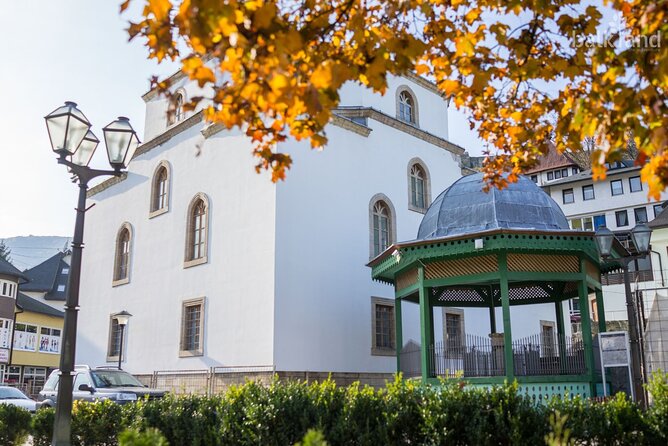
After Old Town, you hit the religious and cultural markers that define Travnik’s Ottoman-era identity.
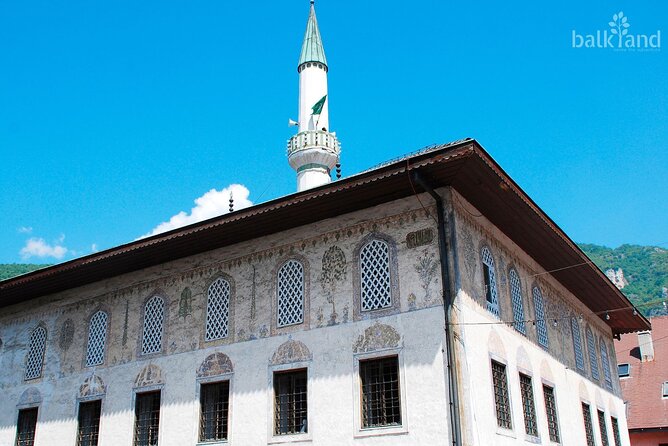
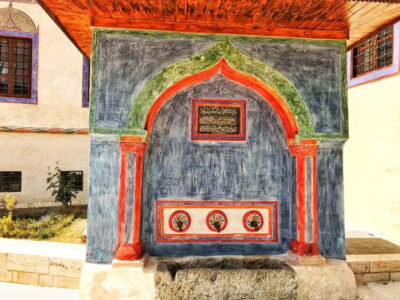
The Šarena Džamija is next, built in the 16th century during Ottoman rule. The focus here is architecture and ornamentation, including intricate details that make it more than a quick exterior photo. The stop is about 20 minutes with admission included, so you’ll have enough time to look carefully without feeling rushed.
Then you’ll visit Turbe, the Ottoman-style mausoleum of a prominent vizier. This is one of those stops where the architecture and symbolism matter. You get a crafted structure, not just a marker, and it reinforces the Ottoman influence in a very physical way.
You’ll also see the Hadzi Ali-Begova dzamija, a historic Ottoman-style mosque. The visit is about 10 minutes with admission free. Mosque visits can vary depending on whether interior access is open, but even from the outside this is a useful stop because it shows how different Ottoman sites within the same town have distinct styles.
Museums in Travnik: Ivo Andric and how the town remembers itself
Travnik is not only about Ottoman buildings and views. It also has a strong literary and local-history thread.
One of the highlights is the Museum Birth House of Nobel Prize winner Ivo Andrić. His birthplace in the Zenjak neighborhood was reconstructed and opened as a memorial museum in 1974. The stop is short, about 15 minutes, but it is packed with a permanent exhibition about his life and literary works. If you have even a mild interest in Balkan literature, this is a smart way to connect a world-famous name to a specific hometown.
Next is the Zavičajni muzej Travnik, a local home museum established in 1950. What I like about this stop is the story of the building itself. The museum started using different buildings for exhibits, including an Austro-Hungarian prison and other historic structures. Since 1972 it has been housed in a building constructed in 1928 for medical and health purposes, funded by the Rockefeller Foundation, and the permanent exhibition opened for visitors in 1975.
This makes the museum stop feel grounded in place. You are not just reading panels, you are walking through a building with its own history. The visit is about 10 minutes, so treat it like a taste, not a deep research trip.
St. John the Baptist church, plus the multi-faith mix that feels real
One reason Travnik works so well on this route is that it does not feel single-note. You get Ottoman Islamic sites, then a Catholic landmark.
The Church of St. John the Baptist was built in the mid-19th century. It is a Catholic church with interior decorations and religious artwork and a sacred altar. The time is around 10 minutes with admission included.
Why it matters: this is one of those stops that helps you understand Bosnia as a country of overlapping communities. You get a more complete picture of daily life and identity when different faith traditions are visibly present in the same town.
Jajce begins underground at the Catacomb, then climbs toward the fortress
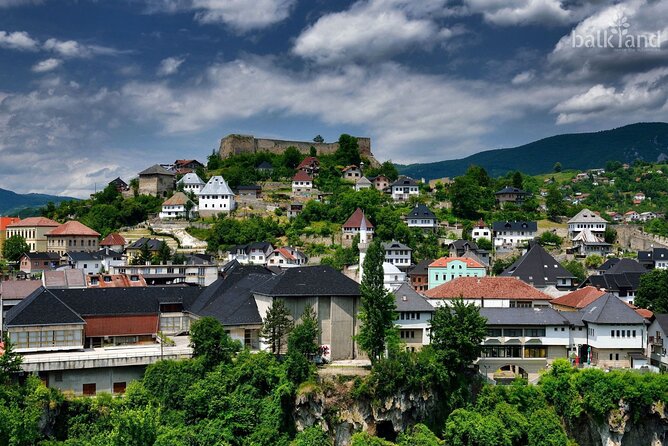
Once you reach Jajce, the tone shifts toward medieval kingdom capital energy plus stronger layers of later history.
The Catacomb of Jajce is an underground tunnel system built in the medieval period. You explore the tunnels and learn about the history, with about 30 minutes on the stop and admission included. Underground sites can be cool inside if you go in warm weather, and they also give you a break from sun and walking.
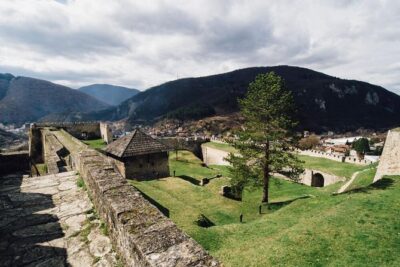
Then it is up to the Fortress of Jajce, tied directly to the Bosnian Kingdom. The description is clear: Jajce held great significance as the residence of the last two kings, and beneath the fortress area sits the Coronation Church of St. Mary, where the final Bosnian king was crowned. The fortress provides panoramic views of town and surroundings, and you get about 30 minutes.
Practical note: fortress areas usually mean stairs and uneven surfaces. Also, viewpoint time is only as good as the weather. If it’s cloudy or windy, you’ll still get the structure and the story, but the views may be less dramatic.
AVNOJ Museum and the Mithra Temple: WWII and Roman layers in one town
Jajce is one of those places where you can bounce between eras without changing towns.
The AVNOJ Museum covers the founding place of Yugoslavia in 1943, focusing on the second session of AVNOJ and the partisan resistance movement during World War II. You’ll see artifacts and original items from the AVNOJ session. Time is about 20 minutes with admission included.
This stop is valuable because it shows how Jajce links directly to 20th-century state-making, not just medieval romance. If you want to understand the Balkans after the Ottoman era, this is a good anchor.
Then you switch again, to ancient times: the Temple of Mithras. It is dedicated to Mithra and was constructed in the 3rd century AD by Roman soldiers. The tour description calls it one of the best-preserved Mithraic icons in the Balkans. Your time is about 20 minutes with admission included.
If you tend to like variety, this pairing works. WWII context plus Roman religious archaeology in the same day keeps you from getting too locked into one era. It also helps you see how often the same region gets reused by different peoples, for different reasons, across centuries.
Pliva Waterfall and Mlincici watermills: nature time at the right moment
After the indoor and historical stops, you get outdoor payoff.
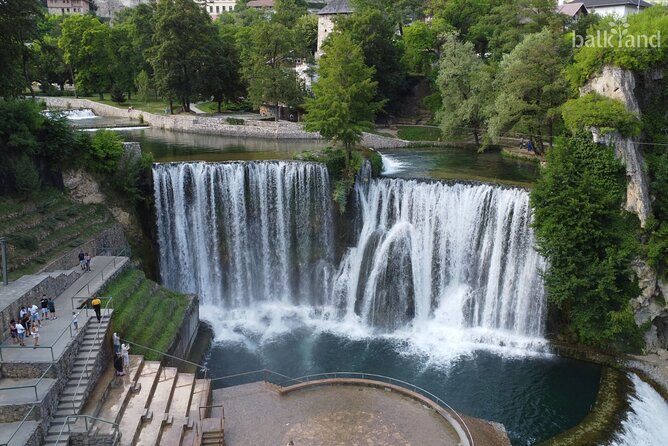
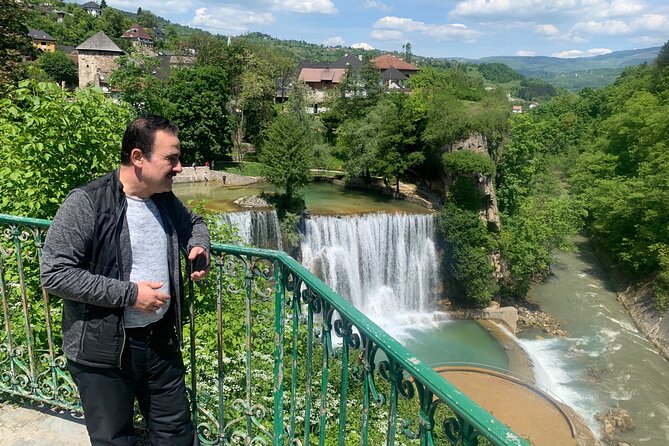
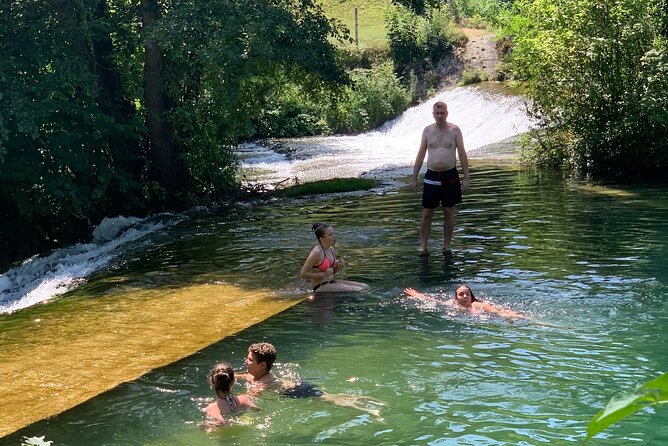
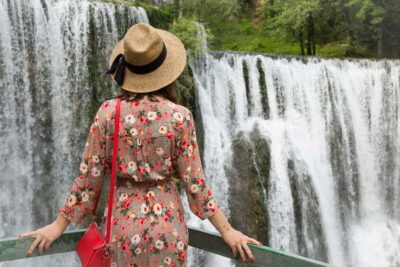
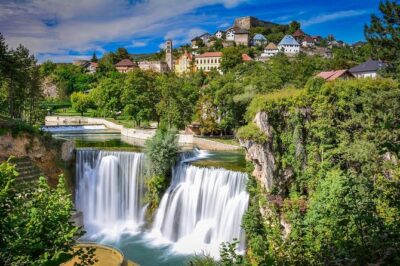
The Pliva Waterfall stop includes about 30 minutes with admission included. The description highlights crystal clear waters cascading over moss-covered rocks, plus natural pools where you can take a refreshing dip. Even if you do not swim, it is a strong photo and sensory stop because sound and color do a lot of the work.
A quick practical consideration: if the weather turns or the area is slippery, you might want to keep footwear grippy and avoid rushing into pools.
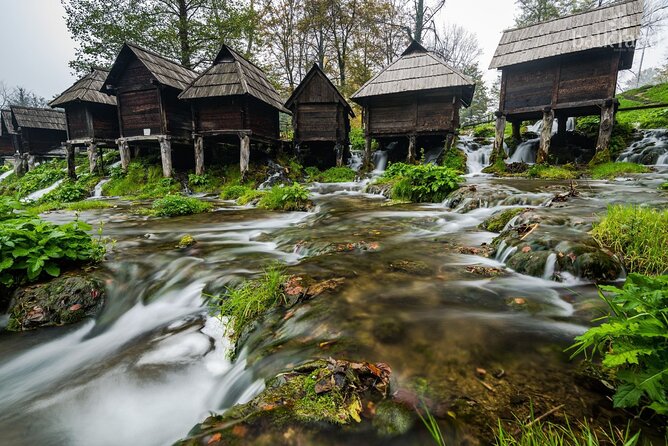
Then you move to Mlincici, the watermills in Jajce. These mills are powered by the Pliva River and have served as economic assets for centuries, including during the Ottoman period when they helped grind grains into flour. You get a sense of how the town used natural resources for daily survival and growth.
This is also where the day’s pacing feels smart. Your brain has been switching between centuries, then you get a slower, visual rhythm along the river and mill area.
Dinner break in Jajce and what to plan for lunch and meals
Your schedule includes a dinner break in Jajce, about 45 minutes to 1 hour. The important part is what is not included: lunch and dinner are not part of the package, and alcohol is not included either.
So you should plan to budget for at least one meal while you’re out there. The good news is that the tour gives you snacks and water earlier, and dinner break timing usually helps you avoid arriving starving after the Pliva and watermill time.
If you like to eat like a local, use the free meal window to try something Bosnian, but keep it simple with your time. Your tour day still has the drive back to Sarajevo after dinner.
The drive back to Sarajevo, and why the itinerary feels efficient
After dinner, you head back to Sarajevo with a scenic drive that takes about 2.5 hours. The total tour time is listed as 10 to 12 hours, and the schedule is explicit that remaining time is spent on travel.
Here is why I think that matters: you can treat this as a single-trip orientation to central Bosnia. You end the day knowing what Ottoman and medieval Bosnia look like in real places, not only in photos. You also learn how later periods like the Yugoslav era and Roman archaeology fit into the same geography.
One practical tip: if you tend to get car-sick, consider taking precautions before you board. This route is long and includes winding countryside roads.
What stood out most from the experience
The best part of this tour is that it can be both structured and personal. One review highlighted that even when the group situation changed, Muhmmnad organized the trip for a single guest and lined up well-educated local guides in both Travnik and Jajce. That detail matters because it suggests the tour is not just a cookie-cutter checklist.
What you’ll likely feel day-of is a story that connects each stop to the next. You go from Ottoman monuments in Travnik, to kingdom-capital fortifications in Jajce, to 20th-century political memory, and then to Roman-era religious archaeology. It is a lot of time periods, but it is arranged so you are not wandering without purpose.
I also like that the tour mixes types of stops. You get architecture, museums, a subterranean tunnel system, and real outdoor scenery near the Pliva River. That balance helps your brain stay interested even on a long day.
Who should book this Bosnia tour, and who should skip it
This tour suits you if:
- You want a one-day orientation to Travnik and Jajce from Sarajevo
- You like Ottoman architecture, plus medieval and fortress views
- You enjoy history across time, from 3rd-century Roman traces to WWII-era museum content
- You’re comfortable with a long day and short stop times
You might skip it if:
- You want slow travel with long free time in each town
- You have mobility limits that make stair-heavy fortress areas difficult
- You prefer only nature or only museums, because this day is deliberately mixed
Should you book Balkland Bosnian Kingdom Capitals?
If your goal is to cover Travnik and Jajce efficiently from Sarajevo and leave with a strong sense of Bosnia’s layered story, this is an easy yes. The included transport, admissions at key sites, and onboard comfort make the day feel manageable, even though it is long.
I would book it if you like variety and you want your time to count. I’d think twice if you hate structured itineraries or you need lots of personal downtime. But for most people who want a highlight-heavy day that still feels tied to real places, this tour is a solid choice.
FAQ
How long is the Bosnian Kingdom Capitals tour from Sarajevo?
The tour runs about 10 to 12 hours total, with remaining time spent on travel between stops.
Where do I meet the tour, and where does it end?
You meet at Sarajevo City Hall, Brodac 1, and the tour ends back at the same meeting point.
Is pickup offered?
Yes, pickup is offered for this experience.
What is included in the price?
It includes bottled water, snacks (such as a chocolate bar or chips), all fees and taxes, an air-conditioned vehicle, and WiFi on board.
What is not included?
Lunch and dinner are not included, and alcoholic beverages are not included (18 years old and above is noted). Personal expenses and anything not listed in the itinerary are also not included.
Are tickets for sites included?
Many stops include admission tickets as part of the itinerary, while a couple are listed as free admissions.
Most recently added near Sarajevo
- Sarajevo : Private Walking Tour With A Guide (Private Tour)★ 5.0 · 1 review
- Sarajevo: Islamic Tour | 500+ years of Glorious Heritage★ 5.0 · 1 review
- Sarajevo: Srebrenica – A Journey of Remembrance★ 5.0 · 1 review
- Transfer tour Sarajevo-Dubrovnik★ 5.0 · 1 review
- Bunker: Tito’s Secret & Boracko Lake Tour from Sarajevo★ 5.0 · 1 review
- Svrzo House Entrance Ticket★ 5.0 · 1 review
- Thrilling Rafting Adventure on the Neretva River with Lunch★ 5.0 · 1 review
- Private transfer (FROM-TO) Sarajevo – Dubrovnik★ 5.0 · 1 review
Jajce, Travnik & Pliva Lakes, compared.
Jajce, Travnik and Pliva watermills – Day Tour from Sarajevo
Read our review →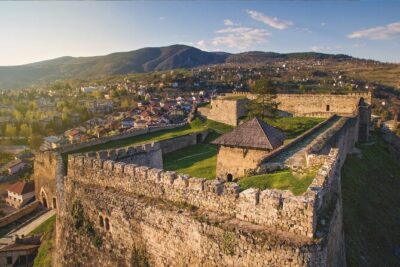
Travnik, Jajce & Pliva Lakes Day Tour From Sarajevo (fees Incl.)
Read our review →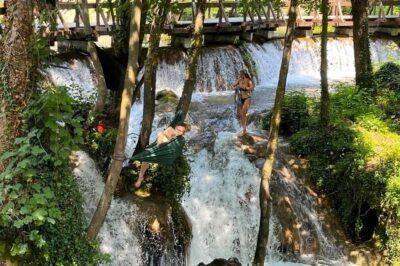
Browse the lists this tour appears in