
Reviewed · MOSTAR TOURS
The Death of Yugoslavia Tour in Mostar
Cold War ghosts live in Mostar. This 2.5-hour Death of Yugoslavia tour strings together Tito, the breakup of Yugoslavia, and what Bosnia faces now, using real places tied to each era.
I especially like the way the tour is built as four clear chapters, each with about 30 minutes on site. I also love the extra touch of music presentation, which helps the stories feel tied to the decades, not just facts on a page.
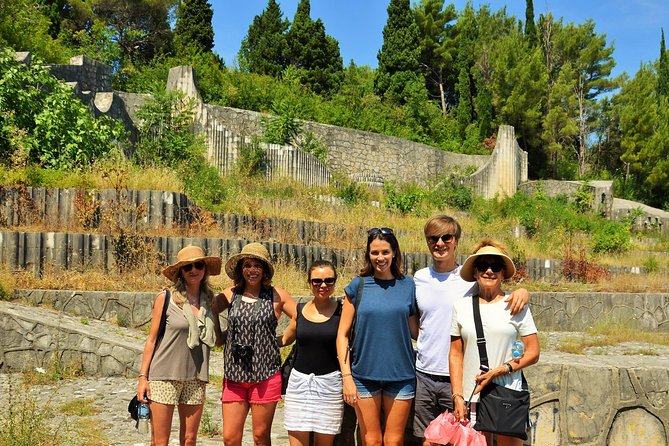
One thing to consider: several stops are abandoned, decaying locations, so this is for history minds, not for postcard photos.
In This Review
- Key tour takeaways
- Entering the story at 5 pm in Mostar
- Meeting at iHouse Travel, then getting easy transport between stops
- Stop 1 at Gornje Gnojnice: Yugoslav paranoia and the Informbiro years
- Stop 2 at Rodoč: Tito’s tailored socialism, everyday life, and culture
- Stop 3 at Španski trg: the 1984 Olympics and why Yugoslavia unraveled
- Stop 4 at the Partisan Cemetery: Bosnia today and the EU question
- Why secret locations work better than you think
- The guides, the delivery style, and the music cue
- Price and logistics: what $47.17 actually covers
- Who this Mostar tour is perfect for, and who should skip it
- Final call: should you book the Death of Yugoslavia tour in Mostar?
- FAQ
- Where does the Death of Yugoslavia tour start?
- What time does the tour begin?
- How long is the tour?
- What does the tour cost?
- Is the tour offered in English?
- How big is the group?
- Is hotel pickup included?
- Are admission tickets included?
- Are food and drinks included?
- What is the cancellation policy?
Key tour takeaways
- Four Mostar sites linked to Yugoslavia’s Cold War to today
- Secret stops that keep the focus on the story, not on scanning maps
- Tito era to pop culture coverage, including brands, music, and cars in the 70s and 80s
- Yugoslav Wars explained with attention to how economic stress and nationalism escalated
- Music during the commentary, used to shift between time periods
- Small group size (max 16), English guided, with round-trip transport included
Other Mostar trips worth comparing
- Dubrovnik: Kravica Waterfalls, Mostar and Pocitelj Day Trip
★ 4.5 · 3,045 reviews - From Mostar: Blagaj, Počitelj & Kravice Waterfalls Day Tour
★ 5.0 · 1,310 reviews - Discover Herzegovina Day Tour from Mostar: Kravice Waterfalls, Blagaj, Počitelj
★ 5.0 · 742 reviews - From Mostar: Kravice Waterfalls, Blagaj, & Počitelj
★ 5.0 · 565 reviews
Entering the story at 5 pm in Mostar
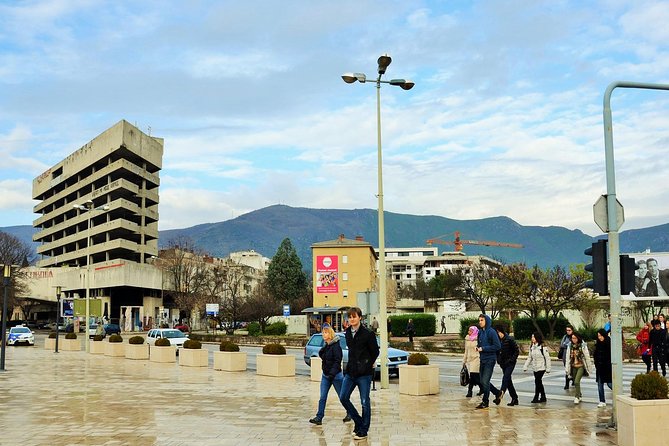
This tour runs in the early evening, starting at 5:00 pm in Mostar. You meet at iHouse Travel, Onešćukova 25, then the group moves through the city and out to several sites that most people would never stumble upon.
What makes this schedule work is the pacing. You get a drive first, then a focused stop, then another drive, and so on. By the end, you have a timeline in your head, instead of a handful of disconnected points.
Also, the tour is designed for small groups, capped at 16 people. That matters because the guide can actually explain without yelling, and you can ask questions when something lands hard, like the Cold War repression or the human cost of war.
Meeting at iHouse Travel, then getting easy transport between stops
Logistics are simple. You start at iHouse Travel, and the tour ends back at the same meeting point. Round-trip transport is part of the experience, which saves you from piecing together buses, taxis, and directions while you are trying to follow a story.
There are a couple practical notes to keep you comfortable. If you did not select hotel pickup, you will need to make your own way to the meeting point. And since food and drinks are not included, plan to eat beforehand or carry a snack if you know you get hungry in late afternoon.
The tour uses a mobile ticket, and it is offered in English. You do not need to study up on Yugoslav history before you go, but you will get more out of it if you come with a basic curiosity about Tito, communism, and the breakup of Yugoslavia.
Stop 1 at Gornje Gnojnice: Yugoslav paranoia and the Informbiro years
The first big chapter starts with a drive, then a stop at Gornje Gnojnice. This part is framed as the Yugoslav Paranoia, and it begins by grounding you in World War II and how Socialist Yugoslavia formed in the aftermath.
Then the tone darkens. You head into the Cold War era tied to the break with the Soviet Union, which helped trigger a period of fear and militarization. The tour focuses on the Informbiro period, when Yugoslavia’s relationship with the USSR shifted and internal trust became a major issue.
One thing I like about this approach is that it explains the why, not just the what. You are not only hearing names and dates. You are seeing how geopolitics shaped daily life, and how uncertainty can turn into harsh policy.
A possible drawback here is emotional intensity. If you are not ready for repression-era history, this stop can feel heavy early in the tour. Still, it sets the necessary groundwork for everything that comes next.
Another way to spend the day from here:
Stop 2 at Rodoč: Tito’s tailored socialism, everyday life, and culture
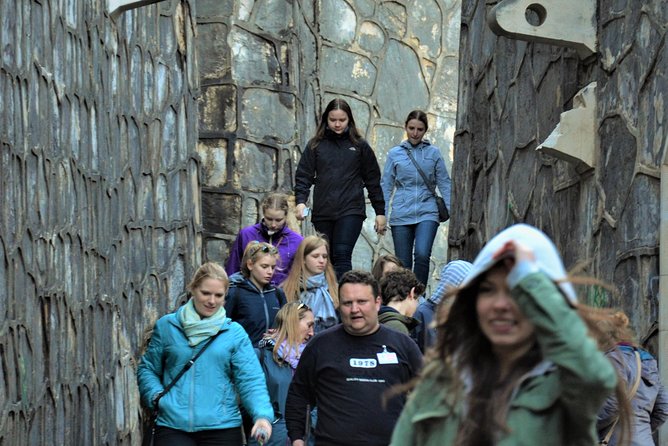
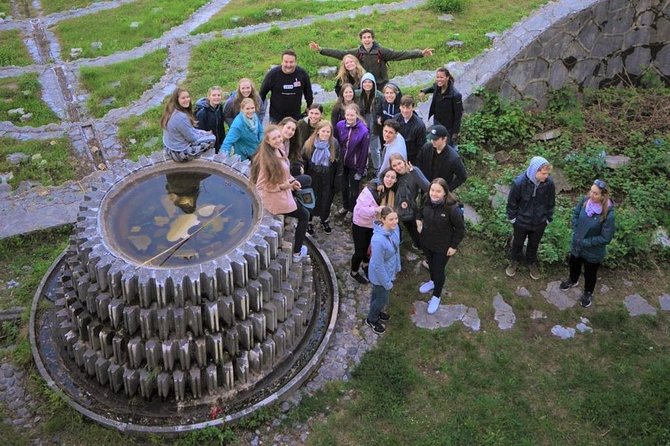
From there you drive to Rodoč, another stop tied to a second secret location for a more story-focused flow. This chapter is about People’s life, and it shifts from political pressure to what the system promised, and how it tried to deliver.
The guide connects Josip Broz Tito not just to ideology, but to personal life and political achievements. Then the tour moves into the practical side: youth work actions and the push for heavy industrialization in the 1950s and 1960s.
What I found useful, and what you will likely appreciate, is the jump from work and policy to leisure and identity. The tour covers Yugoslav popular culture through the 1970s and 1980s, including references to brands, music, automotive industry, and lifestyle.
This is where the music presentation can make sense of the timeline. Even if you only catch a few details, you start to feel how the same state that controlled politics also influenced the soundtracks and symbols people carried in everyday life.
One practical consideration: because this stop is tied to a story and not a landscaped attraction, wear and comfort matter. You are walking and standing as the guide explains. Keep your expectations realistic, and treat it like history in the real world, not a stage set.
Stop 3 at Španski trg: the 1984 Olympics and why Yugoslavia unraveled
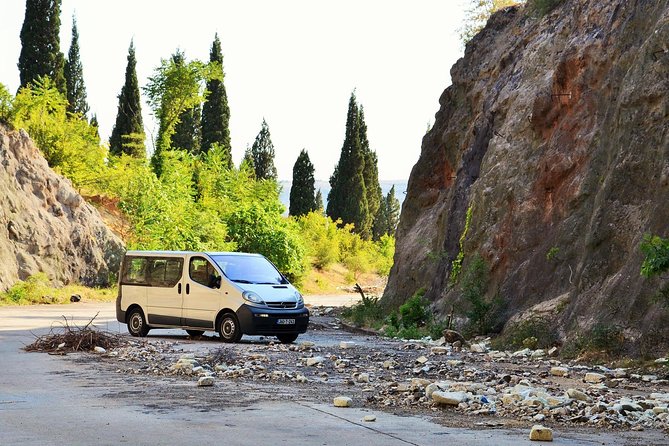
The third stop is at Španski trg, and the tour zooms in on the 1980s while traveling there. A key anchor point is the 1984 Sarajevo Winter Olympics, which the tour frames as a peak moment, a kind of golden era of Yugoslav socialism.
This part matters because it prevents a common misunderstanding. Instead of treating Yugoslavia only as the lead-in to tragedy, you see how people experienced the country when it felt stable or even proud. That context makes the later breakup feel less sudden and more understandable.
Then the tour connects the dots to collapse. It explains how economic depression and growing nationalisms pushed Yugoslavia toward fragmentation. You hear how the conflict ignited first in Slovenia and Croatia, then spread to Bosnia and Herzegovina, where the story reached its culmination.
Finally, the guide wraps this chapter with a broader look at the Yugoslav dream and what happened to it. You also get the consequences laid out clearly, including destruction and loss of human lives.
This is the part of the tour where you should lower your guard emotionally. Even with a skilled guide, war history is war history. If you can handle difficult topics, this stop is often what makes the tour stick in your memory.
Stop 4 at the Partisan Cemetery: Bosnia today and the EU question
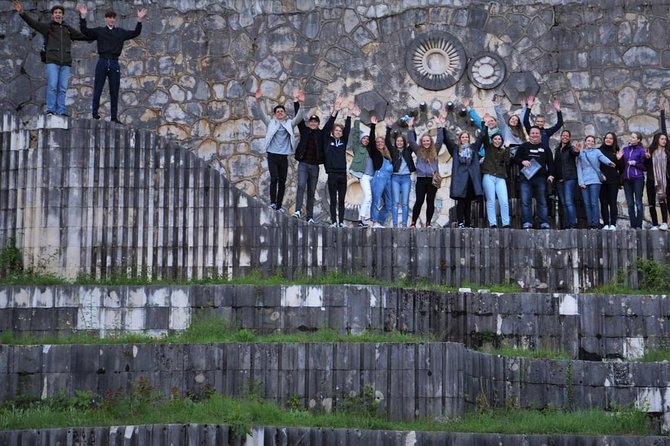
The last chapter shifts away from the past and looks at Bosnia and Herzegovina today. While driving to the final stop, the tour frames modern challenges in the early 21st century and asks you to think about Bosnia’s political structure and its problems.
Then you reach the Partisan Cemetery, the closing site. Here the tour brings the story into the present by placing Bosnia into a bigger question: possible European Union membership and what recovery might require, economically, culturally, and politically.
I like ending with this kind of perspective. It keeps the tour from becoming only a history lecture. Instead, you leave thinking about how people rebuild after systems collapse and after war damages society.
One more thing to know: cemeteries and memorial spaces tend to feel quieter and heavier by nature. Give yourself a minute to absorb what you are seeing before you start asking questions. A good guide will usually help you read the symbolism without turning it into a performance.
Why secret locations work better than you think
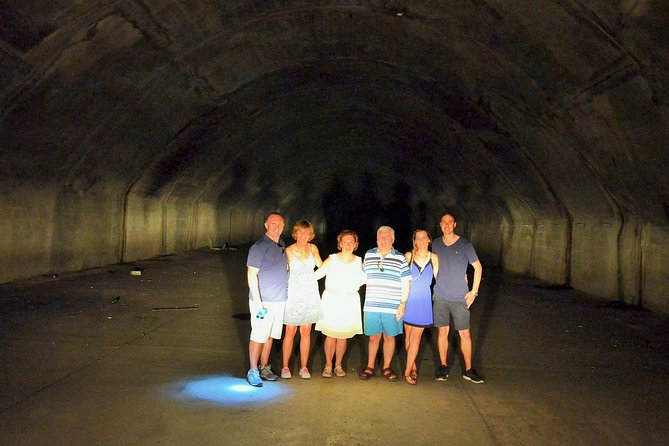
Two of the sites are described as secret or kept undisclosed until you arrive. That might sound like a marketing trick, but it serves a real purpose here.
When you do not know exactly what you are going to see, you pay attention to the story beats. You focus on what the guide is saying about the Cold War, Tito’s social experiments, and the Yugoslav Wars, instead of spending time trying to locate a landmark or compare photos.
It also helps you experience the tour as a single narrative, not a set of separate stops. For most people, that is where the value comes from. You leave with a timeline you can explain to someone later.
The only catch is planning your expectations. If you want famous, maintained sights, you may feel let down. But if you like meaningful places that carry weight, secret sites can be a big advantage.
The guides, the delivery style, and the music cue
The strongest part of this tour, based on how it is talked about, is the guide experience. Names that come up often include Marco, Marko, Miran, Dario, Marin, and Sebi. The common thread is storytelling and clarity, with a sense of humor that keeps the serious material from turning into a slog.
Just as important, the guide uses music to support the time period shifts. That turns decades into something you can almost feel. Instead of hearing Yugoslavia in one lump, you sense change by era: Cold War tension, socialist everyday ambition, and then the later breakdown.
If you are the kind of traveler who learns best by listening to a narrative, this tour fits you well. If you only want quick facts and minimal talking, you might find it too story-driven.
Price and logistics: what $47.17 actually covers
At $47.17 per person for about 2 hours 30 minutes, this tour is priced like a solid half-day experience. The key detail is what’s included.
Your price covers local taxes, a driver/guide, and all taxes, fees, and handling charges. It also includes the round-trip transport from Mostar. On top of that, the listed stops have admission ticket free, so you are not hit with additional entry costs during the tour.
Not included are the obvious basics: food and drinks. Also, hotel pickup and drop-off only apply if you select that option. So your actual convenience depends on how you plan to get to the meeting point.
If you book solo, you might see an extra cost sometimes due to a two-person minimum running requirement. It is worth checking when you confirm so there are no surprises.
If you want value in a sentence: you are paying for guided storytelling plus transport between meaningful but non-touristy sites, with no admissions added along the way.
Who this Mostar tour is perfect for, and who should skip it
This is a great match if you care about:
- Tito and Yugoslavia, not just as politics, but as daily life
- the Cold War and the ripple effects of the USSR breakup
- how the Yugoslav Wars started and spread, and what it did to communities
- modern Bosnia and how the EU question plays into recovery
It is also a good choice if you want something different from Mostar’s usual photo stops. The sites are described as real, abandoned, and decaying in places. That can be uncomfortable, but it is also honest.
You might want to skip if:
- you only want light topics and scenic stops
- you expect a polished museum style experience
- you are not interested in heavy history about war and repression
Final call: should you book the Death of Yugoslavia tour in Mostar?
Book it if you want a story you can actually repeat after your trip. You get a structured timeline, thoughtful guide delivery, and the added help of music to mark the eras. You also get transport and included admissions, so you spend your time on the ideas, not on logistics.
Skip it if you are coming only for pretty sights. Several stops are not meant to be comfortable, and the tour goes straight through Cold War fear and the human consequences of the Yugoslav Wars.
If you can handle difficult history with an open mind, this is one of the most memorable, least touristy things you can do in Mostar.
FAQ
Where does the Death of Yugoslavia tour start?
It starts at iHouse Travel, Onešćukova 25, Mostar 88000, Bosnia and Herzegovina.
What time does the tour begin?
The start time is 5:00 pm.
How long is the tour?
It lasts about 2 hours 30 minutes.
What does the tour cost?
The price is $47.17 per person.
Is the tour offered in English?
Yes, it is offered in English.
How big is the group?
The tour has a maximum of 16 travelers.
Is hotel pickup included?
Hotel pickup is included only if you select that option. Otherwise, the tour uses the iHouse Travel meeting point.
Are admission tickets included?
Yes, admission tickets are listed as free for the stops.
Are food and drinks included?
No, food and drinks are not included.
What is the cancellation policy?
You can cancel for a full refund up to 24 hours before the experience starts. If you cancel less than 24 hours in advance, the amount you paid will not be refunded.
Most recently added near Mostar
- Going North and visit Sarajevo in a Day Tour from Mostar★ 5.0 · 1 review
- The Ottoman Experience Tour in Mostar★ 5.0 · 1 review
- Authentic Antique Museum Home★ 5.0 · 1 review
- Mostar: Private Walking Tour with Local Guide★ 4.0 · 1 review
- Top Secret Tito’s Bunker in a day tour from Mostar★ 5.0 · 1 review
- City Tour: Mostar Medival Town★ 5.0 · 1 review
- Wine Tour & Tasting (Herzegovina)★ 5.0 · 1 review
- Mostar Sunset Walking Tour with Wine Tasting★ 5.0 · 1 review
Mostar Tours, compared.
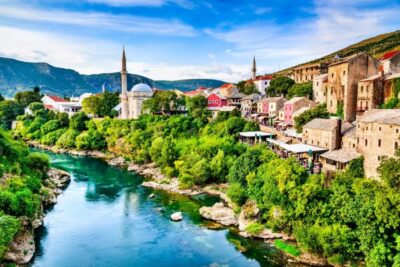
Kravica Waterfalls, Mostar and Pocitelj Day Trip
Read our review →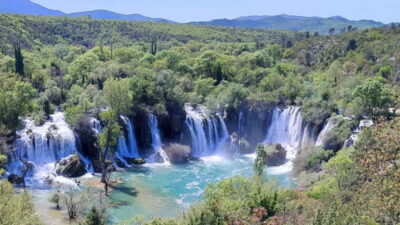
Blagaj, Počitelj & Kravice Waterfalls Day Tour
Read our review →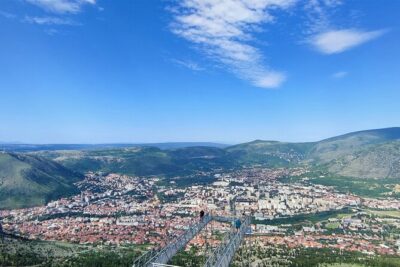
Discover Herzegovina Day Tour from Mostar: Kravice Waterfalls, Blagaj, Počitelj
Read our review →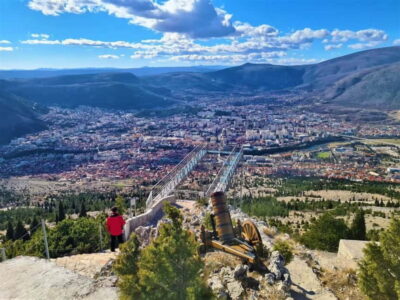
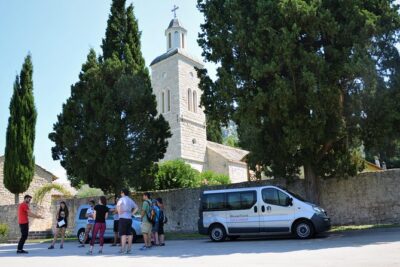
Herzegovina Day Tour from Mostar: Blagaj, Pocitej, Kravice falls (Join Us! :D)
Read our review →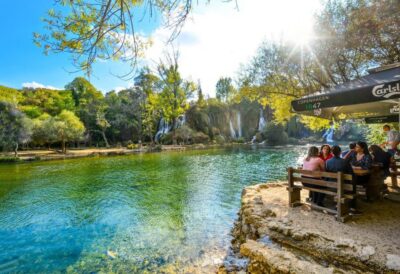
Mostar and Kravice Waterfalls Full-Day Tour from Split
Read our review →
Browse the lists this tour appears in