
Reviewed · CITY TOURS
Sarajevo City SIghtseeing / War Bike Tour
Sarajevo rolls by fast on two wheels. I love that this ride links the old town’s landmark stops with the Tunnel of Hope, and I love that you cover real distance by bike instead of doing another slow walking loop.
One thing to consider: the day moves at a steady pace and runs best in good weather, since most stops are quick hits and you’ll spend real time riding.
Key points at a glance
- Up to 10 people keeps it intimate and easier to hear your guide
- Helmet and bike included, so you start riding immediately at the 9:00 am start
- Tunnel of Hope museum time is included, not just a drive-by photo stop
- City Hall, bridges, mosques, and cathedrals in one route, showing Sarajevo’s mixed layers
- Vrelo Bosne spring park is a full reset with a full hour there
- Guides like Mustafa, Mirza, Said, Kamer, and Arna come up repeatedly for clear storytelling and a smooth flow
In This Review
- Why bike touring fits Sarajevo so well
- Price and value for a 6 to 7 hour guided route
- The meeting point, start time, and the pace you should expect
- Baščaršija area stops: Sebilj Brunnen and the coppersmith street
- What to keep in mind here
- Vijećnica and Inat Kuća: City Hall, damage, and stubborn survival
- Latin Bridge and Ottoman faith landmarks: the day’s turning point
- Why these two stops work together
- Sacred Heart Cathedral and Sarajevo Parliament: Sarajevo’s layered mix
- Vrelo Bosne: a full hour for air, water, and a breather
- Sarajevo War Tunnel: understanding the Tunnel of Hope
- Guides and group size: what makes the experience feel personal
- What I liked most, and what to watch for
- Who should book this bike tour, and who might skip it
- Should you book the Sarajevo City Sightseeing and War Bike Tour?
- FAQ
- How long is the Sarajevo City Sightseeing and War Bike Tour?
- What time does the tour start, and where is the meeting point?
- Is the tour offered in English?
- How big is the group?
- What’s included in the price?
- Do I need tickets for the War Tunnel or Vrelo Bosne?
- What if the weather is bad, or plans change?
Why bike touring fits Sarajevo so well
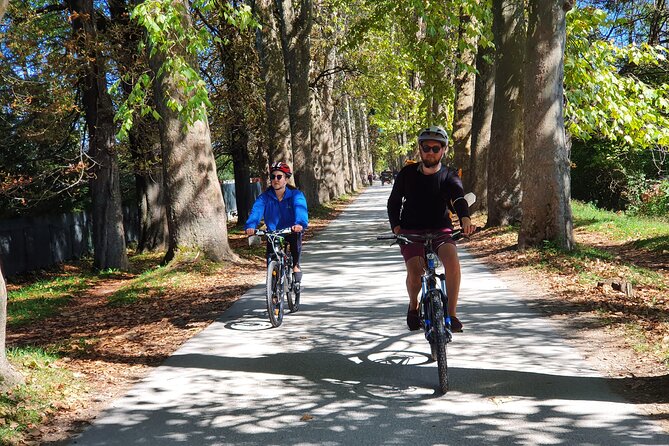
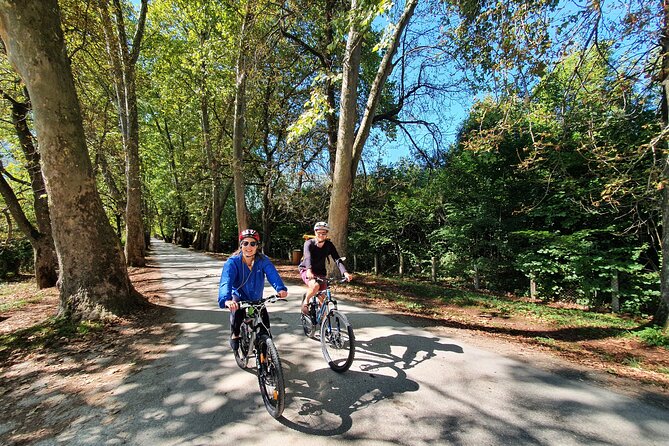
Sarajevo can feel spread out when you only have your feet and a vague map. This tour fixes that by using bicycles for the moving parts, then switching to short guided stops when you need context. It’s a smart mix: ride to connect the dots, then pause to understand what you’re looking at.
I also like the way the tour quietly prevents the usual “checklist tourism” problem. You’re not just racing from one sight to the next. The stops are chosen so the route tells a story: Ottoman-era Sarajevo, then the Austro-Hungarian and Austro-leaning landmarks, then the wartime reality at the Tunnel of Hope. You end the day with a clearer sense of why the city looks the way it does.
And yes, you get the practical perks too. You’re given a bicycle and helmet, and two admissions are included, so you’re not hunting tickets mid-day.
A few more City Tours in Sarajevo
- ROSES OF SARAJEVO (Official WAR + CITY tour)- Story of a Survivor
★ 5.0 · 770 reviews - Sarajevo: Guided City Highlights Tour with Sarajevo Tunnel
★ 4.8 · 79 reviews - Sarajevo: Sarajevo City Market, Old Town Food Tasting Tour
★ 4.9 · 69 reviews - Sarajevo: Nighttime City Highlights Walking Tour
★ 4.9 · 52 reviews
Price and value for a 6 to 7 hour guided route
The price is $138.34 per person for a 6 to 7 hour experience. That might sound steep until you break down what you’re actually paying for.
You’re paying for:
- A guided route that moves through a long list of major landmarks
- Bicycle and helmet use (so you don’t rent separately)
- War tunnel museum admission (Tunnel of Hope)
- Vrelo Bosne spring admission (the park stop)
When you add those together, the price starts to make more sense. You’re also getting a maximum group size of 10, which usually means less waiting, easier bike management, and better chances to ask questions when a stop matters.
From what I’ve gathered about the ride pace, you may cycle just over 25 miles. That helps you decide if this tour fits your energy level. If you’re comfortable on a bike for a half-day, the value tends to feel solid.
The meeting point, start time, and the pace you should expect
The tour starts at Obala Isa-bega Ishakovića 3 at 9:00 am, and you return to the same meeting point at the end. It’s designed as a single loop in Sarajevo, which is convenient if you’re also trying to see other neighborhoods later that day.
Most of the city stops are short, about 5 minutes each. That doesn’t mean you’re rushed without meaning. It means you’ll get the essentials, then move on while the route is still fresh and not packed. The two big time anchors are the Vrelo Bosne stop (about 1 hour) and the Sarajevo War Tunnel (about 1 hour).
So, think of the morning as orientation, and the afternoon as understanding. If you want long, slow museum wandering at every stop, you might feel the timebox. But if you want a well-structured day that connects the city and the war story, the pace works.
Baščaršija area stops: Sebilj Brunnen and the coppersmith street
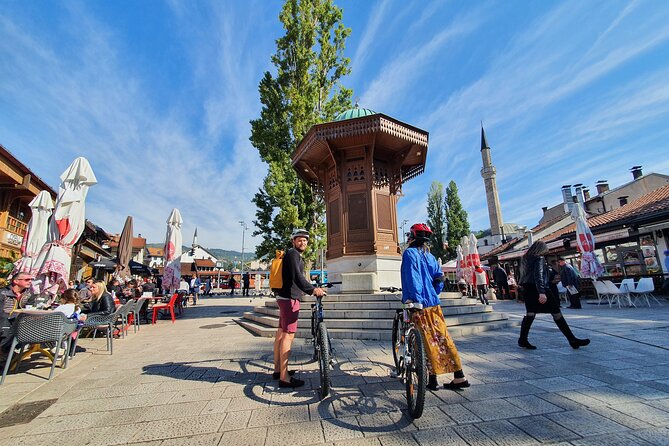
Your tour kicks off in central Baščaršija around Sebilj Brunnen. This wooden fountain is one of the city’s signature meeting points. It’s been there since the 18th century and it’s surrounded by cobbled lanes, shops, and cafés. Even if you’ve only seen photos, standing nearby helps you understand the scale of the old town, and why locals still use it as a reference point.
Right after, you move onto Kazandžiluk, one of the oldest pedestrian streets in Baščaršija, dating back to the 16th century. This is where the city’s Ottoman-era crafts show up in a very practical way: coppersmiths working with copperware you can actually buy. You’ll find items like coffee pots, trays, and jewelry, often with intricate filigree designs.
The best part of a stop like this on a bike tour is that you get a quick window into how the old town economy used to work, and still works. If you like souvenirs that feel local instead of mass-produced, this is one of your best shots during the day.
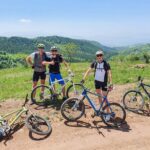
More cycling out of Sarajevo:
What to keep in mind here
This area is pedestrian-focused. You’ll likely do a short walking segment through the older lanes, then remount or move on by bike. If you’re hoping for lots of browsing time for shopping, don’t count on a long free-roam stretch.
Vijećnica and Inat Kuća: City Hall, damage, and stubborn survival
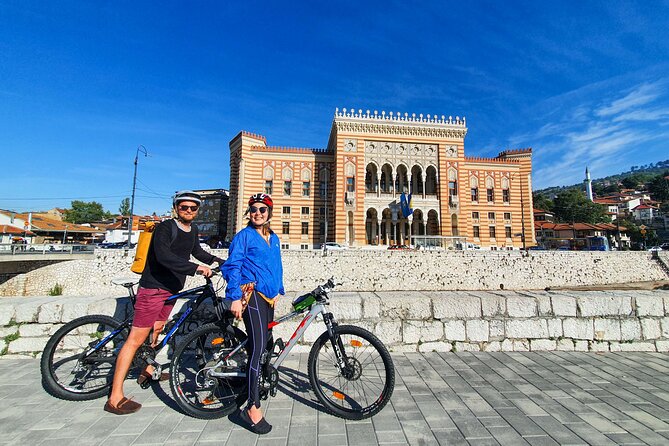
Next up is Vijećnica, Sarajevo’s City Hall. The building is known for its Moorish Revival style and the fact that it started life as a city hall before later housing the National Library. During the siege in 1992 it took heavy damage, and after restoration it reopened in 2014 as a national monument and cultural venue.
What I like about including Vijećnica early is that it gives you a big visual anchor. It’s a landmark you can see, but it also helps you understand the theme of the day, which is survival through structure and story.
Right around the river you’ll also encounter Inat Kuća, also called House of Spite. The story here is simple and memorable: the owner refused to sell his house for construction of the City Hall, so authorities moved the building brick by brick to the opposite bank. Today it operates as a restaurant serving traditional Bosnian food.
This is one of those stops where you can feel the city’s attitude. People didn’t just rebuild after disruption. They preserved stubborn details. If you like architecture stories, this one pays off.
Latin Bridge and Ottoman faith landmarks: the day’s turning point
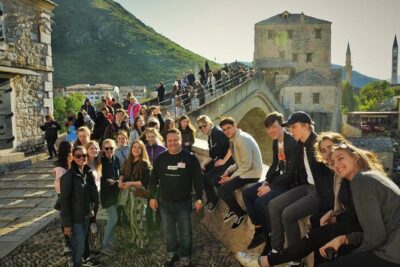
Latin Bridge is one of Sarajevo’s most internationally known spots. It’s an Ottoman bridge from the 16th century, but its global significance is the 1914 assassination of Archduke Franz Ferdinand, an event that triggered World War I.
This stop is short, but it matters because it frames Sarajevo as more than local scenery. The city sits in the middle of major European history.
Then you head to Gazi Husrev-beg Mosque, built in 1530. It’s the largest mosque in Sarajevo and an important symbol of the city’s Ottoman legacy. You’ll also pass Bezistan, a covered market from the 16th century built by Gazi Husrev-beg. It’s essentially a shopping arcade under arched arcades, which makes it a useful contrast to the exposed cobbles of the older streets.
Why these two stops work together
Mosque to market makes sense. In many Ottoman cities, religious space and daily commerce are close by. Even if you only get quick views during this tour, the pairing helps you connect architecture to how people used to live and trade.
Sacred Heart Cathedral and Sarajevo Parliament: Sarajevo’s layered mix
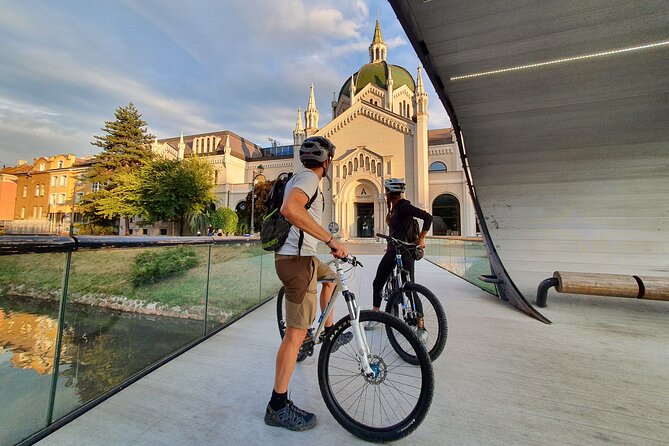
Sacred Heart Cathedral comes next. Built in the late 19th century, it is the largest cathedral in Bosnia and Herzegovina. It’s Neo-Gothic in style, and it’s another strong visual signal that Sarajevo isn’t only Ottoman-era. It reflects the Austro-Hungarian period influence that shaped much of the region.
After that, you visit the Parliamentary Assembly building of Bosnia and Herzegovina. It was constructed in 1982 and is a modernist structure designed by Juraj Neidhardt. During the siege in the 1990s it was severely damaged, but it has since been restored.
This part of the route is where the tour starts to feel more adult and serious. You’re seeing different eras side by side, then realizing how often the city had to repair itself. The design differences are obvious, but the shared theme is what lingers.
Vrelo Bosne: a full hour for air, water, and a breather
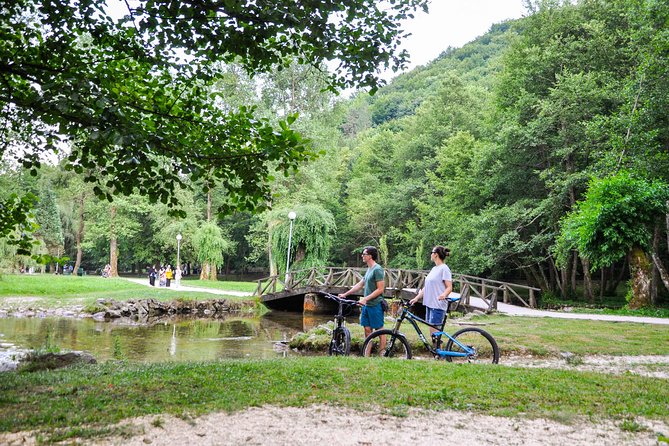
After the packed historic core, you get a break at Vrelo Bosne, the Spring of the Bosna River. It’s a public park at the foothills of Mount Igman on Sarajevo’s outskirts.
You have about an hour here, and that’s important. The tour shifts gears from monuments and architecture to nature and water, giving your brain time to reset after the heavy parts of the morning and the real-world history still ahead later in the day.
Even if you keep it casual and just enjoy the surroundings, this hour helps the Tunnel of Hope visit later land better. By the time you head there, you’re ready to focus.
Sarajevo War Tunnel: understanding the Tunnel of Hope
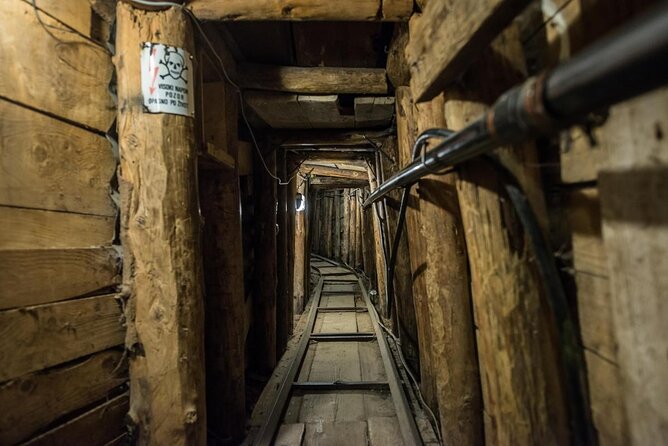
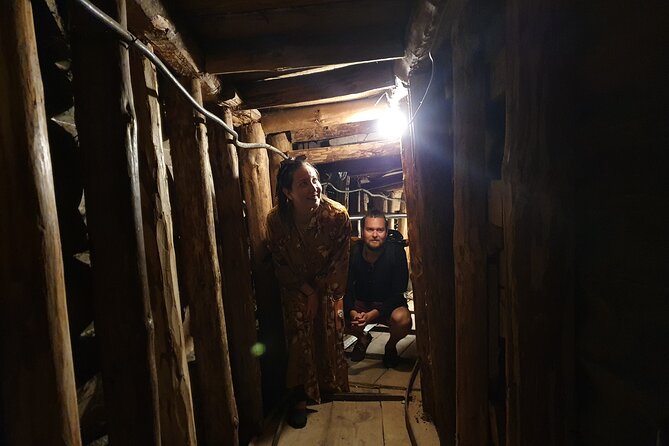
The last major stop is the Sarajevo War Tunnel, with about an hour including the museum admission. The tunnel was constructed during the Bosnian War to connect two territories held by Bosnians that were cut off by the Army of Republika Srpska.
This is the emotional weight of the day. The tour doesn’t sugarcoat what the tunnel represents, and that’s a good thing. You’re not only seeing a historic structure. You’re learning how survival worked when normal routes were blocked.
A bike tour makes this stop feel even more grounded. You’ve moved through the city’s physical layers, then you arrive at a wartime lifeline. The contrast helps your understanding.
If you’re sensitive to war-related history, plan your day so you’re not immediately doing something stressful afterward. Give yourself time to process on your own after the ride ends.
Guides and group size: what makes the experience feel personal
A lot of Sarajevo tours can feel like a conveyor belt, but the small max group size of 10 changes the vibe. It’s easier for your guide to manage questions. It’s also easier to keep track of everyone on bikes, especially when you’re weaving through older streets.
The names that come up often include Mustafa and Mirza for strong storytelling and a route that goes beyond the most obvious tourist patterns. Others like Said and Kamer are repeatedly described as friendly and accommodating, while Arna is praised for passion for Bosnian history and culture and for offering useful ideas for where to eat and shop after the tour.
That guide quality matters here because the day mixes architecture, faith landmarks, and war history. A good guide keeps the flow readable, so you don’t end up with random facts. You end up with connections.
What I liked most, and what to watch for
Here are the two biggest strengths I’d steer you toward:
- A complete Sarajevo snapshot in half a day: You get Ottoman, Austro-era, and modernist landmarks in one route.
- Real depth at the Tunnel of Hope: You get museum time included, not just a brief stop.
Now the main considerations:
- Most city stops are around 5 minutes, so you’re not going to linger. If you want long reading and deep museum time, this format is more about orientation and context.
- It requires good weather to run as planned, and you’ll be cycling a meaningful distance. If you’re not confident on a bike for 6 to 7 hours with ride segments, pick your expectations carefully.
Who should book this bike tour, and who might skip it
This is a great fit if you want:
- An efficient introduction to Sarajevo’s top sights
- A guided route that avoids long, exhausting walking
- The Tunnel of Hope experience built into the same day as the city highlights
- A small-group setting where you can hear your guide
You might skip it if you:
- Prefer only walking tours
- Want long, unstructured time inside each site
- Are uncomfortable with cycling for much of the half day
If you’re the type who likes to understand a place quickly and then return later for slower exploring, this is exactly that kind of day.
Should you book the Sarajevo City Sightseeing and War Bike Tour?
Yes, if you’re booking Sarajevo for limited time and you want both the beauty of Sarajevo’s landmarks and the reality behind the city’s 1990s story, this is a strong choice. The fact that the bike, helmet, and admissions for the Tunnel of Hope and Vrelo Bosne are included is what pushes it into value territory.
I’d especially recommend it to first-time visitors who want to get their bearings fast, then build the rest of their trip around what they learn. Just go in knowing the pace is structured, the stops are short, and the war tunnel part is serious.
FAQ
How long is the Sarajevo City Sightseeing and War Bike Tour?
It lasts about 6 to 7 hours.
What time does the tour start, and where is the meeting point?
The tour starts at 9:00 am at Obala Isa-bega Ishakovića 3, Sarajevo 71000, Bosnia and Herzegovina, and it ends back at the meeting point.
Is the tour offered in English?
Yes, it is offered in English.
How big is the group?
The tour has a maximum group size of 10 travelers.
What’s included in the price?
Included items are bicycle use, helmet use, War tunnel museum admission, Spring of the Bosna admission, and the chance to make new friends.
Do I need tickets for the War Tunnel or Vrelo Bosne?
The War tunnel museum admission fee and the Spring of the Bosna admission fee are included.
What if the weather is bad, or plans change?
The tour requires good weather. If it is canceled due to poor weather, you’ll be offered a different date or a full refund. You can cancel for a full refund if you cancel up to 24 hours in advance of the experience’s start time.
Most recently added near Sarajevo
- Sarajevo : Private Walking Tour With A Guide (Private Tour)★ 5.0 · 1 review
- Sarajevo: Islamic Tour | 500+ years of Glorious Heritage★ 5.0 · 1 review
- Sarajevo: Srebrenica – A Journey of Remembrance★ 5.0 · 1 review
- Transfer tour Sarajevo-Dubrovnik★ 5.0 · 1 review
- Bunker: Tito’s Secret & Boracko Lake Tour from Sarajevo★ 5.0 · 1 review
- Svrzo House Entrance Ticket★ 5.0 · 1 review
- Thrilling Rafting Adventure on the Neretva River with Lunch★ 5.0 · 1 review
- Private transfer (FROM-TO) Sarajevo – Dubrovnik★ 5.0 · 1 review
City Tours, compared.
ROSES OF SARAJEVO (Official WAR + CITY tour)- Story of a Survivor
Read our review →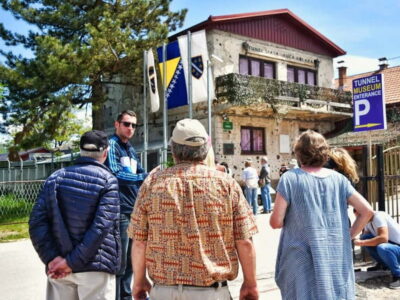
Guided City Highlights Tour with Sarajevo Tunnel
Read our review →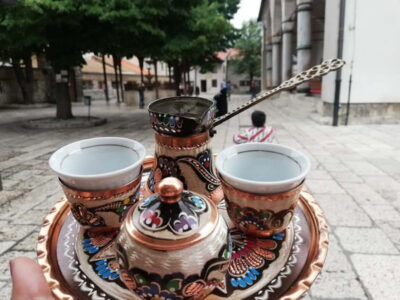
Sarajevo City Market, Old Town Food Tasting Tour
Read our review →
Half Day Trip to Kravice Waterfalls From Mostar with City Voucher
Read our review →
Private group city tour of Mostar and the Old Bridge
Read our review →Browse the lists this tour appears in