
Reviewed · MOSTAR TOURS
Mostar Shelters tour in Mostar
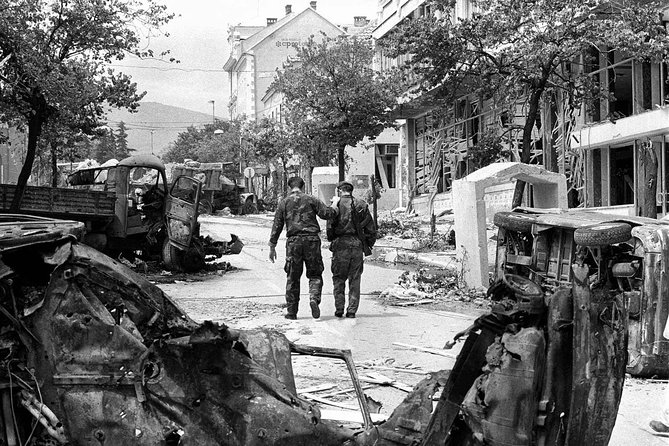
War leaves visible scars in Mostar. The Mostar Shelters tour shows how the siege shaped daily life, using half driving and half walking through artillery positions, trench lines, and the urban front, guided by people like Miran and Dario.
I love the hotel pickup option (for selected hotels), because it makes it easy to fit into your day without hunting for a taxi. I also like how the guide explains what you are seeing in real time, with stories and visuals that make the past feel specific, not abstract.
One drawback to plan for: this is about the Bosnian War era, so you will see and hear about damage to homes and buildings. If you want mostly light, postcard Mostar, this evening tour may feel intense.
In This Review
- Key things to know before you go
- What Mostar Shelters is really about: seeing the siege from the street
- Meeting point and 5:00 pm start: how the evening schedule works
- Half driving, half walking: a route designed for comfort
- Artillery positions and trench lines: what you will notice as you look around
- Bullet-riddled buildings and burnt houses: learning to read the city center
- The cross viewpoint above town: why that extra view is not random
- Guide style matters: Miran and Dario’s hands-on storytelling
- What the tour covers, in plain practical terms
- Value and price: why $41.20 makes sense for this kind of tour
- Who should book, and who should think twice
- Should you book Mostar Shelters in Mostar?
- FAQ
- How long is the Mostar Shelters tour?
- What time does the tour start, and where is the meeting point?
- Is hotel pickup included?
- How much of the tour is walking versus driving?
- What war-related locations will I see?
- Is the tour offered in English?
- Are food and drinks included?
- What is the maximum group size?
- Is there free cancellation?
Key things to know before you go
- Hotel pickup in selected areas means less hassle and more time listening
- Small group size (max 16) makes it easier to ask questions
- Half walking, half driving keeps you moving without turning it into a marathon
- Straight talk about war locations helps you connect bullet-scarred streets to the bigger story
- English live commentary keeps the experience accessible
- Evening start time (5:00 pm) fits well after you’ve done the main sights
Other Mostar trips worth comparing
- Dubrovnik: Kravica Waterfalls, Mostar and Pocitelj Day Trip
★ 4.5 · 3,045 reviews - From Mostar: Blagaj, Počitelj & Kravice Waterfalls Day Tour
★ 5.0 · 1,310 reviews - Discover Herzegovina Day Tour from Mostar: Kravice Waterfalls, Blagaj, Počitelj
★ 5.0 · 742 reviews - From Mostar: Kravice Waterfalls, Blagaj, & Počitelj
★ 5.0 · 565 reviews
What Mostar Shelters is really about: seeing the siege from the street
Mostar is famous for bridges and old-town charm, but this tour focuses on something harder. It is built around the war in Bosnia and Herzegovina, specifically what the conflict looked like in Mostar during 1992 to 1995, and what happened to the people afterward.
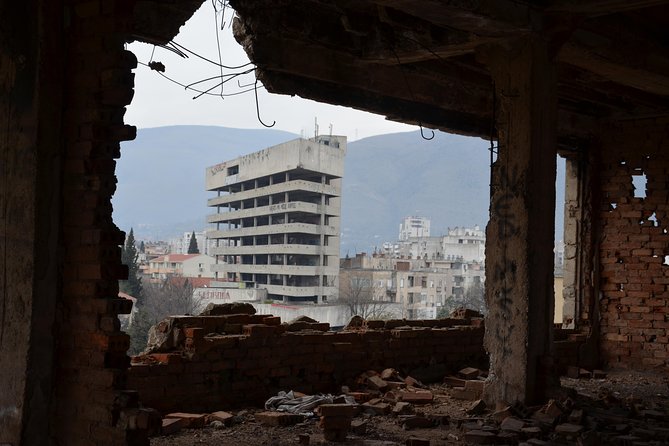
The idea is simple and effective: you cannot really understand the bullet-riddled buildings and burnt houses you notice in the city center unless someone helps you read them. The guide walks you through the questions that pop up as you look around, and the tone stays respectful while still being direct about what occurred.
You get more than a timeline. You get the logic of why people built positions where they did, how the fighting shaped neighborhoods, and why the city still carries the marks.
Meeting point and 5:00 pm start: how the evening schedule works
The tour starts at Onešćukova 32, Mostar, with departures at 5:00 pm. It also ends back at the same meeting point, so you are not left figuring out a last-mile return after you finish.
Because it runs in the late afternoon into early evening, it is a good choice when you want to balance sightseeing with something meaningful. It is also helpful if your daytime is already booked with the Old Bridge area, since this experience shifts you to parts of the city that most people do not naturally wander into.
Half driving, half walking: a route designed for comfort
This is not a “stand still and listen” tour, and it is not a full walking slog either. You should expect half time on the road and half time on foot, with short walks at points of interest.
That mix matters for two reasons. First, driving lets the guide cover multiple key war-related locations without burning energy on long transfers. Second, the walking segments give you that close-up perspective that photographs simply cannot replace, especially when you are looking at damage that is right in front of you.
And since the group is capped at 16 people, the guide can keep the pacing manageable and still answer questions without rushing everyone along.
Another way to spend the day from here:

Artillery positions and trench lines: what you will notice as you look around
The core stops revolve around the places where the fighting played out in Mostar. You will visit prominent artillery positions and trench line areas, plus spots linked to the urban front line.
What makes these stops valuable is not just the label. The guide connects each location to what it would have meant for people living nearby. Standing in these areas, you start noticing patterns, like how the urban layout affects visibility, movement, and why certain positions mattered more than others.
If you are the type who likes to connect history to real streets, you will enjoy this section. It gives you a mental map so that when you later spot scars on buildings, you understand there is a reason behind where and how those marks show up.
Bullet-riddled buildings and burnt houses: learning to read the city center
Mostar’s city center can look beautiful from a distance, and that is exactly why this tour hits so hard. The whole premise is that the damage is not random, and the guide explains the context behind the scenes that make your brain say, Wait, what happened here?
You get a guided tour through what you are seeing: the bullet-riddled structures, the burnt houses, and the areas that show the proximity of the conflict to daily life. The guide also addresses the practical questions you might have in the moment, including how this kind of urban siege changes everything from movement to safety.
One of the most praised parts is the way the guide keeps information grounded. Instead of tossing facts at you, they help you connect the visible clues to the broader story of the siege and its aftermath.
The cross viewpoint above town: why that extra view is not random
One highlight that shows up in the experience is a stop that goes up toward a mountain viewpoint with a cross. It gives a different angle on Mostar, letting you see how the city sits in relation to the surrounding terrain.
This is more than a photo moment. Views like this help you understand why places become strategic, because geography starts to make sense when you can see how neighborhoods relate to each other. If you have ever wondered how a fight could affect such a compact urban area, this viewpoint helps your brain connect the dots.
Guide style matters: Miran and Dario’s hands-on storytelling
Two guide names come up again and again in the experience: Miran and Dario. Both are described as passionate and careful with explanations, and you can feel the difference between someone reading a script and someone who knows how to teach.
A key detail is that the commentary includes real supporting material, like visuals and footage, which helps the story stay clear instead of turning into vague war talk. Just as important, the guides make room for questions. That is crucial in a topic like this, where your curiosity is not only natural, it is part of processing what you are learning.
Also, the tour is offered in English, so you do not have to rely on translation tricks to follow the story.
What the tour covers, in plain practical terms
Here is what you are generally signing up for, based on how the tour is described and how it plays on the ground:
- You start in central Mostar at Onešćukova 32
- You move by car between multiple locations, with short walks at key points
- You visit artillery positions, trench lines, and areas tied to the urban front line
- You get commentary that explains not just events, but what everyday life looked like during and after the conflict
- You return to the original meeting point at the end
The biggest “surprise” for many people is that the tour makes the city feel personal. It is not just history. It is the story of people living very close to the front.
Value and price: why $41.20 makes sense for this kind of tour
At $41.20 per person, this is not a bargain in the “cheap tourist” sense. It is a fair price for what you actually get: a professional guide, live commentary, and hotel pickup for selected hotels.
The value comes from three places:
- You are paying for human explanation, not just transportation.
- The tour format is time-efficient, since half driving lets the guide cover more locations in the limited time window.
- It is a smaller group experience, capped at 16 travelers, so you are not stuck listening in a crowd.
If you are the kind of traveler who likes your sightseeing to have a point, this price can feel surprisingly good. You are essentially buying a guided lens for a part of Mostar that most people only glance at.
Who should book, and who should think twice
This tour is a strong match if you:
- want more than postcard Mostar and want real context
- enjoy learning history through specific places, not just museum-style timelines
- appreciate guides who answer questions and keep the conversation open
It may be less ideal if you:
- want a lighter evening with minimal emotional weight
- are easily overwhelmed by discussions of war damage
- prefer to stay mostly in the Old Town zone without going to more affected areas
Also, the tour is listed as suitable for most travelers, but it is important to note that children must be accompanied by an adult. If you bring kids, think carefully about how your family handles heavy topics.
Should you book Mostar Shelters in Mostar?
If you are spending time in Mostar and you want to understand why the city looks the way it does, I think this is an excellent call. The combination of hotel pickup, a small group size, and a guide who can explain the visible evidence makes it practical, not just emotional.
My rule of thumb: book it if you are curious and willing to feel something. Skip it if your plan is strictly for relaxing, low-context sightseeing. For many visitors, the payoff is that Mostar stops being just a pretty stopover, and starts making sense.
FAQ
How long is the Mostar Shelters tour?
The tour lasts about 2 hours, with the experience described as taking between two and three hours in practice.
What time does the tour start, and where is the meeting point?
It starts at 5:00 pm. The meeting point is Onešćukova 32, Mostar 88000. The tour ends back at the meeting point.
Is hotel pickup included?
Yes, hotel pickup is included, but only for selected hotels.
How much of the tour is walking versus driving?
It is designed to be half walking and half driving, so you will do some short walks but also spend time moving by vehicle.
What war-related locations will I see?
You will visit prominent sites connected with the war in Mostar, including artillery positions, trench lines, and the urban front line, along with other interesting sights.
Is the tour offered in English?
Yes. The tour is offered in English with live commentary.
Are food and drinks included?
No. Food and drinks are not included.
What is the maximum group size?
The tour has a maximum of 16 travelers.
Is there free cancellation?
Yes. Free cancellation is available, and you can cancel up to 24 hours in advance for a full refund. If you cancel less than 24 hours before the start time, the amount paid is not refunded.
Most recently added near Mostar
- Going North and visit Sarajevo in a Day Tour from Mostar★ 5.0 · 1 review
- The Ottoman Experience Tour in Mostar★ 5.0 · 1 review
- Authentic Antique Museum Home★ 5.0 · 1 review
- Mostar: Private Walking Tour with Local Guide★ 4.0 · 1 review
- Top Secret Tito’s Bunker in a day tour from Mostar★ 5.0 · 1 review
- City Tour: Mostar Medival Town★ 5.0 · 1 review
- Wine Tour & Tasting (Herzegovina)★ 5.0 · 1 review
- Mostar Sunset Walking Tour with Wine Tasting★ 5.0 · 1 review
Mostar Tours, compared.
Kravica Waterfalls, Mostar and Pocitelj Day Trip
Read our review →
Blagaj, Počitelj & Kravice Waterfalls Day Tour
Read our review →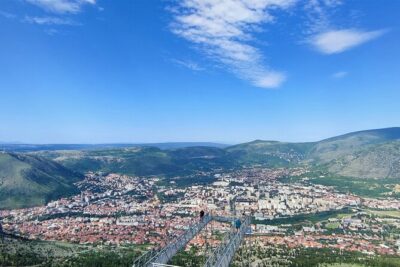
Discover Herzegovina Day Tour from Mostar: Kravice Waterfalls, Blagaj, Počitelj
Read our review →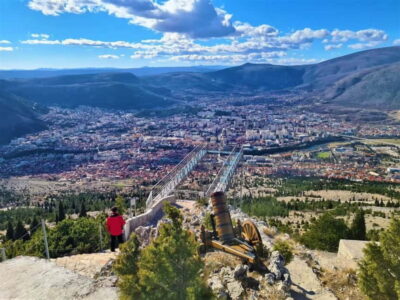
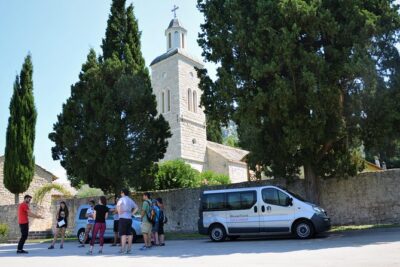
Herzegovina Day Tour from Mostar: Blagaj, Pocitej, Kravice falls (Join Us! :D)
Read our review →
Mostar and Kravice Waterfalls Full-Day Tour from Split
Read our review →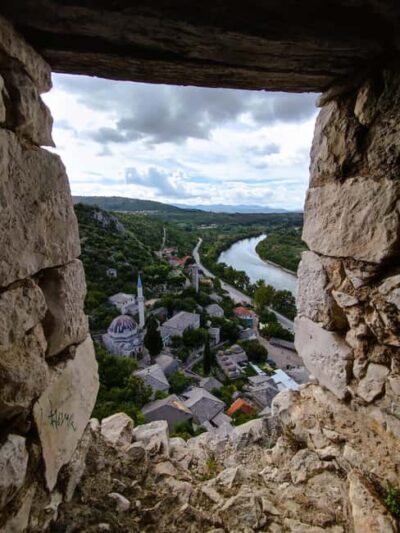

Browse the lists this tour appears in